Key Takeaway
Complete protocol for the NAD+ and Glutathione longevity stack. Covers dosing schedules, administration methods, cycling, and how to combine these two powerhouse molecules for optimal anti-aging results.
The NAD+ and Glutathione longevity stack protocol pairs the body's primary cellular energy coenzyme with its most abundant endogenous antioxidant, creating a dual-pathway approach to slowing biological aging. A well-structured protocol addresses administration routes, dosing frequency, cycling patterns, and supporting cofactors to maximize the combined benefits of these two molecules.
Why NAD+ and Glutathione Work Together
NAD+ (nicotinamide adenine dinucleotide) is important for cellular energy production, DNA repair, and sirtuin activation. Glutathione is the body's master antioxidant, responsible for neutralizing reactive oxygen species, detoxifying harmful compounds, and supporting immune function.
These molecules are deeply interdependent. NAD+ fuels the enzymatic processes that recycle oxidized glutathione (GSSG) back into its active reduced form (GSH). Meanwhile, glutathione protects the mitochondria where NAD+ performs its energy-producing duties. When both decline with age, the result is a compounding deterioration in cellular function. Restoring both simultaneously addresses this cycle more effectively than supplementing either one alone.
Administration Routes
Subcutaneous Injection
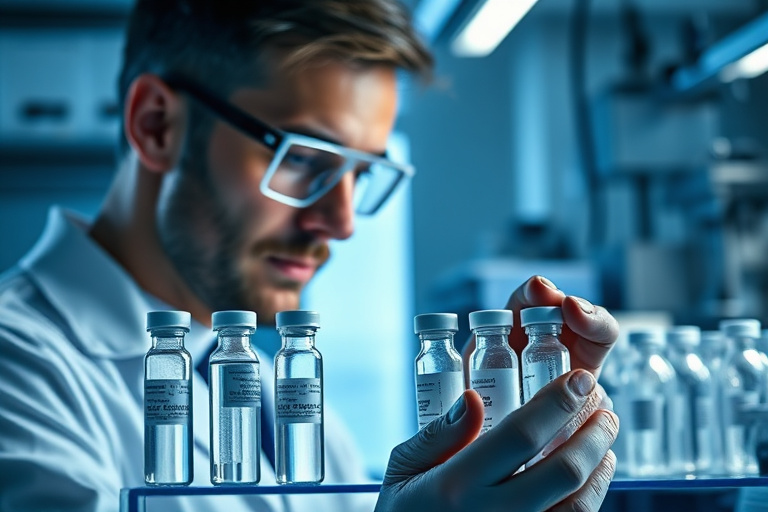
Subcutaneous injection is the most common clinical route for both NAD+ and glutathione in a peptide therapy context. It offers high bioavailability, bypassing first-pass liver metabolism, and allows for precise dosing.
View data table
| Category | Clinical Interest Score | Detail |
|---|---|---|
| BPC-157 | 88 | Tissue repair and gut healing |
| TB-500 | 82 | Injury recovery |
| Sermorelin | 78 | Growth hormone support |
| Ipamorelin | 75 | Anti-aging and recovery |
| GHK-Cu | 70 | Skin and tissue repair |
- Use insulin syringes (29-31 gauge) for comfort
- Common injection sites: lower abdomen, outer thigh, upper arm
- Rotate sites to avoid lipodystrophy
- NAD+ injections may cause a temporary stinging or burning sensation at the site. this is normal and subsides within minutes
Intravenous (IV) Infusion
IV NAD+ infusions deliver the highest bioavailability and are often used for initial loading phases or for individuals who want maximum cellular saturation. IV glutathione pushes are commonly administered alongside or immediately following NAD+ infusions. IV administration requires a clinical setting and trained staff.
Oral and Sublingual
Oral NAD+ precursors (NMN, NR) and liposomal glutathione offer more accessible but lower-bioavailability alternatives. These can serve as maintenance supplements between injection or IV sessions. NAD+ supplement forms
The Protocol: Phase by Phase
Phase 1: Loading (Weeks 1-2)
The loading phase rapidly restores depleted NAD+ and glutathione levels. This is especially important for individuals over 40 or those with chronic health conditions where both molecules are significantly depleted.
From the FormBlends catalog
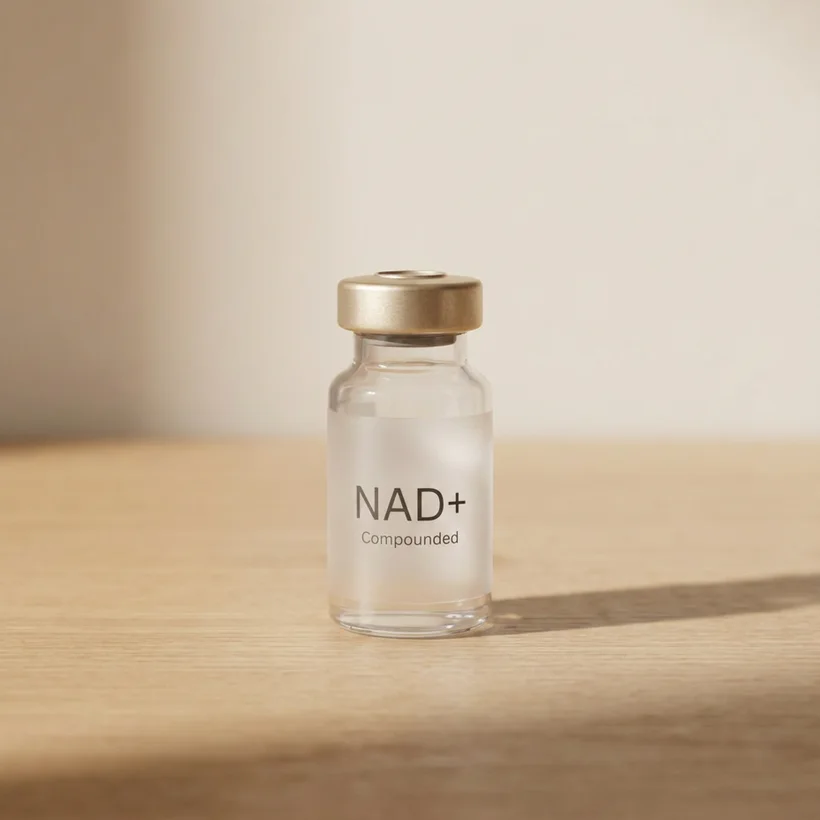
NAD+ Peptide Complex
Restore cellular energy and DNA repair capacity · From $179/mo · compounded by a licensed 503A pharmacy, dispensed only after provider review.
View NAD+ Peptide Complex →| Molecule | Route | Dose | Frequency |
|---|---|---|---|
| NAD+ | Subcutaneous | 100-200 mg | Daily or every other day |
| Glutathione | Subcutaneous | 200-400 mg | Daily or every other day |
| NAD+ (alternative) | IV infusion | 250-500 mg | 2-3 sessions over 2 weeks |
| Glutathione (alternative) | IV push | 600-1200 mg | 2-3 sessions over 2 weeks |
Phase 2: Improvement (Weeks 3-12)
Once tissue levels are restored, the improvement phase maintains improved levels while allowing the body to integrate the benefits. Dosing frequency decreases during this phase.
| Molecule | Route | Dose | Frequency |
|---|---|---|---|
| NAD+ | Subcutaneous | 50-100 mg | 3-5 times per week |
| Glutathione | Subcutaneous | 200 mg | 3-5 times per week |
Phase 3: Maintenance (Ongoing)
The maintenance phase sustains benefits long-term with the minimum effective dose and frequency. Some individuals transition partially or fully to oral precursors during this phase.
| Molecule | Route | Dose | Frequency |
|---|---|---|---|
| NAD+ | Subcutaneous | 50-100 mg | 2-3 times per week |
| Glutathione | Subcutaneous | 200 mg | 2-3 times per week |
| NMN or NR (optional) | Oral | 250-500 mg | Daily |
| Liposomal Glutathione (optional) | Oral | 500-1000 mg | Daily |
Contact provider for current pricing Contact provider for current pricing
Timing and Administration Tips
Best Time of Day
NAD+ is best administered in the morning or early afternoon. Because NAD+ plays a central role in circadian rhythm regulation through sirtuin and PARP activity, late-evening administration can sometimes interfere with sleep. Glutathione can be administered at any time, though pairing it with NAD+ in a single session simplifies the protocol.
Can They Be Mixed in the Same Syringe?
Some compounding pharmacies offer NAD+ and glutathione as a pre-mixed combination. When sourced from a licensed compounder, this is safe and convenient. If mixing yourself from separate vials, confirm compatibility with your provider.
Food and Fasting
Subcutaneous injections don't require fasting. But some practitioners recommend dosing NAD+ on an empty stomach for potentially enhanced absorption, though this is based more on clinical observation than controlled studies.
Supporting Cofactors
Both NAD+ and glutathione metabolism depend on key cofactors. Including these in your daily supplement regimen optimizes the stack's effectiveness:
- B vitamins (especially B2, B3, B6): important for NAD+ biosynthesis and glutathione recycling
- Selenium: Required for glutathione peroxidase function
- Vitamin C: Helps regenerate oxidized glutathione back to GSH
- Magnesium: Involved in over 300 enzymatic reactions, including those in NAD+ metabolism
- Alpha-lipoic acid: Supports both NAD+ and glutathione recycling
- N-acetylcysteine (NAC): A direct glutathione precursor that boosts endogenous production
Longevity supplement cofactors
Cycling Considerations
Unlike some peptide stacks, NAD+ and glutathione supplementation doesn't typically require strict cycling for receptor desensitization concerns, since these are naturally occurring molecules rather than receptor ligands. But periodic breaks (such as 1 month off after every 3-4 months) may be beneficial for:
- Allowing the body's endogenous production pathways to function independently
- Assessing baseline function without supplementation
- Cost management over long-term use
Monitoring and Lab Work
Track the following markers at baseline, 6-8 weeks, and every 3-6 months thereafter:
- Intracellular NAD+ levels (specialized testing through providers like Jinfiniti)
- Glutathione (GSH/GSSG ratio) via blood test
- Inflammatory markers: hs-CRP, homocysteine
- Oxidative stress markers: 8-OHdG, lipid peroxides (if available)
- Liver function panel: AST, ALT, GGT (glutathione is central to liver detoxification)
- Complete metabolic panel
Safety and Contraindications
Both NAD+ and glutathione have strong safety profiles at therapeutic doses. Known considerations include:
- NAD+ injections commonly cause transient flushing, nausea, or a warm sensation. Starting with lower doses reduces these effects.
- IV NAD+ infusions should be administered slowly (over 1-4 hours) to minimize discomfort
- Glutathione injections are generally well-tolerated with minimal side effects
- Individuals on chemotherapy should consult their oncologist before using glutathione, as it may interfere with certain drug mechanisms
- Pregnant or nursing women should avoid injectable NAD+ and glutathione protocols
Frequently Asked Questions
- Can I take NAD+ and glutathione at the same time?
-
Yes. NAD+ and glutathione can be administered in the same session, either as separate injections or as a pre-mixed formulation from a compounding pharmacy. Their mechanisms are complementary, and concurrent dosing is standard practice in most clinical protocols.
- How long should I follow this protocol?
-
Most providers recommend a minimum of 3 months to evaluate the full benefits. Many individuals continue the maintenance phase indefinitely, as NAD+ and glutathione levels naturally decline with age and ongoing supplementation helps sustain optimal levels. longevity stack long-term use
- Do I need IV infusions, or are subcutaneous injections sufficient?
-
Subcutaneous injections are sufficient for most people and offer the convenience of at-home administration. IV infusions deliver higher single-session doses and may be preferred for initial loading or acute recovery situations. Many protocols use IV sessions periodically alongside regular subcutaneous maintenance.
- What does NAD+ injection feel like?
-
NAD+ subcutaneous injections often produce a mild stinging or burning sensation at the injection site that lasts 1-5 minutes. Some users experience brief flushing or warmth. These effects are dose-dependent and tend to lessen as the body adjusts. Injecting slowly and using a smaller dose initially can reduce discomfort.
- Can I use oral supplements instead of injections?
-
Oral NAD+ precursors (NMN, NR) and liposomal glutathione are viable alternatives with lower bioavailability. They work well as maintenance supplements or for individuals who prefer to avoid injections. For maximum therapeutic effect, particularly during loading and improvement phases, injectable forms are generally preferred.
Ready when you are
NAD+ Peptide Complex
Restore cellular energy and DNA repair capacity · From $179/mo · compounded by a licensed 503A pharmacy, dispensed only after provider review.
View NAD+ Peptide Complex →