Key Takeaway
How rapid weight loss affects immune function and why Thymosin Alpha-1's immunomodulatory properties are drawing attention as supportive therapy during GLP-1 treatment.
When we talk about the effects of GLP-1 medications like semaglutide and tirzepatide, the conversation almost always centers on weight, appetite, blood sugar, and body composition. These are the obvious outcomes, the ones the clinical trials measured and the media reports on. But there's a quieter, less-discussed aspect of rapid weight loss that deserves attention: what happens to the immune system.
Significant weight loss, particularly the rapid and substantial kind driven by GLP-1 agonists, is a major physiological event. It changes hormonal signaling, shifts micronutrient availability, alters the gut microbiome, and mobilizes stored compounds from adipose tissue. The immune system, which is exquisitely sensitive to metabolic and nutritional status, inevitably responds to these changes. For some individuals, the result is a period of relative immune vulnerability that coincides with one of the most metabolically dynamic periods of their lives.
This is the context in which Thymosin Alpha-1 (Ta1), one of the best-characterized immunomodulatory peptides in existence, enters the conversation.
How Rapid Weight Loss Affects Immune Function
The relationship between body weight, caloric restriction, and immune function is well-established but often oversimplified. Obesity itself is associated with chronic low-grade inflammation and immune dysfunction, so losing weight should theoretically improve immune health. And in the long run, it does. But the process of losing weight, particularly when it happens quickly, creates a transitional period where immune function can be compromised.
Several mechanisms contribute to this transient immune suppression:
Caloric restriction and immune cell energy demands. Immune cells are metabolically expensive. T cells, B cells, and natural killer cells require substantial energy to proliferate and function effectively. When the body is in significant caloric deficit, there's competition for metabolic resources. The body prioritizes immediate survival functions, and immune surveillance can receive reduced energy allocation. This isn't a hypothesis. it has been documented in studies of voluntary and involuntary caloric restriction, including research on elite athletes during weight cuts and individuals undergoing very-low-calorie diets.
Adipose tissue as an endocrine and immune organ. Fat tissue isn't inert storage. It's an active endocrine organ that produces adipokines, cytokines, and immune modulators. When fat cells shrink rapidly, the profile of these secreted molecules changes. Leptin, which plays a role in both appetite and immune function, drops significantly during weight loss. Leptin is actually a pro-inflammatory and immune-stimulatory adipokine, and its decline can reduce T-cell proliferation and function. This is one of the paradoxes of weight loss: the chronic inflammation of obesity decreases, but acute immune responsiveness may also temporarily decline.
Release of stored lipophilic compounds. Adipose tissue accumulates lipophilic environmental toxins, including persistent organic pollutants (POPs), heavy metals, and other xenobiotics. When fat is mobilized during weight loss, these stored compounds are released into the bloodstream. Research has shown measurable increases in blood levels of organochlorine pesticides, PCBs, and other pollutants during significant weight loss. These compounds can have immunosuppressive effects, placing additional stress on immune defenses during the exact period when fat mobilization is highest.
Gut microbiome disruption. GLP-1 medications alter gut function directly (through slowed gastric emptying and changes in bile acid metabolism) and indirectly (through changes in diet composition and caloric intake). The gut microbiome, which is intimately connected to immune function through the gut-associated lymphoid tissue (GALT), undergoes significant shifts during this period. Microbiome instability can transiently reduce the barrier function that keeps pathogens from crossing the intestinal lining and can alter the balance of immune-stimulatory and immune-regulatory microbial signals.
Micronutrient depletion. When food intake drops substantially, as it often does on GLP-1 medications, the intake of immune-critical micronutrients can become insufficient. Zinc, selenium, vitamin D, vitamin C, and iron are all important for immune cell function. Patients who are eating dramatically less than before starting GLP-1 therapy may develop marginal deficiencies that wouldn't show up on standard lab work but can affect immune cell performance.
Thymosin Alpha-1: What It Is and What It Does
Thymosin Alpha-1 is a 28-amino-acid peptide originally isolated from the thymus gland. The thymus is the primary organ responsible for T-cell maturation, the process by which immature immune cells from the bone marrow develop into functional T lymphocytes capable of recognizing and responding to specific threats. Ta1 is one of the key signaling molecules the thymus uses to guide this maturation process.
View data table
| Category | Clinical Interest Score | Detail |
|---|---|---|
| BPC-157 | 88 | Tissue repair and gut healing |
| TB-500 | 82 | Injury recovery |
| Sermorelin | 78 | Growth hormone support |
| Ipamorelin | 75 | Anti-aging and recovery |
| GHK-Cu | 70 | Skin and tissue repair |
What makes Ta1 unusual among immune-active compounds is that it's an immunomodulator rather than a simple immune stimulant. The distinction matters enormously. An immune stimulant pushes the immune system harder, which can be counterproductive when the goal is balanced function rather than maximum activation. An immunomodulator adjusts the system toward optimal function, enhancing responses that are too weak and restraining responses that are excessive.
Ta1's immunomodulatory effects have been documented across a remarkable range of contexts:
T-cell maturation and function. Ta1 promotes the differentiation of immature thymocytes into mature, functional T cells. It enhances the expression of T-cell surface markers (CD3, CD4, CD8) and improves the functional responsiveness of mature T cells to antigenic stimulation. In immunocompromised patients, Ta1 has been shown to restore T-cell counts and function toward normal levels.
Natural killer cell activity. NK cells are the immune system's first-line surveillance against virus-infected cells and early-stage tumor cells. Ta1 enhances NK cell cytotoxic activity, improving the immune system's ability to identify and eliminate compromised cells before they become clinical problems.
Dendritic cell maturation. Dendritic cells are the "antigen-presenting cells" that bridge innate and adaptive immunity. They capture foreign antigens and present them to T cells, initiating targeted immune responses. Ta1 promotes dendritic cell maturation and their ability to activate appropriate T-cell responses, improving the efficiency of immune surveillance.
Toll-like receptor expression. Ta1 upregulates the expression of several Toll-like receptors (TLRs), particularly TLR2, TLR5, and TLR9. TLRs are pattern-recognition receptors on immune cells that detect molecular signatures associated with pathogens. Enhanced TLR expression means the immune system is more alert to potential threats, improving the speed and accuracy of the initial immune response.
Anti-inflammatory cytokine balance. Critically, Ta1 doesn't simply increase immune activation across the board. It also promotes the production of anti-inflammatory cytokines like IL-10 and TGF-beta, helping prevent excessive inflammatory responses. This bidirectional modulation is what makes Ta1 an immunomodulator rather than a blunt immune stimulant.
Clinical Track Record
Thymosin Alpha-1 has a clinical track record that distinguishes it from most peptides in the wellness space. It's an approved pharmaceutical product in over 35 countries under the brand name Zadaxin. It has been used clinically for hepatitis B, hepatitis C, as an adjunct to cancer vaccines and chemotherapy, and for immune support in immunocompromised populations.
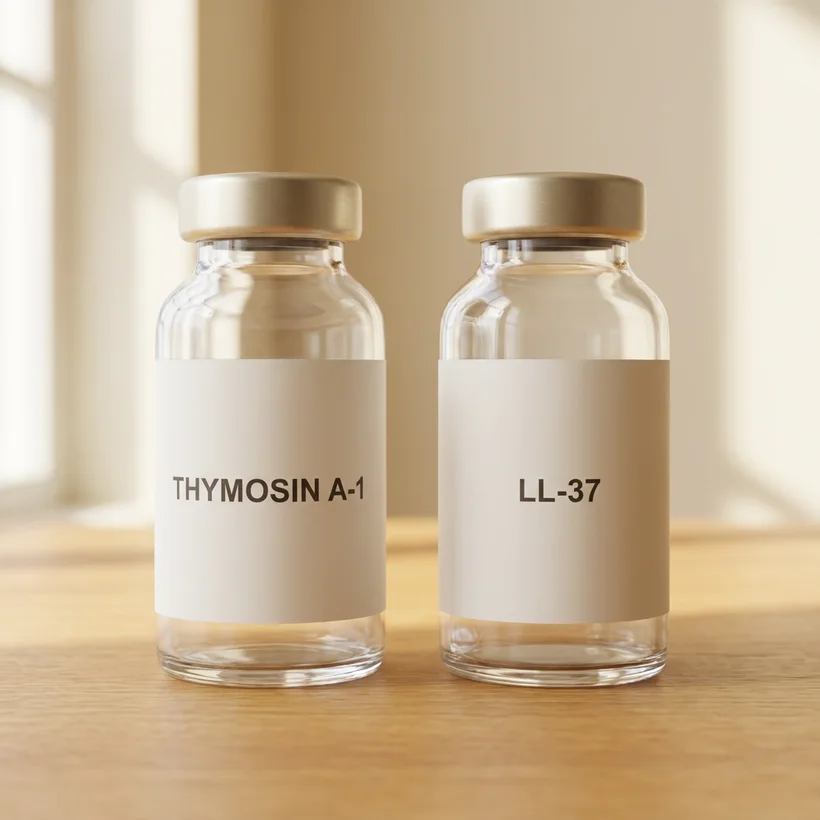
From the FormBlends catalog
Immune Defense
Immune modulation with antimicrobial support. · Bundle from $381 · provider-reviewed peptide bundle.
View Immune Defense →Clinical trial data for Ta1 includes:
Randomized controlled trials in chronic hepatitis B showing improved viral clearance rates when Ta1 was added to standard antiviral therapy. A meta-analysis of these trials confirmed statistically significant benefit.
Studies in elderly patients showing improved immune response to influenza vaccination. Older adults, whose thymic output naturally declines with age, showed enhanced antibody production and T-cell responses when vaccinated alongside Ta1 treatment.
Cancer adjuvant studies showing improved immune parameters and, in some cases, improved survival when Ta1 was combined with chemotherapy regimens. The compound appeared to help restore immune function that was suppressed by chemotherapeutic agents.
COVID-19 studies from China and Italy that showed improved outcomes in severely ill patients who received Ta1 alongside standard care, though these studies varied in design quality.
The safety profile across these studies has been consistently favorable. Ta1 is well-tolerated, with injection site reactions being the most commonly reported side effect. Serious adverse events attributable to the compound are rare in the published literature.
The Rationale for Combination with GLP-1 Therapy
Bringing this together, the case for Thymosin Alpha-1 during GLP-1 weight loss therapy rests on several converging factors.
Addressing transient immunosuppression. The caloric deficit, micronutrient shifts, leptin changes, and adipose tissue mobilization that accompany GLP-1 therapy can create a window of reduced immune competence. Ta1's ability to enhance T-cell function, NK cell activity, and overall immune surveillance could help maintain immune resilience during this transitional period.
Supporting gut-immune function. Given that GLP-1 medications directly affect the GI tract and alter the gut environment, and given that roughly 70% of the body's immune tissue resides in the gut, supporting gut-associated immunity during GLP-1 therapy is particularly relevant. Ta1's effects on dendritic cells and TLR expression include activity in the GALT, potentially supporting the gut immune barrier during a period of significant gut functional change.
Age-related thymic decline. Many patients using GLP-1 medications for weight loss are in their 40s, 50s, and 60s, precisely the age range where thymic output has significantly declined. The thymus begins involuting (shrinking) after puberty, and by middle age, its T-cell production capacity is a fraction of youthful levels. Ta1 supplementation is most logically beneficial in individuals whose endogenous thymic peptide production is already reduced.
Non-interference with GLP-1 mechanisms. Ta1 works entirely through immune system modulation. It doesn't affect appetite, gastric motility, insulin secretion, or any of the pathways through which GLP-1 agonists produce their effects. There's no mechanistic basis for pharmacological interaction, and no interaction has been reported in any clinical context where Ta1 has been combined with other medications.
Practical Protocols and Considerations
Dosing. The standard clinical dose of Thymosin Alpha-1 (based on the approved Zadaxin protocols) is 1.6 mg administered subcutaneously two to three times per week. Some peptide therapy practitioners use lower doses (0.5-1.0 mg) for wellness and immune maintenance applications, while reserving the full 1.6 mg dose for active immune challenges. There's no established dose-finding data for the specific context of immune support during GLP-1 therapy, so practitioners extrapolate from the existing clinical literature.
Duration. In the clinical literature, Ta1 has been used in courses ranging from a few weeks (vaccine adjuvant studies) to over a year (hepatitis B treatment). For immune support during weight loss, a common approach is to use Ta1 during the most metabolically active phase of weight loss, typically the first 3-6 months of GLP-1 therapy when caloric deficit is greatest and body composition is changing most rapidly. Some practitioners cycle the peptide (4 weeks on, 2 weeks off) rather than using it continuously.
Monitoring. Baseline and periodic immune panels can help assess whether Ta1 is having a measurable effect. Complete blood count with differential, T-cell subset analysis (CD4, CD8 counts and ratios), and NK cell activity assays provide objective data. These tests also help identify patients who might benefit most, specifically those whose baseline immune parameters suggest suboptimal function.
Concurrent immune support. Ta1 is most logically used as part of a thorough approach to immune resilience during weight loss, not as a standalone solution. This includes ensuring adequate micronutrient intake (particularly zinc, vitamin D, selenium, and vitamin C, supplementing if dietary intake is insufficient due to reduced food consumption), maintaining sleep quality, managing stress, and staying physically active. Exercise itself is a powerful immune modulator, and moderate physical activity enhances many of the same immune parameters that Ta1 targets.
Who Should Consider This Combination
Not everyone on a GLP-1 medication needs supplemental immune support. For young, otherwise healthy individuals losing moderate amounts of weight with adequate nutrition, the immune impact of treatment is likely minimal and self-correcting.
The profiles where Ta1 makes the most clinical sense include:
Older adults (50+) on GLP-1 therapy. Age-related immune decline (immunosenescence) combined with the metabolic stress of significant weight loss creates a compounding vulnerability that Ta1 is specifically equipped to address.
Patients losing more than 15% of body weight. The physiological demands of substantial weight loss are proportionally greater, and the immune impact is likely more significant.
Individuals with a history of frequent infections or slow recovery. These patients may already have marginal immune function that could be further compromised during weight loss.
Patients who have difficulty maintaining adequate nutrition on GLP-1 therapy. When appetite suppression is so profound that food intake drops to very low levels, immune-critical nutrient intake may suffer. Ta1 can support immune function while nutritional strategies are improved.
Those undergoing weight loss during cold and flu season or other periods of increased infection exposure. The practical concern of catching respiratory infections during the most active phase of weight loss is a reasonable one, and immune support during high-exposure periods is a straightforward application.
What This Combination Is Not
It's important to set boundaries on the claims being made here. Ta1 with GLP-1 therapy isn't a treatment for any specific disease. It isn't a substitute for vaccines, appropriate medical care for infections, or standard immune-directed therapies for autoimmune or immunodeficiency conditions. It isn't proven to prevent any specific infection during weight loss therapy.
What it represents is a biologically rational approach to supporting immune resilience during a period of physiological stress. The individual evidence for Ta1's immunomodulatory effects is strong, with a depth of clinical data that exceeds most other peptides. The evidence that rapid weight loss affects immune function is also well-established. The combination of these two bodies of evidence creates a reasonable rationale for the pairing, even in the absence of specific clinical trials studying Ta1 alongside GLP-1 agonists.
The Overlooked Dimension of Weight Loss Medicine
The explosion of GLP-1 therapy has, understandably, focused attention on the dramatic weight loss outcomes these medications produce. But weight loss isn't just about losing pounds. It's a systemic physiological process with implications for virtually every organ system, including the immune system.
As millions of patients worldwide undergo significant GLP-1-driven weight loss, the question of how to support overall health during this process becomes increasingly important. Thymosin Alpha-1 represents one of the more evidence-based approaches to addressing the immune dimension of this question. It isn't flashy. It doesn't produce visible before-and-after results. But for the patients who need it, maintaining immune competence during one of the most metabolically demanding periods of their lives isn't a minor consideration.
Working with a physician who understands both GLP-1 pharmacology and immune function is important for anyone considering this combination. The peptide is well-studied, but its application in this specific context is novel, and individualized assessment and monitoring ensure that the approach is both safe and appropriately targeted.
This article is for informational purposes only and doesn't constitute medical advice. Always consult with a qualified healthcare provider before beginning any peptide or medication regimen. Thymosin Alpha-1 is approved as a pharmaceutical product in some countries but isn't FDA-approved in the United States.
Related guides
- Thymosin Alpha 1 Immune Support Guide
- Thymosin Alpha 1 Immune Support Peptide
- Thymosin Alpha-1 for Chronic Fatigue Immune: Evidence and Guide
- Thymosin Alpha-1 for Post-covid Immune Recovery: Evidence and Guide
- Thymosin Alpha-1 for Autoimmune Disease Support: Evidence and Guide
- Thymosin Alpha-1 for Chronic Infection Support: Evidence and Guide
See your options in about 2 minutes
Take the free quiz and see what fits you. Quick, private, and no commitment to continue.
See my options →