

Deep research
About AICAR
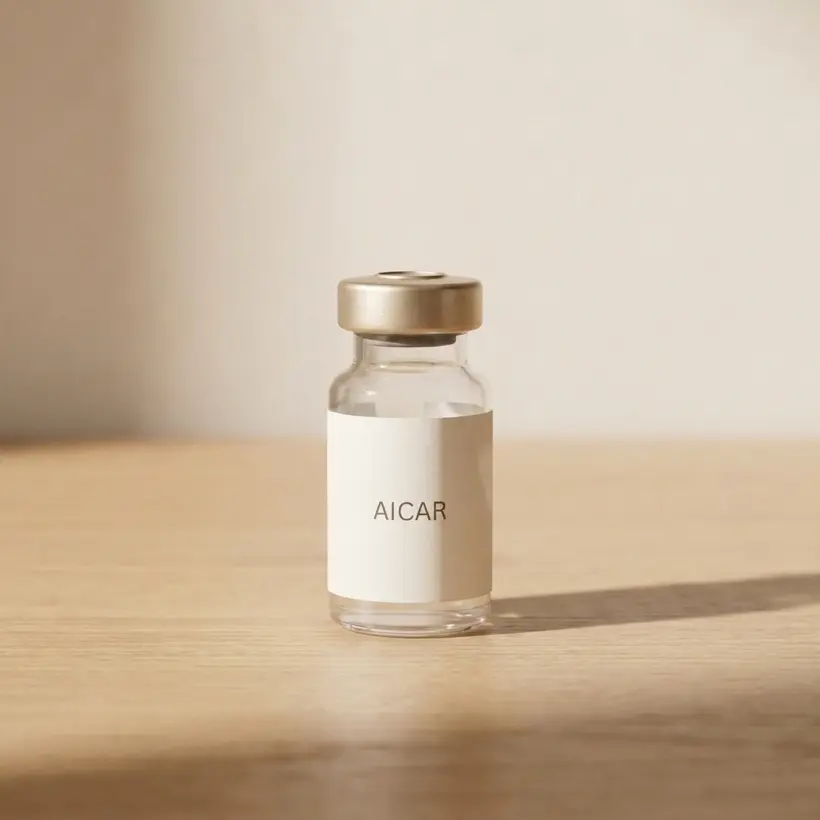
AICAR (5-Aminoimidazole-4-carboxamide ribonucleoside, also known as acadesine) is a cell-permeable nucleoside analog with the molecular formula C9H14N4O5, a molecular weight of approximately 258 Da, and CAS number 2627-69-2. It is an intermediate in the de novo purine biosynthesis pathway and has been studied extensively as a pharmacological activator of AMP-activated protein kinase (AMPK), the master cellular energy sensor that coordinates metabolic responses to energy stress.
The mechanism of action begins with cellular uptake of AICAR via adenosine transporters, followed by intracellular phosphorylation by adenosine kinase to form ZMP (5-aminoimidazole-4-carboxamide ribonucleotide monophosphate). ZMP is an AMP mimetic that binds to the gamma subunit of AMPK, promoting allosteric activation and protecting the activating phosphorylation on Thr172 of the alpha subunit from dephosphorylation by protein phosphatases. Once activated, AMPK triggers a thorough metabolic switch from anabolic (energy-storing) to catabolic (energy-burning) programs: fatty acid oxidation increases via phosphorylation and inactivation of acetyl-CoA carboxylase (ACC), glucose uptake increases via GLUT4 translocation to the cell membrane, mitochondrial biogenesis is stimulated via PGC-1alpha transcriptional activation, and energy-consuming processes (protein synthesis via mTORC1 inhibition, lipogenesis, gluconeogenesis) are suppressed.
The landmark study establishing AICAR as an exercise mimetic was published in Cell (2008, DOI: 10.1016/j.cell.2008.06.051) by Narkar et al. at the Salk Institute. Sedentary mice treated with AICAR for 4 weeks, without any exercise training, showed a 44% increase in running endurance on treadmill testing. The mice developed increased proportions of oxidative (type I) muscle fibers, elevated mitochondrial density, and enhanced fatty acid oxidation capacity, all adaptations that normally require weeks of endurance training. This study provided the first evidence that a single pharmacological agent could replicate the metabolic benefits of exercise without physical activity.
AICAR also improves insulin sensitivity through an insulin-independent mechanism. GLUT4 translocation to the cell surface in skeletal muscle occurs through AMPK-dependent signaling that bypasses the insulin receptor/IRS/PI3K pathway entirely. This means AICAR can drive glucose uptake into muscle even when insulin signaling is impaired, as in type 2 diabetes. This mechanism is additive to insulin's effects and has been demonstrated in both animal models and human skeletal muscle biopsy studies.
In clinical medicine, AICAR (as acadesine) has been studied as a cardioprotective agent during coronary artery bypass graft (CABG) surgery. A Phase 3 clinical trial (MACE Trial, ~2700 patients) evaluated AICAR infusion during cardiac surgery for reduction of myocardial infarction, stroke, and death. AICAR maintains cellular energy balance during ischemia-reperfusion injury by preserving adenine nucleotide pools and activating pro-survival AMPK signaling in cardiomyocytes.
Pharmacokinetically, AICAR has a plasma half-life of approximately 1.5-2 hours after intravenous infusion. It is water-soluble and distributes widely to skeletal muscle, liver, and cardiac tissue. Oral bioavailability has been estimated at 30-50% in animal models. The compound is cleared primarily through renal excretion of the parent compound and its metabolites.
For storage, AICAR lyophilized powder should be stored at -20C for long-term stability or 2-8C for up to 30 days. Reconstitute with bacteriostatic water or sterile 0.9% saline. Reconstituted solutions should be kept at 2-8C and used within 14 days. The compound is stable in aqueous solution at pH 5-7. Protect from light.
Safety observations from clinical trials show AICAR is generally well-tolerated at therapeutic doses. The most commonly reported effects in cardiac surgery trials were transient elevations in uric acid (a metabolic byproduct of purine metabolism) and mild lactic acidosis at high doses. Hypoglycemia is possible due to the insulin-independent glucose uptake mechanism, particularly in fasted states. No hepatotoxicity, nephrotoxicity, or bone marrow suppression has been observed. AICAR was added to the World Anti-Doping Agency (WADA) prohibited list in 2011 due to its exercise-mimetic properties.