
Deep research
About HGH Fragment 176-191
HGH Fragment 176-191 is a modified peptide corresponding to amino acids 176-191 of the human growth hormone (hGH) polypeptide chain, with an approximate molecular weight of 1817 Da. The sequence corresponds to the C-terminal portion of the GH molecule that was identified through systematic truncation studies at Monash University (Melbourne, Australia) as the region responsible for the lipolytic (fat-burning) activity of growth hormone, separate from its growth-promoting, diabetogenic, and IGF-1-stimulating properties.
The mechanism of action involves stimulation of lipolysis (triglyceride breakdown) in adipocytes through activation of hormone-sensitive lipase (HSL), the rate-limiting enzyme that hydrolyzes stored triglycerides into free fatty acids and glycerol for oxidation. The fragment activates HSL through a pathway independent of beta-3 adrenergic receptor signaling, which is the conventional route by which catecholamines (epinephrine, norepinephrine) mobilize fat. This mechanistic distinction is clinically significant because beta-adrenergic receptors downregulate with chronic stimulant use, aging, and obesity, making conventional lipolytic stimuli less effective. Fragment 176-191 bypasses this limitation entirely.
Monash University research demonstrated that Fragment 176-191 stimulates lipolysis 12.5 times more potently than full-length human growth hormone in isolated fat cell assays. Simultaneously, it inhibits lipogenesis (new fat synthesis from glucose and other substrates) in adipose tissue, creating a dual anti-adiposity effect. Critically, the fragment does not compete with full-length GH for binding to the GH receptor in growth-related tissues, meaning it does not affect blood glucose levels, insulin sensitivity, IGF-1 production, or somatic growth. This selectivity for fat metabolism without metabolic side effects distinguishes it from full-length GH administration.
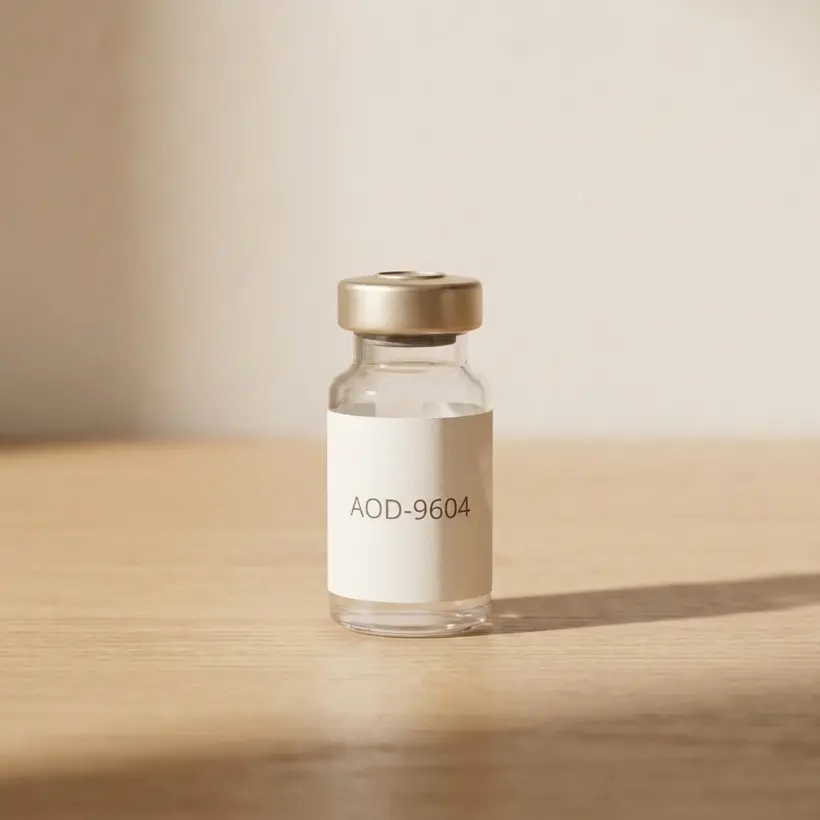
Phase 2 clinical trials in obese subjects (BMI 30-40) demonstrated statistically significant reductions in body fat over 12 weeks of daily subcutaneous injection. No changes in glucose tolerance (OGTT), fasting insulin, IGF-1 levels, or any growth-related parameters were observed, confirming the metabolic selectivity seen in preclinical studies. The modified version, AOD-9604 (Anti-Obesity Drug 9604), which includes a tyrosine modification at position 182, received FDA GRAS (Generally Recognized As Safe) status in 2010 for use as a food ingredient.
Pharmacokinetically, Fragment 176-191 has a plasma half-life of approximately 15-30 minutes after subcutaneous injection. The short half-life means the lipolytic effect is pulsatile rather than sustained, which may actually be advantageous in mimicking the natural pulsatile pattern of GH-mediated fat mobilization that occurs during sleep and fasting. Peak fatty acid mobilization occurs 1-2 hours after injection. The fragment is cleared by renal and hepatic peptidases.
For storage, the lyophilized peptide should be stored at -20C for long-term stability or 2-8C for up to 30 days. Reconstitute with bacteriostatic water for injection. Reconstituted solutions should be kept at 2-8C and used within 21 days. The peptide is stable at pH 5-7 in aqueous solution. Protect from light and avoid repeated freeze-thaw cycles. The absence of disulfide bonds in this fragment makes it more stable than full-length GH.
Safety data from Phase 2 clinical trials showed Fragment 176-191 / AOD-9604 was well-tolerated with no significant adverse events beyond mild injection site reactions. No changes in glucose metabolism, thyroid function, cortisol levels, or hematological parameters were observed. The FDA GRAS designation for AOD-9604 provides additional safety assurance. No cardiovascular adverse events, fluid retention, or carpal tunnel syndrome (side effects associated with full-length GH) have been reported. The fragment does not promote tumor growth or IGF-1-dependent cell proliferation.