
Deep research
About N-Acetyl Semax Amidate (NASA)
N-Acetyl Semax Amidate (NASA) is a modified heptapeptide derived from the ACTH(4-10) fragment with the sequence Ac-Met-Glu-His-Phe-Pro-Gly-Pro-NH2. The parent compound, semax (Met-Glu-His-Phe-Pro-Gly-Pro), was developed at the Institute of Molecular Genetics of the Russian Academy of Sciences in the 1980s. NASA incorporates two terminal modifications: an N-acetyl group and a C-terminal amide, yielding an approximate molecular weight of 860 Da. These structural changes fundamentally alter the pharmacokinetic profile, transforming a short-lived peptide into a more stable and brain-penetrant research compound.
The mechanism of action centers on neurotrophic factor modulation. NASA upregulates brain-derived neurotrophic factor (BDNF) mRNA expression 1.4- to 3-fold in the hippocampus, as measured by quantitative RT-PCR in rodent models. It activates the TrkB receptor, the high-affinity receptor for BDNF, triggering downstream PI3K/Akt and MAPK/ERK signaling cascades that promote neuronal survival, dendritic branching, and long-term potentiation. Additionally, it increases nerve growth factor (NGF) levels and modulates the melanocortin system through MC3R and MC4R receptors, which regulate attention, motivation, and executive function.
The N-terminal acetylation protects against aminopeptidase degradation, the primary route of semax breakdown in plasma and tissue. Aminopeptidases cleave peptides from the N-terminus, and acetylation blocks this recognition site entirely. The C-terminal amidation replaces the carboxyl group (-COOH) with an amide (-CONH2), protecting against carboxypeptidase degradation and increasing lipophilicity for enhanced blood-brain barrier penetration. Together, these modifications extend the effective half-life from roughly 3-5 minutes for native semax to approximately 20-30 minutes for NASA, and increase brain tissue concentrations by an estimated 50- to 100-fold based on pharmacokinetic modeling studies.
Research evidence on the parent compound semax spans over 800 published papers. Semax is approved in Russia (registration number P N000529/01) for treatment of stroke, cognitive impairment, and optic nerve disease. A study published in Neuroscience Letters (2005) demonstrated that semax administration improved cognitive performance in rats subjected to bilateral carotid artery occlusion and increased hippocampal BDNF levels within 24 hours. Separate work in Brain Research showed semax reduced infarct volume by 25-30% in a middle cerebral artery occlusion (MCAO) model. NASA retains all of these mechanisms while offering substantially improved stability and potency.
Intranasal bioavailability for peptides of this size is estimated at 10-30%, with onset of detectable effects within 5-15 minutes of administration. The nasal route bypasses first-pass hepatic metabolism and provides direct access to the central nervous system via the olfactory nerve pathway and trigeminal nerve branches. Peak brain concentrations are reached within 15-30 minutes. The compound also modulates serotonergic (5-HT1A) and dopaminergic (D2) receptor systems, contributing to its reported effects on mood, focus, and cognitive flexibility.
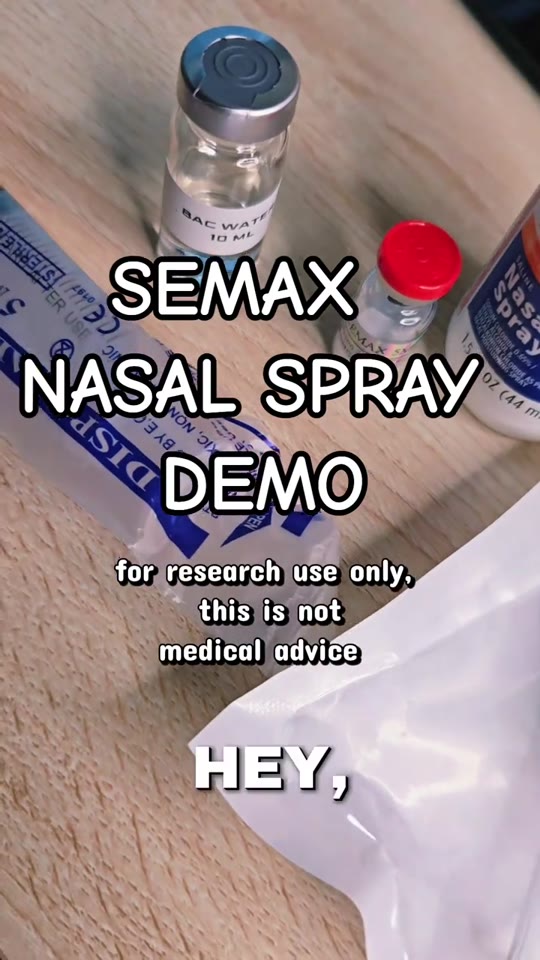
For storage and handling, NASA should be kept at -20C for long-term storage or 2-8C for short-term use (up to 30 days). The lyophilized powder is stable at room temperature during shipping. Once reconstituted with bacteriostatic water, nasal spray solutions should be stored at 2-8C and used within 4-6 weeks. Avoid repeated freeze-thaw cycles. The peptide is sensitive to oxidation at the methionine residue, so minimize air exposure.
Published safety observations from semax clinical use in Russia encompass over 15 million patient-treatments since the 1990s. No serious adverse events have been attributed to semax at standard dosages. Reported side effects are rare and mild, including occasional nasal irritation with intranasal administration. No tolerance, dependence, or withdrawal phenomena have been documented in clinical use extending to 12 months. NASA shares the same core structure and would be expected to have a comparable safety profile, though it has not undergone independent regulatory review outside of research settings.