Key Takeaway
Complete TB-4 safety profile. Side effects, contraindications, theoretical concerns, drug interactions, and what your physician should monitor.
Quick Answer: Thymosin Beta-4 safety profile is favorable based on available evidence. As a naturally occurring peptide present in virtually every human cell, TB-4 is generally well-tolerated. The Phase II clinical trial of topical TB-4 (RGN-259) reported no serious adverse events attributable to the peptide. Common side effects of systemic TB-4 are mild: temporary fatigue, injection site reactions, and occasional headache. The primary theoretical concern is TB-4's cell migration and angiogenesis effects in patients with active cancer .
Safety Evidence
- Natural peptide: TB-4 is endogenous (your body already produces it), which reduces the risk of immune reactions or foreign body responses
- Clinical trial safety: The Phase II RGN-259 trials demonstrated a safety profile comparable to placebo for topical application
- Veterinary safety record: Extensive use in equine medicine has shown no significant safety signals
- No dose-limiting toxicity: Preclinical studies haven't identified a dose at which TB-4 becomes toxic, suggesting a wide therapeutic window
Known Side Effects
| Side Effect | Frequency | Severity | Duration |
|---|---|---|---|
| Temporary fatigue | Common (20-30%) | Mild | 3-7 days |
| Injection site reaction | Common (15-20%) | Mild | 24-48 hours |
| Headache | Occasional (10-15%) | Mild | 1-2 weeks |
| Nausea | Occasional (5-10%) | Mild | Hours post-injection |
| Flu-like symptoms | Occasional (5-10%) | Mild | 1-3 days |
| Lightheadedness | Rare (2-5%) | Mild | Minutes post-injection |
Contraindications
- Active cancer: TB-4 promotes cell migration and angiogenesis, which could theoretically benefit tumors. Absolute contraindication
- Recent cancer history: Discuss with your oncologist. Timeframe varies by cancer type and treatment response
- Pregnancy and breastfeeding: Safety not established. Avoid use
- Known hypersensitivity: Rare, but if allergic reaction occurs, discontinue immediately
Theoretical Cancer Concern
The most frequently discussed safety concern is TB-4's relationship with cancer:
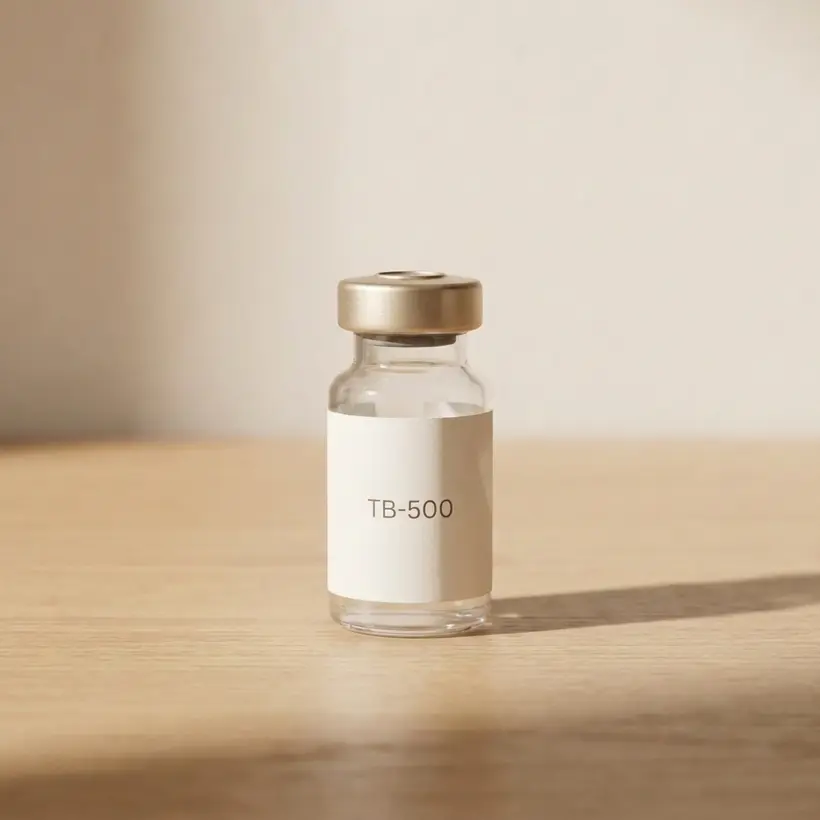
From the FormBlends catalog
TB-500 (Thymosin Beta-4)
Universal repair peptide for tissue regeneration · From $49/mo · compounded by a licensed 503A pharmacy, dispensed only after provider review.
Learn about TB-500 (Thymosin Beta-4) →View data table
| Category | Clinical Interest Score | Detail |
|---|---|---|
| BPC-157 | 88 | Tissue repair and gut healing |
| TB-500 | 82 | Injury recovery |
| Sermorelin | 78 | Growth hormone support |
| Ipamorelin | 75 | Anti-aging and recovery |
| GHK-Cu | 70 | Skin and tissue repair |
- TB-4 levels are improved in some tumor types
- TB-4's cell migration effects could theoretically promote metastasis
- TB-4's angiogenesis could theoretically support tumor blood supply
However:
- No clinical evidence links TB-4 administration to cancer development
- improved TB-4 in tumors may be a consequence rather than a cause of cancer
- Some research suggests TB-4 may have anti-tumor properties in certain contexts
Until this question is definitively answered, the precautionary contraindication for active cancer remains appropriate.
Drug Interactions
No significant drug interactions have been documented for TB-4. However:
- Inform your physician of all medications you take
- If taking anticoagulants, monitor for any changes in bleeding tendency (TB-4's angiogenic effects are theoretical)
- If on immunosuppressive medications, discuss potential immune-modulating interactions
Frequently Asked Questions
Is TB-4 safe for long-term use?
Long-term controlled safety data is limited. Most protocols use TB-4 in defined treatment courses (8-12 weeks) rather than indefinite use. This approach provides the repair benefits while minimizing long-term exposure.
Can TB-4 cause organ damage?
No evidence suggests TB-4 causes organ damage. TB-4 is present throughout the body naturally and its supplementation appears to amplify existing repair processes rather than introduce foreign mechanisms.
Is TB-4 safe to use with BPC-157?
Yes. The TB-4 + BPC-157 combination is widely used with no documented interactions or additive side effects. Both peptides have favorable safety profiles individually and in combination.
Medical References
- Goldstein AL, Hannappel E, Sosne G, Kleinman HK. Thymosin beta4: a multi-functional regenerative peptide. Basic properties and clinical applications. Expert Opin Biol Ther. 2012;12(1):37-51. [PubMed | DOI]
Safe, Monitored Treatment
At FormBlends, patient safety is critical. Our physicians screen appropriately, monitor your response, and adjust protocols to ensure the safest possible experience.
Disclaimer: This article is for informational purposes only and doesn't constitute medical advice. Thymosin Beta-4 isn't FDA-approved for any medical condition. Always consult with a licensed healthcare provider. Individual results may vary.
Ready when you are
TB-500 (Thymosin Beta-4)
Universal repair peptide for tissue regeneration · From $49/mo · compounded by a licensed 503A pharmacy, dispensed only after provider review.
Learn about TB-500 (Thymosin Beta-4) →