Ipamorelin is one of the more discussed growth hormone peptides, often described as selective and well tolerated. Looking at what is actually known about its safety helps separate reputation from evidence.
Quick answer: Ipamorelin is a synthetic peptide that stimulates the body's own growth hormone release by acting on the ghrelin receptor. It is a research peptide, not an FDA-approved drug, and human clinical data are limited. In early studies it appeared relatively selective, with less effect on cortisol and prolactin than some other secretagogues, and reported side effects were generally mild. Because it lacks large long-term human safety trials and FDA approval, its full safety profile is not fully established. Anyone considering it should do so only with a clinician.
Is ipamorelin safe?
The honest answer is that ipamorelin's safety is not fully established, because it has not undergone the large, long-term human trials required for FDA approval. What exists is early research and reports describing it as relatively well tolerated, with a selective action that, in early studies, caused less rise in cortisol and prolactin than some other growth hormone secretagogues. That selectivity is the basis for its reputation. But "appeared well tolerated in limited studies" is different from "proven safe over years," and that distinction matters when judging any research peptide.
Is ipamorelin an FDA-approved drug?
No. Ipamorelin is not an FDA-approved medication. It is used as a research peptide, and access through compounding pharmacies narrowed after the FDA tightened rules on compounding several research peptides. Its lack of approval means it has not been reviewed for safety and effectiveness the way approved drugs are, and product quality can vary by source. This regulatory status is one of the most important parts of its safety picture.
What are the reported side effects of ipamorelin?
| Reported effect | Notes |
|---|---|
| Injection site reactions | Redness or irritation at the site |
| Headache | Reported in some users |
| Flushing or warmth | Possible with secretagogues |
| Water retention | Associated with growth hormone effects |
| Lightheadedness | Reported by some |
| Increased appetite | Ghrelin receptor activity can raise appetite |
These reflect commonly described effects rather than a complete, trial-verified list. Because rigorous long-term human data are limited, rarer or longer-term effects are not well characterized. Effects related to raising growth hormone, such as effects on blood sugar or fluid balance, are worth discussing with a clinician.
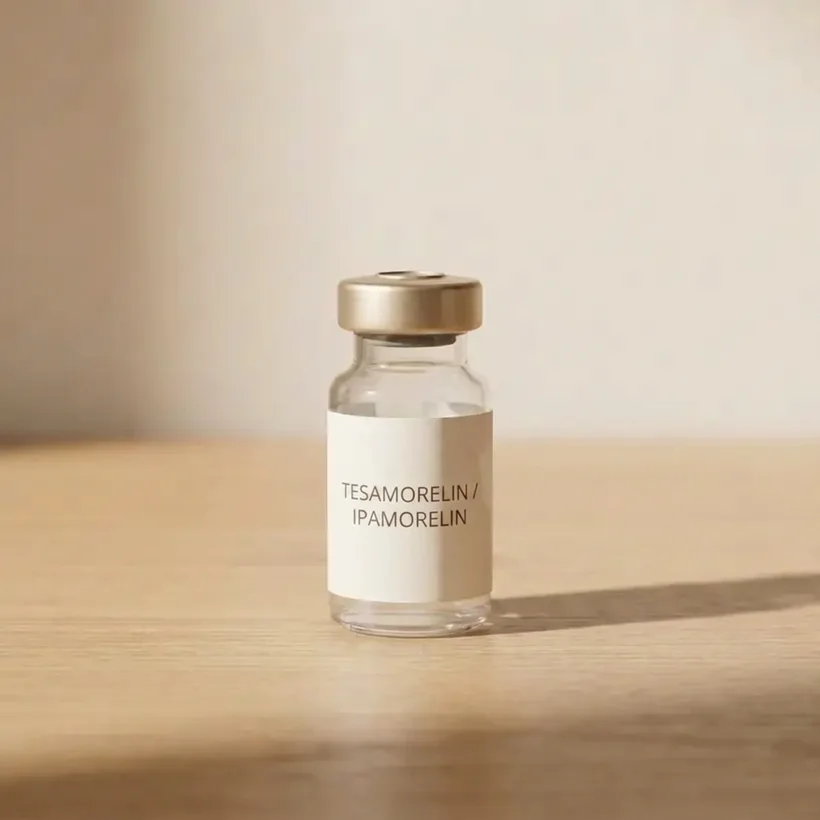
From the FormBlends catalog
Tesamorelin / Ipamorelin Blend
Growth-hormone pathway support in one blend · From $299/mo · compounded by a licensed 503A pharmacy, dispensed only after provider review.
View Tesamorelin / Ipamorelin Blend →What are the contraindications and cautions for peptide therapy?
General cautions for growth-hormone-stimulating peptides include active cancer, since raising growth hormone and IGF-1 is a theoretical concern with malignancy, as well as pregnancy and breastfeeding, and caution with conditions affected by blood sugar or fluid balance. People on other medications or with significant health conditions should be especially careful. Because ipamorelin is not an approved drug, there is no official labeled contraindication list the way there is for approved medicines, which is why clinician involvement is important.
Does ipamorelin interact with other drugs?
Formal drug-interaction data for ipamorelin are limited, again because it has not been through the studies approved drugs undergo. Theoretically, anything affecting growth hormone, blood sugar, or fluid balance could interact with its effects, and combining it with other hormone-active compounds increases uncertainty. The safest approach is to share your full medication and supplement list with a clinician before considering it, rather than assuming no interactions exist.
What does the human research show?
Human research on ipamorelin is limited, with much evidence coming from early studies and animal models examining growth hormone secretion and tolerability. Early work supported its reputation for selectivity, but the body of large, long-term human safety and outcome data that would firmly establish its profile does not exist. That gap is the central caveat: ipamorelin is interesting and relatively selective in early studies, but not proven over time in humans.
What this means for you
Treat ipamorelin as an unapproved research peptide with an incomplete safety picture, not as a vetted medicine. If you are interested, involve a clinician, understand the regulatory status, and be cautious about sourcing and claims. FormBlends focuses on medically supervised weight management with compounded semaglutide and tirzepatide; see our provider comparison tool if weight is your goal.
Frequently asked questions
Is ipamorelin safe?
Its safety is not fully established due to limited long-term human data and no FDA approval, though early studies described it as relatively well tolerated.
Is ipamorelin FDA-approved?
No. It is a research peptide, not an approved drug.
What side effects are reported?
Injection site reactions, headache, flushing, water retention, lightheadedness, and increased appetite, among others.
Who should avoid it?
General cautions include active cancer, pregnancy, breastfeeding, and conditions affected by blood sugar or fluid balance; discuss with a clinician.
Does it interact with other drugs?
Formal interaction data are limited; share your full medication list with a clinician.
Is it more selective than other peptides?
Early studies suggested less effect on cortisol and prolactin than some other secretagogues.
Can I get it from a compounding pharmacy?
Access narrowed after the FDA restricted compounding of several research peptides.
Sources
- PubMed listings for ipamorelin and growth hormone secretagogues: https://pubmed.ncbi.nlm.nih.gov/
- FDA on compounding of certain peptides: https://www.fda.gov/drugs/human-drug-compounding
Related guides
- CJC-1295/Ipamorelin Safety Profile: Complete Guide
- Ipamorelin Side Effects: Complete Safety Profile | FormBlends
- Are Compounded Semaglutides Safe? The Evidence-Based Safety Profile Decoder
- BPC-157 Safety Profile: Complete Guide
- Cerebrolysin Safety Profile: Complete Guide
- GHK-Cu Safety Profile: Complete Guide
- Tool: side-effect checker
Ready when you are
Tesamorelin / Ipamorelin Blend
Growth-hormone pathway support in one blend · From $299/mo · compounded by a licensed 503A pharmacy, dispensed only after provider review.
View Tesamorelin / Ipamorelin Blend →