Key Takeaway
Thymosin Beta-4 (TB-500) dosage guide. Loading and maintenance phases, dosing by condition, frequency, and physician-guided protocols.
Quick Answer: Thymosin Beta-4 dosage guide typically follows a two-phase approach: a loading phase of 2 to 4 weeks at higher doses, followed by a maintenance phase at reduced doses. Common loading doses range from 750 mcg to 2.5 mg injected subcutaneously twice per week. Maintenance doses are typically half the loading dose, administered once or twice weekly. Your physician will determine the exact protocol based on your condition, body weight, and treatment goals .
Standard Dosing Protocol
| Phase | Dose | Frequency | Duration |
|---|---|---|---|
| Loading phase | 2-2.5 mg | 2x per week | 2-4 weeks |
| Maintenance phase | 1-1.5 mg | 1-2x per week | 4-8 weeks |
| Low-dose maintenance | 750 mcg | 1-2x per week | As directed |
The loading phase delivers higher doses to saturate tissue levels and initiate the repair cascade. Once healing is well underway, the maintenance phase sustains the benefit at lower doses .
Dosing by Condition
Acute Injury (Tendon, Ligament, Muscle)
- Loading: 2-2.5 mg twice weekly for 4 weeks
- Maintenance: 1-1.5 mg twice weekly for 4-6 weeks
- Total course: 8-10 weeks
Chronic Tendinopathy
- Loading: 2 mg twice weekly for 2-3 weeks
- Maintenance: 1 mg twice weekly for 6-8 weeks
- May require multiple treatment courses with breaks between
Wound Healing (Surgical, Skin)
- Loading: 1.5-2 mg twice weekly for 2 weeks
- Maintenance: 750 mcg-1 mg twice weekly until healed
- Start 1-2 weeks before elective surgery when possible
Hair Growth
- Loading: 2 mg twice weekly for 4 weeks
- Maintenance: 1 mg once weekly for 8-12 weeks
- Results take 2-3 months. longer treatment courses often needed
General Recovery and Wellness
- 750 mcg-1 mg twice weekly for 4-8 weeks
- Cycle off for 4-6 weeks, then reassess
Dosing Considerations
- Body weight: Larger individuals may require doses at the higher end of the range. Some practitioners dose at approximately 20-30 mcg per kg of body weight
- Severity of injury: More severe or chronic injuries typically warrant the loading phase approach, while minor injuries may respond to maintenance-level doses from the start
- Combination therapy: When combined with BPC-157, some physicians reduce the TB-4 dose slightly since both peptides support healing through complementary mechanisms
- Timing: TB-4 can be injected at any time of day. Some patients prefer morning dosing for convenience, while others inject at night to sleep through any initial fatigue
Injection Frequency and Timing
TB-4 has a relatively long half-life compared to some peptides, estimated at 2-3 hours in circulation but with tissue effects lasting much longer due to its intracellular mechanism of action. This is why twice-weekly dosing is sufficient for most protocols rather than daily injections .
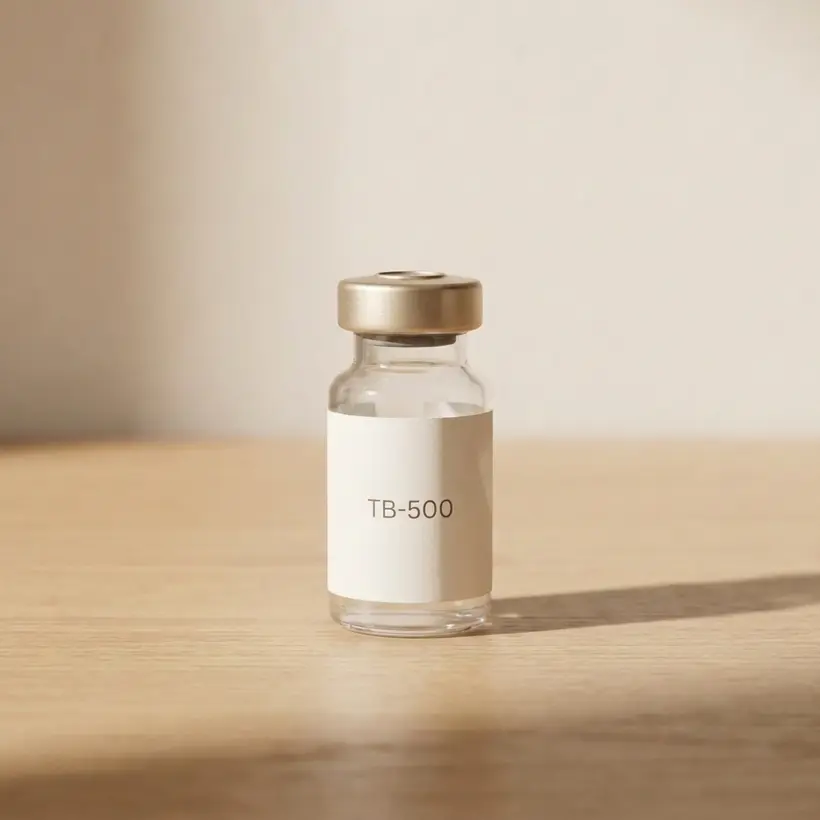
From the FormBlends catalog
TB-500 (Thymosin Beta-4)
Universal repair peptide for tissue regeneration · From $49/mo · compounded by a licensed 503A pharmacy, dispensed only after provider review.
Learn about TB-500 (Thymosin Beta-4) →View data table
| Category | Clinical Interest Score | Detail |
|---|---|---|
| BPC-157 | 88 | Tissue repair and gut healing |
| TB-500 | 82 | Injury recovery |
| Sermorelin | 78 | Growth hormone support |
| Ipamorelin | 75 | Anti-aging and recovery |
| GHK-Cu | 70 | Skin and tissue repair |

Space injections evenly throughout the week (for example, Monday and Thursday, or Tuesday and Friday) for consistent tissue levels.
Frequently Asked Questions
Can I take more for faster healing?
Higher doses don't necessarily produce faster results and may increase side effects. Research shows a dose-response relationship up to a point, beyond which additional TB-4 provides diminishing returns. Follow your prescribed protocol.
What if I miss a dose?
Take the missed dose as soon as you remember, then resume your regular schedule. Don't double the next dose. TB-4's tissue effects are cumulative, so a single missed dose won't significantly impact your overall results.
How do I know if the dose is working?
Signs your dose is effective include reduced pain and swelling at injury sites (week 1-2), improved range of motion (week 2-4), and measurable healing progress on imaging or physical exam (week 4-8). If no improvement is seen after 4 weeks, discuss dose adjustment with your physician.
Medical References
- Goldstein AL, Hannappel E, Sosne G, Kleinman HK. Thymosin beta4: a multi-functional regenerative peptide. Basic properties and clinical applications. Expert Opin Biol Ther. 2012;12(1):37-51. [PubMed | DOI]
Get Your Personalized Protocol
At FormBlends, our physicians determine the optimal TB-4 dosing strategy for your specific condition and goals.
Disclaimer: This article is for informational purposes only and doesn't constitute medical advice. Thymosin Beta-4 isn't FDA-approved for any medical condition. Always consult with a licensed healthcare provider. Individual results may vary.
Ready when you are
TB-500 (Thymosin Beta-4)
Universal repair peptide for tissue regeneration · From $49/mo · compounded by a licensed 503A pharmacy, dispensed only after provider review.
Learn about TB-500 (Thymosin Beta-4) →