
Deep research
About Gonadorelin (GnRH)
Gonadorelin is the synthetic form of endogenous gonadotropin-releasing hormone (GnRH), a decapeptide with the sequence pyro-Glu-His-Trp-Ser-Tyr-Gly-Leu-Arg-Pro-Gly-NH2 and a molecular weight of approximately 1182 Da. The pyroglutamate at the N-terminus and the amide at the C-terminus are important for biological activity and provide some protection against exopeptidase degradation. Gonadorelin is bioidentical to the human hormone and was one of the first peptide hormones to be synthetically produced, with its structure elucidated by Andrew Schally and Roger Guillemin, who shared the 1977 Nobel Prize in Physiology or Medicine for this discovery.
The mechanism of action involves direct stimulation of GnRH receptors (GnRHR) on gonadotroph cells of the anterior pituitary gland. GnRHR is a seven-transmembrane G-protein-coupled receptor that signals through Gq/11, activating phospholipase C, generating IP3 and DAG, mobilizing intracellular calcium, and activating protein kinase C. This signaling cascade triggers exocytosis of secretory granules containing LH (luteinizing hormone) and FSH (follicle-stimulating hormone). Critically, the pattern of GnRH delivery determines the biological response: pulsatile administration (mimicking the natural hypothalamic secretion pattern of one pulse every 60-120 minutes) stimulates LH and FSH release, while continuous administration paradoxically suppresses gonadotropin secretion through receptor downregulation.
Gonadorelin is particularly valuable in the context of testosterone replacement therapy (TRT) and other hormonal protocols. Exogenous testosterone activates negative feedback at the hypothalamus and pituitary, suppressing endogenous GnRH, LH, and FSH secretion. This causes intratesticular testosterone to drop by 80-95% (normal intratesticular testosterone is 40-100x higher than serum levels), leading to testicular atrophy (average 20-25% volume loss over 6-12 months) and cessation of spermatogenesis. Pulsatile gonadorelin administration maintains LH and FSH signaling, preserving testicular volume, intratesticular testosterone, and sperm production during TRT.
Clinical evidence for gonadorelin is extensive. In the treatment of hypogonadotropic hypogonadism, pulsatile GnRH (delivered by a portable pump at 90-120 minute intervals) restores fertility in over 80% of patients, with normal sperm parameters achieved in 6-12 months. The New England Journal of Medicine, Journal of Clinical Endocrinology & Metabolism, and Fertility and Sterility have published landmark studies on this approach. Gonadorelin has FDA-approved diagnostic use as Factrel for assessment of pituitary gonadotroph reserve.
Pharmacokinetically, gonadorelin has a plasma half-life of approximately 2-4 minutes after intravenous injection and 10-40 minutes after subcutaneous injection. The short half-life is actually advantageous for its intended use: it allows each dose to produce a discrete pulse of LH/FSH release that mimics the natural pulsatile pattern, avoiding the receptor desensitization that occurs with continuous GnRH exposure. Subcutaneous bioavailability is approximately 75-80%.
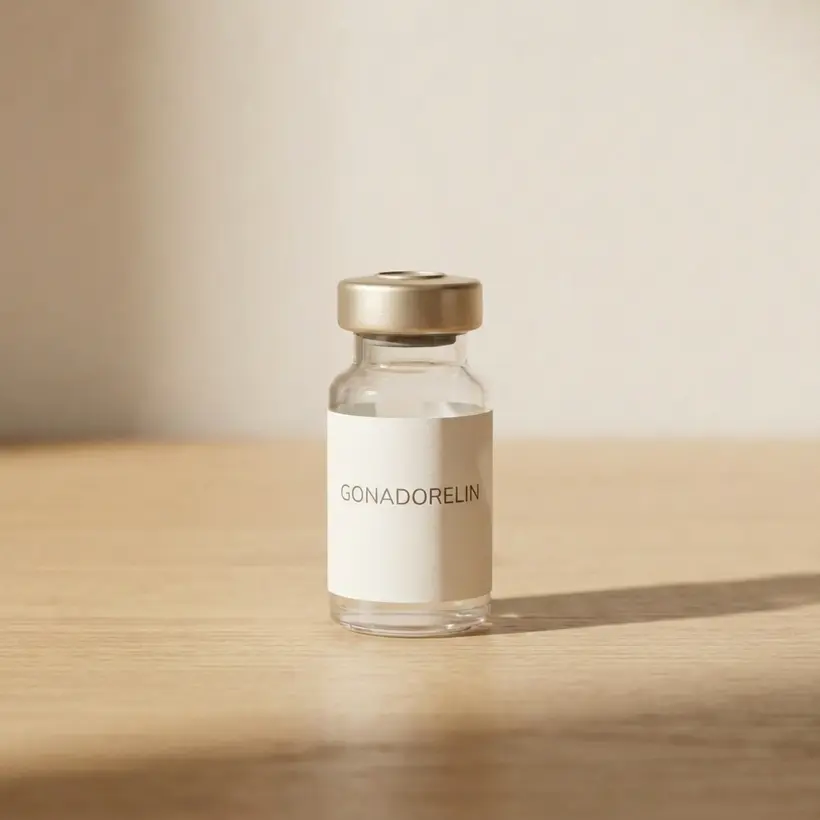
For storage, gonadorelin lyophilized powder should be stored at 2-8C (refrigerated) or -20C for long-term storage. Reconstitute with bacteriostatic water for injection. Reconstituted multi-dose vials should be stored at 2-8C and used within 28 days. The peptide is stable at pH 4-7 in aqueous solution. Protect from light and avoid repeated freeze-thaw cycles. The pyroglutamate and C-terminal amide provide moderate stability, but the peptide is susceptible to enzymatic degradation if stored at room temperature for extended periods.
The safety profile of gonadorelin is well-established through decades of clinical use and FDA review. Adverse effects at standard doses are uncommon and typically mild: headache, flushing, nausea, and injection site reactions occur in fewer than 5% of patients. Allergic reactions are rare. There is no hepatotoxicity, nephrotoxicity, or cardiovascular risk associated with gonadorelin use. Importantly, gonadorelin does not cause the testosterone flare seen with long-acting GnRH agonists (leuprolide, goserelin) because its short half-life prevents the sustained receptor activation needed for desensitization. It does not interfere with exogenous testosterone pharmacokinetics.