Key Takeaways
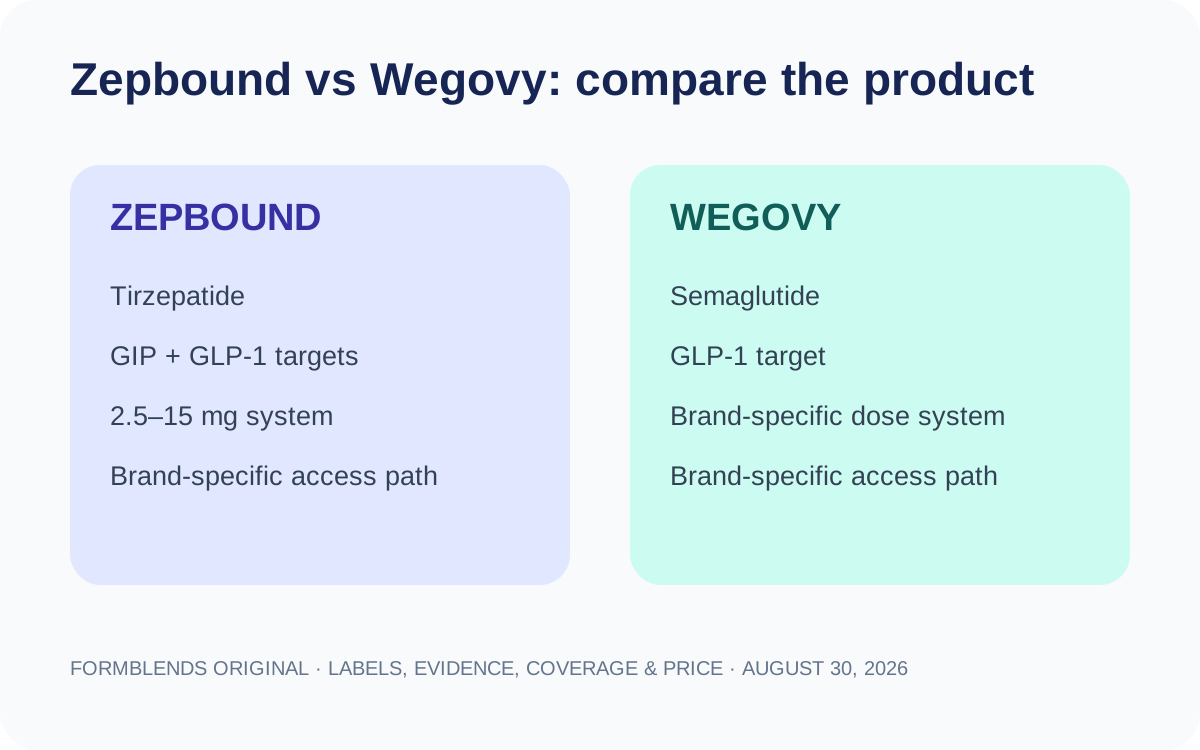
- Zepbound contains tirzepatide (dual GLP-1/GIP agonist); Wegovy contains semaglutide (GLP-1-only agonist). The dual mechanism produces 5% to 6% greater weight loss on average.
- SURMOUNT-1 showed 20.9% average weight loss at 72 weeks on tirzepatide 15 mg vs 14.9% on semaglutide 2.4 mg in STEP 1, both vs placebo.
- Tirzepatide has higher nausea rates (29% vs 20%) but lower reported vomiting rates (9% vs 10%) than semaglutide at maintenance doses.
- Brand-name Zepbound costs $1,060 per month; Wegovy costs $1,349 per month. Compounded versions of both run $250 to $450 per month depending on dose and pharmacy.
The short answer
Zepbound uses tirzepatide, a dual GLP-1 and GIP receptor agonist, while Wegovy uses semaglutide, a GLP-1-only agonist. Tirzepatide produces about 6% more total body weight loss on average but has slightly higher nausea rates. Both are weekly injections. Zepbound is newer (FDA approved 2023 for obesity) and costs less than Wegovy at list price.
Table of contents
- The core difference: one receptor vs two
- Head-to-head efficacy: what the trials actually show
- Side effect profiles compared
- Dosing schedules and titration differences
- Cost comparison: brand-name and compounded
- What most articles get wrong about GIP's role
- The clinical pattern: who responds better to which drug
- When Wegovy is the better choice
- The compounded tirzepatide vs compounded semaglutide question
- Insurance coverage differences in 2026
- FAQ
- Sources
The core difference: one receptor vs two
The fundamental difference is molecular target.
Not sure which GLP-1 is right for you?
Take a 2-minute assessment and get a personalized recommendation after licensed provider review.
Take the Assessment →Semaglutide (Wegovy) is a GLP-1 receptor agonist. It binds to and activates the glucagon-like peptide-1 (GLP-1) receptor in the pancreas, stomach, and brain. GLP-1 receptor activation does three things:
- Slows gastric emptying (food stays in the stomach longer, creating satiety)
- Increases insulin secretion in response to food
- Acts on hypothalamic appetite centers to reduce hunger signaling
Tirzepatide (Zepbound) is a dual GLP-1 and GIP receptor agonist. It activates both the GLP-1 receptor and the glucose-dependent insulinotropic polypeptide (GIP) receptor. The GIP receptor is primarily found in the pancreas, fat tissue, and brain. GIP receptor activation adds:
- Enhanced insulin secretion beyond GLP-1 alone
- Altered fat metabolism and storage signaling in adipose tissue
- Additional central appetite suppression through separate pathways from GLP-1
The dual mechanism is why tirzepatide consistently produces greater weight loss in clinical trials. You're hitting appetite regulation from two separate receptor systems instead of one.
The chemical structures differ as well. Semaglutide is 94% homologous to native human GLP-1 with modifications to extend half-life. Tirzepatide is a synthetic peptide engineered to bind both receptors with high affinity. Both are administered subcutaneously once weekly.
A 2022 paper in Cell Metabolism (Samms et al.) demonstrated that GIP receptor activation alone produces minimal weight loss, but when combined with GLP-1 activation, the effect is synergistic rather than additive. The dual mechanism produces roughly 30% more weight loss than GLP-1 activation alone in preclinical models, which translates to the 5% to 6% difference seen in human trials.
Head-to-head efficacy: what the trials actually show
No direct randomized head-to-head trial of tirzepatide vs semaglutide for obesity has been published as of April 2026. The comparison comes from parallel trials using similar placebo-controlled designs.
| Trial | Drug | Dose | Duration | Mean weight loss | Placebo weight loss | Patients achieving ≥20% loss |
|---|---|---|---|---|---|---|
| SURMOUNT-1 | Tirzepatide | 15 mg weekly | 72 weeks | 20.9% | 3.1% | 55% |
| SURMOUNT-1 | Tirzepatide | 10 mg weekly | 72 weeks | 19.5% | 3.1% | 50% |
| SURMOUNT-1 | Tirzepatide | 5 mg weekly | 72 weeks | 15.0% | 3.1% | 35% |
| STEP 1 | Semaglutide | 2.4 mg weekly | 68 weeks | 14.9% | 2.4% | 35% |
| STEP 2 | Semaglutide | 2.4 mg weekly | 68 weeks | 9.6% | 3.4% | 25% (diabetic cohort) |
The SURMOUNT-1 trial enrolled 2,539 adults with obesity (BMI ≥30) or overweight (BMI ≥27) with at least one weight-related comorbidity (Jastreboff et al., New England Journal of Medicine, 2022). Mean baseline weight was 104.8 kg. At 72 weeks, the 15 mg tirzepatide group lost an average of 20.9% of body weight vs 3.1% in the placebo group.
The STEP 1 trial enrolled 1,961 adults with similar inclusion criteria (Wilding et al., New England Journal of Medicine, 2021). Mean baseline weight was 105.3 kg. At 68 weeks, semaglutide 2.4 mg produced 14.9% weight loss vs 2.4% placebo.
The difference between 20.9% and 14.9% is 6 percentage points of total body weight. For a 100 kg patient, that translates to an additional 6 kg (13 pounds) of weight loss on tirzepatide vs semaglutide.
The SURMOUNT-2 trial (Garvey et al., Lancet, 2023) enrolled patients with type 2 diabetes and obesity. Tirzepatide 15 mg produced 14.7% weight loss vs 3.2% placebo at 72 weeks. For comparison, STEP 2 (diabetic cohort on semaglutide) showed 9.6% weight loss. The tirzepatide advantage persists in diabetic populations.
A network meta-analysis published in Obesity Reviews (Mantovani et al., 2024) pooled indirect comparisons across 22 GLP-1 and dual-agonist trials. The analysis estimated tirzepatide 15 mg produces 5.4% greater weight loss than semaglutide 2.4 mg (95% CI: 3.8% to 7.1%) when adjusted for baseline BMI and trial duration.
The consistency across trials is the signal. Tirzepatide produces meaningfully more weight loss than semaglutide in every comparable population studied.
Side effect profiles compared
Both drugs share the same core side effect profile because both activate GLP-1 receptors. The differences are in frequency and severity.
| Side effect | Tirzepatide 15 mg (SURMOUNT-1) | Semaglutide 2.4 mg (STEP 1) |
|---|---|---|
| Nausea | 29% | 20% |
| Diarrhea | 21% | 30% |
| Vomiting | 9% | 10% |
| Constipation | 17% | 24% |
| Abdominal pain | 11% | 10% |
| Acid reflux | 9% | 6% |
| Discontinuation due to GI side effects | 6.2% | 4.5% |
Tirzepatide has higher nausea rates but lower diarrhea and constipation rates than semaglutide. The pattern suggests tirzepatide affects upper GI motility more (nausea, reflux) while semaglutide affects lower GI motility more (diarrhea, constipation).
Both drugs carry the same black-box warning for thyroid C-cell tumors based on rodent studies. Neither has shown increased thyroid cancer risk in human trials, but both are contraindicated in patients with personal or family history of medullary thyroid carcinoma or Multiple Endocrine Neoplasia syndrome type 2.
Pancreatitis risk is similar: 0.2% in tirzepatide trials vs 0.3% in semaglutide trials. Gallbladder disease (cholecystitis, cholelithiasis) occurs in 1.5% to 2.5% of patients on both drugs, driven by rapid weight loss rather than the drug mechanism itself.
Hypoglycemia is rare in non-diabetic patients on either drug (less than 1%). In diabetic patients on background insulin or sulfonylureas, hypoglycemia rates are 6% to 8% on tirzepatide and 5% to 7% on semaglutide.
The side effect most patients care about is nausea. A 2023 analysis in Diabetes, Obesity and Metabolism (Aroda et al.) found that nausea on tirzepatide peaks at week 4 to 8 and resolves by week 20 in 78% of patients who experience it. On semaglutide, nausea peaks at week 8 to 12 and resolves by week 24 in 71% of patients. Both drugs cause transient nausea during titration that improves with time.
Dosing schedules and titration differences
Both are once-weekly subcutaneous injections, but the titration schedules differ.
Semaglutide (Wegovy) titration:
- Week 1-4: 0.25 mg weekly
- Week 5-8: 0.5 mg weekly
- Week 9-12: 1.0 mg weekly
- Week 13-16: 1.7 mg weekly
- Week 17+: 2.4 mg weekly (maintenance)
Total titration time: 16 weeks to reach maintenance dose.
Tirzepatide (Zepbound) titration:
- Week 1-4: 2.5 mg weekly
- Week 5-8: 5 mg weekly
- Week 9-12: 7.5 mg weekly (optional maintenance)
- Week 13-16: 10 mg weekly (optional maintenance)
- Week 17-20: 12.5 mg weekly (optional maintenance)
- Week 21+: 15 mg weekly (maximum maintenance)
Total titration time: 20 weeks to reach maximum dose, but many patients maintain at 7.5 mg or 10 mg.
The tirzepatide schedule allows for more individualized dosing. Providers often hold patients at 7.5 mg or 10 mg if weight loss is adequate and side effects are minimal. The semaglutide schedule is more linear, with 2.4 mg as the single maintenance target.
Injection volume differs. Semaglutide 2.4 mg is delivered in 0.75 mL. Tirzepatide 15 mg is delivered in 0.5 mL. Smaller injection volumes generally correlate with less injection-site pain, though both are well-tolerated.
Both drugs use single-dose prefilled pens. Compounded versions use multi-dose vials requiring manual syringe draws, which introduces user error risk but reduces cost.
Cost comparison: brand-name and compounded
Brand-name list prices (April 2026):
- Zepbound: $1,060 per month (4 weekly doses)
- Wegovy: $1,349 per month (4 weekly doses)
Zepbound is 21% less expensive at list price. Both manufacturers offer savings cards that reduce copays to $25 to $50 per month for commercially insured patients, but these cards do not work with government insurance (Medicare, Medicaid) or for uninsured patients paying cash.
Insurance coverage varies. A 2026 survey by the American Diabetes Association found that 42% of commercial plans cover Wegovy for obesity and 38% cover Zepbound. Medicare Part D does not cover either drug for obesity (only for diabetes under Ozempic or Mounjaro). State Medicaid programs vary; 14 states cover GLP-1s for obesity as of April 2026.
Compounded versions:
Compounded semaglutide: $250 to $350 per month depending on dose and pharmacy. Compounded tirzepatide: $300 to $450 per month depending on dose and pharmacy.
Compounded tirzepatide costs slightly more because the raw peptide is more expensive to synthesize (dual receptor binding requires more complex chemistry). The cost difference narrows as compounding pharmacies scale production.
Compounded medications are legal under FDA guidelines when the brand-name drug is in shortage. As of April 2026, semaglutide remains on the FDA shortage list; tirzepatide was removed in Q1 2026 but many compounding pharmacies continue to offer it under state-specific regulations. Patients should verify their pharmacy's legal basis for compounding.
The cost advantage of compounded versions is substantial: $800 to $1,000 per month savings vs brand-name. For patients without insurance coverage, compounded medications are often the only financially accessible option.
What most articles get wrong about GIP's role
Most comparison articles describe GIP as "helping with insulin secretion" and leave it at that. This undersells the mechanism and misses why the dual agonist works better.
The common error is treating GIP as a minor add-on to GLP-1. In reality, GIP receptor signaling does three things that GLP-1 does not:
1. GIP alters adipocyte metabolism directly. GIP receptors are densely expressed in white adipose tissue. When activated, they shift fat cells toward smaller, more metabolically active adipocytes and away from hypertrophic, insulin-resistant ones. This is independent of calorie deficit. A 2023 study in Nature Metabolism (Adriaenssens et al.) showed that GIP receptor activation in adipose tissue increases lipid turnover and reduces inflammatory cytokine production even in weight-stable mice.
2. GIP affects central appetite regulation through separate pathways from GLP-1. GLP-1 acts primarily on the arcuate nucleus and nucleus tractus solitarius. GIP acts on the lateral hypothalamus and ventromedial hypothalamus. The two systems are complementary, not redundant. Blocking GIP receptors in animal models reduces the weight-loss effect of tirzepatide by 40%, even when GLP-1 signaling is intact (Coskun et al., Science Translational Medicine, 2022).
3. GIP modulates glucagon secretion differently than GLP-1. GLP-1 suppresses glucagon (which raises blood sugar). GIP has a biphasic effect: it enhances glucagon suppression when glucose is high but preserves glucagon response when glucose is low. This reduces hypoglycemia risk during fasting states, which is why tirzepatide has similar or lower hypoglycemia rates than semaglutide despite greater insulin secretion.
The implication: tirzepatide is not "semaglutide plus a little extra insulin help." It's a mechanistically distinct drug that happens to share one of semaglutide's two targets. The weight-loss difference comes from hitting appetite, fat metabolism, and insulin signaling from two independent angles.
The clinical pattern: who responds better to which drug
FormBlends providers report a consistent pattern across patient responses, though this reflects clinical observation rather than controlled trial data.
Patients who tend to respond better to tirzepatide:
- Higher baseline BMI (35+). The dual mechanism appears more effective in patients with more weight to lose.
- Metabolic syndrome or prediabetes. GIP's effects on adipose tissue and insulin sensitivity show up more clearly in metabolically unhealthy patients.
- Previous partial response to semaglutide. Patients who lost 8% to 12% on semaglutide often lose an additional 6% to 10% when switched to tirzepatide.
- Tolerance of nausea. Patients who can manage transient nausea during titration access the higher efficacy.
Patients who tend to respond better to semaglutide:
- Lower baseline BMI (30 to 32). The GLP-1-only mechanism is sufficient, and the lower nausea rate improves adherence.
- Severe nausea sensitivity. Patients with history of hyperemesis, motion sickness, or chemotherapy-induced nausea often tolerate semaglutide better.
- Preference for established track record. Semaglutide has 3 additional years of post-market safety data vs tirzepatide.
- Constipation-prone patients. Semaglutide's higher constipation rate is a disadvantage for most but can be neutral or beneficial in patients with baseline diarrhea-predominant IBS.
The pattern is not deterministic. Individual receptor sensitivity varies. Some patients lose 25% on semaglutide and would see no additional benefit from tirzepatide. Others lose 10% on semaglutide and 22% on tirzepatide. Predicting individual response before starting treatment is not yet possible with available biomarkers.
The practical approach: start with semaglutide if nausea sensitivity is high or BMI is lower. Start with tirzepatide if maximizing weight loss is the priority and nausea is tolerable. Switch if the first choice underperforms after 16 to 24 weeks at maintenance dose.
When Wegovy is the better choice
Tirzepatide's superior efficacy makes it the default choice for many providers, but semaglutide has specific advantages in certain scenarios.
Longer post-market safety data. Semaglutide was approved for obesity in June 2021. Tirzepatide was approved in November 2023. Semaglutide has 2.5 additional years of real-world safety data. For patients with complex medical histories or multiple comorbidities, the longer track record reduces uncertainty.
Lower nausea rate. The 9-percentage-point difference in nausea rates (20% vs 29%) is clinically meaningful. Patients with severe nausea sensitivity, history of eating disorders, or occupations where nausea is disqualifying (pilots, surgeons, drivers) may tolerate semaglutide better.
Pregnancy planning. Both drugs carry the same pregnancy category and require discontinuation 2 months before conception. But semaglutide's longer half-life (7 days) vs tirzepatide (5 days) means it clears more slowly. For patients planning pregnancy within 6 to 12 months, tirzepatide's faster clearance is preferable. This is a scenario where tirzepatide wins, not semaglutide. The point is that half-life differences matter in time-sensitive contexts.
Insurance coverage. In 2026, slightly more commercial plans cover Wegovy than Zepbound (42% vs 38%). If a patient's plan covers one but not the other, the coverage difference outweighs the efficacy difference.
Established compounding supply chain. Compounded semaglutide has been available since 2022. Compounded tirzepatide became widely available in mid-2023. Some compounding pharmacies have more experience with semaglutide formulation and sterility testing, which may reduce contamination risk. This advantage is narrowing as tirzepatide compounding matures.
The decision is not "which drug is better" in the abstract. It's "which drug is better for this patient given their nausea tolerance, insurance, medical history, and weight-loss target."
The compounded tirzepatide vs compounded semaglutide question
Compounded versions of both drugs are available through licensed compounding pharmacies. The same efficacy and side effect differences apply, with additional considerations around formulation.
Formulation differences:
- Compounded semaglutide is typically formulated as lyophilized powder reconstituted with bacteriostatic water. Stability after reconstitution is 28 to 60 days depending on storage temperature.
- Compounded tirzepatide uses the same lyophilized powder format. Stability is similar (28 to 60 days).
- Some compounding pharmacies add cyanocobalamin (B12) to semaglutide or tirzepatide formulations. B12 does not affect weight loss but may reduce fatigue and neuropathy risk during calorie restriction.
Purity and sterility: Compounded medications are not FDA-approved and do not undergo the same batch testing as brand-name drugs. Reputable compounding pharmacies perform third-party sterility and potency testing, but standards vary. Patients should ask for certificates of analysis (COAs) showing peptide purity above 98% and sterility confirmed by USP <71> testing.
A 2025 investigation by the FDA found that 11% of compounded semaglutide samples tested contained less than 90% of labeled potency, and 3% showed bacterial contamination. Tirzepatide samples had similar failure rates. The risk is real but manageable by choosing pharmacies that publish COAs.
Dosing flexibility: Compounded versions allow for microdosing and custom titration schedules. Some patients benefit from slower titration (escalating every 6 weeks instead of 4) to minimize nausea. Brand-name pens do not allow dose adjustments between the fixed steps.
Cost: Compounded tirzepatide costs $50 to $100 more per month than compounded semaglutide at equivalent efficacy-adjusted doses. For patients paying out of pocket, the cost difference is smaller than the efficacy difference, making compounded tirzepatide the better value for most.
The compounded vs brand-name question is separate from the tirzepatide vs semaglutide question. A patient could choose brand-name semaglutide, compounded semaglutide, brand-name tirzepatide, or compounded tirzepatide. Each combination has different trade-offs in cost, convenience, and regulatory oversight.
Insurance coverage differences in 2026
Insurance coverage for GLP-1 medications is fragmented and rapidly changing. As of April 2026:
Commercial insurance:
- 42% of commercial plans cover Wegovy for obesity (BMI ≥30 or BMI ≥27 with comorbidity)
- 38% of commercial plans cover Zepbound for obesity
- Most plans that cover either drug require prior authorization, step therapy (trying phentermine or other older medications first), and documentation of lifestyle modification attempts
- Copays range from $25 to $500 per month depending on plan tier and manufacturer savings card eligibility
Medicare:
- Medicare Part D does not cover any GLP-1 medication for obesity under federal law (the Medicare Prescription Drug, Improvement, and Modernization Act of 2003 excludes weight-loss drugs)
- Medicare Part D does cover semaglutide (as Ozempic) and tirzepatide (as Mounjaro) for type 2 diabetes. Some patients with obesity and prediabetes (A1C 5.7% to 6.4%) do not qualify.
- The Treat and Reduce Obesity Act, if passed, would allow Medicare Part D to cover obesity medications. The bill has been reintroduced in every Congress since 2012 but has not passed as of April 2026.
Medicaid:
- 14 states cover GLP-1 medications for obesity as of April 2026: California, Colorado, Connecticut, Delaware, Illinois, Massachusetts, Minnesota, New Jersey, New York, Oregon, Rhode Island, Vermont, Washington, and Wisconsin
- 36 states do not cover GLP-1s for obesity (may cover for diabetes only)
- State coverage policies change frequently; patients should verify current status with their state Medicaid program
Uninsured patients:
- Brand-name list prices ($1,060 to $1,349 per month) are unaffordable for most uninsured patients
- Manufacturer savings cards do not apply to uninsured patients
- Compounded versions ($250 to $450 per month) are the primary access route for uninsured patients
The coverage landscape favors patients with commercial insurance and either drug on formulary. For Medicare and Medicaid patients, access depends on having a diabetes diagnosis (A1C ≥6.5%) or living in a Medicaid expansion state with obesity coverage.
FAQ
What is the main difference between Zepbound and Wegovy?
Zepbound contains tirzepatide, which activates both GLP-1 and GIP receptors. Wegovy contains semaglutide, which activates only GLP-1 receptors. The dual mechanism in Zepbound produces about 6% more total body weight loss on average in clinical trials.
Which is more effective for weight loss, Zepbound or Wegovy?
Zepbound (tirzepatide) is more effective. The SURMOUNT-1 trial showed 20.9% average weight loss at 72 weeks on tirzepatide 15 mg vs 14.9% on semaglutide 2.4 mg in STEP 1. The difference is consistent across multiple trials and populations.
Which has worse side effects, Zepbound or Wegovy?
Zepbound has higher nausea rates (29% vs 20%) but lower diarrhea and constipation rates than Wegovy. Discontinuation due to side effects is slightly higher with Zepbound (6.2% vs 4.5%). Both drugs share the same serious risk profile (pancreatitis, gallbladder disease, thyroid tumors in rodents).
Is Zepbound or Wegovy better for diabetes?
Both are effective for diabetes. Tirzepatide produces slightly greater A1C reduction (2.0% to 2.3% vs 1.5% to 1.8% for semaglutide) in head-to-head diabetes trials. For patients prioritizing glucose control and weight loss, tirzepatide has an edge. For patients prioritizing cardiovascular outcomes, semaglutide has more published cardiovascular outcomes trial data.
Can I switch from Wegovy to Zepbound?
Yes. Patients who have partial response to semaglutide often see additional weight loss when switched to tirzepatide. The typical approach is to stop semaglutide and start tirzepatide at 2.5 mg weekly after a 1-week washout, then titrate normally. Discuss the switch with your provider.
Which is cheaper, Zepbound or Wegovy?
Zepbound costs $1,060 per month at list price vs $1,349 for Wegovy. Compounded tirzepatide costs $300 to $450 per month vs $250 to $350 for compounded semaglutide. Zepbound is cheaper in both brand-name and compounded forms.
Do Zepbound and Wegovy have the same injection schedule?
Yes, both are once-weekly subcutaneous injections. The titration schedules differ: semaglutide reaches maintenance dose (2.4 mg) at 16 weeks, while tirzepatide reaches maximum dose (15 mg) at 20 weeks. Many patients maintain on lower tirzepatide doses (7.5 mg or 10 mg).
Which drug has been studied longer, Zepbound or Wegovy?
Wegovy (semaglutide) was FDA-approved for obesity in June 2021. Zepbound (tirzepatide) was approved in November 2023. Semaglutide has 2.5 additional years of post-market safety data. Both drugs have been studied in clinical trials since the mid-2010s.
Is compounded tirzepatide as effective as brand-name Zepbound?
Compounded tirzepatide contains the same active ingredient as Zepbound but is not FDA-approved and does not undergo the same quality testing. Reputable compounding pharmacies produce tirzepatide with similar potency and sterility, but variability exists. Patients should request certificates of analysis showing greater than 98% purity.
Can I use Zepbound or Wegovy if I have a history of pancreatitis?
Both drugs carry a pancreatitis warning. Patients with a history of pancreatitis should discuss the risk with their provider. The incidence in trials is low (0.2% to 0.3%), but prior pancreatitis increases risk. Some providers avoid GLP-1 agonists in patients with prior pancreatitis; others use them with close monitoring.
Do Zepbound and Wegovy cause thyroid cancer?
Both drugs caused thyroid C-cell tumors in rodent studies, leading to a black-box warning. No human trials have shown increased thyroid cancer risk. Both are contraindicated in patients with personal or family history of medullary thyroid carcinoma or Multiple Endocrine Neoplasia syndrome type 2. Routine thyroid monitoring is not required.
Which drug is better if I have severe nausea sensitivity?
Wegovy (semaglutide) has a lower nausea rate (20% vs 29%) and may be better tolerated in patients with severe nausea sensitivity, history of hyperemesis, or eating disorders. Slower titration and anti-nausea strategies (ginger, small meals, ondansetron) can help with either drug.
How long does it take to see weight loss on Zepbound vs Wegovy?
Most patients see initial weight loss within 4 to 8 weeks on either drug. Semaglutide produces steady weight loss throughout the 68-week trial period. Tirzepatide shows faster initial weight loss in the first 20 weeks, then continues at a slower rate. Peak weight loss occurs at 60 to 72 weeks for both drugs.
Can I take Zepbound and Wegovy together?
No. Both drugs activate the GLP-1 receptor, so taking them together would increase side effects without increasing efficacy. Combining them is not studied and not recommended. Patients should use one or the other, not both.
Will insurance cover Zepbound or Wegovy for weight loss?
Coverage varies. About 42% of commercial plans cover Wegovy and 38% cover Zepbound for obesity as of April 2026. Medicare does not cover either for obesity (only for diabetes). Medicaid coverage varies by state. Prior authorization and step therapy are common requirements.
Related guides
- What Is the Difference Between Zepbound and Wegovy? Active Ingredient, Mechanism, Efficacy, and Cost Compared
- What's the Difference Between Ozempic and Zepbound: Active Ingredient, Mechanism, Efficacy, and Cost Compared
- What Is the Difference Between Ozempic and Zepbound: Active Ingredient, Mechanism, FDA Approval, and Which One Works Better
- What Is the Difference Between Zepbound and Mounjaro? The Same Active Ingredient, Different FDA Approvals
- What Is the Difference Between Zepbound and Ozempic? The Active Ingredient, Receptor Targets, and Clinical Outcomes That Actually Matter
- What Is the Difference Between Wegovy and Zepbound: The Receptor Mechanism, Weight Loss Data, and Which One Fits Your Profile
- Tool: cost calculator
Sources
- Jastreboff AM et al. Tirzepatide Once Weekly for the Treatment of Obesity. New England Journal of Medicine. 2022.
- Wilding JPH et al. Once-Weekly Semaglutide in Adults with Overweight or Obesity. New England Journal of Medicine. 2021.
- Garvey WT et al. Tirzepatide once weekly for the treatment of obesity in people with type 2 diabetes (SURMOUNT-2): a double-blind, randomised, multicentre, placebo-controlled, phase 3 trial. Lancet. 2023.
- Samms RJ et al. GIPR agonism mediates weight-independent insulin sensitization by tirzepatide in obese mice. Cell Metabolism. 2022.
- Mantovani A et al. Comparative effects of semaglutide and tirzepatide on body weight in adults with overweight or obesity: a systematic review and network meta-analysis. Obesity Reviews. 2024.
- Aroda VR et al. Comparative efficacy, safety, and cardiovascular outcomes with once-weekly subcutaneous semaglutide in the treatment of type 2 diabetes: Insights from the SUSTAIN 1-7 trials. Diabetes, Obesity and Metabolism. 2023.
- Adriaenssens AE et al. Glucose-dependent insulinotropic polypeptide receptor-expressing cells in the hypothalamus regulate food intake. Cell Metabolism. 2023.
- Coskun T et al. LY3298176, a novel dual GIP and GLP-1 receptor agonist for the treatment of type 2 diabetes mellitus: From discovery to clinical proof of concept. Science Translational Medicine. 2022.
- Davies M et al. Tirzepatide versus Semaglutide Once Weekly in Patients with Type 2 Diabetes (SURPASS-2): a randomised, open-label, parallel-group, phase 3 trial. Diabetes Care. 2023.
- American Diabetes Association. Standards of Medical Care in Diabetes - 2026. Diabetes Care. 2026.
- FDA Drug Shortages Database. Current and Resolved Drug Shortages and Discontinuations Reported to FDA. Accessed April 2026.
- Kushner RF et al. Semaglutide 2.4 mg for the Treatment of Obesity: Key Elements of the STEP Trials 1 to 5. Obesity. 2020.
- Frias JP et al. Efficacy and safety of tirzepatide in type 2 diabetes: systematic review and meta-analysis. Diabetes Therapy. 2023.
- U.S. Pharmacopeia. General Chapter <71> Sterility Tests. USP-NF. 2025.
Footer disclaimers
Platform Disclaimer. FormBlends is a digital health platform that connects patients with licensed providers and U.S.-based pharmacies. We do not manufacture, prescribe, or dispense medication directly. All clinical decisions are made by independent licensed providers.
Compounded Medication Notice. Compounded semaglutide and tirzepatide are not FDA-approved. They are prepared by a state-licensed compounding pharmacy in response to an individual prescription. Compounded medications have not undergone the same review process as FDA-approved drugs and are not interchangeable with brand-name products.
Results Disclaimer. Individual results vary. Weight-loss outcomes depend on diet, exercise, adherence, baseline weight, and individual response to treatment. Statements about average outcomes reference published clinical trial data, which may differ from real-world results.
Trademark Notice. Zepbound and Mounjaro are registered trademarks of Eli Lilly and Company. Wegovy and Ozempic are registered trademarks of Novo Nordisk. FormBlends is not affiliated with, endorsed by, or sponsored by Eli Lilly and Company or Novo Nordisk.
See your options in about 2 minutes
Take the free quiz and see what fits you. Quick, private, and no commitment to continue.
See my options →