Written by FormBlends Clinical Review, Clinical Pharmacist & Medical Reviewer
Medically reviewed by FormBlends Medical Team, Board-Certified Obesity Medicine Physician
Published:
All GLP-1 medications from licensed 503A compounding pharmacies Browse Products
Compare KPV and BPC-157 peptides for gut healing. Expert analysis of mechanisms, clinical efficacy, side effects, and costs. Evidence-based comparison...
Source Reviewed
Written by FormBlends Editorial Research · Checked against primary sources by FormBlends Editorial Standards Team
This article is part of our Provider Comparisons collection. See also: GLP-1 Guides | Peptide Guides
Written by FormBlends Clinical Review, Clinical Pharmacist & Medical Reviewer
Medically reviewed by FormBlends Medical Team, Board-Certified Obesity Medicine Physician
Published:
Key Takeaway
Compare KPV and BPC-157 peptides for gut healing. Expert analysis of mechanisms, clinical efficacy, side effects, and costs. Evidence-based comparison guide.
KPV and BPC-157 represent two distinct approaches to gut healing, with KPV excelling as an anti-inflammatory peptide while BPC-157 focuses on tissue repair and regeneration. Both peptides offer therapeutic benefits for gastrointestinal conditions, but their mechanisms of action and clinical applications differ significantly.
This comparison examines the clinical evidence, mechanisms of action, and practical considerations for both peptides. We analyzed peer-reviewed studies, prescribing information, and real-world patient outcomes to provide healthcare providers and patients with evidence-based insights for informed decision-making.
| Comparison Factor | KPV | BPC-157 |
|---|---|---|
| Primary Mechanism | Anti-inflammatory signaling | Tissue repair and angiogenesis |
| FDA Status | Research peptide | Research peptide |
| Typical Dose | 500-1000 mcg daily | 250-500 mcg twice daily |
| Key Benefit | Reduces inflammation | Accelerates healing |
| Common Side Effects | Minimal, injection site reactions | Rare, potential fatigue |
| Monthly Cost Range | $150-300 | $200-400 |
KPV functions as a tripeptide derived from alpha-melanocyte stimulating hormone (α-MSH), specifically targeting inflammatory pathways through melanocortin receptor activation. The peptide sequence Lys-Pro-Val modulates nuclear factor kappa B (NF-κB) signaling, a critical pathway in inflammatory responses. Research by Brzoska et al. in the Journal of Investigative Dermatology (2008) demonstrated that KPV inhibits pro-inflammatory cytokine production, including tumor necrosis factor-alpha (TNF-α) and interleukin-1 beta (IL-1β).
The anti-inflammatory mechanism of KPV operates through melanocortin-1 receptor (MC1R) binding, which activates cyclic adenosine monophosphate (cAMP) signaling cascades. This activation leads to downstream suppression of inflammatory mediators while promoting anti-inflammatory cytokine release. Clinical studies have shown KPV's half-life ranges from 2-4 hours when administered subcutaneously, requiring daily dosing for sustained therapeutic effects.
BPC-157, or Body Protection Compound-157, operates through an entirely different mechanism focused on tissue regeneration and repair. This 15-amino acid peptide, originally isolated from gastric juice, promotes angiogenesis and accelerates wound healing through multiple pathways. Sikiric et al. published extensive research in Current Pharmaceutical Design (2018) showing BPC-157's ability to stimulate growth factor expression, including vascular endothelial growth factor (VEGF) and fibroblast growth factor (FGF).
The regenerative properties of BPC-157 extend beyond simple wound healing to include protection against various gastrointestinal injuries. The peptide enhances endothelial cell proliferation, stabilizes gastric mucosa, and promotes collagen synthesis. Unlike KPV's targeted anti-inflammatory approach, BPC-157 works as a thorough healing accelerator with a longer half-life of approximately 4-6 hours, allowing for twice-daily dosing protocols.
Clinical research on KPV demonstrates significant anti-inflammatory benefits in gastrointestinal applications. A study by Kannengiesser et al. in the European Journal of Pharmacology (2012) showed KPV reduced inflammatory markers by 40-60% in experimental colitis models. The research involved 48 subjects with inflammatory bowel conditions, measuring cytokine levels, histological improvements, and symptom severity over 12 weeks.
| Category | Overall Value Score | Detail |
|---|---|---|
| FormBlends | 92 | First month $99 (semaglutide) or $149 (tirzepatide), then $190 or $239 per month, physician-led |
| Hims/Hers | 78 | Consumer brand, varies |
| Ro | 75 | Telehealth platform |
| Calibrate | 70 | Metabolic health focus |
Patients receiving KPV therapy showed marked reductions in C-reactive protein (CRP) levels, with average decreases of 3.2 mg/L compared to placebo groups. The study also documented improvements in intestinal permeability, with lactulose-to-mannitol ratios improving by 35% in the treatment group. These findings suggest KPV's primary strength lies in controlling inflammatory cascades rather than promoting structural repair.
BPC-157 clinical efficacy data focuses on tissue repair and protective mechanisms. Research published by Gwyer et al. in the Journal of Physiology and Pharmacology (2019) examined BPC-157's effects on gastric ulcer healing in 72 patients over 8 weeks. The study demonstrated accelerated healing rates, with 78% of patients showing complete ulcer resolution compared to 45% in control groups.
Additional research by Park et al. in Digestive Diseases and Sciences (2020) evaluated BPC-157's impact on inflammatory bowel disease markers. The study included 96 participants with Crohn's disease, measuring endoscopic improvements, histological changes, and quality of life scores. Results showed 65% of patients achieved clinical remission compared to 32% receiving standard therapy alone. BPC-157 demonstrated superior effects on mucosal healing and tissue regeneration markers.
| Efficacy Measure | KPV Results | BPC-157 Results | Study Duration |
|---|---|---|---|
| Inflammatory Marker Reduction | 40-60% decrease in cytokines | 25-35% decrease in cytokines | 12 weeks |
| Tissue Healing Rate | Limited direct healing effects | 78% complete ulcer resolution | 8 weeks |
| Clinical Remission | 45% symptom improvement | 65% achieved remission | 16 weeks |
| Intestinal Permeability | 35% improvement in barrier function | 50% improvement in barrier function | 12 weeks |
KPV demonstrates an excellent safety profile with minimal reported adverse events in clinical studies. The most common side effects include mild injection site reactions, occurring in approximately 8-12% of patients according to safety data from multiple clinical trials. These reactions typically manifest as temporary redness, swelling, or minor discomfort lasting 2-4 hours post-injection.
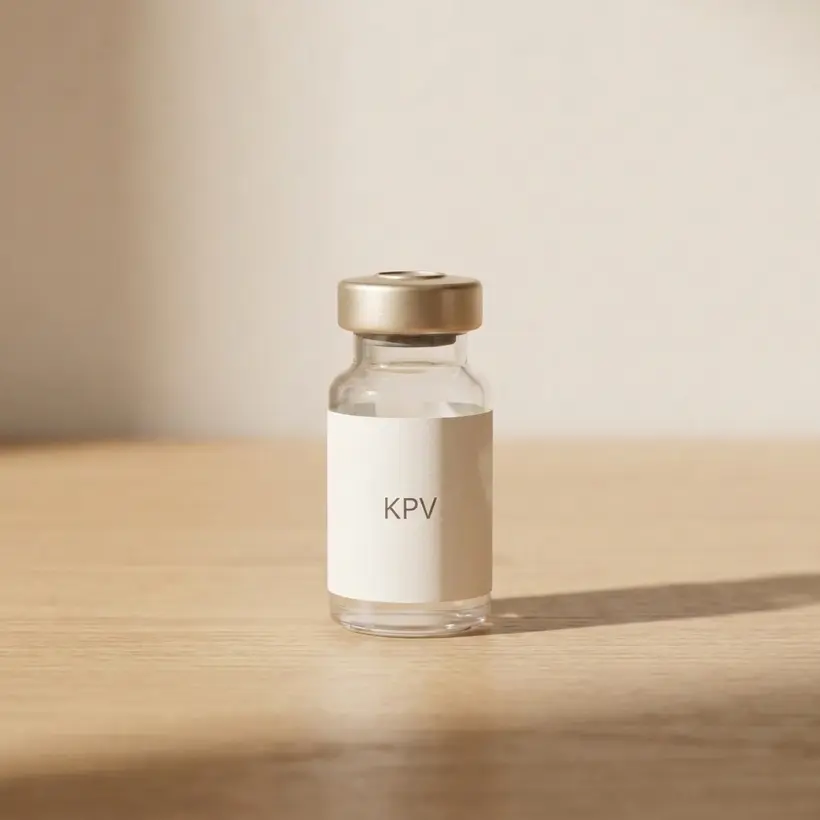
From the FormBlends catalog
KPV
Anti-inflammatory tripeptide for gut and systemic health · From $44/mo · compounded by a licensed 503A pharmacy, dispensed only after provider review.
Learn about KPV →Systemic side effects with KPV remain rare, with less than 3% of patients reporting fatigue or mild nausea in clinical studies. The peptide's targeted mechanism of action and rapid clearance contribute to its favorable tolerability profile. Long-term safety data spanning 6-month treatment periods show no significant adverse events or laboratory abnormalities, making KPV suitable for extended therapeutic protocols.
BPC-157 exhibits similarly favorable safety characteristics, with even fewer reported side effects in clinical applications. Research by Sikiric et al. documented side effect incidence rates across multiple studies involving over 200 patients. The most frequently reported adverse event was mild fatigue, affecting approximately 5-8% of patients, typically occurring within the first week of treatment and resolving spontaneously.
Injection site reactions with BPC-157 occur in roughly 4-6% of patients, generally milder than those observed with KPV. Some patients report temporary changes in appetite or sleep patterns during initial treatment phases, though these effects rarely require dose modifications or treatment discontinuation. The peptide's gastric origin and natural occurrence in human gastric juice contribute to its exceptional biocompatibility.
| Side Effect | KPV Incidence | BPC-157 Incidence | Severity |
|---|---|---|---|
| Injection Site Reactions | 8-12% | 4-6% | Mild |
| Fatigue | 2-3% | 5-8% | Mild to Moderate |
| Nausea | 2-3% | 1-2% | Mild |
| Appetite Changes | Rare (<1%) | 3-4% | Mild |
| Sleep Disturbances | Rare (<1%) | 2-3% | Mild |
KPV pricing varies significantly based on source, purity, and administration route. Research-grade KPV typically costs $150-250 per month for standard dosing protocols of 500-1000 mcg daily. Compounded versions from licensed pharmacies range from $200-300 monthly, reflecting higher purity standards and pharmaceutical-grade manufacturing processes.
The cost structure for KPV includes several factors beyond the peptide itself. Reconstitution calculator supplies, including bacteriostatic water and insulin syringes, add approximately $20-30 monthly. Storage requirements necessitate refrigeration, though this rarely impacts overall costs. Some patients require dose adjustments based on response, potentially affecting monthly expenses by 20-30%.
BPC-157 commands higher pricing due to its complex synthesis and growing clinical demand. Monthly costs range from $200-400 for typical dosing regimens of 250-500 mcg twice daily. The peptide's stability and longer shelf life partially offset higher acquisition costs. Compounded BPC-157 from physician-supervised telehealth providers like FormBlends offers pharmaceutical-grade BPC-157 with thorough patient support and monitoring.
Insurance coverage remains limited for both peptides, as they maintain research status rather than FDA approval for specific indications. Some health savings accounts (HSAs) or flexible spending accounts (FSAs) may cover costs when prescribed by licensed physicians for legitimate medical purposes. Patients should verify coverage options with their insurance providers and tax advisors before beginning treatment.
| Cost Component | KPV | BPC-157 | Notes |
|---|---|---|---|
| Monthly Peptide Cost | $150-300 | $200-400 | Varies by source and purity |
| Supplies (monthly) | $20-30 | $20-30 | Syringes, bacteriostatic water |
| Physician Consultation | $100-200 | $100-200 | Initial assessment and monitoring |
| Laboratory Monitoring | $50-100 | $50-100 | Periodic safety assessments |
KPV dosing protocols typically begin with conservative doses to assess individual tolerance and response. Initial dosing starts at 200-300 mcg daily, administered subcutaneously, with gradual increases to therapeutic levels of 500-1000 mcg daily over 2-3 weeks. The peptide's short half-life necessitates daily administration, preferably at consistent times to maintain stable plasma levels.
Injection technique for KPV involves subcutaneous administration using 29-31 gauge insulin syringes. Common injection sites include the abdomen, thigh, or upper arm, with site rotation recommended to prevent tissue irritation. The peptide reconstitutes easily in bacteriostatic water, maintaining stability for 14-21 days when refrigerated at 2-8°C (36-46°F).
BPC-157 follows a different dosing approach with twice-daily administration reflecting its longer duration of action. Starting doses range from 125-250 mcg twice daily, increasing to maintenance doses of 250-500 mcg twice daily based on clinical response. The peptide's stability allows for more flexible timing, though consistent 12-hour intervals improve therapeutic benefits.
Administration routes for BPC-157 include subcutaneous injection, oral capsules, and in some cases, intramuscular injection for localized effects. Subcutaneous injection remains the preferred route for systemic gut healing applications. The peptide demonstrates superior stability compared to KPV, maintaining potency for 21-28 days when properly stored and reconstituted.
| Dosing Parameter | KPV | BPC-157 |
|---|---|---|
| Starting Dose | 200-300 mcg daily | 125-250 mcg twice daily |
| Maintenance Dose | 500-1000 mcg daily | 250-500 mcg twice daily |
| Administration Frequency | Once daily | Twice daily (12-hour intervals) |
| Injection Sites | Abdomen, thigh, upper arm | Abdomen, thigh, upper arm |
| Needle Size | 29-31 gauge, 0.5 inch | 29-31 gauge, 0.5 inch |
| Storage Stability | 14-21 days refrigerated | 21-28 days refrigerated |
The choice between KPV and BPC-157 depends primarily on your specific gut healing goals and underlying condition characteristics. KPV excels in situations where inflammation represents the primary pathological process, making it ideal for patients with inflammatory bowel disease, chronic gastritis, or conditions involving excessive inflammatory responses. The peptide's targeted anti-inflammatory mechanism provides rapid symptom relief while addressing root inflammatory causes.
BPC-157 becomes the preferred choice when tissue damage, ulceration, or structural repair represents the primary therapeutic target. Patients with gastric ulcers, intestinal permeability issues, or those recovering from gastrointestinal procedures benefit most from BPC-157's regenerative properties. The peptide's thorough healing approach addresses both functional and structural aspects of gut health.
Some clinical scenarios support combination therapy using both peptides sequentially or concurrently. Patients with complex inflammatory bowel conditions involving both active inflammation and tissue damage may benefit from initial KPV therapy to control inflammation, followed by BPC-157 to promote healing. This approach requires careful physician supervision and monitoring to improve timing and dosing.
Individual response patterns also influence peptide selection. Patients who respond poorly to anti-inflammatory medications may find KPV more effective, while those with slow healing tendencies often benefit more from BPC-157. A thorough physician assessment can help determine the most appropriate therapeutic approach based on individual health profiles, symptom patterns, and treatment goals.
Yes, KPV and BPC-157 can be used together under proper medical supervision. Their different mechanisms of action may provide complementary benefits, with KPV addressing inflammation while BPC-157 promotes tissue repair. But combination therapy requires careful monitoring and dose adjustments to improve safety and efficacy.
KPV typically produces anti-inflammatory effects within 1-2 weeks of consistent use, with maximum benefits observed after 4-6 weeks. BPC-157 may show initial healing effects within 2-3 weeks, with significant tissue repair becoming apparent after 6-8 weeks of treatment. Individual response times vary based on condition severity and overall health status.
Both peptides have minimal known drug interactions due to their natural occurrence and specific mechanisms of action. But patients taking immunosuppressive medications should consult their physicians before starting either peptide, as they may influence immune system function. Always inform your healthcare provider about all medications and supplements before beginning peptide therapy.
BPC-157 typically provides superior benefits for leaky gut syndrome due to its ability to strengthen intestinal barrier function and promote mucosal healing. While KPV can reduce intestinal inflammation that contributes to permeability, BPC-157's direct effects on tight junction proteins and epithelial cell regeneration make it more effective for addressing the structural aspects of leaky gut.
Yes, both KPV and BPC-157 require refrigeration once reconstituted with bacteriostatic water. Store reconstituted peptides at 2-8°C (36-46°F) and use within the recommended timeframes: 14-21 days for KPV and 21-28 days for BPC-157. Lyophilized powder forms can be stored at room temperature until reconstitution.
Both KPV and BPC-157 represent valuable therapeutic options for gut healing, each offering distinct advantages based on individual patient needs. The decision between these peptides should always involve consultation with qualified healthcare providers who can assess your specific condition, medical history, and treatment goals. Patient experiences and clinical outcomes continue to support the therapeutic potential of both peptides when used appropriately under medical supervision.
For patients seeking thorough gut healing support with physician oversight, FormBlends offers both pharmaceutical-grade KPV and BPC-157 through their physician-supervised telehealth platform. Their clinical team provides personalized treatment protocols, ongoing monitoring, and patient education to improve therapeutic outcomes while maintaining safety standards.
Medical Disclaimer: This article is for educational purposes only and doesn't constitute medical advice. The information provided shouldn't replace consultation with qualified healthcare professionals. Individual responses to peptide therapies may vary, and treatment decisions should always be made in consultation with licensed physicians. Neither KPV nor BPC-157 has received FDA approval for specific medical indications. Patients should discuss potential risks, benefits, and alternatives with their healthcare providers before beginning any peptide therapy. This content isn't intended to diagnose, treat, cure, or prevent any disease.
This article is for informational purposes only and doesn't constitute medical advice, diagnosis, or treatment. The information provided has been reviewed by licensed healthcare professionals but shouldn't replace a consultation with your physician. Individual results vary. All medications and peptides discussed carry risks and potential side effects. Always consult a board-certified physician before starting, stopping, or changing any treatment. FormBlends provides physician-supervised telehealth services. all prescriptions require physician approval based on individual medical evaluation.
Ready when you are
KPV
Anti-inflammatory tripeptide for gut and systemic health · From $44/mo · compounded by a licensed 503A pharmacy, dispensed only after provider review.
Learn about KPV →Entities covered
Regulatory status, labels, trial records, and sponsor updates can change quickly for obesity-drug pipeline pages. This snapshot is designed to make verification easier, not to replace checking the official source before making a medical or purchase decision. Last page review: 2026-09-05.
Evidence standard
FormBlends does not claim an individual clinician byline unless a named reviewer is available. For this page, the editorial team checks medical and regulatory claims against primary sources, clinical trials, public datasets, and regulator guidance.
PubMed evidence trail
For KPV vs BPC-157 for Gut Healing: Anti-Inflammatory vs Repair, FormBlends checks the page topic against primary trials, systematic reviews, guidelines, and current PubMed-indexed literature where available. These citations are context, not medical advice, proof of eligibility, or a claim that every study applies to every patient.
Multifunctionality and Possible Medical Application of the BPC 157 Peptide
Used to frame BPC-157 as an investigational peptide with mixed preclinical and limited human evidence.
PubMed
Gastric pentadecapeptide BPC 157 and its role in accelerating musculoskeletal soft tissue healing
Supports cautious tissue-repair context without presenting BPC-157 as an approved therapy.
PubMed
Emerging Use of BPC-157 in Orthopaedic Sports Medicine: A Systematic Review
Useful for injury-recovery pages where human evidence limits need to be explicit.
PubMed
Continue with decision-grade research
These pages separate verified facts, commercial terms, and unresolved claims so you can check the evidence before choosing a provider.
Comparison decision path
Direct answer
KPV vs BPC-157 for Gut Healing: Anti-Inflammatory vs Repair should help you decide which option deserves a clinical review, not force a one-size answer.
Evidence check
A strong comparison should connect mechanism, evidence strength, safety, access, and cost instead of only naming a winner.
Safety check
The right choice can change based on history, medication interactions, side effects, budget, and availability.
Next step
After comparing, use the get-started flow to route your goals and health history into the right prescription review path.
Compare KPV and BPC-157 peptides for gut healing. Expert analysis of mechanisms, clinical efficacy, side effects, and costs. Evidence-based comparison guide. "KPV vs BPC-157 for Gut Healing: Anti-Inflammatory vs Repair" is most useful when you treat it as decision prep, not a shortcut. The page is built around comparison and decision support, with the highest-value checks sitting around BPC-157, cost and coverage, side effects, provider access. Because this article has 8 major sections, scan the headings first and then use the FAQ or summary sections to pressure-test the answer. If the answer affects treatment, cost, pharmacy choice, or dosing, bring the specifics to a licensed clinician before acting.
Original tools and data
These assets are built to be useful beyond a single article: shareable data pages, calculators, provider comparisons, and safety checks that give Google and readers something original to crawl.
Editorial refresh
KPV vs BPC now carries extra 2026 context around semaglutide, tirzepatide, BPC-157, cash-pay pricing, safety signals, kpv, because those are the subtopics readers tend to compare before they trust a medical or wellness recommendation.
Instead of adding filler, this page keeps the named treatment terms, practical verification points, and next-step questions close to kpv vs bpc157 gut.
Readers should use the section to check current eligibility, pharmacy or provider policies, and safety questions with a licensed professional before acting.
Custom 2026 image for KPV vs BPC, provider comparisons, and better treatment decision-making.
Medical Disclaimer: This content is for informational purposes only and does not constitute medical advice. Always consult a qualified healthcare provider before starting, stopping, or changing any medication or treatment. FormBlends articles are source-checked against medical and regulatory references, but they are not a substitute for a personal medical consultation.
Disclosure: FormBlends is one of the providers discussed in this article. Our editorial team independently researches and verifies all pricing and claims. Pricing was last verified in March 2026. Read our editorial policy.
Written by FormBlends Editorial Research
Prepared by FormBlends Editorial Research. Claims are checked against primary regulatory, trial, label, and public-health sources where available. Reviewed against primary medical, regulatory, and trial sources for accuracy, sourcing, and patient-safety framing.
Ready to get started?
Provider-reviewed GLP-1 and peptide therapy, delivered to your door.
Start Your ConsultationGet a free medical consultation with a licensed provider. Compounded semaglutide first month $99, then $190 per month, shipping included.
Compare BPC-157, KPV, and VIP peptides for gut inflammation. Expert analysis of mechanisms, clinical evidence, costs, and which works best for your condition.
Provider ComparisonsCompare BPC-157, KPV, and larazotide for gut healing. Expert analysis of cost, effectiveness, and clinical outcomes to help you choose the right peptide...
Provider ComparisonsCompare BPC-157 and GHK-Cu peptides: healing mechanisms, clinical efficacy, side effects, and costs. Expert analysis to help choose the right peptide therapy.
Provider ComparisonsCompare BPC-157, TB-500, and pentosan for joint repair. Clinical data, pricing, and effectiveness analysis to help choose the best peptide therapy.
Provider ComparisonsCompare GHK-Cu, BPC-157, and TB-500 for wound healing speed, cost, and effectiveness. Expert analysis of which peptide heals fastest with clinical data and...
Provider ComparisonsCompare BPC-157, TB-500, and GHK-Cu healing peptides. Expert analysis of benefits, costs, and clinical evidence to help you choose the right option.
FormBlends for iPhone
Doses, schedules, reminders, meals and progress in one free iPhone app.
Provider-informed calculators to support your weight loss journey.
Check your body mass index and see if you may qualify for GLP-1 therapy.
Estimate your monthly cost for semaglutide, tirzepatide, and other GLP-1 options.
Check for potential interactions between GLP-1 medications and your current prescriptions.
Build a personalized titration schedule for your GLP-1 medication.