
Deep research
About BPC-157
BPC-157, formally known as Body Protection Compound-157, is a stable pentadecapeptide with the amino acid sequence Gly-Glu-Pro-Pro-Pro-Gly-Lys-Pro-Ala-Asp-Asp-Ala-Gly-Leu-Val (GEPPPGKPADDAGLV). It has a molecular weight of approximately 1419.53 Da and carries a net negative charge at physiological pH. The peptide is a partial sequence derived from a larger protective protein identified in human gastric juice, designated BPC. Unlike many peptides, BPC-157 is remarkably stable in human gastric juice for extended periods (over 24 hours), a property that is unusual for a peptide of its size and that makes it viable for both injectable and oral research protocols.
BPC-157 operates through an unusually broad set of signaling mechanisms. It upregulates the expression of vascular endothelial growth factor (VEGF), epidermal growth factor (EGF), and their respective receptors at sites of injury, directly promoting angiogenesis and epithelial repair. It modulates the nitric oxide (NO) system in a bidirectional manner, meaning it can counteract both NO-excess states (like those caused by L-arginine or NO donors) and NO-deficiency states (such as those induced by L-NAME). This NO-system interaction extends to blood pressure regulation, gastrointestinal motility, and wound healing. BPC-157 also influences the FAK-paxillin pathway, which governs cell adhesion, migration, and cytoskeletal reorganization during tissue repair.
The research evidence supporting BPC-157 spans over 100 peer-reviewed publications. In a study published in the Journal of Orthopaedic Research (Staresinic et al., 2003), BPC-157 accelerated Achilles tendon healing in rats by approximately 72%, with biomechanical testing showing significantly greater tensile strength in treated tendons versus controls (N=72 rats, measured at 14 and 28 days). A 2010 study in the Journal of Physiology-Paris (Sikiric et al.) demonstrated complete reversal of NSAID-induced gastrointestinal lesions at doses as low as 10 ng/kg. In a transected rat sciatic nerve model (Gjurasin et al., 2010, published in Regulatory Peptides), BPC-157 promoted functional nerve reconnection and accelerated axonal sprouting, with treated animals recovering motor function significantly faster than controls.
Pharmacokinetically, BPC-157 has a relatively short plasma half-life estimated at 10-15 minutes when administered parenterally, though its tissue-level effects persist far longer due to receptor-level interactions and growth factor cascading. The peptide is metabolized by standard peptidase activity but shows unusual resistance to gastric acid degradation, with stability documented in pH as low as 1.5 for over 24 hours. Oral bioavailability studies in rats show systemic effects even when administered per os, suggesting meaningful absorption through the GI mucosa. The peptide does not appear to accumulate in specific organs and is cleared renally as degraded fragments.
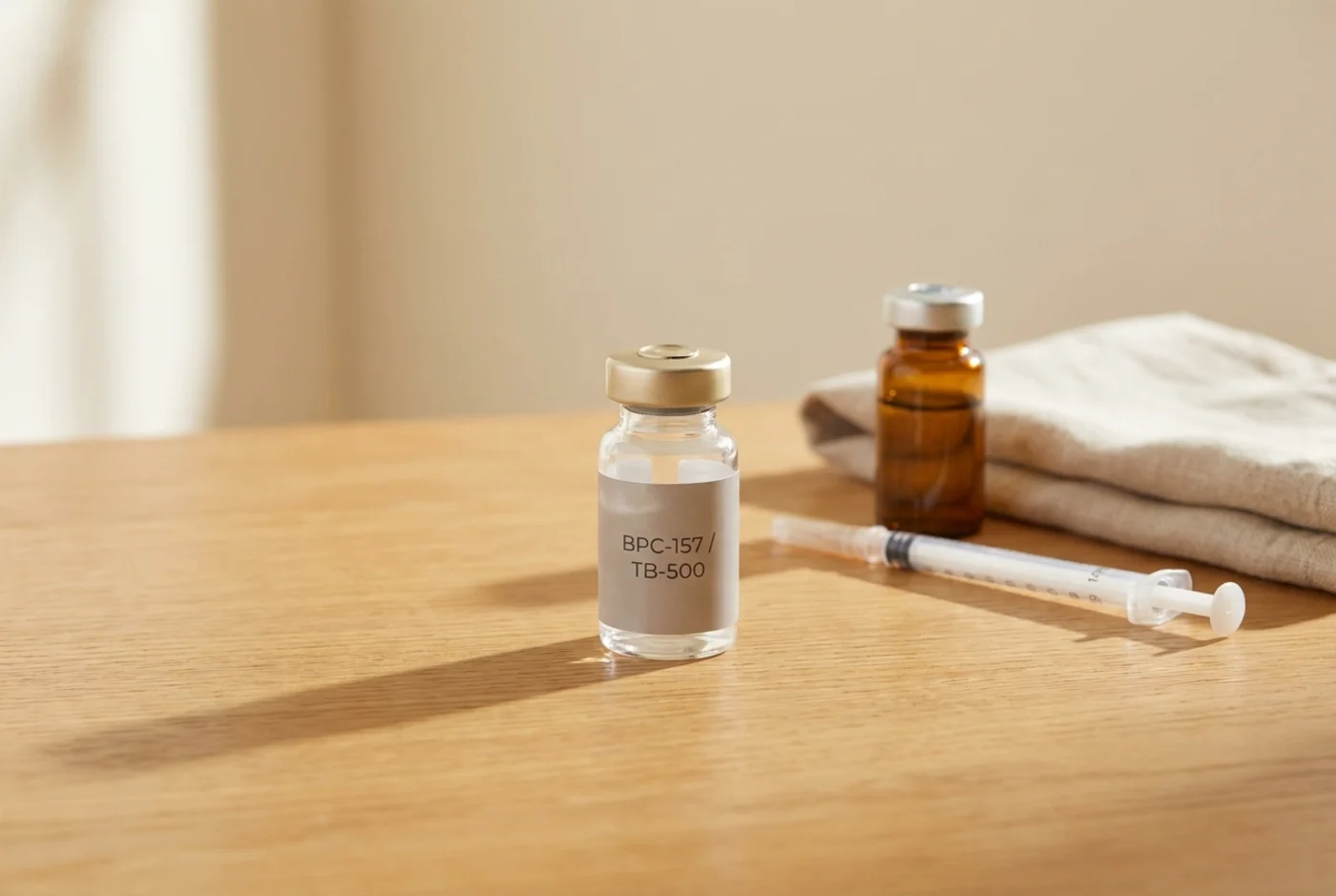
For research applications, BPC-157 should be stored as a lyophilized powder at -20C, where it remains stable for 24+ months. Once reconstituted in bacteriostatic water (0.9% benzyl alcohol), the solution should be refrigerated at 2-8C and used within 30 days. Repeated freeze-thaw cycles degrade the peptide and should be avoided. The lyophilized powder is a white, hygroscopic solid that should be protected from light and moisture. Reconstitution should be performed by gently directing bacteriostatic water down the vial wall rather than directly onto the powder cake to prevent foaming and denaturation.
In published research protocols, BPC-157 has been studied across a dosing range of 1-10 mcg/kg in animal models, with the majority of positive results observed at doses between 2-10 mcg/kg administered intraperitoneally or subcutaneously. Oral dosing studies have used comparable per-kilogram doses with demonstrable efficacy. Most tendon, ligament, and muscle healing protocols in the literature use daily administration for 14-28 days. Researchers studying gastrointestinal effects have used both acute (single-dose) and chronic (7-14 day) protocols, with efficacy observed in both paradigms.
The safety profile of BPC-157 in published research is notable for the absence of reported adverse effects across a wide range of doses. Unlike most growth-factor-promoting compounds, BPC-157 has not demonstrated tumor-promoting activity in any published study. Toxicology assessments in rats found no organ toxicity at doses up to 10 mg/kg (approximately 1000x the effective dose), no mutagenicity in Ames testing, and no teratogenic effects. The LD50 has not been established because lethal doses could not be reached in standard toxicology protocols. However, it is important to note that the vast majority of this data comes from animal models, and human clinical trial data remains limited.