Key Takeaway
What if you could get the benefits of a GLP-1 medication without injections? This oral GLP-1 pills guide walks you through the options that exist today and the ones heading to market soon. For many people, the idea of a daily pill instead of a weekly shot is appealing.
What if you could get the benefits of a GLP-1 medication without injections? This oral GLP-1 pills guide walks you through the options that exist today and the ones heading to market soon. For many people, the idea of a daily pill instead of a weekly shot is appealing. But there are tradeoffs you should understand before deciding which route is right for you.
Key Takeaways: - Current Oral GLP-1 Options: Rybelsus - The Convenience vs. Efficacy Tradeoff - Upcoming Oral GLP-1 Medications - Should You Choose Pills or Injections
The oral GLP-1 space is evolving fast. Let's look at where things stand.
Current Oral GLP-1 Options: Rybelsus
Rybelsus (oral semaglutide) was the first oral GLP-1 medication to hit the market. The FDA approved it in 2019 for type 2 diabetes management. It contains compounded formulations of the active ingredient as the injectable form of semaglutide, but it's delivered as a tablet you swallow.
Here is how it works. Rybelsus uses a special absorption enhancer called SNAC that helps the semaglutide molecule survive your stomach acid and get absorbed into your bloodstream. Without this enhancer, the peptide would break down before it could work.
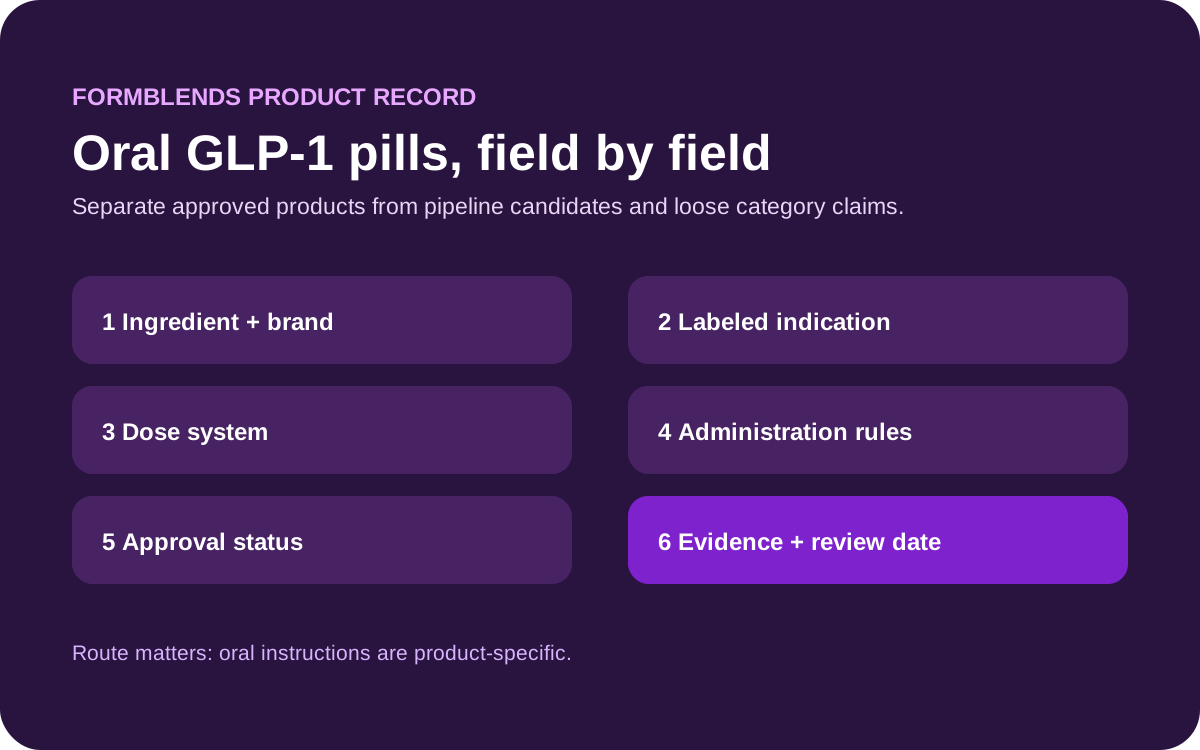
There are some specific rules for taking it. You must take Rybelsus on an empty stomach with no more than 4 ounces of plain water. Then you wait at least 30 minutes before eating, drinking, or taking other medications. These requirements matter because food and larger amounts of liquid reduce how much of the drug gets absorbed.
"The conversation about obesity needs to shift from willpower to biology. These medications work because obesity is a neuroendocrine disease, not a character flaw.") Dr. Fatima Cody Stanford, MD, MPH, Massachusetts General Hospital
The doses available are 3 mg, 7 mg, and 14 mg. For diabetes, the typical maintenance dose is 7 or 14 mg. But these doses produce less weight loss than the injectable semaglutide doses used for weight management.
For more on injectable semaglutide, see our .
The Convenience vs. Efficacy Tradeoff
This is the big question with oral GLP-1 pills. Are they as effective as injections? The honest answer is: it depends on the dose.
View data table
| Category | Mean Body Weight Loss (%) | Detail |
|---|---|---|
| Tirzepatide | 22 | ~22% body weight at 72 wks |
| Semaglutide | 15 | ~15% body weight at 68 wks |
| Liraglutide | 8 | ~8% body weight at 56 wks |
| Retatrutide | 24 | ~24% in Phase 2 trial |

Free Download: GLP-1 Medication Comparison One-Pager Compare oral and injectable GLP-1 options side by side, including efficacy, dosing, and cost differences. Get yours free (we'll email it to you instantly. [Email Input] [Download Button]
The currently available oral semaglutide doses (up to 14 mg) produce meaningful blood sugar improvements for diabetes. But the weight loss is more modest compared to injectable semaglutide at the 2.4 mg dose. Studies suggest about 5-7% weight loss with oral semaglutide at 14 mg, compared to about 15% with injectable semaglutide.
But higher oral semaglutide doses are being studied. A 25 mg and 50 mg oral semaglutide formulation showed weight loss of about 15-17% in clinical trials. If approved, these higher doses could close the gap between pills and injections.
The convenience factor is real. No needles, no refrigeration requirements, no injection site reactions. For people who are needle-averse, an oral option removes a significant barrier to starting treatment.
But the strict fasting requirements can be a downside. Remembering to take a pill 30 minutes before eating or drinking each morning is harder than it sounds. Missing that window reduces how well the medication works.
Upcoming Oral GLP-1 Medications
The pipeline of oral GLP-1 medications is exciting. Several companies are developing pills that could overcome the limitations of current options.
Check your GLP-1 eligibility
Use our free BMI Calculator to see if you may qualify for provider-reviewed GLP-1 therapy.
Try the BMI Calculator →Orforglipron from Eli Lilly is a non-peptide oral GLP-1 agonist. Unlike Rybelsus, which is a peptide that needs special absorption technology, orforglipron is a small molecule. This means it doesn't require fasting before taking it and may be absorbed more consistently. Phase 3 trial results have been promising.
Other oral options in development include danuglipron (also from Pfizer, though its development path has shifted) and various oral formulations of existing injectable GLP-1 drugs.
The goal across all of these programs is the same: deliver injection-level results in a pill form that's easy to take. We aren't fully there yet, but the science is moving fast.
Should You Choose Pills or Injections?
This decision comes down to your priorities and your provider's recommendation. Here are some factors to consider.
Choose oral options if needle phobia is a real barrier for you, you prefer the routine of a daily pill, or you're managing diabetes and the current oral doses meet your needs.
Choose injectable options if maximum weight loss is your primary goal, you prefer the simplicity of a once-weekly dose, or you want the most clinical data backing your treatment choice.
Many people start with injections because the data is strongest there. Injectable compounded semaglutide through FormBlends is prescribed by licensed providers and prepared by US-based 503A pharmacies. It offers a well-studied, effective option while the market continues to develop.
For a broader comparison, read our .
Frequently Asked Questions
Is oral semaglutide as effective as injectable semaglutide?
At currently available doses (up to 14 mg), oral semaglutide produces less weight loss than injectable semaglutide. But higher oral doses (25-50 mg) being studied in trials show weight loss results closer to the injectable form.
Do you have to take oral GLP-1 pills on an empty stomach?
Yes, Rybelsus must be taken on an empty stomach with no more than 4 ounces of plain water. You must wait at least 30 minutes before eating or drinking. Newer oral GLP-1 drugs in development may not have this requirement.
When will new oral GLP-1 pills be available?
Orforglipron from Eli Lilly is in Phase 3 trials and could be available in 2026 or 2027, pending FDA approval. Higher-dose oral semaglutide is also under FDA review. Check our for the latest updates.
Are oral GLP-1 pills cheaper than injections?
Currently, oral semaglutide (Rybelsus) is priced similarly to injectable options at brand-name pricing. Compounded injectable semaglutide through platforms like FormBlends may be more affordable. Visit our for current rates.
Start your plan Today
Every transformation starts with a single step. Talk to a licensed FormBlends provider about whether this approach is right for you, consultations are free and confidential.
Medical References
- Davies M, Færch L, Jeppesen OK, et al. Semaglutide 2.4 mg once a week in adults with overweight or obesity, and type 2 diabetes (STEP 2). Lancet. 2021;397(10278):971-984. [PubMed | ClinicalTrials.gov | DOI]
- Wadden TA, Bailey TS, Billings LK, et al. Effect of Subcutaneous Semaglutide vs Placebo as an Adjunct to Intensive Behavioral Therapy on Body Weight in Adults With Overweight or Obesity (STEP 3). JAMA. 2021;325(14):1403-1413. [PubMed | ClinicalTrials.gov | DOI]
- Garvey WT, Batterham RL, Bhatt DL, et al. Two-year effects of semaglutide in adults with overweight or obesity (STEP 5). Nat Med. 2022;28(10):2083-2091. [PubMed | ClinicalTrials.gov | DOI]
- Garvey WT, Frias JP, Jastreboff AM, et al. Tirzepatide once weekly for the treatment of obesity in people with type 2 diabetes (SURMOUNT-2). Lancet. 2023;402(10402):613-626. [PubMed | ClinicalTrials.gov | DOI]
- Wadden TA, Chao AM, Engel S, et al. Tirzepatide with intensive lifestyle intervention in adults with overweight or obesity (SURMOUNT-3). Nat Med. 2024. [PubMed | ClinicalTrials.gov | DOI]
- Aronne LJ, Sattar N, Horn DB, et al. Continued Treatment With Tirzepatide for Maintenance of Weight Reduction in Adults With Obesity (SURMOUNT-4). JAMA. 2024;331(1):38-48. [PubMed | ClinicalTrials.gov | DOI]
Sources &. References
- Pi-Sunyer X, Astrup A, Fujioka K, et al. A Randomized, Controlled Trial of 3.0 mg of Liraglutide in Weight Management. N Engl J Med. 2015;373(1):11-22. Doi:10.1056/NEJMoa1411892
- Marso SP, Daniels GH, Tanaka K, et al. Liraglutide and Cardiovascular Outcomes in Type 2 Diabetes. N Engl J Med. 2016;375(4):311-322. Doi:10.1056/NEJMoa1603827
- Wilding JPH, Batterham RL, Calanna S, et al. Once-Weekly Semaglutide in Adults with Overweight or Obesity. N Engl J Med. 2021;384(11):989-1002. Doi:10.1056/NEJMoa2032183
- Davies M, Færch L, Jeppesen OK, et al. Semaglutide 2.4 mg once a week in adults with overweight or obesity, and type 2 diabetes (STEP 2 (Davies et al., Lancet, 2021)). Lancet. 2021;397(10278):971-984. Doi:10.1016/S0140-6736(21)00213-0
- Wadden TA, Bailey TS, Billings LK, et al. Effect of Subcutaneous Semaglutide vs Placebo as an Adjunct to Intensive Behavioral Therapy on Body Weight in Adults With Overweight or Obesity (STEP 3 (Wadden et al., JAMA, 2021)). JAMA. 2021;325(14):1403-1413. Doi:10.1001/jama.2021.1831
- Garvey WT, Batterham RL, Bhatt DL, et al. Two-Year Effects of Semaglutide in Adults with Overweight or Obesity (STEP 5 (Garvey et al., Nat Med, 2022)). Nat Med. 2022;28:2083-2091. Doi:10.1038/s41591-022-02026-4
- Lincoff AM, Brown-Frandsen K, Colhoun HM, et al. Semaglutide and Cardiovascular Outcomes in Obesity without Diabetes. N Engl J Med. 2023;389(24):2221-2232. Doi:10.1056/NEJMoa2307563
- Jastreboff AM, Aronne LJ, Ahmad NN, et al. Tirzepatide Once Weekly for the Treatment of Obesity. N Engl J Med. 2022;387(3):205-216. Doi:10.1056/NEJMoa2206038
- Garvey WT, Frias JP, Jastreboff AM, et al. Tirzepatide once weekly for the treatment of obesity in people with type 2 diabetes (SURMOUNT-2[4] (Garvey et al., Lancet, 2023)). Lancet. 2023;402(10402):613-626. Doi:10.1016/S0140-6736(23)01200-X
- Wadden TA, Chao AM, Engel S, et al. Tirzepatide after intensive lifestyle intervention in adults with overweight or obesity (SURMOUNT-3[5] (Wadden et al., Nat Med, 2023)). Nat Med. 2023. Doi:10.1038/s41591-023-02597-w
- Aronne LJ, Sattar N, Horn DB, et al. Continued Treatment With Tirzepatide for Maintenance of Weight Reduction in Adults With Obesity (SURMOUNT-4[6] (Aronne et al., JAMA, 2024)). JAMA. 2024;331(1):38-48. Doi:10.1001/jama.2023.24945
- Malhotra A, Grunstein RR, Fietze I, et al. Tirzepatide for the Treatment of Obstructive Sleep Apnea and Obesity. N Engl J Med. 2024;391:1193-1205. Doi:10.1056/NEJMoa2404881
This article is for educational purposes only and doesn't constitute medical advice. Always consult with a licensed healthcare provider before starting, changing, or stopping any medication or supplement. FormBlends connects you with licensed providers who can evaluate your individual health needs.
Last updated: 2026-03-24
See your options in about 2 minutes
Take the free quiz and see what fits you. Quick, private, and no commitment to continue.
See my options →