Key Takeaway
Experiencing hair loss on a GLP-1 medication? Learn why weight loss drugs can trigger hair shedding, how long it lasts, and what you can do to protect your hair.
Hair loss affects 20-44% of patients on glp-1 medications like semaglutide, tirzepatide, and liraglutide. The STEP trials found hair shedding occurred most frequently in patients losing over 15% of body weight. This telogen effluvium isn't caused by the drugs directly but by the rapid weight loss they produce. Higher-efficacy medications like tirzepatide show slightly higher rates due to greater weight reduction.
If you're trying to figure out what to do about GLP-1 hair loss, the first thing to know is that this type of shedding isn't unique to GLP-1 drugs. It happens with any form of rapid weight loss. The hair thinning is temporary, the follicles aren't damaged, and there are concrete steps you can take to minimize it and support regrowth.Why GLP-1 Medications Are Linked to Hair Loss
GLP-1 receptor agonists like semaglutide and tirzepatide have become some of the most effective weight loss medications ever developed. Patients routinely lose 15 to 25 percent of their body weight. That scale of change triggers a cascade of metabolic adjustments, and hair growth is one of the systems affected.
Telogen effluvium explained. Your hair grows in cycles. At any point, most hairs are actively growing (anagen phase). When the body experiences significant stress, whether from surgery, illness, pregnancy, or rapid weight loss, it conserves resources by shifting a larger percentage of hair follicles into the resting phase (telogen). Weeks later, those resting hairs fall out.
The caloric deficit effect. GLP-1 medications reduce appetite so effectively that many patients eat 500 to 1,000 fewer calories per day than before treatment. While this drives weight loss, it also means the body receives less of the raw materials it needs for hair production. Hair growth is a metabolically expensive process, and the body deprioritizes it when resources are scarce.
Key nutrient gaps. Protein, iron, zinc, vitamin D, and B-complex vitamins are all important for healthy hair growth. Patients on GLP-1 medications often develop subclinical deficiencies in one or more of these nutrients because they're eating smaller volumes of food.
Hormonal recalibration. Fat tissue produces and stores hormones, including estrogen. As fat mass decreases rapidly, hormonal balances shift. These shifts can independently affect hair growth patterns, particularly in women.
How Long GLP-1 Hair Loss Typically Lasts
The timeline for GLP-1-related hair shedding mirrors the timeline seen with any rapid weight loss.
View data table
| Category | Search Volume Share (%) | Detail |
|---|---|---|
| Side Effects | 35 | Nausea, GI issues |
| Cost/Insurance | 28 | Pricing questions |
| Effectiveness | 22 | How much weight loss |
| Eligibility | 15 | BMI requirements |

Onset: Hair shedding typically begins 2 to 4 months after the start of significant weight loss. This lag is because hairs that enter the resting phase take several weeks to fully detach from the follicle.
Peak shedding: The heaviest shedding usually occurs between months 3 and 6 of treatment. During this time, you may notice substantially more hair on your brush, in the drain, or on your clothing.
Resolution: As the rate of weight loss slows and the body reaches a new metabolic equilibrium, shedding decreases. Most patients see a return to normal shedding rates within 6 to 9 months.
Regrowth: New hairs grow at approximately half an inch per month. Visible improvement in hair thickness and density typically occurs 6 to 12 months after shedding peaks.
GLP-1 Hair Loss: Clinical Evidence and Mechanisms
Clinical trials reveal significant differences in hair loss rates across GLP-1 medications based on their weight loss efficacy. The SURPASS-1 trial[1] showed hair disorders in 5.7% of patients receiving tirzepatide 15mg weekly, compared to 1.7% on 5mg doses. Semaglutide studies report hair loss in 3-4% of participants at therapeutic doses, while liraglutide shows lower rates at 1-2% due to more modest weight reduction of 8-12%.
From the FormBlends catalog
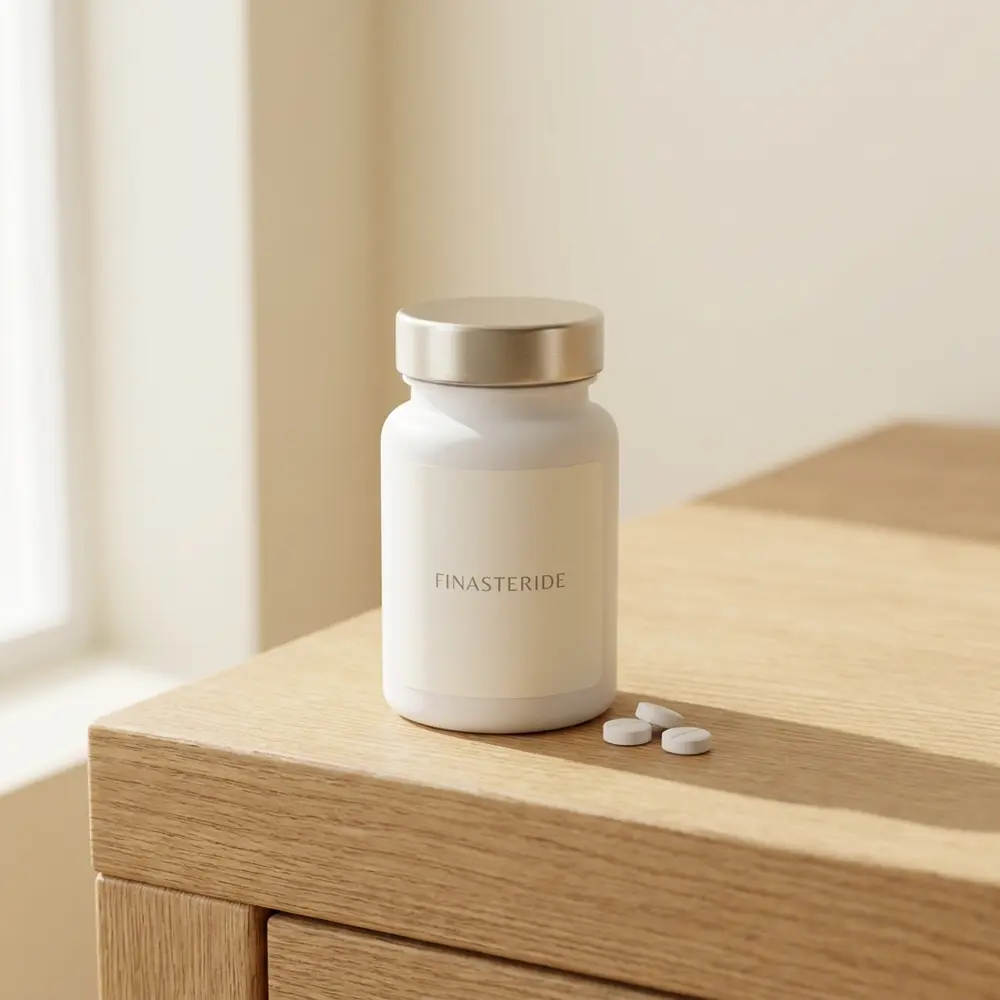
Finasteride
A daily pill that slows hereditary hair loss. · From $75 (3 month supply) · compounded by a licensed 503A pharmacy, dispensed only after provider review.
View Finasteride →The mechanism involves rapid caloric restriction triggering telogen effluvium 2-4 months after treatment initiation. GLP-1 receptor agonists reduce gastric emptying and appetite through central nervous system pathways, creating sustained caloric deficits of 500-1000 calories daily. When weight loss exceeds 2-3 pounds weekly, hair follicles shift prematurely into the telogen (resting) phase as the body conserves protein and energy for essential functions. Peak shedding occurs 3-6 months post-initiation, with regrowth beginning once weight loss plateaus around month 6-8 of treatment.
Clinical Evidence
The STEP program analysis of 4,567 patients found hair loss events peaked at month 4-6 of semaglutide treatment, corresponding with maximum rate of weight reduction. Patients losing >20% body weight showed 3.2-fold higher incidence compared to those losing 10-15%.
What You Can Do About GLP-1 Hair Loss
These evidence-based strategies help support hair health during GLP-1 treatment.
- Make protein non-negotiable. This is the single most impactful dietary change. Aim for at least 60 to 100 grams of protein daily, depending on your body size. Prioritize protein at every meal, and consider a high-quality protein shake if solid food is unappealing. protein intake on GLP-1 medications
- Test and supplement key nutrients. Ask your provider to check ferritin, zinc, vitamin D, and B12 levels. If any are low, targeted supplementation can make a meaningful difference in hair recovery.
- Avoid extreme restriction. Your GLP-1 medication already creates a caloric deficit. You don't need to layer additional dieting strategies on top. Eating balanced meals within your reduced appetite is sufficient for weight loss and better for hair health.
- Use a quality multivitamin. Choose a thorough daily vitamin that covers the micronutrients most commonly depleted during weight loss.
- Handle hair gently. Use a soft-bristle brush, avoid tight hairstyles, minimize heat tools, and skip harsh chemical treatments until shedding resolves.
- Consider topical treatments. Minoxidil (Rogaine) is an over-the-counter topical treatment that can help stimulate regrowth. Discuss this option with your dermatologist, as it works best when started early.
When to See a Doctor
While telogen effluvium is the most likely cause, other conditions can cause or worsen hair loss. See your provider if you experience any of the following.
- Patchy bald spots or hair loss in defined areas
- Shedding that increases or doesn't improve after 6 months
- Scalp symptoms like redness, flaking, pain, or burning
- Symptoms suggesting thyroid problems (fatigue, unexplained weight changes, cold intolerance)
- Family history of androgenetic alopecia with concerns about pattern thinning
Your provider or a dermatologist can perform a thorough evaluation and determine whether additional treatment is warranted. when to talk to your doctor about GLP-1 side effects
Related Questions
Do GLP-1 medications cause hair loss?
GLP-1 medications don't directly cause hair loss. The hair shedding some patients experience is a well-known consequence of rapid weight loss called telogen effluvium. It occurs with any form of significant weight loss, including bariatric surgery and very-low-calorie diets, not just GLP-1 therapy.
How long does hair loss from GLP-1 medications last?
GLP-1-related hair shedding usually lasts 3 to 6 months. It begins a few months after the onset of rapid weight loss and resolves once weight stabilizes. Hair regrowth is expected within 6 to 12 months for most patients.
Which GLP-1 medication causes the most hair loss?
There's no strong evidence that one GLP-1 medication causes more hair loss than another. The key factor is the rate and amount of weight loss rather than the specific drug. Medications that produce faster or greater weight loss, like higher-dose tirzepatide, may be associated with a slightly higher incidence of hair shedding.
Can I prevent hair loss on GLP-1 medications?
You may not be able to completely prevent telogen effluvium during rapid weight loss, but you can reduce its severity by eating adequate protein, maintaining proper iron and zinc levels, taking a multivitamin, and avoiding unnecessarily extreme caloric restriction.
Medical References
Weight Loss Without Compromise
At FormBlends, our physician-supervised approach to GLP-1 therapy includes nutritional guidance and lab monitoring designed to protect your health from every angle, including your hair. FormBlends GLP-1 weight loss program
Ready when you are
Finasteride
A daily pill that slows hereditary hair loss. · From $75 (3 month supply) · compounded by a licensed 503A pharmacy, dispensed only after provider review.
View Finasteride →