Key Takeaway
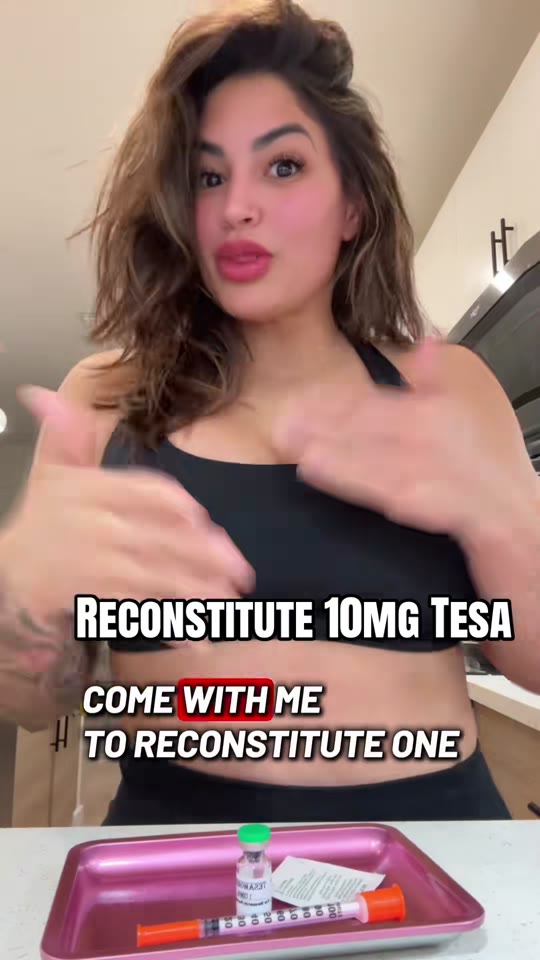
If you've been prescribed a peptide like BPC-157 or CJC-1295, you may need to know how to reconstitute peptides before your first injection. Reconstitution calculator simply means mixing the freeze-dried powder with a sterile liquid so you can draw up an accurate dose.
If you've been prescribed a peptide like BPC-157 or CJC-1295, you may need to know how to reconstitute peptides before your first injection. Reconstitution simply means mixing the freeze-dried powder with a sterile liquid so you can draw up an accurate dose. It sounds intimidating, but once you understand the process, it becomes second nature.
Key Takeaways: - Understand what does reconstitution mean and why does it matter - Supplies You Need Before Starting - Step-by-Step Reconstitution Process - Common Reconstitution Mistakes to Avoid
This guide walks you through every step. You'll learn what supplies you need, how to calculate your concentration, and how to avoid the most common mistakes that waste medication.
What Does Reconstitution Mean and Why Does It Matter?
Peptides arrive as a lyophilized (freeze-dried) powder inside a small glass vial. In this form, they're stable and can be stored for months. But you can't inject a powder. You need to add a specific amount of bacteriostatic water to create a liquid solution.
The amount of water you add determines the concentration of each dose. Get this wrong, and you could underdose or overdose your peptide. That's why precision matters here.
Your prescribing provider will tell you the total milligrams of peptide in your vial and the dose they want you to take. From there, you'll calculate how much water to add and how many units to draw on your syringe.
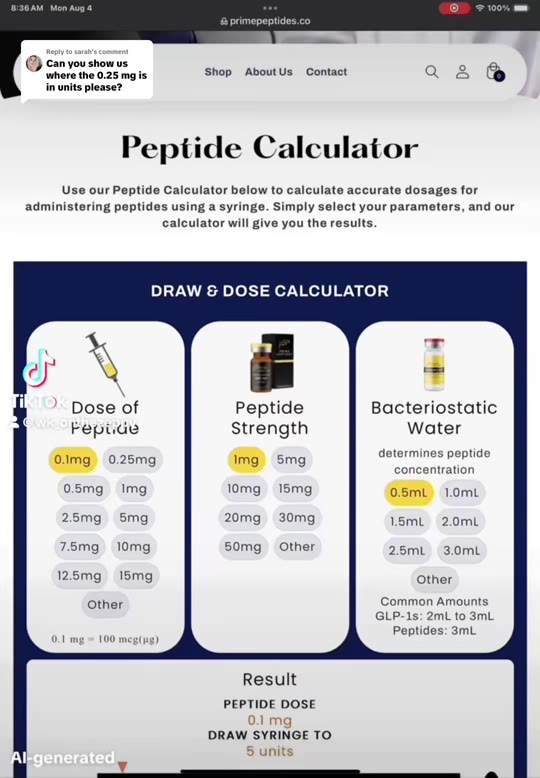
For example, a 5 mg vial of BPC-157 reconstituted with 2 mL of bacteriostatic water gives you a concentration of 2.5 mg per mL. If your prescribed dose is 250 mcg, you'd draw 10 units on an insulin syringe. If that math feels tricky, don't worry. Our does it for you instantly.
"Compounding pharmacies serve a critical role in healthcare, but patients need to understand the difference between a properly regulated 503B facility and an unregulated operation. Ask about PCAB accreditation and third-party testing.") Dr. Scott Brunner, PharmD, Alliance for Pharmacy Compounding
Supplies You Need Before Starting
Before you begin, gather everything in one clean space. You'll need:
- Your peptide vial (prescribed by your provider)
- Bacteriostatic water (BAC water with 0.9% benzyl alcohol)
- Insulin syringes (typically 1 mL / 100 unit syringes with 29-31 gauge needles)
- Alcohol swabs for sterilizing vial tops
- A clean, flat surface to work on
Don't use normal saline or sterile water for injection unless your provider specifically instructs you to. Bacteriostatic water contains a preservative that prevents bacterial growth, which is critical when you'll be drawing multiple doses from the same vial over several days or weeks.
Never reuse syringes. Each injection requires a fresh, sterile syringe. This isn't optional. Reusing needles increases infection risk and can contaminate your vial.
Store your bacteriostatic water at room temperature. Store your reconstituted peptide in the refrigerator between 36-46 degrees Fahrenheit. Never freeze a reconstituted peptide.
Try our free to get your exact dose measurements in seconds. Just enter your vial size, peptide amount, and prescribed dose.
Step-by-Step Reconstitution Process
Follow these steps carefully the first time. After a few sessions, it will feel routine.
Get pre-measured GLP-1 doses shipped to your door
No mixing, no guesswork. FormBlends medications come ready to inject with clear dosing instructions.
Start Free Assessment →Step 1[1]: Wash your hands. Use soap and water for at least 20 seconds. Dry with a clean towel.
Step 2: Swab the vial tops. Use an alcohol pad to wipe the rubber stopper on both the peptide vial and the bacteriostatic water vial. Let them air dry for 10 seconds.
Step 3: Draw your bacteriostatic water. Pull back the plunger on a fresh syringe to the amount your provider specified (for example, 2 mL). Insert the needle into the BAC water vial, invert it, and slowly draw the water.
Step 4: Add water to the peptide vial. Insert the needle into the peptide vial at an angle. Let the water run down the inside wall of the vial. Do NOT spray it directly onto the powder. This can damage the peptide molecules.
Step 5: Swirl gently. Roll the vial between your palms or tilt it slowly side to side. Never shake it. Shaking can break the peptide bonds and reduce potency. The powder should dissolve within 1-3 minutes.
Step 6: Inspect the solution. It should be clear and free of particles. If it's cloudy or has floating debris, don't use it. Contact your pharmacy.
Step 7: Label the vial. Write the date of reconstitution and the concentration on a small label. Most reconstituted peptides are good for 28-30 days when refrigerated.
If you want a printable version of these steps, check out our for reference sheets you can keep near your supplies.
Common Reconstitution Mistakes to Avoid
Even experienced users make errors. Here are the ones that come up most often.
Using too much or too little water. This changes your concentration and throws off every dose. Always double-check your math or use a before you start.
Squirting water directly onto the powder. The force can denature the peptide. Always aim the stream at the glass wall so it trickles down gently.
Shaking the vial. Peptides are fragile molecules. Aggressive shaking can break them apart. Gentle swirling is all you need.
Leaving reconstituted peptides at room temperature. Once mixed, peptides degrade quickly outside the fridge. Put the vial back in the refrigerator immediately after drawing your dose.
Skipping the alcohol swab. Every time you insert a needle into a vial, bacteria can enter. Swabbing the stopper first is a simple step that prevents contamination.
Not tracking your doses. After a few days, it's easy to forget how many doses you've drawn. Use the to log each injection and see exactly how much medication remains in your vial.
Frequently Asked Questions
Can I use sterile water instead of bacteriostatic water?
Sterile water for injection lacks the preservative found in bacteriostatic water. If you use it, you must use the entire vial in one session because bacteria can grow in the solution. For multi-dose vials, always use bacteriostatic water unless your provider says otherwise.
How long does a reconstituted peptide last?
Most reconstituted peptides remain stable for 28-30 days when stored in the refrigerator at 36-46 degrees Fahrenheit. Some peptides may have shorter shelf lives. Your provider or pharmacy can give you specific guidance for your medication.
What syringe size should I use for peptide injections?
Most peptide injections use a 1 mL (100 unit) insulin syringe with a 29 or 31 gauge needle. These are thin enough for comfortable subcutaneous injections and precise enough for accurate dosing. Your provider will confirm the right syringe for your protocol.
What if the powder doesn't dissolve completely?
Give it more time. Some peptides take up to 5 minutes to fully dissolve. Continue gently swirling. If particles remain after 10 minutes, don't use the vial. Contact your pharmacy for a replacement.
Do I need to refrigerate bacteriostatic water?
No. Bacteriostatic water is stable at room temperature before opening. After opening, it's good for 28 days. Some people refrigerate it for convenience, but it's not required.
Start your progress Today
Every transformation starts with a single step. Talk to a licensed FormBlends provider about whether this approach is right for you, consultations are free and confidential.
Medical References
- Wilding JPH, Batterham RL, Calanna S, et al. Once-Weekly Semaglutide in Adults with Overweight or Obesity. N Engl J Med. 2021;384(11):989-1002. [PubMed | ClinicalTrials.gov | DOI]
- Davies M, Færch L, Jeppesen OK, et al. Semaglutide 2.4 mg once a week in adults with overweight or obesity, and type 2 diabetes (STEP 2). Lancet. 2021;397(10278):971-984. [PubMed | ClinicalTrials.gov | DOI]
- Wadden TA, Bailey TS, Billings LK, et al. Effect of Subcutaneous Semaglutide vs Placebo as an Adjunct to Intensive Behavioral Therapy on Body Weight in Adults With Overweight or Obesity (STEP 3). JAMA. 2021;325(14):1403-1413. [PubMed | ClinicalTrials.gov | DOI]
- Rubino D, Abrahamsson N, Davies M, et al. Effect of Continued Weekly Subcutaneous Semaglutide vs Placebo on Weight Loss Maintenance in Adults With Overweight or Obesity (STEP 4). JAMA. 2021;325(14):1414-1425. [PubMed | ClinicalTrials.gov | DOI]
- Garvey WT, Batterham RL, Bhatt DL, et al. Two-year effects of semaglutide in adults with overweight or obesity (STEP 5). Nat Med. 2022;28(10):2083-2091. [PubMed | ClinicalTrials.gov | DOI]
Sources &. References
- Sikiric P, Hahm KB, Blagaic AB, et al. Stable Gastric Pentadecapeptide BPC 157, Robert's Cytoprotection, Adaptive Cytoprotection, and Therapeutic Effects. Curr Pharm Des. 2018;24(18):1990-2001. Doi:10.2174/1381612824666180515125918
- Chang CH, Tsai WC, Lin MS, et al. The promoting effect of pentadecapeptide BPC 157 on tendon healing involves tendon outgrowth, cell survival, and cell migration. J Appl Physiol. 2011;110(3):774-780. Doi:10.1152/japplphysiol.00945.2010
- Seiwerth S, Brcic L, Vuletic LB, et al. BPC 157 and blood vessels. Curr Pharm Des. 2014;20(7):1121-1125. Doi:10.2174/13816128113199990421
- Bock-Marquette I, Saxena A, White MD, et al. Thymosin beta4 activates integrin-linked kinase and promotes cardiac cell migration, survival and cardiac repair. Nature. 2004;432(7016):466-472. Doi:10.1038/nature03000
- Malinda KM, Sidhu GS, Mani H, et al. Thymosin beta4 accelerates wound healing. J Invest Dermatol. 1999;113(3):364-368. Doi:10.1046/j.1523-1747.1999.00708.x
- Ionescu M, Frohman LA. Pulsatile secretion of growth hormone (GH) persists during continuous stimulation by CJC-1295, a long-acting GH-releasing hormone analog. J Clin Endocrinol Metab. 2006;91(12):4792-4797. Doi:10.1210/jc.2006-1702
This content is provided for informational and educational purposes only. It isn't a substitute for professional medical advice, diagnosis, or treatment. Always seek the advice of a licensed healthcare provider with any questions about a medical condition or treatment plan.
Last updated: 2026-03-24
See your options in about 2 minutes
Take the free quiz and see what fits you. Quick, private, and no commitment to continue.
See my options →