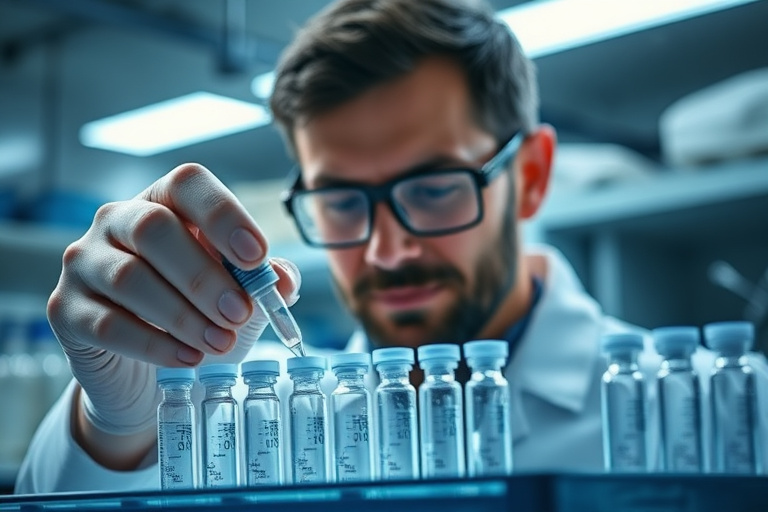
You're researching peptides for recovery and you keep seeing two names: TB-500 and BPC-157. Both are popular. Both have research supporting tissue repair. But they aren't the same thing.
You're researching peptides for recovery and you keep seeing two names: TB-500 and BPC-157. Both are popular. Both have research supporting tissue repair. But they aren't the same thing. This TB-500 vs BPC-157 comparison breaks down how each works, when providers prescribe one over the other, and whether combining them makes sense.
Key Takeaways:
- Learn how tb-500 works
- Learn how bpc-157 works
- TB-500 vs BPC-157: Key Differences
- The Wolverine Stack: Using Both Together
- Making the Decision with Your Provider
The short version: they work through different mechanisms and may complement each other. But the right choice depends on your specific situation. Let your provider guide that decision.
How TB-500 Works
TB-500 is a synthetic version of Thymosin Beta-4, a naturally occurring peptide found throughout your body. It's involved in cell migration, new blood vessel formation, and tissue repair.
Key mechanisms of TB-500:
Cell migration. TB-500 helps repair cells travel to injury sites faster. It promotes the movement of endothelial cells (blood vessel lining), keratinocytes (skin cells), and other cell types involved in healing.
Angiogenesis. TB-500 promotes the growth of new blood vessels. This is especially important for tissues with poor blood supply, like tendons and ligaments. More blood flow means more oxygen and nutrients reaching the damaged area.
Actin regulation. TB-500 interacts with actin, a key structural protein in cells. By influencing actin polymerization, it may help cells rebuild their internal framework after damage.
Systemic effects. TB-500 is considered more systemic in its action. It circulates throughout the body rather than acting primarily at the injection site. This makes it potentially useful for widespread tissue repair or conditions affecting multiple areas.
Anti-inflammatory properties. Preclinical research, including the key Bock-Marquette et al. Study (Nature, 2004), demonstrates that thymosin beta-4 may reduce inflammation in damaged tissue, creating a better environment for repair.
How BPC-157 Works
"We now have cardiovascular outcomes data showing semaglutide reduces MACE events by 20% in people with obesity, independent of diabetes status. The SELECT trial[2] changed how we think about these medications.", Dr. A. Michael Lincoff, MD, Cleveland Clinic, lead author of SELECT
Popular Therapeutic Peptides by Use Case. Based on published peptide research literature.
View data table
Bar chart showing popular therapeutic peptides by use case: BPC-157 (88), TB-500 (82), Sermorelin (78), Ipamorelin (75), GHK-Cu (70)
Category
Clinical Interest Score
Detail
BPC-157
88
Tissue repair and gut healing
TB-500
82
Injury recovery
Sermorelin
78
Growth hormone support
Ipamorelin
75
Anti-aging and recovery
GHK-Cu
70
Skin and tissue repair
BPC-157 (Body Protection Compound-157) is a synthetic peptide derived from a protein found in human gastric juice. Its research focus has been on gut healing, tissue repair, and protection against various forms of damage.
Free Download: Peptide Protocol Planner (12-Week)
Whether you choose TB-500, BPC-157, or both, this planner keeps your protocol organized. Tracks doses, injection sites, and recovery milestones. Get yours free (we'll email it to you instantly.
[Email Input] [Download Button]
Key mechanisms of BPC-157:
Growth factor modulation. BPC-157 appears to influence several growth factors involved in tissue repair, including VEGF (vascular endothelial growth factor) and FGF (fibroblast growth factor). This may accelerate the repair cascade.
Gut healing. One of BPC-157's most studied properties is its effect on the gastrointestinal tract. Animal studies show it may protect against and help heal ulcers, inflammatory bowel conditions, and gut lining damage. Read our for more detail.
Localized effects. BPC-157 is thought to have both systemic and localized effects. Some providers recommend injecting near the injury site for more targeted action, though systemic benefits have also been observed in research.
Tendon and muscle repair. Animal Animal studies, including the full review by Sikiric et al. (Curr Pharm Des, 2018), suggest that BPC-157 may improve healing of tendons, muscles, and ligaments. Some research suggests it promotes collagen production in damaged tissue.
Neuroprotective properties. Early Preclinical research, primarily in animal models, indicates that BPC-157 may have protective effects on nerve tissue, potentially supporting recovery from nerve damage.
TB-500 vs BPC-157: Key Differences
Factor
TB-500
BPC-157
Origin
Thymosin Beta-4 (found throughout the body)
Gastric juice protein fragment
Primary action
Cell migration, angiogenesis
Growth factor modulation, gut healing
Systemic vs local
More systemic
Both systemic and local
Gut-specific benefits
Limited
Significant (well-studied)
Tendon/ligament research
Strong animal data
Strong animal data
Anti-inflammatory
Yes
Yes (different pathway)
Administration
Subcutaneous injection
Subcutaneous injection (or oral in some formulations)
When providers may lean toward TB-500:
- Injuries with poor blood supply (tendons, ligaments)
- Multiple injury sites or widespread tissue damage
- Conditions where angiogenesis would be beneficial
- Post-surgical recovery involving blood vessel formation
From the FormBlends catalog
BPC-157
The body protection compound for accelerated healing · From $169/mo · compounded by a licensed 503A pharmacy, dispensed only after provider review.
When providers may lean toward BPC-157:
- GI-related conditions (gut healing, ulcers)
- Localized muscle or tendon injuries
- Nerve-related pain or damage
- Patients who want both systemic and gut benefits
Your will recommend the peptide that best matches your clinical situation.
The Wolverine Stack: Using Both Together
The combination of TB-500 and BPC-157 is commonly called the "Wolverine Stack." The name comes from the idea of enhanced recovery) like the comic book character. The concept is that these two peptides may work together effectively because they target different aspects of the healing process.
The theoretical combined effect:
- TB-500 promotes blood vessel formation and cell migration to the injury site
- BPC-157 modulates growth factors and supports collagen production at the injury site
- Together, they may address both the delivery system (blood flow) and the repair process (growth factors and collagen)
Many providers who prescribe peptide therapy offer the Wolverine Stack as an option for patients with significant tissue repair needs. The two peptides are typically administered as separate injections on the same schedule.
For a breakdown into the Wolverine Stack, read our.
Important considerations for stacking:
- Stacking requires medical supervision (don't combine peptides without provider guidance
- Dosing may be adjusted when using both peptides together
- Cost is higher since you're using two peptides
- Track both peptides in the to maintain accurate records for your provider
Making the Decision with Your Provider
Choosing between TB-500, BPC-157, or both is a clinical decision. Here is how to approach the conversation with your provider.
Come prepared with:
- A clear description of your primary concern (what hurts, what isn't healing, what you want to improve)
- Your treatment history (what you have already tried)
- Any imaging results (MRI, ultrasound) if available
- A list of all current medications and supplements
- Your goals and timeline expectations
Questions to ask your provider:
- Which peptide is best supported by research for my specific condition?
- Do you recommend one peptide or the stack?
- What is the expected treatment timeline?
- How will we monitor progress?
- What are the costs and how do they compare?
Your provider may start with one peptide and add the second if needed. Or they may recommend the stack from the beginning based on your situation. Trust their clinical judgment (they have experience with peptide protocols that you can't get from online research alone.
Frequently Asked Questions
Can I switch from TB-500 to BPC-157 or vice versa?
Yes. Your provider may recommend switching peptides if your initial choice doesn't produce the desired response. Some providers also use them sequentially) for example, starting with TB-500 for its angiogenesis effects, then switching to BPC-157 for continued local repair.
Is the Wolverine Stack safe?
When prescribed by a licensed provider and sourced from a regulated 503A pharmacy, the combination of TB-500 and BPC-157 has a generally mild side effect profile. But combining any two medications requires medical oversight. Your provider will monitor your response and adjust as needed.
Which peptide is better for joint pain?
Both have research supporting joint-related tissue repair. TB-500 may be preferred when poor blood flow to the joint is a contributing factor. BPC-157 may be preferred for conditions involving the soft tissues around the joint. Many providers use both for significant joint issues. Your provider will assess which approach fits your situation.
Can I take TB-500 or BPC-157 with GLP-1 medication?
There are no well-documented interactions between these peptides and GLP-1 medications like semaglutide or tirzepatide. But always inform your provider about all treatments you're using. Your FormBlends provider can evaluate your complete medication profile.
How long before I see results from TB-500 or BPC-157?
Individual timelines vary. Many people report noticing improvements within 2-4 weeks, with more substantial results at 6-12 weeks. Chronic conditions may take longer. Your provider will set realistic expectations based on your specific situation and monitor your progress throughout treatment.
Your Personalized Plan Is Waiting
No two patients are the same, and your protocol shouldn't be either. FormBlends providers create customized treatment plans based on your health profile, goals, and preferences.
Medical References
Goldstein AL, Hannappel E, Sosne G, Kleinman HK. Thymosin beta4: a multi-functional regenerative peptide. Basic properties and clinical applications. Expert Opin Biol Ther. 2012;12(1):37-51. [PubMed | DOI]
Lincoff AM, Brown-Frandsen K, Colhoun HM, et al. Semaglutide and Cardiovascular Outcomes in Obesity without Diabetes. N Engl J Med. 2023;389(24):2221-2232. [PubMed | ClinicalTrials.gov | DOI]
Sources &. References
Bock-Marquette I, Saxena A, White MD, et al. Thymosin beta4 activates integrin-linked kinase and promotes cardiac cell migration, survival and cardiac repair. Nature. 2004;432(7016):466-472. Doi:10.1038/nature03000
Malinda KM, Sidhu GS, Mani H, et al. Thymosin beta4 accelerates wound healing. J Invest Dermatol. 1999;113(3):364-368. Doi:10.1046/j.1523-1747.1999.00708.x
Nothing in this article should be construed as medical advice. The information provided is educational only. Always consult with your healthcare provider before beginning, modifying, or discontinuing any medication or treatment. FormBlends connects patients with licensed providers for individualized care.
Last updated: 2026-03-24
Ready when you are
BPC-157
The body protection compound for accelerated healing · From $169/mo · compounded by a licensed 503A pharmacy, dispensed only after provider review.
Check the current prescribing information, regulatory status, and trial source before treating an investigational or newly approved medication as interchangeable with an established therapy.
Check before ordering
Regulatory status, labels, trial records, and sponsor updates can change quickly for obesity-drug pipeline pages. This snapshot is designed to make verification easier, not to replace checking the official source before making a medical or purchase decision. Page updated: 2026-05-31.
Comparison decision path
Use this comparison to narrow the provider review question
Related treatment context
Tb 500 Vs Bpc 157 Which Peptide Is Right should help you decide which option deserves a clinical review, not force a one-size answer.
A printable 2-page reference covering popular peptides, dosing ranges, stacking protocols, and storage.
Free download. We'll also send helpful GLP-1 guides to your inbox. Unsubscribe anytime.
Medical Disclaimer: This content is for informational purposes only and does not constitute medical advice. Always consult a qualified healthcare provider before starting, stopping, or changing any medication or treatment. FormBlends articles are source-checked against medical and regulatory references, but they are not a substitute for a personal medical consultation.
Written by FormBlends Editorial Research
Prepared by FormBlends Editorial Research.
Ready to get started?
Provider-reviewed GLP-1 and peptide therapy, delivered to your door.