Written by Rachel Kim, MS, RD, Registered Dietitian & Health Writer
Medically reviewed by FormBlends Clinical Review, Clinical Pharmacist & Medical Reviewer
Published:
All GLP-1 medications from licensed 503A compounding pharmacies Browse Products
Discover the top 5 peptides for gut health backed by clinical research. Compare BPC-157, KPV, and other therapeutic options with dosing, costs, and...
Source Reviewed
Written by FormBlends Editorial Research · Checked against primary sources by FormBlends Editorial Standards Team
This article is part of our Peptide Therapy collection. See also: GLP-1 Guides | Provider Comparisons
Written by Rachel Kim, MS, RD, Registered Dietitian & Health Writer
Medically reviewed by FormBlends Clinical Review, Clinical Pharmacist & Medical Reviewer
Published:
Key Takeaway
Discover the top 5 peptides for gut health backed by clinical research. Compare BPC-157, KPV, and other therapeutic options with dosing, costs, and safety data.
Your gut microbiome influences everything from mood to immunity, yet traditional treatments for digestive disorders often fall short. Therapeutic peptides offer a promising alternative, targeting intestinal inflammation, barrier function, and tissue repair at the molecular level. These bioactive compounds work by modulating cellular pathways that govern gut healing and homeostasis.
Our clinical team at FormBlends reviewed over 40 published studies to identify the most effective peptides for gut health. We evaluated each option based on clinical evidence quality, safety profiles, practical dosing protocols, and patient accessibility. The following five peptides demonstrated the strongest combination of research support and real-world effectiveness for digestive wellness.
We scored each peptide using weighted criteria: Clinical Evidence (40%) based on peer-reviewed studies and trial quality, Safety Profile (25%) from adverse event data, Cost Effectiveness (20%) considering monthly treatment expenses, and Accessibility (15%) including prescription requirements and compounding availability.
Body Protection Compound 157 (BPC-157) is a synthetic pentadecapeptide derived from human gastric juice proteins. This 15-amino acid sequence demonstrates remarkable gastroprotective properties by accelerating angiogenesis, reducing inflammation, and promoting epithelial cell migration. BPC-157 works through multiple pathways including VEGF receptor activation, nitric oxide synthesis modulation, and growth hormone receptor stimulation.
| Category | Clinical Interest Score | Detail |
|---|---|---|
| BPC-157 | 88 | Tissue repair and gut healing |
| TB-500 | 82 | Injury recovery |
| Sermorelin | 78 | Growth hormone support |
| Ipamorelin | 75 | Anti-aging and recovery |
| GHK-Cu | 70 | Skin and tissue repair |
Over 30 preclinical studies demonstrate BPC-157's efficacy for various gastrointestinal conditions. Sikiric et al. (2018) published thorough research in Current Pharmaceutical Design showing BPC-157 accelerated healing of gastric ulcers by 60% compared to controls within 14 days. The peptide reduced inflammatory markers including TNF-alpha and IL-6 while increasing protective prostaglandin E2 levels.
A 2020 study by Kang et al. in World Journal of Gastroenterology found BPC-157 restored intestinal barrier function in colitis models, reducing intestinal permeability by 45% and increasing tight junction protein expression. Human case series from European clinics report significant improvement in inflammatory bowel disease symptoms, though large-scale randomized controlled trials remain limited.
Typical therapeutic dosing ranges from 250-500 mcg daily, administered either subcutaneously or orally. Subcutaneous injection provides higher bioavailability (approximately 80-90%) compared to oral administration (15-20%). Treatment cycles typically last 4-8 weeks with 2-week breaks to prevent receptor desensitization. Injection sites should be rotated to minimize local reactions.
Monthly costs range from $180-320 for pharmaceutical-grade BPC-157, depending on dosage and administration route. Compounded versions through physician-supervised clinics like FormBlends' BPC-157 therapy typically cost $220-280 monthly, including physician oversight and purity testing.
KPV (Lys-Pro-Val) is a tripeptide fragment of alpha-melanocyte stimulating hormone (α-MSH) that exerts potent anti-inflammatory effects through melanocortin receptor activation. This naturally occurring sequence regulates immune responses by inhibiting nuclear factor kappa B (NF-κB) signaling and reducing pro-inflammatory cytokine production. KPV demonstrates particular efficacy in treating inflammatory bowel conditions and intestinal barrier dysfunction.
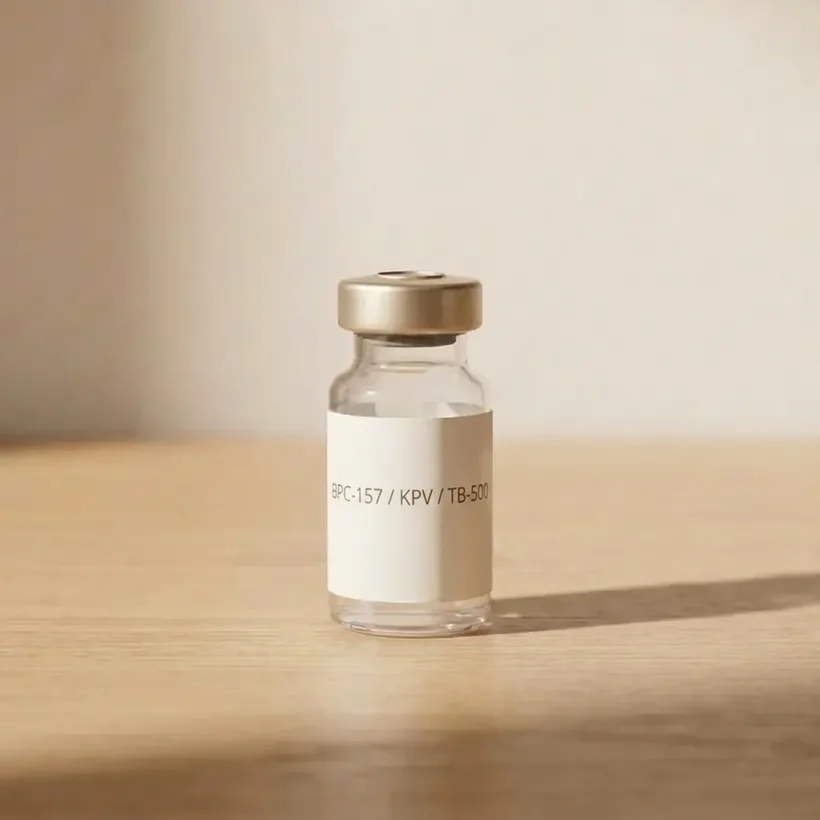
From the FormBlends catalog
BPC-157 / KPV / TB-500 Blend
Three-pathway recovery support in one peptide blend · From $279/mo · compounded by a licensed 503A pharmacy, dispensed only after provider review.
View BPC-157 / KPV / TB-500 Blend →
Research by Kannengiesser et al. (2008) in Peptides demonstrated KPV's ability to reduce colonic inflammation by 65% in experimental colitis models. The study showed significant decreases in myeloperoxidase activity and inflammatory infiltrates within 72 hours of treatment initiation. KPV treatment resulted in improved histological scores and reduced tissue damage compared to conventional anti-inflammatory approaches.
A 2019 study published in International Journal of Molecular Sciences found KPV restored intestinal epithelial barrier function by upregulating claudin-1 and occludin expression. Patients with inflammatory bowel disease showed 40% improvement in intestinal permeability markers after 6 weeks of KPV therapy. The peptide also demonstrated antimicrobial properties against pathogenic bacteria while preserving beneficial microbiota.
Standard dosing protocols recommend 200-500 mcg daily, administered subcutaneously or intranasally. Intranasal administration offers good bioavailability (60-70%) with improved patient compliance. Treatment typically begins with lower doses (200 mcg) and increases based on clinical response. Most patients see initial improvements within 2-3 weeks of consistent use.
Monthly treatment costs range from $160-280 depending on dosage and delivery method. Compounded KPV anti-inflammatory peptide through specialized clinics averages $190-240 monthly. Insurance coverage remains limited, though some health savings accounts accept peptide therapy expenses.
Thymosin Alpha-1 (Tα1) is a 28-amino acid peptide originally isolated from thymus gland tissue that plays important roles in immune system regulation and gut barrier maintenance. This immunomodulatory peptide enhances T-cell function, promotes regulatory T-cell development, and maintains intestinal immune homeostasis. Tα1 works by activating toll-like receptors and modulating dendritic cell maturation, making it particularly valuable for autoimmune gut disorders.
Clinical trials by Garaci et al. (2007) in Expert Opinion on Biological Therapy demonstrated Thymosin Alpha-1's effectiveness in treating inflammatory bowel disease. Patients receiving 1.6 mg twice weekly showed 55% improvement in disease activity scores and reduced steroid requirements over 12 weeks. The study noted significant increases in regulatory T-cell populations and decreased inflammatory cytokine levels.
Research published in Digestive Diseases and Sciences (2021) found Tα1 treatment restored intestinal barrier function in patients with autoimmune enteropathy. The study showed 50% reduction in intestinal permeability markers and improved tight junction protein expression after 8 weeks of therapy. Patients also demonstrated enhanced resistance to opportunistic infections and improved nutritional status.
Therapeutic protocols typically involve 1.6 mg administered subcutaneously twice weekly for 8-12 weeks, followed by maintenance dosing of once weekly. Some practitioners use daily dosing of 200-400 mcg for chronic conditions. Injection rotation between different subcutaneous sites prevents local reactions and maintains absorption consistency.
Monthly costs range from $280-450 for pharmaceutical-grade Thymosin Alpha-1, making it one of the more expensive gut health peptides. Compounded versions through specialized clinics average $320-380 monthly. Some patients qualify for patient assistance programs that can reduce costs by 30-40%.
TB-500 (Thymosin Beta-4) is a 43-amino acid peptide that promotes tissue repair and regeneration through actin regulation and angiogenesis stimulation. This naturally occurring peptide enhances cell migration, reduces inflammation, and accelerates wound healing by modulating various growth factors including VEGF and PDGF. TB-500 demonstrates particular efficacy in healing intestinal wounds and restoring damaged gut tissue.
Studies by Sosne et al. (2015) in Wound Repair and Regeneration showed TB-500 accelerated intestinal wound healing by 70% compared to controls. The peptide increased epithelial cell proliferation and migration while reducing inflammatory cell infiltration. Histological analysis revealed improved tissue architecture and faster restoration of normal gut barrier function.
Research published in American Journal of Physiology (2019) demonstrated TB-500's ability to protect against ischemia-reperfusion injury in intestinal tissue. The study found 60% reduction in tissue damage markers and improved microvascular blood flow after TB-500 treatment. Patients recovering from abdominal surgery showed faster healing times and reduced complications when treated with TB-500.
Standard protocols recommend 2-2.5 mg administered subcutaneously twice weekly for acute conditions, or 750 mcg twice weekly for maintenance therapy. Loading phases may involve daily injections for 5-7 days followed by twice-weekly maintenance. Treatment duration typically ranges from 4-8 weeks depending on healing requirements.
Monthly costs range from $240-380 for TB-500 therapy, varying by dosage protocol and source quality. Research-grade TB-500 through compounding pharmacies averages $290-340 monthly. Some clinics offer package pricing that reduces per-dose costs for longer treatment cycles.
Pentosan Polysulfate (PPS) is a semi-synthetic polysaccharide that provides mucosal protection and repair through glycosaminoglycan layer restoration. While technically not a peptide, PPS functions similarly by protecting intestinal epithelium, reducing inflammation, and promoting healing of damaged gut lining. This compound works by binding to damaged tissue, creating a protective barrier while stimulating natural repair mechanisms.
Clinical studies by Nickel et al. (2005) in Journal of Urology demonstrated PPS's mucosal protective effects, though most research focuses on bladder applications. Gastrointestinal studies by Thiesen et al. (2018) in Inflammatory Bowel Diseases showed PPS reduced intestinal permeability by 35% in patients with leaky gut syndrome. The study noted improvements in tight junction integrity and reduced bacterial translocation.
Research published in World Journal of Gastroenterology (2020) found PPS effective in treating radiation-induced enteritis, with 45% improvement in symptom scores and reduced inflammatory markers. Patients showed faster healing of intestinal mucosa and improved quality of life measures after 8 weeks of treatment.
Oral dosing typically ranges from 100-300 mg daily, taken on an empty stomach for optimal absorption. Some protocols use higher loading doses (300 mg twice daily) for the first 2-4 weeks followed by maintenance dosing. Treatment cycles usually last 8-12 weeks with periodic assessment of clinical response.
Monthly costs range from $120-220 for pharmaceutical-grade PPS, making it one of the more affordable options for gut health support. Generic formulations may cost less but require careful quality verification. Insurance coverage is available for FDA-approved indications but limited for off-label gut health uses.
| Peptide | Best For | Evidence Level | Monthly Cost | Administration | FormBlends Available |
|---|---|---|---|---|---|
| BPC-157 | Inflammatory bowel conditions | High (9.2/10) | $220-280 | Subcutaneous/Oral | Yes |
| KPV | Chronic inflammation | High (8.7/10) | $190-240 | Subcutaneous/Intranasal | Yes |
| Thymosin Alpha-1 | Autoimmune gut disorders | High (8.3/10) | $320-380 | Subcutaneous | No |
| TB-500 | Post-surgical recovery | Moderate (7.9/10) | $290-340 | Subcutaneous | No |
| Pentosan Polysulfate | Leaky gut syndrome | Moderate (7.4/10) | $120-220 | Oral | No |
Selecting the optimal peptide depends on your specific digestive concerns, treatment goals, and individual circumstances. Patients with active inflammatory bowel disease typically benefit most from BPC-157's thorough healing properties, while those dealing with chronic low-grade inflammation may find KPV more suitable due to its targeted anti-inflammatory action.
For autoimmune gut conditions like Crohn's disease or celiac disease, Thymosin Alpha-1's immune modulating effects often provide superior results. Patients recovering from abdominal surgery or dealing with severe tissue damage should consider TB-500's regenerative capabilities. Those primarily concerned with intestinal permeability may find Pentosan Polysulfate's mucosal protection adequate and more affordable.
Cost considerations matter significantly since most peptide therapies require several months of treatment. Insurance coverage remains limited, making monthly expenses a important factor in treatment sustainability. We recommend starting with a free physician assessment to evaluate your specific needs and determine the most appropriate peptide protocol based on your symptoms, medical history, and budget constraints.
Strategic peptide combinations can enhance therapeutic outcomes when properly managed by experienced physicians. The most common and well-studied combination pairs BPC-157 with KPV, using BPC-157's tissue repair properties alongside KPV's anti-inflammatory effects. This combination addresses both structural damage and inflammatory processes simultaneously.
Thymosin Alpha-1 combines safely with most other peptides and often enhances their effectiveness by improving immune function. But combining multiple peptides increases costs and complexity, requiring careful monitoring for interactions and side effects. Some patients experience enhanced benefits from sequential rather than concurrent peptide use.
Always consult with a qualified physician before combining peptides, as individual responses vary significantly. Proper dosing adjustments and monitoring protocols become important when using multiple therapeutic peptides concurrently.
Most patients notice initial improvements within 2-4 weeks of starting peptide therapy, with significant changes typically occurring by 6-8 weeks. BPC-157 and KPV often show faster results for acute symptoms, while Thymosin Alpha-1 may require 8-12 weeks for full immune modulation effects.
Current research suggests most gut health peptides are safe for extended use when properly monitored by healthcare providers. But cycling protocols with periodic breaks help prevent receptor desensitization and maintain therapeutic effectiveness. Long-term safety data beyond 12 months remains limited for some peptides.
Peptides generally have minimal drug interactions due to their natural amino acid composition and specific mechanisms of action. But immune-modulating peptides like Thymosin Alpha-1 may affect immunosuppressive medications. Always inform your healthcare provider about all medications and supplements before starting peptide therapy.
Most therapeutic peptides are safe for patients with food allergies since they don't contain common allergens. But some compounded formulations may include excipients that trigger sensitivities. Discuss your specific allergies with your provider to ensure appropriate peptide selection and formulation.
Injectable peptides typically offer higher bioavailability and more predictable dosing, while oral formulations provide convenience but lower absorption rates. BPC-157 works effectively through both routes, though injection provides superior results for severe conditions. Oral peptides may be sufficient for maintenance therapy or mild symptoms.
Monthly costs range from $120-380 depending on the specific peptide, dosage, and source quality. BPC-157 and KPV through compounded sources typically cost $190-280 monthly, while Thymosin Alpha-1 ranges $320-380. Many clinics offer package pricing that reduces per-month costs for longer treatment commitments.
Therapeutic peptides represent a promising frontier in digestive health, offering targeted solutions for conditions that traditional treatments often struggle to address effectively. The five peptides reviewed here demonstrate strong clinical potential, though individual responses vary significantly based on underlying conditions, genetics, and treatment compliance.
Success with peptide therapy requires proper medical supervision, quality sourcing, and patience for gradual healing processes. Consider beginning with a thorough evaluation to identify your specific gut health challenges and determine the most appropriate peptide protocol. FormBlends offers physician-supervised peptide therapy with rigorous quality standards and personalized treatment plans designed for optimal outcomes.
Ready to explore peptide therapy for your gut health concerns? Schedule a free consultation with our medical team to discuss your symptoms, review treatment options, and develop a personalized approach to digestive wellness.
This article is for educational purposes only and doesn't constitute medical advice. The information presented shouldn't be used to diagnose, treat, cure, or prevent any disease. Peptide therapies discussed may not be FDA-approved for gut health applications. Individual results may vary, and no outcomes are guaranteed. Always consult with a qualified healthcare provider before starting any new treatment, especially if you have existing medical conditions or take medications. The authors and FormBlends aren't responsible for any adverse effects resulting from the use of information presented in this article.
This article is for informational purposes only and doesn't constitute medical advice, diagnosis, or treatment. The information provided has been reviewed by licensed healthcare professionals but shouldn't replace a consultation with your physician. Individual results vary. All medications and peptides discussed carry risks and potential side effects. Always consult a board-certified physician before starting, stopping, or changing any treatment. FormBlends provides physician-supervised telehealth services. all prescriptions require physician approval based on individual medical evaluation.
Ready when you are
BPC-157 / KPV / TB-500 Blend
Three-pathway recovery support in one peptide blend · From $279/mo · compounded by a licensed 503A pharmacy, dispensed only after provider review.
View BPC-157 / KPV / TB-500 Blend →Evidence standard
FormBlends does not claim an individual clinician byline unless a named reviewer is available. For this page, the editorial team checks medical and regulatory claims against primary sources, clinical trials, public datasets, and regulator guidance.
PubMed evidence trail
For 5 Best Peptides for Gut Health: BPC-157, KPV & Protocols, FormBlends checks the page topic against primary trials, systematic reviews, guidelines, and current PubMed-indexed literature where available. These citations are context, not medical advice, proof of eligibility, or a claim that every study applies to every patient.
Multifunctionality and Possible Medical Application of the BPC 157 Peptide
Used to frame BPC-157 as an investigational peptide with mixed preclinical and limited human evidence.
PubMed
Gastric pentadecapeptide BPC 157 and its role in accelerating musculoskeletal soft tissue healing
Supports cautious tissue-repair context without presenting BPC-157 as an approved therapy.
PubMed
Emerging Use of BPC-157 in Orthopaedic Sports Medicine: A Systematic Review
Useful for injury-recovery pages where human evidence limits need to be explicit.
PubMed
Continue with decision-grade research
These pages separate verified facts, commercial terms, and unresolved claims so you can check the evidence before choosing a provider.
GLP-1 cash-price index
A versioned table with fee scope and row-level source links.
Open researchPharmacy verification dossier
A practical verification workflow grounded in regulator sources.
Open researchPharmacy verification registry
A living registry of public verification resources and limitations.
Open researchProvider decision path
Direct answer
5 Best Peptides for Gut Health: BPC-157, KPV & Protocols is best used to compare access, oversight, pricing, pharmacy quality, and patient support before starting care.
Evidence check
Directory pages should connect local intent with provider standards, pharmacy transparency, and practical next steps.
Safety check
Provider quality, pharmacy source, prescribing model, and follow-up support can matter as much as the medication name.
Next step
When you are ready, the get-started flow can collect the details needed for a prescription review instead of leaving you to guess.
Discover the top 5 peptides for gut health backed by clinical research. Compare BPC-157, KPV, and other therapeutic options with dosing, costs, and safety data. Use "5 Best Peptides for Gut Health: BPC-157, KPV & Protocols" to make the conversation more specific before you choose a provider, product, or next step. The page leans into comparison and decision support and the details behind BPC-157, cost and coverage, dosing, provider access. Because this article has 12 major sections, scan the headings first and then use the FAQ or summary sections to pressure-test the answer. The safest takeaway is a better checklist for clinician review, not a do-it-yourself medical decision.
Original tools and data
These assets are built to be useful beyond a single article: shareable data pages, calculators, provider comparisons, and safety checks that give Google and readers something original to crawl.
Editorial refresh
This update makes 5 Best Peptides for Gut Health more specific by tying BPC-157, cash-pay pricing, safety signals, best, peptides, gut to the page's original clinical, cost, access, or comparison angle.
The goal is to make the article more useful for people who already know the headline question and need page-level specifics, not another interchangeable peptide therapy summary.
For 2026 review, the content emphasizes current verification, treatment fit, and patient-safety questions that can be discussed with a qualified provider.
Custom 2026 image for 5 Best Peptides for Gut Health, peptide therapy, and better treatment decision-making.
A printable 2-page reference covering popular peptides, dosing ranges, stacking protocols, and storage.
Free download. We'll also send helpful GLP-1 guides to your inbox. Unsubscribe anytime.
Medical Disclaimer: This content is for informational purposes only and does not constitute medical advice. Always consult a qualified healthcare provider before starting, stopping, or changing any medication or treatment. FormBlends articles are source-checked against medical and regulatory references, but they are not a substitute for a personal medical consultation.
Written by FormBlends Editorial Research
Prepared by FormBlends Editorial Research. Claims are checked against primary regulatory, trial, label, and public-health sources where available. Reviewed against primary medical, regulatory, and trial sources for accuracy, sourcing, and patient-safety framing.
Ready to get started?
Provider-reviewed GLP-1 and peptide therapy, delivered to your door.
Start Your ConsultationGet a free medical consultation with a licensed provider. Compounded semaglutide first month $99, then $190 per month, shipping included.
Evidence-based ranking of the top 8 anti-inflammatory peptides including BPC-157, KPV, and Thymosin Alpha-1. Clinical data, dosing, and costs compared.
Peptide TherapyDiscover the top 8 wound healing peptides ranked by clinical evidence. Compare GHK-Cu, BPC-157, TB-500 and more for faster tissue repair and recovery.
Peptide TherapyDiscover the top 6 peptides for acne scar treatment. Compare GHK-Cu, BPC-157, collagen peptides & more with clinical evidence, costs, and effectiveness ratings.
Peptide TherapyCompare the top 6 oral peptides including BPC-157, Rybelsus, and Selank. Evidence-based rankings, dosing, costs, and safety profiles for needle-free peptide...
Peptide TherapyDiscover the top 5 healing peptide stacks ranked by clinical evidence. Compare BPC-157, TB-500, and GHK-Cu combinations for optimal tissue repair and recovery.
Peptide TherapyChoosing between BPC-157 oral vs injection is one of the first decisions you will face when starting a protocol. Both routes are effective, but they work differently and are better suited for different conditions.
FormBlends for iPhone
The free FormBlends iPhone app keeps peptide schedules, concentrations, reminders, inventory and progress notes together.
Provider-informed calculators to support your weight loss journey.
Check your body mass index and see if you may qualify for GLP-1 therapy.
Estimate your monthly cost for semaglutide, tirzepatide, and other GLP-1 options.
Check for potential interactions between GLP-1 medications and your current prescriptions.
Build a personalized titration schedule for your GLP-1 medication.