
Deep research
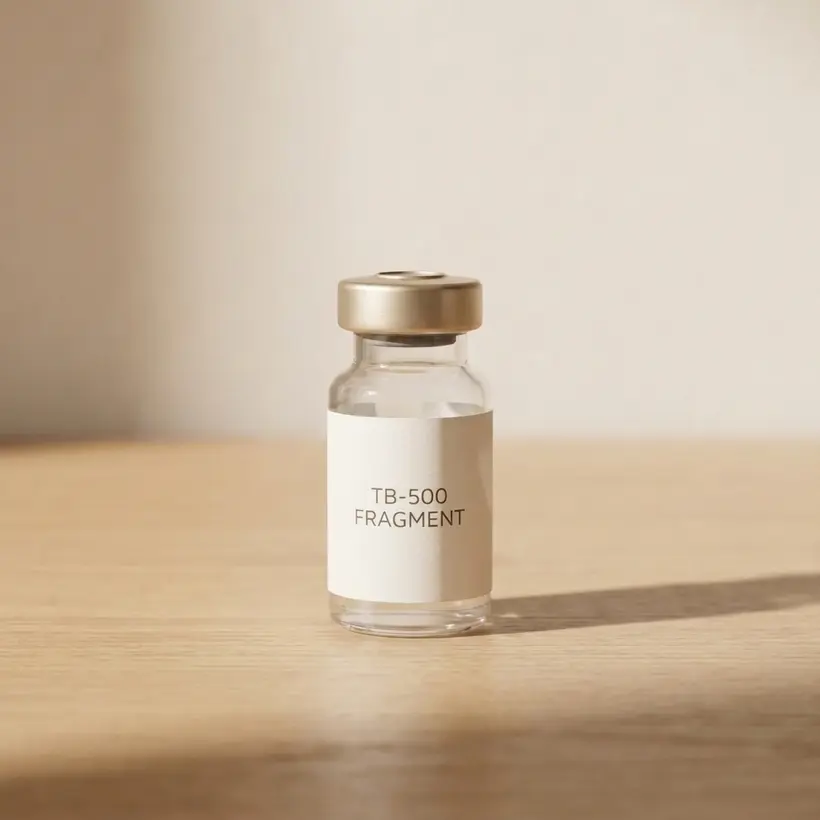
About TB-500 (Thymosin Beta-4)
TB-500 is the synthetic version of Thymosin Beta-4 (Tbeta4), a 43-amino acid peptide with the molecular formula C212H350N56O78S and a molecular weight of approximately 4921 Da. Thymosin Beta-4 is one of the most abundant intracellular peptides, found in virtually all nucleated cells, with particularly high concentrations in blood platelets, wound fluid, and developing tissues. The full sequence is Ac-SDKPDMAEIEKFDKSKLKKTETQEKNPLPSKETIEQEKQAGES, and the N-terminal acetylation is important for biological activity. TB-500 replicates this full sequence and acetylation pattern for reconstitution and storage.
The central mechanism of TB-500 involves its role as the primary intracellular G-actin sequestering peptide. TB-500 binds to monomeric actin (G-actin) and prevents its premature polymerization, maintaining a pool of available actin monomers that can be rapidly deployed when cell migration or cytoskeletal reorganization is needed. This actin-regulating function is critical because cell migration is the rate-limiting step in wound healing. By ensuring actin availability, TB-500 accelerates endothelial cell and keratinocyte migration to injury sites by up to 300% in cell culture models. TB-500 also directly promotes cell survival by activating the Akt (protein kinase B) signaling pathway and inhibiting apoptosis in stressed cells.
Cardiovascular research on TB-500 has produced some of the most compelling data. A study published in the Annals of the New York Academy of Sciences (Bock-Marquette et al., 2004) demonstrated that Thymosin Beta-4 reduced infarct size by approximately 40% when administered after coronary artery ligation in mice. The same group showed that TB-500 activates cardiac progenitor cells expressing the epicardial marker Wt1, promoting their migration and differentiation into functional cardiomyocytes. In corneal injury models (Sosne et al., published in the Journal of Clinical Investigation, 2002), TB-500 accelerated wound closure by 2.5x versus controls and reduced inflammatory cytokine expression (TNF-alpha, MMP-1, MMP-9) in the corneal epithelium. A separate study in dermal wound models (Malinda et al., FASEB Journal, 1999) showed TB-500 increased angiogenesis and collagen deposition while reducing wound closure time by 40-60%.
The pharmacokinetics of TB-500 reflect its large peptide size. Administered subcutaneously, it has an estimated half-life of approximately 2 hours in plasma, though tissue-level activity persists for considerably longer due to intracellular accumulation and slow release from actin-binding pools. TB-500 distributes widely due to its small molecular size relative to proteins, crossing tissue barriers and reaching deep compartments including cardiac, neural, and hepatic tissue. Metabolism occurs through standard endopeptidase cleavage, producing the bioactive fragment Ac-SDKP (the N-terminal tetrapeptide) as a major metabolite. This fragment has its own documented anti-fibrotic and angiogenic activity and is naturally present in human plasma at concentrations of 1-5 nM.
TB-500 lyophilized powder should be stored at -20C and is stable for at least 24 months under these conditions. After reconstitution in bacteriostatic water or sterile water, the solution should be stored at 2-8C and used within 21 days. TB-500 is more susceptible to degradation from repeated freeze-thaw cycles than smaller peptides, so aliquoting into single-use volumes at reconstitution is recommended. The reconstituted solution should appear clear and colorless. Any cloudiness or particulate matter indicates aggregation and the solution should be discarded.
Research protocols in the published literature have used TB-500 across a range of doses, typically 0.5-2 mg administered subcutaneously in small animal models. Equine research (where TB-500 has been most extensively studied in vivo) has used doses in the range of 10 mg per administration, with loading protocols of twice-weekly dosing for 4-6 weeks followed by monthly maintenance. Most tissue repair studies use treatment periods of 14-42 days, with measurable outcomes (reduced inflammation, increased vascularization, accelerated closure) typically observable within the first 7-14 days.
Published safety data on TB-500 shows a favorable profile. In equine studies conducted over 30-60 day periods, no adverse effects on hematology, serum chemistry, or organ function were observed. Thymosin Beta-4 has been through Phase 2 clinical trials for corneal wound healing (RegeneRx Biopharmaceuticals) and chronic venous stasis ulcers, with no serious adverse events attributed to the peptide in either trial. There is a theoretical concern that its pro-angiogenic properties could promote tumor vascularization, but published research has not demonstrated tumor-promoting effects, and some studies suggest Tbeta4 may actually have tumor-suppressive properties in certain cancer cell lines.