Key Takeaway
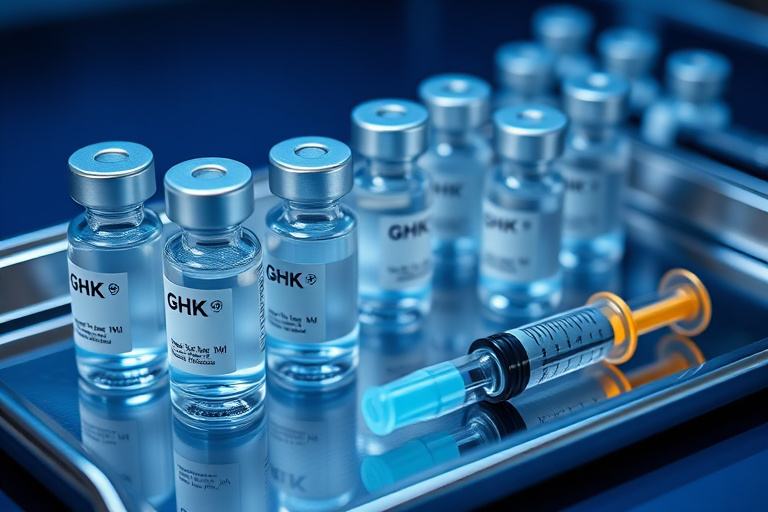
GHK-Cu peptide is one of the most researched peptides in the fields of wound healing and skin regeneration. Short for glycyl-L-histidyl-L-lysine copper, GHK-Cu is a naturally occurring tripeptide found in human plasma, saliva, and urine.
GHK-Cu peptide is one of the most researched peptides in the fields of wound healing and skin regeneration. Short for glycyl-L-histidyl-L-lysine copper, GHK-Cu is a naturally occurring tripeptide found in human plasma, saliva, and urine. Your body produces it on its own, but levels decline significantly with age. By age 60, your GHK-Cu levels may be roughly 60% lower than they were at age 20.
Key Takeaways: - Learn how ghk-cu works in your body - Benefits Supported by Research - Learn how ghk-cu is used: topical vs injectable - Side Effects and Safety Profile
This decline coincides with slower wound healing, thinner skin, reduced collagen production, and other visible signs of aging. That connection has made GHK-Cu one of the most popular peptides for people looking to support skin health and tissue repair from the inside out.
How GHK-Cu Works in Your Body
GHK-Cu is a copper-binding peptide. The copper ion is important to its function. Copper matters in many biological processes, including collagen synthesis, antioxidant enzyme production, and tissue remodeling.
When GHK-Cu is present in damaged tissue, it activates several repair pathways. Research published in the Journal of Biological Chemistry and other journals has identified key mechanisms:
Collagen stimulation. GHK-Cu increases the production of collagen types I and III, the primary structural proteins in your skin. It also stimulates the production of glycosaminoglycans, which are molecules that help your skin retain moisture and maintain elasticity.
Anti-inflammatory action. GHK-Cu can modulate the inflammatory response in damaged tissue. It reduces pro-inflammatory cytokines while supporting the transition from inflammation to repair. This is particularly relevant for wound healing and post-procedure recovery.
Antioxidant support. The peptide increases production of superoxide dismutase (SOD), a powerful antioxidant enzyme that protects cells from oxidative damage. This may contribute to its anti-aging effects.
Stem cell attraction. Research suggests GHK-Cu may help attract stem cells to damaged tissue, supporting the body's natural repair processes.
"What makes tirzepatide particularly interesting is the dual GIP/GLP-1 mechanism. We're seeing that GIP receptor activation appears to amplify the metabolic effects in ways we didn't fully anticipate from the preclinical data.") Dr. Ania Jastreboff, MD, PhD, Yale School of Medicine, lead author of SURMOUNT-1[1]
GHK-Cu is available in several forms: topical creams and serums, subcutaneous injections, and in some cases as part of a . The delivery method affects how deeply the peptide penetrates and what tissues it reaches.
Benefits Supported by Research
GHK-Cu has been studied for over four decades. While much of the research has been in vitro (cell cultures) and animal models, the body of evidence is substantial. Here is what the research suggests.
Skin quality and anti-aging. Multiple studies have shown that GHK-Cu can improve skin firmness, elasticity, and thickness. A study in the Journal of Cosmetic Dermatology found that topical GHK-Cu cream improved skin clarity, reduced fine lines, and increased skin density over a 12-week period.
Wound healing. GHK-Cu has demonstrated the ability to accelerate wound closure in both animal and human studies. It supports all phases of wound healing: inflammation, proliferation, and remodeling. This makes it relevant for post-surgical recovery and chronic wound management.
Free Download: Protocol Planner Track your GHK-Cu protocol alongside other peptides with a structured weekly planner. Get yours free (we'll email it to you instantly. [Download Your Protocol Planner]
Hair growth support. Some Available research indicates that GHK-Cu may support hair follicle health. Studies have shown it can increase hair follicle size and stimulate hair growth in a manner similar to minoxidil, though more research is needed in this area.
Tissue repair beyond skin. GHK-Cu's repair mechanisms aren't limited to the skin. Research has explored its potential role in lung tissue repair, bone regeneration, and nerve regeneration. These applications are still in early stages, but they highlight the peptide's broad biological activity.
While the research is promising, GHK-Cu isn't FDA-approved for any specific medical condition. All use is prescribed off-label by licensed providers based on clinical judgment and patient needs.
If you're interested in how GHK-Cu fits into a broader peptide protocol, learn about as well.
How GHK-Cu Is Used: Topical vs Injectable
The two primary delivery methods for GHK-Cu each have advantages depending on your goals.

From the FormBlends catalog
GHK-Cu (Copper Peptide)
A copper peptide studied for skin and tissue support · From $179/mo · compounded by a licensed 503A pharmacy, dispensed only after provider review.
View GHK-Cu (Copper Peptide) →Topical GHK-Cu
Topical formulations (creams, serums) are the most common and most studied delivery method for skin-specific benefits. They're applied directly to the face or target area.
- Best for: Fine lines, skin firmness, skin clarity, post-procedure recovery
- Concentration: Typically 1-3% GHK-Cu in a cream or serum base
- Application: Once or twice daily to clean skin
- Timeline: Visible improvements may begin within 4-8 weeks with consistent use
Topical GHK-Cu is available both through compounding pharmacies (prescription) and in some over-the-counter skincare products. Prescription formulations typically have higher concentrations and pharmaceutical-grade purity.
Injectable GHK-Cu
Subcutaneous injection delivers GHK-Cu systemically, allowing it to reach tissues beyond the skin. This route may be preferred for broader anti-aging, recovery, or tissue repair goals.
- Typical dose: 200-600 mcg per day via subcutaneous injection
- Cycle: Often used for 4-8 weeks at a time
- Common injection sites: Abdominal area or near target tissue
- Reconstitution: Requires mixing lyophilized powder with bacteriostatic water
For injection preparation, use the to ensure accurate dosing.
Injectable GHK-Cu must be prescribed by a licensed provider and prepared by a licensed compounding pharmacy. FormBlends works with US-based 503A pharmacies to ensure quality and sterility.
Side Effects and Safety Profile
GHK-Cu has a strong safety profile based on decades of research. It's a naturally occurring peptide in the human body, and adverse reactions are uncommon.
Topical side effects are rare and may include mild irritation or redness at the application site, particularly in people with sensitive skin. Starting with a lower concentration and gradually increasing can minimize this.
Injectable side effects are also generally mild: - Injection site redness or tenderness - Mild headache (infrequent) - Temporary skin discoloration at injection site (related to copper content)
Serious adverse events from GHK-Cu haven't been widely reported in the literature. But individuals with Wilson's disease or other copper metabolism disorders should avoid GHK-Cu due to the copper component. Always disclose your full medical history to your provider.
Some patients use GHK-Cu alongside for weight management. The peptides work on entirely different pathways and are generally considered compatible, but your provider should be aware of all medications and peptides in your protocol.
Track your skin changes and any side effects using the to share progress with your provider.
Frequently Asked Questions
How long does it take for GHK-Cu to work?
For topical use targeting skin quality, most users notice improvements in skin texture and firmness within four to eight weeks of consistent daily application. Injectable GHK-Cu for broader tissue support may show effects within two to four weeks. As with all peptides, individual response varies.
Can I use GHK-Cu with other peptides?
Yes. GHK-Cu is commonly included in multi-peptide protocols. It's often paired with BPC-157 for enhanced tissue healing or with growth hormone peptides for detailed anti-aging support. Your provider can design a safe combination protocol based on your goals.
Is GHK-Cu the same as copper peptides in skincare?
GHK-Cu is the specific copper peptide most studied for skin benefits. Some skincare products label their ingredients as "copper peptides" without specifying the exact peptide. Prescription-grade GHK-Cu from a compounding pharmacy provides a standardized, verified formulation.
Do I need a prescription for GHK-Cu?
Injectable GHK-Cu requires a prescription from a licensed provider. Some topical GHK-Cu products are available over the counter, but prescription formulations from compounding pharmacies offer higher concentrations and pharmaceutical-grade quality.
Can GHK-Cu help with scars?
Research suggests GHK-Cu can support scar remodeling by promoting organized collagen deposition and reducing excessive scar tissue formation. It has been studied in the context of post-surgical scarring and skin resurfacing procedures. Results vary, and it should be used as part of a detailed scar management plan directed by your provider.
Start your protocol Today
Every transformation starts with a single step. Talk to a licensed FormBlends provider about whether this approach is right for you) consultations are free and confidential.
Medical References
- Jastreboff AM, Aronne LJ, Ahmad NN, et al. Tirzepatide Once Weekly for the Treatment of Obesity. N Engl J Med. 2022;387(3):205-216. [PubMed | ClinicalTrials.gov | DOI]
Sources &. References
- Pickart L, Vasquez-Soltero JM, Margolina A. GHK Peptide as a Natural Modulator of Multiple Cellular Pathways in Skin Regeneration. BioMed Res Int. 2015;2015:648108. Doi:10.1155/2015/648108
- Pickart L, Vasquez-Soltero JM, Margolina A. GHK and DNA: Resetting the Human Genome to Health. BioMed Res Int. 2014;2014:151479. Doi:10.1155/2014/151479
- Sikiric P, Hahm KB, Blagaic AB, et al. Stable Gastric Pentadecapeptide BPC 157, Robert's Cytoprotection, Adaptive Cytoprotection, and Therapeutic Effects. Curr Pharm Des. 2018;24(18):1990-2001. Doi:10.2174/1381612824666180515125918
- Chang CH, Tsai WC, Lin MS, et al. The promoting effect of pentadecapeptide BPC 157 on tendon healing involves tendon outgrowth, cell survival, and cell migration. J Appl Physiol. 2011;110(3):774-780. Doi:10.1152/japplphysiol.00945.2010
- Seiwerth S, Brcic L, Vuletic LB, et al. BPC 157 and blood vessels. Curr Pharm Des. 2014;20(7):1121-1125. Doi:10.2174/13816128113199990421
- Bock-Marquette I, Saxena A, White MD, et al. Thymosin beta4 activates integrin-linked kinase and promotes cardiac cell migration, survival and cardiac repair. Nature. 2004;432(7016):466-472. Doi:10.1038/nature03000
- Malinda KM, Sidhu GS, Mani H, et al. Thymosin beta4 accelerates wound healing. J Invest Dermatol. 1999;113(3):364-368. Doi:10.1046/j.1523-1747.1999.00708.x
Nothing in this article should be construed as medical advice. The information provided is educational only. Always consult with your healthcare provider before beginning, modifying, or discontinuing any medication or treatment. FormBlends connects patients with licensed providers for individualized care.
Last updated: 2026-03-24
Ready when you are
GHK-Cu (Copper Peptide)
A copper peptide studied for skin and tissue support · From $179/mo · compounded by a licensed 503A pharmacy, dispensed only after provider review.
View GHK-Cu (Copper Peptide) →