Key Takeaway
The popularity of GLP-1 medications has attracted counterfeiters. This GLP-1 counterfeit fake warning resource covers the important information you need to make informed decisions.
The popularity of GLP-1 medications has attracted counterfeiters. This GLP-1 counterfeit fake warning resource covers the important information you need to make informed decisions. Fake semaglutide and tirzepatide products have been found online, at unauthorized sellers, and through unverified sources. Knowing the GLP-1 counterfeit warning signs protects your health and your wallet.
Key Takeaways: - Red Flags: How to Spot Counterfeits - Learn how to verify your source - Understand what to do if you suspect counterfeits
This guide helps you identify red flags and verify your medication source.
Red Flags: How to Spot Counterfeits
Purchasing red flags: - Buying without a prescription from a licensed provider - Prices that seem too good to be true - Sellers offering brand-name products at deep discounts - Purchasing from social media ads, marketplaces, or overseas websites - No verifiable pharmacy license or provider credentials - Pressure to buy quickly or in bulk
Product red flags: - Misspellings on labels or packaging - Missing lot numbers or expiration dates - Unusual packaging that doesn't match manufacturer specifications - Product that looks different in color, consistency, or clarity than expected - Missing or suspicious serial numbers - Packaging that appears tampered with
Free Download: Pharmacy Verification Checklist Step-by-step verification process to confirm your medication source is legitimate. Get yours free) we'll email it to you instantly. [Download Your Free Checklist]
How to Verify Your Source
For compounded medications: - Confirm your provider is licensed in your state (verify through state medical board) - Confirm the compounding pharmacy is licensed (verify through state board of pharmacy) - Ask for the pharmacy's accreditation (PCAB accreditation is a positive sign) - Request a certificate of analysis for your medication - Confirm the pharmacy follows USP 797 sterile compounding standards
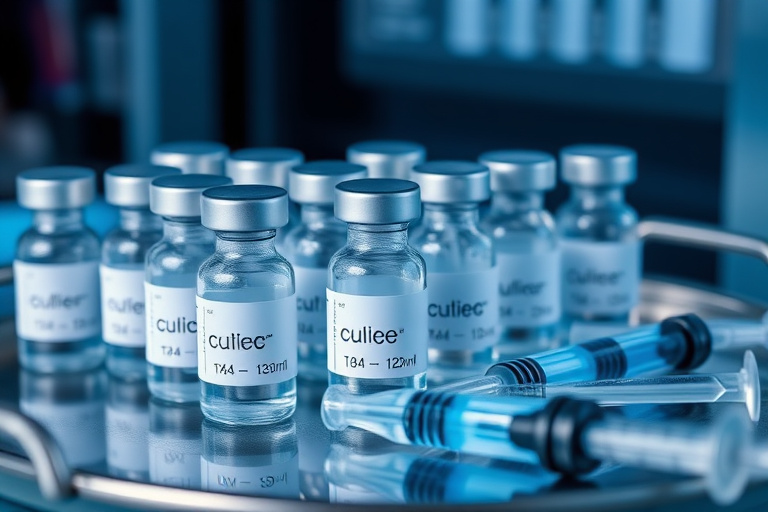
For brand-name medications: - Purchase only through licensed US pharmacies - Verify the pharmacy through the NABP (National Association of Boards of Pharmacy) - Check the FDA's BeSafeRx program for online pharmacy verification - Never purchase from unverified international sources
Your prescribes through verified, licensed US-based compounding pharmacies. Read about and.
What to Do If You Suspect Counterfeits
If you have received medication you believe may be counterfeit: stop using it immediately, contact your provider, report to the FDA's MedWatch program, and save the product and packaging for potential investigation.
Check your GLP-1 eligibility
Use our free BMI Calculator to see if you may qualify for provider-reviewed GLP-1 therapy.
Try the BMI Calculator →Physical Inspection: What to Check When Your Medication Arrives
When your medication arrives, take 5 minutes to inspect it before your first injection. Counterfeiters cut corners that are often visible to a careful eye.
Packaging inspection: - Check the outer box for spelling errors, misaligned printing, or low-quality graphics. Legitimate pharmacies use professional packaging - Verify that tamper-evident seals are intact. If the box or vial has been opened previously, don't use it - Look for a lot number and expiration date printed on both the outer box and the vial itself. These should match - Pharmacy labeling should include the pharmacy name, address, your name, the prescribing provider's name, medication name, concentration, and beyond-use date
Vial inspection: - Hold the vial up to light after reconstitution calculator. The solution should be clear and colorless. Any cloudiness, particles, discoloration, or floating debris means the product shouldn't be used - Check the rubber stopper for damage or signs of prior needle insertion. A new vial should have an intact, undamaged stopper - The vial cap (flip-off top) should require force to remove. If it comes off easily or appears already loosened, the vial may have been accessed previously - Verify the vial label matches what was prescribed. Check the peptide name, concentration, and volume against your prescription
After reconstitution red flags: - Excessive foaming that doesn't settle within a few minutes (indicates degraded protein or contamination) - Solution turns cloudy or develops precipitate after mixing (the peptide may have degraded) - Unusual smell when opening the vial (pharmaceutical-grade peptides in bacteriostatic water should have minimal odor) - The lyophilized powder doesn't dissolve completely with gentle swirling (may indicate incorrect compound or degradation)
If anything looks wrong, photograph it and contact your provider before using the product. Don't assume visual anomalies are harmless.
Online Purchasing Red Flags
The internet is full of GLP-1 sellers. Most of them should be avoided. Here are the specific warning signs that distinguish legitimate telehealth providers from dangerous counterfeit operations.
Immediate red flags that mean walk away: - No prescription required. Any seller offering GLP-1 medications without a provider consultation and prescription is operating illegally - Prices dramatically below market rate. If semaglutide is offered at 70-80% below what established providers charge, the product is almost certainly counterfeit, diluted, or mislabeled - Payment only through cryptocurrency, wire transfer, or peer-to-peer apps. Legitimate pharmacies accept standard credit card payments - Website registered outside the United States with no US pharmacy affiliation - No verifiable pharmacy license or provider credentials listed on the website - "No medical records needed" or "instant approval" language. A legitimate provider needs your health history before prescribing - Products shipped from overseas, particularly from China, India, or Eastern Europe without FDA authorization
Harder to spot but equally concerning: - Websites that look professional but have no physical US address - "Compounded" products that don't come from a verifiable US-licensed 503A pharmacy - Providers who prescribe without asking about your medical history, current medications, or contraindications - Medications that arrive without proper pharmacy labeling (your name, provider name, pharmacy name and address, lot number, beyond-use date) - Sellers who claim their product is "the same as brand-name" without being a licensed pharmacy
How to verify before you buy: - Ask for the pharmacy name and state of licensure, then verify it on the state board website - Ask for the prescribing provider's NPI number, then look it up on the NPPES NPI Registry (free, public database) - Check the Better Business Bureau for complaints against the company - Search for FDA warning letters issued to the company or pharmacy
Your operates with full transparency. Every provider credential, pharmacy license, and quality standard is verifiable.
What to Do If You Have Already Used a Suspect Product
If you have been using a GLP-1 product that you now suspect may be counterfeit or substandard, take these steps immediately.
Step 1[1]: Stop using the product. Don't inject any more of the suspected medication. Set it aside (don't discard yet).
Step 2: Monitor your health. Note any symptoms you're experiencing, including unusual injection site reactions, unexpected side effects, or lack of expected therapeutic effect (no appetite reduction at established doses, for example).
Step 3: Contact a healthcare provider. If you're experiencing adverse symptoms, seek medical attention. If you aren't having symptoms but suspect the product, schedule a consultation to transition to a verified source.
Step 4: Report the product. File a report with the FDA MedWatch program (available online). Include the product name, where you purchased it, lot number if available, and any adverse effects. FDA reports help identify counterfeit operations and protect other patients.
Step 5: Preserve the evidence. Keep the vial, packaging, and any documentation (order confirmation, shipping labels, website screenshots). These may be needed for the FDA investigation or for your provider to understand what you were using.
Step 6: Get legitimate treatment. Transition to a verified provider like where your medication comes from a licensed US pharmacy with third-party quality testing. Your new provider will want to know what you were using previously so they can start your protocol appropriately.
Frequently Asked Questions
Are all online GLP-1 sellers counterfeit?
No. Legitimate telehealth platforms like FormBlends connect you with licensed providers and licensed pharmacies. The key is verifying that a real provider evaluates you and a licensed pharmacy prepares your medication. Unauthorized sellers without prescriptions are the primary risk.
Can counterfeit GLP-1 be dangerous?
Yes. Counterfeit medications may contain wrong ingredients, incorrect concentrations, no active ingredient at all, or contaminants. This can cause serious health problems ranging from no therapeutic effect to allergic reactions or toxicity.
How does FormBlends ensure medication quality?
FormBlends works exclusively with licensed US-based 503A compounding pharmacies. All medications require a valid prescription from a licensed provider who evaluates your individual health needs.
Ready to Take the Next Step?
Your treatment plan is personal (and you deserve a plan that fits. FormBlends connects you with licensed providers who can evaluate your needs and create a personalized protocol.
Medical References
- Wilding JPH, Batterham RL, Calanna S, et al. Once-Weekly Semaglutide in Adults with Overweight or Obesity. N Engl J Med. 2021;384(11):989-1002. [PubMed | ClinicalTrials.gov | DOI]
- Davies M, Færch L, Jeppesen OK, et al. Semaglutide 2.4 mg once a week in adults with overweight or obesity, and type 2 diabetes (STEP 2). Lancet. 2021;397(10278):971-984. [PubMed | ClinicalTrials.gov | DOI]
- Wadden TA, Bailey TS, Billings LK, et al. Effect of Subcutaneous Semaglutide vs Placebo as an Adjunct to Intensive Behavioral Therapy on Body Weight in Adults With Overweight or Obesity (STEP 3). JAMA. 2021;325(14):1403-1413. [PubMed | ClinicalTrials.gov | DOI]
- Rubino D, Abrahamsson N, Davies M, et al. Effect of Continued Weekly Subcutaneous Semaglutide vs Placebo on Weight Loss Maintenance in Adults With Overweight or Obesity (STEP 4). JAMA. 2021;325(14):1414-1425. [PubMed | ClinicalTrials.gov | DOI]
- Garvey WT, Batterham RL, Bhatt DL, et al. Two-year effects of semaglutide in adults with overweight or obesity (STEP 5). Nat Med. 2022;28(10):2083-2091. [PubMed | ClinicalTrials.gov | DOI]
Sources &. References
- Centers for Disease Control and Prevention. Multistate Outbreak of Fungal Meningitis and Other Infections) United States, 2012. MMWR. 2012;61(41):839-842.
- U.S. Food and Drug Administration. Drug Quality and Security Act (DQSA). Public Law 113-54. November 27, 2013.
- Wilding JPH, Batterham RL, Calanna S, et al. Once-Weekly Semaglutide in Adults with Overweight or Obesity. N Engl J Med. 2021;384(11):989-1002. Doi:10.1056/NEJMoa2032183
- Davies M, Færch L, Jeppesen OK, et al. Semaglutide 2.4 mg once a week in adults with overweight or obesity, and type 2 diabetes (STEP 2 (Davies et al., Lancet, 2021)). Lancet. 2021;397(10278):971-984. Doi:10.1016/S0140-6736(21)00213-0
- Wadden TA, Bailey TS, Billings LK, et al. Effect of Subcutaneous Semaglutide vs Placebo as an Adjunct to Intensive Behavioral Therapy on Body Weight in Adults With Overweight or Obesity (STEP 3 (Wadden et al., JAMA, 2021)). JAMA. 2021;325(14):1403-1413. Doi:10.1001/jama.2021.1831
- Garvey WT, Batterham RL, Bhatt DL, et al. Two-Year Effects of Semaglutide in Adults with Overweight or Obesity (STEP 5 (Garvey et al., Nat Med, 2022)). Nat Med. 2022;28:2083-2091. Doi:10.1038/s41591-022-02026-4
- Lincoff AM, Brown-Frandsen K, Colhoun HM, et al. Semaglutide and Cardiovascular Outcomes in Obesity without Diabetes. N Engl J Med. 2023;389(24):2221-2232. Doi:10.1056/NEJMoa2307563
This article is for educational purposes only and doesn't constitute medical advice. Always consult with a licensed healthcare provider before starting, changing, or stopping any medication or supplement. FormBlends connects you with licensed providers who can evaluate your individual health needs.
Last updated: 2026-03-24
See your options in about 2 minutes
Take the free quiz and see what fits you. Quick, private, and no commitment to continue.
See my options →