Key Takeaway
Should you take GH peptides continuously or cycle them on and off? It's one of the most common questions people ask when starting a growth hormone peptide protocol. Cycling GH peptides is standard practice for most providers, but the reasoning and specific schedules vary.
Should you take GH peptides continuously or cycle them on and off? It's one of the most common questions people ask when starting a growth hormone peptide protocol. Cycling GH peptides is standard practice for most providers, but the reasoning and specific schedules vary.
Key Takeaways: - Discover why cycling gh peptides matters - Common Cycling Schedules - Understand what to expect during off periods - Peptide-Specific Cycling Considerations
This guide explains why cycling matters, how to structure your on and off periods, and what to expect during breaks.
Why Cycling GH Peptides Matters
Your body is smart. It adapts to repeated stimulation. When you take the same GH peptide at the same dose for an extended period, your receptors may become less sensitive to the stimulus. This is called receptor desensitization.
Think of it like this: if someone taps your shoulder over and over, you eventually stop noticing. Your ghrelin and GHRH receptors work similarly. Continuous stimulation by peptides like or may lead to a diminished GH response over time.
Cycling) taking planned breaks (allows your receptors to resensitize. When you restart the peptide after a break, your body responds more effectively.
There are other reasons for cycling too. Periodic breaks allow your provider to reassess your blood work without the influence of the peptide. They give your body time to confirm that its own GH production hasn't become dependent on the peptide stimulus. And they reduce the cumulative risk of any long-term side effects.
Not every provider cycles GH peptides the same way. Some believe continuous low-dose use is fine. Others strictly enforce cycling schedules. The evidence isn't definitive, which is why your provider's clinical experience and your individual response should guide the decision.
"The conversation about obesity needs to shift from willpower to biology. These medications work because obesity is a neuroendocrine disease, not a character flaw.") Dr. Fatima Cody Stanford, MD, MPH, Massachusetts General Hospital
Common Cycling Schedules
Here are the most widely used cycling approaches in clinical practice. Your provider may modify these based on your specific situation.
View data table
| Category | Clinical Interest Score | Detail |
|---|---|---|
| BPC-157 | 88 | Tissue repair and gut healing |
| TB-500 | 82 | Injury recovery |
| Sermorelin | 78 | Growth hormone support |
| Ipamorelin | 75 | Anti-aging and recovery |
| GHK-Cu | 70 | Skin and tissue repair |
The 12/4 Protocol (most popular) - 12 weeks on, 4 weeks off - This is the most commonly prescribed cycling schedule - Gives enough time on-protocol for meaningful results - The 4-week break allows receptor resensitization - Align with quarterly blood work for convenient monitoring
The 8/4 Protocol (conservative) - 8 weeks on, 4 weeks off - More conservative approach, often used for first-time users - Allows your provider to evaluate your response before committing to longer cycles - Good for people who want to start cautiously
The 5/2 Weekly Protocol - 5 days on, 2 days off each week (often weekdays on, weekends off) - Continuous overall but with regular micro-breaks - Some providers believe this prevents receptor desensitization while maintaining more consistent GH elevation - Less common but used by some clinics
The 16/8 Protocol (extended) - 16 weeks on, 8 weeks off - Longer cycle for experienced users who have established that they tolerate the peptide well - Allows for deeper body composition and recovery changes - Requires close monitoring with blood work at weeks 8 and 16
Track your cycling schedule using the to ensure you stay consistent and can share accurate timing data with your provider.
Free Download: Peptide Protocol Planner (12-Week) Our 12-week protocol planner includes built-in cycling schedules, break reminders, and tracking templates for each phase. Get yours free (we'll email it to you instantly.
[Download CTA Button]
What to Expect During Off Periods
Taking a break from GH peptides doesn't mean you lose all your progress. Here's what typically happens.
From the FormBlends catalog
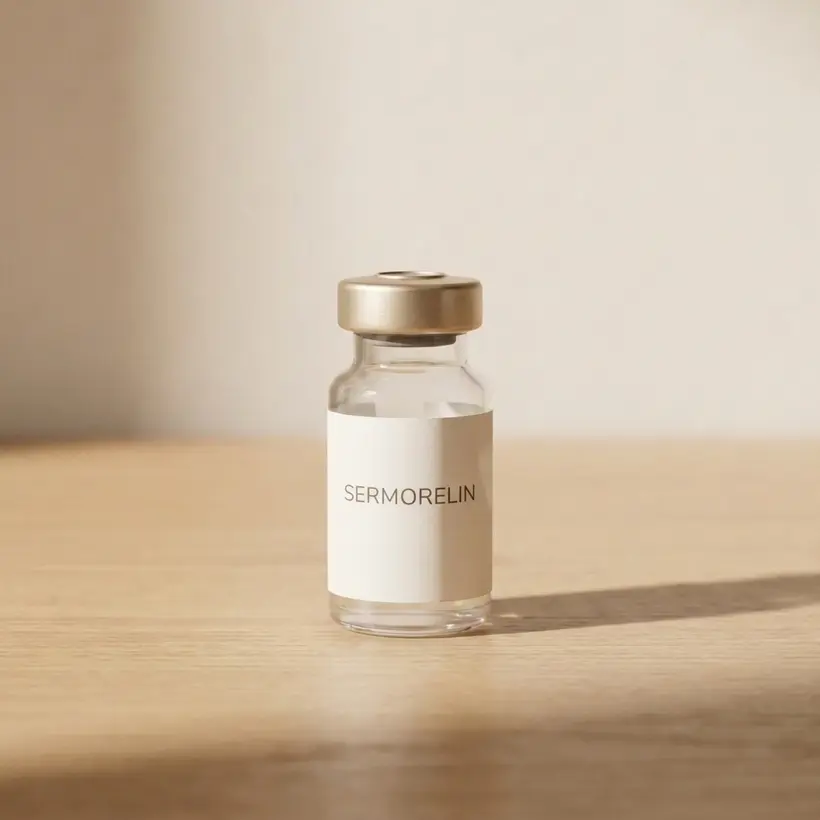
Sermorelin
Bioidentical GHRH analog for natural growth hormone pulsatility · From $175/mo · compounded by a licensed 503A pharmacy, dispensed only after provider review.
View Sermorelin →GH levels return to baseline. Within a few days of stopping, your GH and IGF-1 levels will start declining toward your natural baseline. This is expected and doesn't mean the peptides "stopped working."
Some benefits persist. Body composition improvements, strength gains, and connective tissue changes you've made during the on-cycle don't disappear overnight. These structural changes have momentum. If you maintain good nutrition and training, you can preserve much of your progress.
Sleep may change. Some people notice their sleep quality dips slightly during the off period. This usually isn't dramatic, but if you were relying heavily on the peptide's sleep benefits, you might notice a difference. Good help bridge the gap.
Energy levels. Some people report a slight dip in energy during the first week off. This typically normalizes quickly as your body adjusts.
No withdrawal. GH peptides aren't addictive and don't cause withdrawal symptoms. Stopping them is straightforward. Your body simply returns to its natural GH production pattern.
Use the off period productively. Focus on improving the factors you can control: sleep quality, , stress management, and training. These foundations amplify the benefits of your next on-cycle.
Peptide-Specific Cycling Considerations
Different GH peptides may benefit from different cycling approaches.
CJC-1295 with DAC has a long half-life (6-8 days). It takes longer to clear from your system after stopping. Because of this sustained exposure, some providers lean toward shorter on-cycles or longer off-cycles to ensure full receptor recovery.
CJC-1295 without DAC / Ipamorelin has a short half-life. The peptide clears quickly, so receptor recovery may be faster. The standard 12/4 cycle works well for most people using this combination.
MK-677 is an oral compound that some people use continuously. But long-term continuous use has been associated with increasing insulin resistance. Cycling may be even more important with MK-677 to manage metabolic effects. Monitor blood sugar and insulin sensitivity closely.
GHRP-6 may cause more pronounced receptor desensitization due to its strong ghrelin receptor activation. Some providers recommend shorter on-cycles (8 weeks) with this peptide.
Combination protocols (like CJC-1295/Ipamorelin) generally follow the standard cycling guidelines for the primary peptide. If you're stacking GH peptides with , those healing peptides often follow their own cycling schedule.
Your provider should adjust your cycling based on your blood work, subjective response, and individual goals. Regular monitoring with labs and symptom tracking through the makes these adjustments data-driven rather than guesswork.
Frequently Asked Questions
Can I take GH peptides without cycling?
Some providers do prescribe continuous low-dose use. But the majority recommend cycling to maintain receptor sensitivity and reduce potential long-term risks. Discuss the pros and cons with your provider based on your specific health profile.
Will I lose my gains during the off cycle?
Most body composition changes and strength gains are maintained during short off periods if you continue training and eating well. The off cycle primarily affects the acute benefits like enhanced sleep and improved GH levels, which return when you restart.
How do I know if my receptors are desensitized?
Signs may include diminishing sleep improvements, reduced perceived energy benefit, or blood work showing lower IGF-1 response to the same dose compared to earlier in the cycle. These signals suggest it may be time for a break. Your can interpret your labs in context.
Should I change my training during the off cycle?
You can maintain your normal training during off cycles. Some athletes reduce training volume slightly since recovery support from the peptide is temporarily removed. Listen to your body and adjust if recovery feels slower.
Can I switch peptides instead of cycling off completely?
Some providers rotate peptides) for example, switching from CJC-1295/Ipamorelin to Sermorelin (rather than taking a complete break. The theory is that different receptor interactions allow partial recovery. This approach has less clinical evidence but is used in practice by some clinics.
Let's Make This Happen
The research is clear. The options are available. The only question is whether it's right for you. A FormBlends provider can help you decide) no pressure, no commitment.
Sources &. References
- Ionescu M, Frohman LA. Pulsatile secretion of growth hormone (GH) persists during continuous stimulation by CJC-1295, a long-acting GH-releasing hormone analog. J Clin Endocrinol Metab. 2006;91(12):4792-4797. Doi:10.1210/jc.2006-1702
Nothing in this article should be construed as medical advice. The information provided is educational only. Always consult with your healthcare provider before beginning, modifying, or discontinuing any medication or treatment. FormBlends connects patients with licensed providers for individualized care.
Last updated: 2026-03-24
Ready when you are
Sermorelin
Bioidentical GHRH analog for natural growth hormone pulsatility · From $175/mo · compounded by a licensed 503A pharmacy, dispensed only after provider review.
View Sermorelin →