Key Takeaway
Every athlete knows the frustration of injury. Weeks of training interrupted by a torn tendon, strained muscle, or inflamed joint. Peptides injury recovery athletes protocols have gained significant traction because they target the body's natural healing mechanisms.
Every athlete knows the frustration of injury. Weeks of training interrupted by a torn tendon, strained muscle, or inflamed joint. Peptides injury recovery athletes protocols have gained significant traction because they target the body's natural healing mechanisms. Instead of just managing pain, these peptides may help your body repair damaged tissue faster and more completely.
Key Takeaways: - BPC-157 and TB-500: The Recovery Foundation - Matching Peptides to Injury Types - Protocol Design for Athletes - Return to Activity: A Gradual Approach
If you're a competitive athlete, a weekend warrior, or someone who just wants to get back to their workouts, understanding healing peptides can help you have an informed conversation with your provider about recovery options.
BPC-157 and TB-500: The Recovery Foundation
Is the most widely used peptide for injury recovery. Derived from a protein in human gastric juice, it has shown remarkable healing properties in research. Studies suggest it accelerates repair of tendons, ligaments, muscles, and bones.
BPC-157 works by promoting angiogenesis, the formation of new blood vessels at the injury site. More blood flow means more oxygen and nutrients reaching damaged tissue. It also modulates growth factors including VEGF and EGF, which are critical for tissue repair.
Complements BPC-157 through different mechanisms. It promotes cell migration, meaning repair cells can reach the injury site more quickly. TB-500 also reduces inflammation and downregulates inflammatory cytokines.
"We now have cardiovascular outcomes data showing semaglutide reduces MACE events by 20% in people with obesity, independent of diabetes status. The SELECT trial[1] changed how we think about these medications.") Dr. A. Michael Lincoff, MD, Cleveland Clinic, lead author of SELECT
The combination of BPC-157 and TB-500, sometimes called the Wolverine Stack, is popular among athletes for a reason. They attack injury recovery from two different angles. BPC-157 builds the repair infrastructure while TB-500 gets the repair cells where they need to go.
Free Download: Reconstitution calculator Cheat Sheet Get your peptides right with our free reconstitution cheat sheet. Includes mixing guides, dose calculations, and storage tips for recovery peptides. Get yours free, we will email it to you instantly. [Email Input] [Download Button]
Matching Peptides to Injury Types
Different injuries may respond better to different peptide approaches. Understanding this helps you have a more productive conversation with your provider.
For tendon injuries like Achilles tendinopathy, rotator cuff tears, and tennis elbow, BPC-157 has the most relevant research. Tendon studies show it can promote tendon-to-bone healing and improve tensile strength of damaged tendons.
Muscle tears and strains may benefit from both BPC-157 and TB-500. The combination supports muscle fiber repair while managing the inflammatory response that can delay healing.
Joint injuries involving cartilage may respond to in addition to BPC-157. Pentosan Polysulfate supports cartilage maintenance and improves joint lubrication, which may help with osteoarthritis and chronic joint wear.
Post-surgical recovery is another common application. Some providers prescribe healing peptides before and after surgery to improve the body's repair response. Timing, dosing, and peptide selection should be coordinated with your surgeon and peptide provider.
For chronic inflammation that underlies many overuse injuries, may help by suppressing NF-kB inflammatory signaling. Reducing chronic inflammation creates a better environment for tissue repair.
Protocol Design for Athletes
A well-designed recovery protocol considers the injury type, severity, your training demands, and your timeline for return to activity. Your provider will customize your protocol based on these factors.
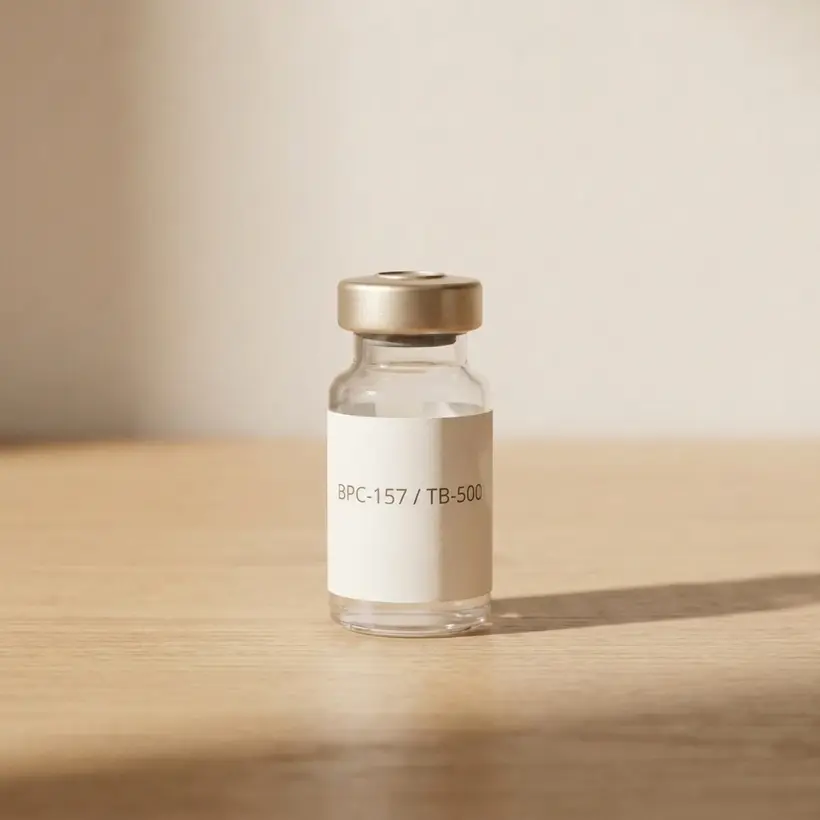
From the FormBlends catalog
BPC-157 / TB-500 Blend
The ultimate recovery stack in one vial · From $249/mo · compounded by a licensed 503A pharmacy, dispensed only after provider review.
View BPC-157 / TB-500 Blend →Most injury recovery protocols run 4 to 8 weeks. Some athletes use peptides for shorter periods during acute injury phases, then resume if recovery stalls. Consistent daily administration throughout the protocol typically produces the best results.
Injection site matters for healing peptides. Many providers recommend injecting as close to the injury site as possible. For a knee injury, you would inject near the knee. For a shoulder injury, near the shoulder. This local delivery concentrates the peptide where it's needed most.
Continue appropriate rehabilitation alongside peptide therapy. Peptides support healing, but they don't replace physical therapy, mobility work, and progressive loading. The combination of peptides and proper rehab is more effective than either approach alone.
Monitor your recovery objectively. Pain levels, range of motion, strength testing, and imaging can all track healing progress. Share this data with your to help fine-tune your protocol.
Use our for accurate dose preparation and track everything in the .
Return to Activity: A Gradual Approach
Peptides may accelerate healing, but don't rush your return to full activity. Tissue repair is a process with distinct phases, and pushing too hard too soon can reinjure healing tissue.
Follow your physical therapist's guidance on progressive loading. Even if you feel better quickly, the structural repair of tissue takes time to mature and strengthen. Pain reduction alone doesn't mean full healing.
Gradually increase training intensity and volume. A common approach is the 10 percent rule: increase training load by no more than 10 percent per week during return to activity.
Consider a maintenance dose of your healing peptide during the transition back to full training. This lower-dose approach provides continued support while your body adapts to increasing demands.
Long-term, some athletes use periodic short courses of healing peptides during heavy training blocks or when they notice early signs of overuse injury. This proactive approach may help prevent minor issues from becoming major ones.
Frequently Asked Questions
How long does peptide-assisted recovery take?
Recovery timelines depend on the injury type and severity. Many athletes notice improved pain and inflammation within 1 to 2 weeks. Structural tissue repair typically takes 4 to 8 weeks. Your provider can give you a more specific timeline based on your situation.
Will peptides show up on a drug test?
Anti-doping policies vary by sport and organization. Some peptides may be detectable with advanced testing methods. If you compete in tested sports, disclose any peptide use to your sports organization and discuss testing implications with your provider.
Can I train while using healing peptides?
Modified training is usually possible and often encouraged. Avoid aggravating the injured area but maintain fitness through alternative exercises. Your provider and physical therapist can advise on appropriate training modifications during recovery.
Are healing peptides better than cortisone injections?
They work differently. Cortisone reduces inflammation rapidly but may weaken tissue with repeated use. Peptides support actual tissue repair. Many providers use peptides as an alternative to repeated cortisone injections, especially for chronic conditions. Discuss both options with your .
Can I use peptides preventively for injury?
Some athletes use short courses of BPC-157 or during heavy training periods as a preventive measure. While research on preventive use is limited, the anti-inflammatory and tissue-supportive properties may offer protection. Discuss this approach with your provider.
Your Personalized Plan Is Waiting
No two patients are the same, and your protocol shouldn't be either. FormBlends providers create customized treatment plans based on your health profile, goals, and preferences.
Medical References
- Lincoff AM, Brown-Frandsen K, Colhoun HM, et al. Semaglutide and Cardiovascular Outcomes in Obesity without Diabetes. N Engl J Med. 2023;389(24):2221-2232. [PubMed | ClinicalTrials.gov | DOI]
Sources &. References
- Pickart L, Vasquez-Soltero JM, Margolina A. GHK Peptide as a Natural Modulator of Multiple Cellular Pathways in Skin Regeneration. BioMed Res Int. 2015;2015:648108. Doi:10.1155/2015/648108
- Pickart L, Vasquez-Soltero JM, Margolina A. GHK and DNA: Resetting the Human Genome to Health. BioMed Res Int. 2014;2014:151479. Doi:10.1155/2014/151479
- Sikiric P, Hahm KB, Blagaic AB, et al. Stable Gastric Pentadecapeptide BPC 157, Robert's Cytoprotection, Adaptive Cytoprotection, and Therapeutic Effects. Curr Pharm Des. 2018;24(18):1990-2001. Doi:10.2174/1381612824666180515125918
- Chang CH, Tsai WC, Lin MS, et al. The promoting effect of pentadecapeptide BPC 157 on tendon healing involves tendon outgrowth, cell survival, and cell migration. J Appl Physiol. 2011;110(3):774-780. Doi:10.1152/japplphysiol.00945.2010
- Seiwerth S, Brcic L, Vuletic LB, et al. BPC 157 and blood vessels. Curr Pharm Des. 2014;20(7):1121-1125. Doi:10.2174/13816128113199990421
- Bock-Marquette I, Saxena A, White MD, et al. Thymosin beta4 activates integrin-linked kinase and promotes cardiac cell migration, survival and cardiac repair. Nature. 2004;432(7016):466-472. Doi:10.1038/nature03000
- Malinda KM, Sidhu GS, Mani H, et al. Thymosin beta4 accelerates wound healing. J Invest Dermatol. 1999;113(3):364-368. Doi:10.1046/j.1523-1747.1999.00708.x
This content is provided for informational and educational purposes only. It isn't a substitute for professional medical advice, diagnosis, or treatment. Always seek the advice of a licensed healthcare provider with any questions about a medical condition or treatment plan.
Last updated: 2026-03-24
Ready when you are
BPC-157 / TB-500 Blend
The ultimate recovery stack in one vial · From $249/mo · compounded by a licensed 503A pharmacy, dispensed only after provider review.
View BPC-157 / TB-500 Blend →