Key Takeaway
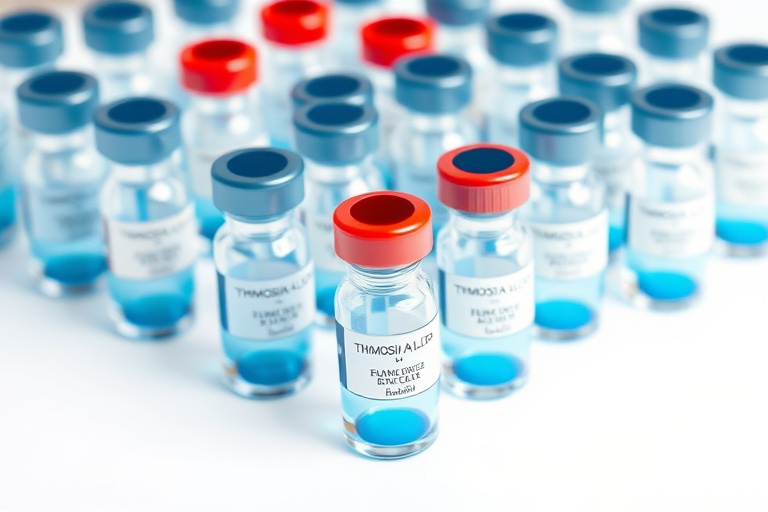
Your immune system is your body's defense department. When it works well, you barely notice it. When it doesn't, everything falls apart. Thymosin Alpha-1 immune support is one of the most studied peptide therapies available, with decades of research and clinical use behind it.
Your immune system is your body's defense department. When it works well, you barely notice it. When it doesn't, everything falls apart. Thymosin Alpha-1 immune support is one of the most studied peptide therapies available, with decades of research and clinical use behind it.
Key Takeaways: - Learn how thymosin alpha-1 supports your immune system - Clinical Applications and Research History - Who May Benefit from Thymosin Alpha-1 - Dosing, Administration, and Safety Profile
Thymosin Alpha-1 (Ta1) is a peptide naturally produced by the thymus gland. The thymus is a small organ behind your breastbone that matters in immune function, particularly in the development and regulation of T-cells. As you age, the thymus shrinks and produces less Ta1. This decline is linked to weakened immune response in older adults.
How Thymosin Alpha-1 Supports Your Immune System
Thymosin Alpha-1 is a 28-amino acid peptide that acts as an immune modulator. That means it doesn't simply boost your immune system. It helps regulate it, which is an important distinction.
Ta1 works primarily by enhancing T-cell function. T-cells are the soldiers of your immune system. They identify and destroy infected cells, coordinate immune responses, and remember previous threats so your body can respond faster next time.
Research published in the Annals of the New York Academy of Sciences shows that Ta1 can stimulate the maturation of T-cells from precursor cells in the thymus. It also enhances the activity of natural killer (NK) cells, which are your first line of defense against viral infections and abnormal cell growth.
"GLP-1 receptor agonists represent the most significant advance in obesity pharmacotherapy in decades. For the first time, we have medications that produce weight loss approaching what was previously only achievable through bariatric surgery.") Dr. Robert Kushner, MD, Northwestern University, speaking at ObesityWeek 2023
A key feature of Ta1 is its ability to modulate dendritic cells. Dendritic cells are the sentinels of your immune system. They detect threats and present them to T-cells for destruction. Ta1 helps these cells function more efficiently, improving your body's ability to recognize and respond to new threats.
Clinical Applications and Research History
Thymosin Alpha-1 has one of the strongest research profiles of any peptide therapy. It has been studied in clinical trials for over 40 years.
View data table
| Category | Clinical Interest Score | Detail |
|---|---|---|
| BPC-157 | 88 | Tissue repair and gut healing |
| TB-500 | 82 | Injury recovery |
| Sermorelin | 78 | Growth hormone support |
| Ipamorelin | 75 | Anti-aging and recovery |
| GHK-Cu | 70 | Skin and tissue repair |
Ta1 is approved in over 35 countries for the treatment of chronic hepatitis B and C, often in combination with other therapies. In these trials, Ta1 improved viral clearance rates and enhanced immune response in patients whose systems were already compromised.
Research has also explored Ta1 in the context of cancer immunotherapy. Studies published in Expert Opinion on Biological Therapy suggest that Ta1 may enhance the effectiveness of certain cancer treatments by improving T-cell mediated immune responses. It has been used as an adjunct therapy in several oncology settings.
During the COVID-19 pandemic, Ta1 was studied in China and Italy as a supportive therapy for critically ill patients. A retrospective study published in Clinical Infectious Diseases found that critically ill patients treated with Ta1 had improved lymphocyte counts and reduced mortality rates compared to controls.
For a broader understanding of peptide therapy options, explore our .
Free Download: Protocol Planner Track your Thymosin Alpha-1 protocol with dosing schedules, immune markers, and provider notes. Get yours free -- we'll email it to you instantly.
[Download Your Free Protocol Planner]
Who May Benefit from Thymosin Alpha-1
Ta1 may be relevant for several groups of people. But only a licensed provider can determine whether it's appropriate for your situation.

From the FormBlends catalog
Thymosin Alpha-1
The master immune regulator peptide · From $249/mo · compounded by a licensed 503A pharmacy, dispensed only after provider review.
View Thymosin Alpha-1 →Adults over 50 may benefit because thymus function naturally declines with age. This age-related immune decline (called immunosenescence) makes older adults more vulnerable to infections, less responsive to vaccines, and slower to recover from illness.
People with chronic infections may find Ta1 helpful. Its track record with hepatitis B and C suggests it can support immune function in the context of persistent viral challenges.
Individuals under chronic stress may also be candidates. Chronic stress suppresses immune function through improved cortisol. Ta1 may help restore more balanced immune activity. If stress is also affecting your sleep, combining immune support with could be beneficial.
Athletes and people with demanding physical lifestyles sometimes use Ta1 to support immune function during periods of intense training, when the immune system can be temporarily suppressed.
Dosing, Administration, and Safety Profile
Thymosin Alpha-1 is administered as a subcutaneous injection. The standard dose used in most clinical trials is 1.6 mg, injected two to three times per week.
Some providers use loading protocols with more frequent dosing for the first 1-2 weeks before transitioning to a maintenance schedule. Your provider will design a protocol based on your immune markers and health goals.
The safety profile of Ta1 is well-established. Across decades of clinical trials and use in over 35 countries, serious adverse effects have been rare. The most common side effects are mild injection site reactions. Some people report temporary fatigue or low-grade fever, which may actually indicate immune activation.
Because Ta1 modulates rather than simply stimulates the immune system, it carries a lower theoretical risk of autoimmune flare-ups compared to non-specific immune boosters. But people with autoimmune conditions should discuss their situation carefully with their provider.
Ta1 should be obtained from a and prescribed by a licensed provider. Use the to track your dosing schedule and any changes in how you feel.
Frequently Asked Questions
What is Thymosin Alpha-1 used for?
Thymosin Alpha-1 is used to support and regulate immune function. It's approved in over 35 countries for chronic hepatitis B and C. Providers also prescribe it for general immune support, age-related immune decline, and as an adjunct in certain clinical situations.
Is Thymosin Alpha-1 the same as thymosin beta-4 (TB-500)?
No. Thymosin Alpha-1 and Thymosin Beta-4 (TB-500) are different peptides with different functions. Ta1 primarily supports immune regulation, while TB-500 is used for tissue repair and recovery. They come from the same family of thymic peptides but act through different mechanisms.
How long does it take for Thymosin Alpha-1 to work?
Immune effects may begin within the first 1-2 weeks. Some people notice increased energy or fewer infections within the first month. Full immune modulation may take 4-8 weeks of consistent use. Lab markers can help your provider assess response.
Can Thymosin Alpha-1 be combined with other peptides?
Yes, many providers use Ta1 alongside other peptide therapies. Common combinations include BPC-157 for gut and tissue health alongside immune support. Always discuss combination protocols with your provider to ensure safety.
Are there any drug interactions with Thymosin Alpha-1?
Ta1 is generally well-tolerated alongside other medications. But people on immunosuppressive drugs should exercise caution, as Ta1 may counteract the immunosuppressive effects. Always provide your provider with a complete list of current medications.
Let's Make This Happen
The research is clear. The options are available. The only question is whether it's right for you. A FormBlends provider can help you decide (no pressure, no commitment.
Medical References
- Goldstein AL, Hannappel E, Sosne G, Kleinman HK. Thymosin beta4: a multi-functional regenerative peptide. Basic properties and clinical applications. Expert Opin Biol Ther. 2012;12(1):37-51. [PubMed | DOI]
Sources &. References
- Pickart L, Vasquez-Soltero JM, Margolina A. GHK Peptide as a Natural Modulator of Multiple Cellular Pathways in Skin Regeneration. BioMed Res Int. 2015;2015:648108. Doi:10.1155/2015/648108
- Pickart L, Vasquez-Soltero JM, Margolina A. GHK and DNA: Resetting the Human Genome to Health. BioMed Res Int. 2014;2014:151479. Doi:10.1155/2014/151479
- Sikiric P, Hahm KB, Blagaic AB, et al. Stable Gastric Pentadecapeptide BPC 157, Robert's Cytoprotection, Adaptive Cytoprotection, and Therapeutic Effects. Curr Pharm Des. 2018;24(18):1990-2001. Doi:10.2174/1381612824666180515125918
- Chang CH, Tsai WC, Lin MS, et al. The promoting effect of pentadecapeptide BPC 157 on tendon healing involves tendon outgrowth, cell survival, and cell migration. J Appl Physiol. 2011;110(3):774-780. Doi:10.1152/japplphysiol.00945.2010
- Seiwerth S, Brcic L, Vuletic LB, et al. BPC 157 and blood vessels. Curr Pharm Des. 2014;20(7):1121-1125. Doi:10.2174/13816128113199990421
- Bock-Marquette I, Saxena A, White MD, et al. Thymosin beta4 activates integrin-linked kinase and promotes cardiac cell migration, survival and cardiac repair. Nature. 2004;432(7016):466-472. Doi:10.1038/nature03000
- Malinda KM, Sidhu GS, Mani H, et al. Thymosin beta4 accelerates wound healing. J Invest Dermatol. 1999;113(3):364-368. Doi:10.1046/j.1523-1747.1999.00708.x
This content is provided for informational and educational purposes only. It isn't a substitute for professional medical advice, diagnosis, or treatment. Always seek the advice of a licensed healthcare provider with any questions about a medical condition or treatment plan.
Last updated: 2026-03-24
Ready when you are
Thymosin Alpha-1
The master immune regulator peptide · From $249/mo · compounded by a licensed 503A pharmacy, dispensed only after provider review.
View Thymosin Alpha-1 →