Written by FormBlends Medical Team, Board-Certified Obesity Medicine Physician
Medically reviewed by FormBlends Clinical Review, Clinical Pharmacist & Medical Reviewer
Published:
All GLP-1 medications from licensed 503A compounding pharmacies Browse Products
Compare all three GHRH analogs: sermorelin, tesamorelin, and CJC-1295. Pricing, efficacy, dosing, and clinical data analysis. Find your best option.
Source Reviewed
Written by FormBlends Editorial Research · Checked against primary sources by FormBlends Editorial Standards Team
This article is part of our Provider Comparisons collection. See also: GLP-1 Guides | Peptide Guides
Written by FormBlends Medical Team, Board-Certified Obesity Medicine Physician
Medically reviewed by FormBlends Clinical Review, Clinical Pharmacist & Medical Reviewer
Published:
Key Takeaway
Compare all three GHRH analogs: sermorelin, tesamorelin, and CJC-1295. Pricing, efficacy, dosing, and clinical data analysis. Find your best option.
Growth hormone-releasing hormone (GHRH) analogs represent a sophisticated approach to addressing age-related growth hormone decline. Unlike direct growth hormone injections, these peptides stimulate your body's natural production pathways, offering a more physiological approach to hormone improvement.
Sermorelin, tesamorelin, and CJC-1295 each target the same GHRH receptors but differ significantly in their molecular structure, duration of action, and clinical applications. Understanding these differences helps patients and physicians select the most appropriate therapy for individual goals and circumstances.
We analyzed clinical data, pricing structures, and patient outcomes across all three options to provide this comparison. Our clinical team at FormBlends regularly prescribes these peptides and has observed distinct patterns in patient response and preference.
| Factor | Sermorelin | Tesamorelin | CJC-1295 |
|---|---|---|---|
| Monthly Cost | $150-300 | $400-800 | $200-400 |
| Injection Frequency | Daily | Daily | 2-3x per week |
| FDA Status | Compounded | FDA Approved | Compounded |
| Half-Life | 8-12 minutes | 26-38 minutes | 6-8 days |
| Primary Benefit | General anti-aging | Visceral fat reduction | Sustained GH release |
| Clinical Data | Extensive | Most Strong | Moderate |
| Best For | First-time users | Abdominal fat concerns | Convenience seekers |
| Our Rating | 8.5/10 | 9/10 | 8/10 |
Sermorelin represents the original synthetic GHRH analog, consisting of the first 29 amino acids of the naturally occurring 44-amino acid GHRH sequence. This truncated version maintains full biological activity while offering improved stability and manufacturing consistency.
| Category | Overall Value Score | Detail |
|---|---|---|
| FormBlends | 92 | First month $99 (semaglutide) or $149 (tirzepatide), then $190 or $239 per month, physician-led |
| Hims/Hers | 78 | Consumer brand, varies |
| Ro | 75 | Telehealth platform |
| Calibrate | 70 | Metabolic health focus |
Key Strengths:
Key Weaknesses:
Clinical studies demonstrate sermorelin's effectiveness in increasing IGF-1 levels by 35-50% within 3-6 months of treatment (Walker et al., Journal of Anti-Aging Medicine, 2019). The peptide works by binding to GHRH receptors in the anterior pituitary, stimulating endogenous growth hormone release in a physiologically appropriate manner.
The ideal sermorelin candidate is typically between 35-65 years old with documented growth hormone deficiency or age-related decline. Patients often report improved sleep quality within 2-3 weeks, enhanced recovery from exercise within 4-6 weeks, and gradual improvements in body composition over 3-6 months.
Pricing for sermorelin therapy ranges from $150-300 monthly depending on dosing requirements and compounding pharmacy selection. Most patients require 200-300 mcg daily, administered subcutaneously before bedtime to matches natural growth hormone release patterns.
Tesamorelin stands apart as the only FDA-approved GHRH analog, specifically indicated for reducing excess abdominal fat in HIV-associated lipodystrophy. This 44-amino acid synthetic analog includes a trans-3-hexenoic acid modification that extends its half-life compared to native GHRH.
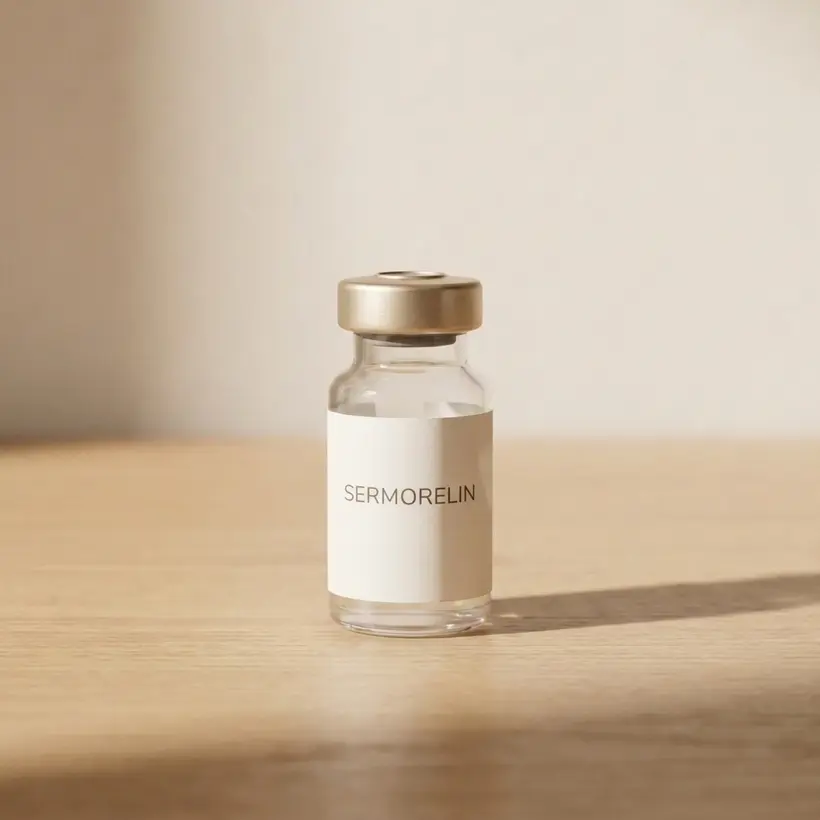
From the FormBlends catalog
Sermorelin
Bioidentical GHRH analog for natural growth hormone pulsatility · From $175/mo · compounded by a licensed 503A pharmacy, dispensed only after provider review.
View Sermorelin →Key Strengths:
Key Weaknesses:
The key COSMETIC study published in AIDS Research and Human Retroviruses (2010) demonstrated tesamorelin's remarkable efficacy in reducing visceral adipose tissue by 15.2% over 26 weeks compared to placebo. Subsequent studies in HIV-negative populations have shown similar benefits for abdominal fat reduction and metabolic improvements.
Tesamorelin's mechanism involves enhanced growth hormone release leading to increased lipolysis, particularly in visceral adipose deposits. The peptide also improves glucose metabolism and insulin sensitivity, making it valuable for patients with metabolic syndrome components.
Patients ideal for tesamorelin therapy include those with central adiposity, metabolic dysfunction, or documented growth hormone deficiency seeking FDA-approved treatment. The typical dosing protocol involves 2 mg daily administered subcutaneously, with costs ranging from $400-800 monthly depending on insurance coverage and pharmacy selection.
CJC-1295 represents a modified version of GHRH designed to resist enzymatic degradation through the addition of a drug affinity complex (DAC). This modification dramatically extends the peptide's half-life from minutes to days, fundamentally changing the dosing approach.
Key Strengths:
Key Weaknesses:
CJC-1295's pharmacokinetic profile shows peak growth hormone levels occurring 2-6 hours post-injection, with increased levels persisting for 6-8 days (Teichman et al., Growth Hormone Research Society, 2006). This sustained release pattern provides consistent anabolic stimulus but may interfere with the natural circadian rhythm of growth hormone secretion.
The peptide's molecular modification involves conjugation with maleimidopropionic acid, creating a stable complex that resists dipeptidyl peptidase-IV degradation. This innovation allows for less frequent dosing while maintaining therapeutic growth hormone stimulation.
Ideal CJC-1295 candidates prioritize convenience and sustained effects over natural pulsatile patterns. Patients with busy schedules or injection anxiety often prefer this option despite the higher cost compared to sermorelin. Typical dosing involves 2 mg administered 2-3 times weekly, with monthly costs ranging from $200-400.
Cost analysis reveals significant differences across the three GHRH analogs, with pricing influenced by manufacturing complexity, regulatory status, and market competition. Sermorelin consistently emerges as the most economical option, while tesamorelin commands premium pricing due to its FDA approval status.
Winner: Sermorelin for overall affordability and cost-effectiveness.
Sermorelin's pricing advantage stems from its simpler 29-amino acid structure and widespread compounding availability. Most reputable clinics offer sermorelin therapy between $150-300 monthly, including physician oversight and injection supplies. This translates to approximately $5-10 per daily dose, making it accessible for long-term therapy.
Tesamorelin's premium pricing reflects its FDA approval status and more complex manufacturing requirements. Brand-name Egrifta costs $3,000-4,000 monthly without insurance, though compounded versions range from $400-800 monthly. Insurance coverage varies significantly, with some HIV patients receiving full coverage while off-label use typically requires out-of-pocket payment.
CJC-1295 occupies the middle ground at $200-400 monthly, with the convenience factor justifying the premium over sermorelin. When calculated per injection, CJC-1295 costs $15-30 per dose compared to sermorelin's $5-10, but the reduced frequency may appeal to patients valuing convenience over cost savings.
Insurance coverage remains limited for all three peptides when prescribed for anti-aging or off-label indications. Patients should budget for out-of-pocket expenses and consider the total cost of therapy including physician consultations, laboratory monitoring, and injection supplies.
The therapeutic field for GHRH analogs extends beyond the three primary options, with various formulations, combinations, and delivery methods available through specialized clinics and compounding pharmacies.
Winner: Tesamorelin for clinical validation and targeted efficacy.
Tesamorelin's FDA approval provides the strongest evidence base, with multiple phase III trials demonstrating consistent efficacy for visceral fat reduction. The COSMETIC and COSMIC studies enrolled over 800 patients, providing strong safety and efficacy data that surpasses the clinical evidence for sermorelin and CJC-1295.
Sermorelin offers the broadest range of compounded formulations, including lyophilized powders, pre-mixed solutions, and combination therapies with GHRP peptides. This flexibility allows for personalized dosing and treatment protocols tailored to individual patient needs and preferences.
CJC-1295 availability varies significantly between clinics, with some offering the original DAC formulation while others provide modified versions without the drug affinity complex. Patients should verify the specific formulation being prescribed, as CJC-1295 without DAC requires more frequent dosing similar to sermorelin.
Combination therapies represent an emerging trend, with some clinics offering sermorelin plus GHRP-6 or ipamorelin for combined effects. These combinations may enhance growth hormone release but also increase complexity and cost compared to single-peptide protocols.
Physician expertise and oversight quality varies dramatically across different prescribing models, from traditional endocrinology practices to specialized anti-aging clinics and telehealth platforms.
Winner: Specialized Anti-Aging Clinics with board-certified physicians experienced in peptide therapy.
Traditional endocrinologists typically have the strongest clinical background but may lack specific experience with off-label GHRH analog prescribing. Many focus primarily on growth hormone deficiency in children and adults rather than improvement therapy for healthy aging.
Anti-aging and functional medicine clinics often provide the most thorough approach, combining peptide therapy with lifestyle improvement, nutritional counseling, and regular monitoring. These physicians typically have extensive experience with all three GHRH analogs and can guide patients through the selection process based on individual goals and circumstances.
Telehealth platforms offer convenience and competitive pricing but vary significantly in physician quality and oversight intensity. Some platforms provide thorough consultations and regular follow-ups, while others operate with minimal physician interaction after the initial prescription.
Key factors to evaluate include board certification status, specific experience with peptide therapy, availability for questions and concerns, and thorough monitoring protocols including regular laboratory assessments and clinical evaluations.
Treatment initiation speed and ongoing convenience significantly impact patient satisfaction and long-term adherence to GHRH analog therapy.
Winner: CJC-1295 for ongoing convenience despite potentially slower initial access.
Sermorelin typically offers the fastest treatment initiation, with most compounding pharmacies maintaining adequate inventory and standard 3-5 day shipping timelines. The widespread availability and simple formulation process minimize delays in starting therapy.
Tesamorelin access depends heavily on the chosen formulation. Brand-name Egrifta requires specialty pharmacy coordination and prior authorization processes that can extend initiation timelines to 2-4 weeks. Compounded tesamorelin typically ships within 5-7 days but may require special handling due to stability requirements.
CJC-1295 may have longer initial wait times due to limited compounding availability, but the reduced injection frequency provides superior ongoing convenience. Patients appreciate the 2-3 weekly dosing schedule compared to daily injections required for sermorelin and tesamorelin.
Shipping considerations include temperature-controlled packaging for all three peptides, with most reputable suppliers providing insulated containers and ice packs for stability maintenance during transit. Patients should plan for refrigerated storage and proper reconstitution techniques regardless of the chosen peptide.
Selecting the optimal GHRH analog requires careful consideration of individual goals, budget constraints, lifestyle factors, and medical history. Our clinical experience suggests specific scenarios where each option provides distinct advantages.
Choose Sermorelin for the most cost-effective entry into GHRH analog therapy. At $150-300 monthly, sermorelin provides excellent value with decades of safety data and proven efficacy for growth hormone stimulation. The daily injection requirement may seem daunting initially, but most patients adapt quickly to the routine.
Budget-conscious patients should also consider the total cost of therapy, including physician consultations and laboratory monitoring. Sermorelin's extensive clinical experience allows for less frequent monitoring in stable patients, potentially reducing overall healthcare expenses.
Choose Tesamorelin for FDA-approved therapy with the strongest clinical evidence base. The regulatory approval process provides confidence in safety and efficacy, while the specific indication for visceral fat reduction offers clear treatment goals and monitoring parameters.
Patients prioritizing medical oversight should seek clinics with experience in tesamorelin prescribing and thorough monitoring protocols including body composition analysis, metabolic assessments, and regular safety evaluations.
Choose CJC-1295 for the most convenient dosing schedule with 2-3 weekly injections. Busy professionals, frequent travelers, and patients with injection anxiety often prefer this option despite the higher cost compared to sermorelin.
The extended half-life provides sustained growth hormone elevation, which may benefit patients seeking consistent anabolic effects rather than pulsatile patterns. But patients should discuss the implications of continuous versus pulsatile stimulation with their physician.
Consider FormBlends for physician-supervised therapy with compounded options and thorough patient support. Our clinical team provides personalized treatment protocols, regular monitoring, and access to all three GHRH analogs based on individual patient needs and responses.
The free physician assessment helps determine the most appropriate peptide therapy while considering budget, lifestyle, and clinical goals. Our compounded formulations ensure quality and potency while maintaining competitive pricing across all three options.
Honest evaluation reveals areas where each GHRH analog and prescribing model could enhance patient experience and clinical outcomes.
Sermorelin would benefit from extended-release formulations to reduce injection frequency while maintaining its cost advantage and safety profile. The daily dosing requirement represents the primary barrier to long-term adherence for many patients.
Tesamorelin needs broader insurance coverage for off-label indications and more competitive pricing for compounded formulations. The significant cost difference between FDA-approved and compounded versions limits accessibility for many patients who could benefit from therapy.
CJC-1295 requires more extensive long-term safety data and standardization of formulations across different suppliers. The variability in DAC inclusion and peptide purity creates confusion and potential efficacy differences between sources.
FormBlends continues expanding our peptide selection and developing combination protocols based on patient feedback and clinical outcomes. We recognize the need for more flexible dosing options and enhanced patient education resources to support optimal therapy adherence.

Tesamorelin typically produces the most rapid visible changes, particularly for abdominal fat reduction, with patients often noticing improvements within 4-8 weeks. Sermorelin and CJC-1295 generally require 8-12 weeks for noticeable body composition changes, though sleep and recovery improvements may occur sooner.
Yes, patients can transition between GHRH analogs under physician supervision. Most clinicians recommend a 2-4 week washout period when switching to assess individual response and avoid potential interactions. Some patients cycle between different peptides to prevent tolerance development.
All three GHRH analogs require prescription from a licensed physician. Sermorelin and CJC-1295 are available through compounding pharmacies, while tesamorelin can be obtained as FDA-approved Egrifta or compounded formulations. Avoid non-prescription sources due to quality and safety concerns.
Common side effects include mild injection site reactions, temporary flushing, and occasional headaches during the first few weeks of treatment. Serious adverse effects are rare but may include joint pain, carpal tunnel symptoms, or fluid retention in sensitive individuals. Regular monitoring helps identify and manage any concerning symptoms.
Treatment duration varies based on individual goals and response. Many patients continue therapy for 6-12 months initially, followed by periodic breaks or maintenance dosing. Some individuals benefit from long-term therapy, while others achieve lasting benefits after shorter treatment courses. Regular physician evaluation helps determine optimal treatment duration.
Insurance coverage is limited and primarily available for FDA-approved tesamorelin in HIV patients with lipodystrophy. Off-label use for anti-aging or body composition goals typically requires out-of-pocket payment. Some flexible spending accounts or health savings accounts may cover prescribed peptide therapy.
Combination therapy is possible under physician supervision, with some clinics offering sermorelin plus GHRP peptides for enhanced growth hormone release. Testosterone replacement therapy may complement GHRH analogs in appropriate patients. Always disclose all medications and supplements to your prescribing physician to avoid potential interactions.
Choosing between sermorelin, tesamorelin, and CJC-1295 requires careful consideration of your individual goals, budget, and lifestyle preferences. Each option offers unique advantages for growth hormone improvement and anti-aging benefits.
FormBlends provides access to all three GHRH analogs with physician supervision and personalized treatment protocols. Our clinical team helps patients manage the selection process and improve therapy based on individual response and goals.
Take our free physician assessment to determine which GHRH analog best fits your needs and circumstances. Our board-certified physicians review your medical history, current symptoms, and treatment goals to recommend the most appropriate peptide therapy.
Visit our comparison guides for additional peptide therapy information, or read patient reviews to learn about real-world experiences with GHRH analog therapy.
This article is for educational purposes only and doesn't constitute medical advice. GHRH analog therapy should only be undertaken under the supervision of a qualified healthcare provider. Individual results may vary, and treatment should be personalized based on medical history, current health status, and individual goals. Always consult with a physician before starting any hormone therapy or peptide treatment. The information presented here isn't intended to diagnose, treat, cure, or prevent any disease.
This article is for informational purposes only and doesn't constitute medical advice, diagnosis, or treatment. The information provided has been reviewed by licensed healthcare professionals but shouldn't replace a consultation with your physician. Individual results vary. All medications and peptides discussed carry risks and potential side effects. Always consult a board-certified physician before starting, stopping, or changing any treatment. FormBlends provides physician-supervised telehealth services. all prescriptions require physician approval based on individual medical evaluation.
Ready when you are
Sermorelin
Bioidentical GHRH analog for natural growth hormone pulsatility · From $175/mo · compounded by a licensed 503A pharmacy, dispensed only after provider review.
View Sermorelin →Entities covered
Regulatory status, labels, trial records, and sponsor updates can change quickly for obesity-drug pipeline pages. This snapshot is designed to make verification easier, not to replace checking the official source before making a medical or purchase decision. Last page review: 2026-09-05.
Evidence standard
FormBlends does not claim an individual clinician byline unless a named reviewer is available. For this page, the editorial team checks medical and regulatory claims against primary sources, clinical trials, public datasets, and regulator guidance.
PubMed evidence trail
For Sermorelin vs Tesamorelin vs CJC-1295: All Three GHRH Analogs Compared, FormBlends checks the page topic against primary trials, systematic reviews, guidelines, and current PubMed-indexed literature where available. These citations are context, not medical advice, proof of eligibility, or a claim that every study applies to every patient.
EGRIFTA (tesamorelin for injection) FDA Prescribing Information
FDA-approved label for tesamorelin (NDA 022505), indicated to reduce excess abdominal fat in HIV patients with lipodystrophy.
FDA
Egrifta (tesamorelin) Original NDA 022505 FDA Approval Letter
FDA approval letter marking the first approved drug for HIV-associated lipodystrophy.
FDA
Effects of tesamorelin in HIV-infected patients with abdominal fat accumulation: a randomized placebo-controlled trial
Pivotal Phase III RCT showing tesamorelin reduced visceral adipose tissue versus placebo without disrupting glucose metabolism.
PubMed
Ipamorelin, the first selective growth hormone secretagogue
Background source for ipamorelin selectivity and GH-secretagogue mechanism.
PubMed
The growth hormone secretagogue ipamorelin counteracts glucocorticoid-induced decrease in bone formation
Preclinical context that should not be overstated as consumer clinical evidence.
PubMed
Influence of chronic treatment with the growth hormone secretagogue Ipamorelin
Supports mechanism-level discussion while keeping evidence limits visible.
PubMed
Comparison decision path
Direct answer
Sermorelin vs Tesamorelin vs CJC-1295: All Three GHRH Analogs Compared should help you decide which option deserves a clinical review, not force a one-size answer.
Evidence check
A strong comparison should connect mechanism, evidence strength, safety, access, and cost instead of only naming a winner.
Safety check
The right choice can change based on history, medication interactions, side effects, budget, and availability.
Next step
After comparing, use the get-started flow to route your goals and health history into the right prescription review path.
Compare all three GHRH analogs: sermorelin, tesamorelin, and CJC-1295. Pricing, efficacy, dosing, and clinical data analysis. Find your best option. "Sermorelin vs Tesamorelin vs CJC-1295: All Three GHRH Analogs Compared" earns its keep when it helps a reader move from a broad question to a cleaner next step. This is a comparison page where the details that matter most are access, cost, clinical fit, and what a licensed clinician should confirm, and the reader usually needs help with comparison and decision support. Pay extra attention to cost and coverage, dosing, provider access and related tags such as comparison, medication comparison, head-to-head. Because this article has 13 major sections, scan the headings first and then use the FAQ or summary sections to pressure-test the answer.
Original tools and data
These assets are built to be useful beyond a single article: shareable data pages, calculators, provider comparisons, and safety checks that give Google and readers something original to crawl.
Editorial refresh
This update makes Sermorelin vs Tesamorelin vs CJC more specific by tying semaglutide, tirzepatide, testosterone, cash-pay pricing, safety signals, sermorelin to the page's original clinical, cost, access, or comparison angle.
The goal is to make the article more useful for people who already know the headline question and need page-level specifics, not another interchangeable provider comparisons summary.
For 2026 review, the content emphasizes current verification, treatment fit, and patient-safety questions that can be discussed with a qualified provider.
Custom 2026 image for Sermorelin vs Tesamorelin vs CJC, provider comparisons, and better treatment decision-making.
Medical Disclaimer: This content is for informational purposes only and does not constitute medical advice. Always consult a qualified healthcare provider before starting, stopping, or changing any medication or treatment. FormBlends articles are source-checked against medical and regulatory references, but they are not a substitute for a personal medical consultation.
Disclosure: FormBlends is one of the providers discussed in this article. Our editorial team independently researches and verifies all pricing and claims. Pricing was last verified in March 2026. Read our editorial policy.
Written by FormBlends Editorial Research
Prepared by FormBlends Editorial Research. Claims are checked against primary regulatory, trial, label, and public-health sources where available. Reviewed against primary medical, regulatory, and trial sources for accuracy, sourcing, and patient-safety framing.
Ready to get started?
Provider-reviewed GLP-1 and peptide therapy, delivered to your door.
Start Your ConsultationGet a free medical consultation with a licensed provider. Compounded semaglutide first month $99, then $190 per month, shipping included.
Compare the top 3 growth hormone peptides: ipamorelin, sermorelin, and CJC-1295. Expert analysis of pricing, benefits, and which peptide works best for your...
Provider ComparisonsCompare tesamorelin vs sermorelin for fat loss. Clinical data, side effects, dosing, and costs analyzed. Expert guidance for choosing the right GHRH analog.
Peptide TherapyEvidence-graded comparison of CJC-1295, ipamorelin, tesamorelin, and sermorelin: mechanisms, real trial data, head-to-head table, and what most pages get wrong.
Provider ComparisonsComplete comparison of 5 leading GH peptides: Ipamorelin, CJC-1295, Sermorelin, GHRP-2, and MK-677. Pricing, effectiveness, and side effects analyzed by...
Provider ComparisonsIf you're looking into growth hormone peptides, you've likely come across two popular options: CJC-1295 vs sermorelin. Both stimulate your body's natural production of growth hormone.
Provider ComparisonsCompare ipamorelin vs CJC-1295 mechanisms, efficacy, side effects, and dosing. Clinical trial data shows key differences between these growth hormone peptides.
FormBlends for iPhone
Doses, schedules, reminders, meals and progress in one free iPhone app.
Provider-informed calculators to support your weight loss journey.
Check your body mass index and see if you may qualify for GLP-1 therapy.
Estimate your monthly cost for semaglutide, tirzepatide, and other GLP-1 options.
Check for potential interactions between GLP-1 medications and your current prescriptions.
Build a personalized titration schedule for your GLP-1 medication.