Key Takeaway
Joint pain affects millions of people, from weekend warriors to desk workers. If you have been exploring options beyond traditional anti-inflammatory medications, peptide stacks for joint pain are gaining attention in the clinical community.
Joint pain affects millions of people, from weekend warriors to desk workers. If you have been exploring options beyond traditional anti-inflammatory medications, peptide stacks for joint pain are gaining attention in the clinical community. Several peptides have been studied for their potential to support joint tissue repair, reduce inflammation, and improve mobility. In this guide, we cover the most commonly prescribed peptide stacks for joint health and what the research says about each.
Key Takeaways: - Discover why peptides may help with joint pain - The BPC-157 and TB-500 Stack for Joints - Other Peptide Stacks for Joint Support - Understand what to expect during treatment
Why Peptides May Help With Joint Pain
Traditional approaches to joint pain often focus on masking symptoms. NSAIDs reduce inflammation and pain, but they don't rebuild damaged tissue. Corticosteroid injections offer temporary relief but may actually weaken connective tissue with repeated use.
Peptides take a different approach. Rather than just blocking pain signals, certain peptides may support the actual repair processes your joints need to heal. They work at the cellular level, potentially promoting collagen synthesis, blood vessel formation, and controlled inflammation resolution.
The joints are complex structures. They involve cartilage, synovial fluid, tendons, ligaments, and the joint capsule itself. Different peptides may target different parts of this system. This is why stacking, using two or more peptides together, can be more effective than using a single peptide. Each one may address a different aspect of joint health.
Peptide therapy isn't a magic fix. Results vary based on the severity of your joint condition, your overall health, and how consistently you follow your protocol. But for people who want to support their body's natural healing processes, peptides offer an option worth discussing with a licensed provider.
"Compounding pharmacies serve a critical role in healthcare, but patients need to understand the difference between a properly regulated 503B facility and an unregulated operation. Ask about PCAB accreditation and third-party testing.") Dr. Scott Brunner, PharmD, Alliance for Pharmacy Compounding
For a breakdown into one of the most popular joint peptides, read .
The BPC-157 and TB-500 Stack for Joints
The BPC-157 and TB-500 combination, sometimes called the Wolverine Stack, is the most well-known peptide pairing for musculoskeletal healing. Here is why providers prescribe them together for joint issues.
View data table
| Category | Clinical Interest Score | Detail |
|---|---|---|
| BPC-157 | 88 | Tissue repair and gut healing |
| TB-500 | 82 | Injury recovery |
| Sermorelin | 78 | Growth hormone support |
| Ipamorelin | 75 | Anti-aging and recovery |
| GHK-Cu | 70 | Skin and tissue repair |
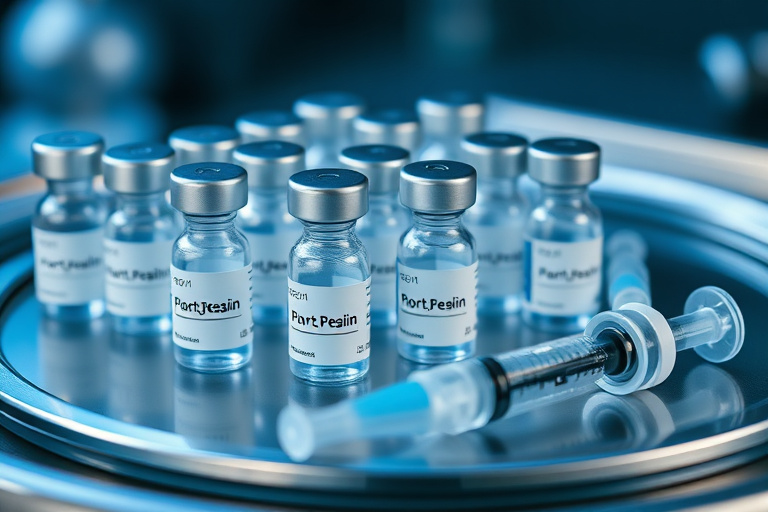
BPC-157 has been studied extensively in animal models for tendon, ligament, and joint healing. Research suggests it may promote the growth of new blood vessels in damaged tissue, accelerate tendon-to-bone healing, and reduce inflammation. For joints, this translates to potential support for the tendons and ligaments that stabilize the joint.
TB-500 (Thymosin Beta-4) is a naturally occurring peptide that plays a role in cell migration and tissue repair. Studies suggest it may promote healing in damaged tissue by helping cells move to the injury site. It has also shown anti-inflammatory and anti-fibrotic properties in preclinical research.
Together, BPC-157 may kickstart the repair process while TB-500 helps cells reach the damaged area and supports tissue remodeling. Providers typically prescribe this stack for 4-8 weeks, with BPC-157 at 250-500 mcg daily and TB-500 at 750 mcg twice per week.
For detailed dosing schedules, check out .
Free Download: Wolverine Stack Protocol Card Get a printable reference card with peptide stacking protocols for joint health, including dosing and cycling schedules. Get yours free (we'll email it to you instantly. [Download Now]
Other Peptide Stacks for Joint Support
Beyond the Wolverine Stack, several other peptide combinations are prescribed for joint health.
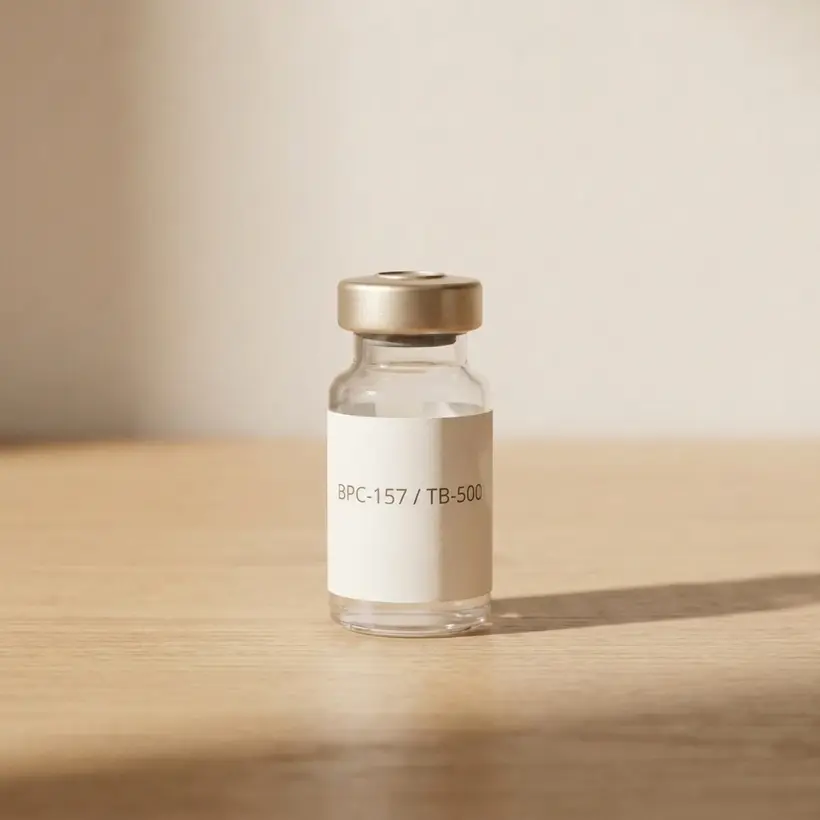
From the FormBlends catalog
BPC-157 / TB-500 Blend
The ultimate recovery stack in one vial · From $249/mo · compounded by a licensed 503A pharmacy, dispensed only after provider review.
View BPC-157 / TB-500 Blend →BPC-157 + GHK-Cu: This combination targets both internal joint repair (BPC-157) and connective tissue remodeling (GHK-Cu). GHK-Cu may support collagen synthesis, which is a key component of cartilage and joint structure. This stack is sometimes preferred when skin or superficial tissue healing is also a goal.
BPC-157 + CJC-1295/Ipamorelin: Adding growth hormone peptides to a healing peptide can be beneficial because growth hormone plays a role in cartilage repair and overall tissue regeneration. This is a more thorough stack that addresses both the immediate healing and the hormonal environment that supports long-term joint health.
TB-500 + GHK-Cu: For people who want to focus on tissue remodeling without using BPC-157, this combination offers anti-inflammatory and collagen-supporting properties. GHK-Cu may also help reduce scar tissue formation, which can limit joint mobility after an injury.
Each of these stacks has different advantages. Your provider will recommend one based on your specific joint condition, medical history, and treatment goals. The right stack for a post-surgical knee repair will be different from the right stack for chronic shoulder inflammation.
If you're working with peptides that need reconstitution calculator, helps you measure doses accurately.
What to Expect During Treatment
Starting a peptide protocol for joint pain requires patience. Here is a realistic timeline of what you may experience.
Weeks 1-2: You may notice reduced inflammation and slight pain improvement. Some people report feeling less morning stiffness. The peptides are working at the cellular level, but visible changes take time.
Weeks 3-4: Many people begin to notice more meaningful improvements. Joint mobility may increase, and pain during movement may decrease. This is often when people feel the most encouraged about their protocol.
Weeks 5-8: Deeper tissue repair continues. If your provider prescribed an 8-week cycle, this is where cumulative benefits often become most apparent. Range of motion improvements, reduced swelling, and better function during exercise are commonly reported.
Post-cycle: Benefits from healing peptides often continue after you stop. The tissue repair processes that were initiated during your cycle keep working. Many providers recommend a follow-up assessment 2-4 weeks after completing a cycle.
Throughout your protocol, track your pain levels, mobility, and function daily. The lets you log these details so your provider has objective data for your follow-up appointments.
Don't push through significant pain during your protocol. Peptides support healing, but they can't override the damage caused by overloading an injured joint. Follow your provider's activity recommendations.
Frequently Asked Questions
Which peptide is best for knee joint pain?
BPC-157 is the most commonly prescribed peptide for knee joint pain. When combined with TB-500, the stack may address both the inflammation and the tissue repair aspects of knee injuries. Your provider will recommend the best approach based on your specific condition.
How long do peptide results last for joint pain?
Many people report lasting improvements after completing a cycle, especially if the peptides supported actual tissue repair rather than just symptom relief. Some people do multiple cycles over time for chronic conditions. Your provider will advise on follow-up protocols.
Can peptides replace surgery for joint problems?
Peptides aren't a replacement for surgery when surgery is medically indicated. They may be helpful for pre-surgical preparation, post-surgical recovery, or conditions where surgery isn't yet necessary. Discuss all your options with your provider.
Are peptide injections painful for joint treatment?
Subcutaneous peptide injections use very small needles and are generally well-tolerated. Most people describe a brief pinch. Local injection near a joint area may cause mild, temporary discomfort. Your provider will teach you proper injection technique.
Can I exercise while on a joint peptide protocol?
Yes, but with modifications. Your provider will typically recommend continuing movement and exercise at a reduced intensity. Staying active supports blood flow to the joint, which may help the peptides reach the treatment area. Avoid high-impact activities that could further damage the joint.
Start your goals Today
Every transformation starts with a single step. Talk to a licensed FormBlends provider about whether this approach is right for you) consultations are free and confidential.
Medical References
- Goldstein AL, Hannappel E, Sosne G, Kleinman HK. Thymosin beta4: a multi-functional regenerative peptide. Basic properties and clinical applications. Expert Opin Biol Ther. 2012;12(1):37-51. [PubMed | DOI]
Sources &. References
- Sikiric P, Hahm KB, Blagaic AB, et al. Stable Gastric Pentadecapeptide BPC 157, Robert's Cytoprotection, Adaptive Cytoprotection, and Therapeutic Effects. Curr Pharm Des. 2018;24(18):1990-2001. Doi:10.2174/1381612824666180515125918
- Chang CH, Tsai WC, Lin MS, et al. The promoting effect of pentadecapeptide BPC 157 on tendon healing involves tendon outgrowth, cell survival, and cell migration. J Appl Physiol. 2011;110(3):774-780. Doi:10.1152/japplphysiol.00945.2010
- Seiwerth S, Brcic L, Vuletic LB, et al. BPC 157 and blood vessels. Curr Pharm Des. 2014;20(7):1121-1125. Doi:10.2174/13816128113199990421
- Bock-Marquette I, Saxena A, White MD, et al. Thymosin beta4 activates integrin-linked kinase and promotes cardiac cell migration, survival and cardiac repair. Nature. 2004;432(7016):466-472. Doi:10.1038/nature03000
- Malinda KM, Sidhu GS, Mani H, et al. Thymosin beta4 accelerates wound healing. J Invest Dermatol. 1999;113(3):364-368. Doi:10.1046/j.1523-1747.1999.00708.x
- Ionescu M, Frohman LA. Pulsatile secretion of growth hormone (GH) persists during continuous stimulation by CJC-1295, a long-acting GH-releasing hormone analog. J Clin Endocrinol Metab. 2006;91(12):4792-4797. Doi:10.1210/jc.2006-1702
This content is provided for informational and educational purposes only. It isn't a substitute for professional medical advice, diagnosis, or treatment. Always seek the advice of a licensed healthcare provider with any questions about a medical condition or treatment plan.
Last updated: 2026-03-24
Ready when you are
BPC-157 / TB-500 Blend
The ultimate recovery stack in one vial · From $249/mo · compounded by a licensed 503A pharmacy, dispensed only after provider review.
View BPC-157 / TB-500 Blend →