Key Takeaway
Joint pain can slow you down, limit your workouts, and make everyday tasks frustrating. If you have been researching peptides for joint pain, you aren't alone. More people than ever are asking their providers about peptide protocols designed to support joint healing and recovery.
Joint pain can slow you down, limit your workouts, and make everyday tasks frustrating. If you have been researching peptides for joint pain, you aren't alone. More people than ever are asking their providers about peptide protocols designed to support joint healing and recovery. Several peptides have shown promise in research for their effects on connective tissue, inflammation, and tissue repair. Here is what you need to know.
Key Takeaways: - Learn how peptides may support joint health - Top Peptides Studied for Joint Recovery - Understand what to expect during a joint recovery protocol - Combining Peptides with Other Recovery Strategies
How Peptides May Support Joint Health
Joints are complex structures made up of cartilage, ligaments, tendons, and synovial fluid. When any of these components are damaged or inflamed, you feel pain. Traditional treatments often focus on managing symptoms. Peptides take a different approach.
Peptides are short chains of amino acids that act as signaling molecules in your body. Certain peptides may help by promoting blood flow to damaged tissue, reducing inflammatory markers, and supporting the body's natural repair processes.
Research suggests peptides like BPC-157 may enhance collagen production. Collagen is the primary structural protein in joints, tendons, and ligaments. More collagen production can mean faster tissue repair and stronger connective tissue over time.
TB-500, another peptide studied for recovery, may support cell migration to injury sites. This means your body can potentially get repair cells where they're needed more efficiently.
"We now have cardiovascular outcomes data showing semaglutide reduces MACE events by 20% in people with obesity, independent of diabetes status. The SELECT trial[1] changed how we think about these medications.") Dr. A. Michael Lincoff, MD, Cleveland Clinic, lead author of SELECT
These peptides must be prescribed by a licensed provider. They aren't supplements you can buy over the counter for self-treatment. A provider evaluates your specific condition and determines whether peptide therapy is appropriate.
Free Download: Wolverine Stack Protocol Card Plan your joint recovery peptide protocol with our printable schedule card. Track doses, rest days, and progress milestones. Get yours free (we'll email it to you instantly.
[Download CTA Button]
Top Peptides Studied for Joint Recovery
Several peptides have been investigated for their potential benefits in joint and connective tissue health. Here are the most commonly discussed options.
View data table
| Category | Clinical Interest Score | Detail |
|---|---|---|
| BPC-157 | 88 | Tissue repair and gut healing |
| TB-500 | 82 | Injury recovery |
| Sermorelin | 78 | Growth hormone support |
| Ipamorelin | 75 | Anti-aging and recovery |
| GHK-Cu | 70 | Skin and tissue repair |
is a synthetic peptide derived from a protein found in gastric juice. Animal studies have shown it may accelerate healing of tendons, ligaments, and muscles. It's one of the most widely prescribed peptides for recovery purposes.
TB-500 is a synthetic version of thymosin beta-4, a naturally occurring peptide involved in tissue repair. Research suggests it may promote new blood vessel formation and reduce inflammation in damaged tissue. Many providers prescribe it alongside BPC-157 for enhanced results.
The is sometimes called the "Wolverine Stack" because of its reputation for supporting recovery. When used together under provider supervision, these peptides may complement each other's mechanisms.
GHK-Cu is a copper peptide that may support collagen synthesis and have anti-inflammatory properties. Some providers include it in joint recovery protocols, particularly for chronic joint issues.
Your provider will determine which peptide or combination is right for your situation. to discuss your options.
What to Expect During a Joint Recovery Protocol
Setting realistic expectations helps you stay committed to your protocol and track meaningful progress.
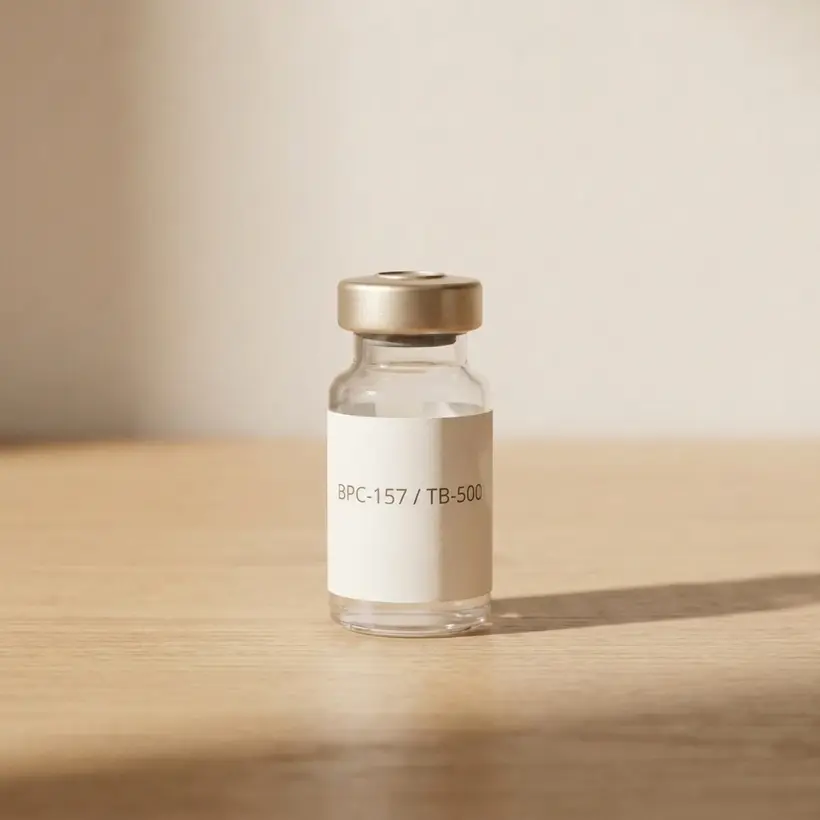
From the FormBlends catalog
BPC-157 / TB-500 Blend
The ultimate recovery stack in one vial · From $249/mo · compounded by a licensed 503A pharmacy, dispensed only after provider review.
View BPC-157 / TB-500 Blend →Most joint recovery peptide protocols run 4 to 12 weeks. You may not notice changes in the first week or two. Tissue healing takes time, and peptides work with your body's natural repair processes rather than masking pain.
Weeks 1-2: Many people report reduced inflammation and slightly less stiffness. Some notice improved sleep quality, which supports recovery.
Weeks 3-4: This is when many users start feeling meaningful differences. Range of motion may improve. Pain during activity may decrease.
Weeks 5-8: Continued improvement in function and comfort. Some people feel significant relief by this point. Others need the full protocol duration.
Track your progress with daily notes on pain levels, range of motion, and activity tolerance. The includes tracking tools designed for exactly this purpose. Sharing this data with your provider helps them improve your protocol.
What peptides don't do: They aren't painkillers. They don't replace physical therapy, proper movement, or addressing the root cause of your joint issues. Think of them as one tool in a complete recovery plan.
Combining Peptides with Other Recovery Strategies
Peptides work best as part of a detailed approach to joint health. Here are strategies that complement your protocol.
Movement and physical therapy. Controlled movement sends signals to your body about where healing is needed. A physical therapist can design exercises that support your recovery without aggravating the injury.
Anti-inflammatory nutrition. Foods rich in omega-3 fatty acids, colorful vegetables, and lean protein support your body's repair processes. Reducing sugar and processed foods may help manage systemic inflammation. Check out our guide to for ideas.
Sleep improvement. Your body does most of its repair work during deep sleep. Growth hormone release peaks during sleep, and this is critical for tissue repair. Aim for 7-9 hours of quality sleep per night.
Hydration. Joint cartilage is largely made of water. Proper hydration supports synovial fluid production and helps nutrients reach joint tissues.
Supplementation. Some providers recommend collagen peptides, vitamin C, and other supplements alongside prescribed peptide protocols. Always discuss supplements with your provider to avoid interactions.
Frequently Asked Questions
How long do peptides take to help with joint pain?
Most people begin noticing improvements within 3-4 weeks of starting a prescribed peptide protocol. Full results typically develop over 6-12 weeks. Individual response varies based on the severity of the joint issue and overall health.
Can I use peptides for joint pain without a prescription?
No. Peptides for joint recovery should only be used under the supervision of a licensed healthcare provider. They're prescription compounds prepared by licensed pharmacies. Self-treating with unregulated peptides can be dangerous. to see if you're a candidate.
Are there side effects from joint recovery peptides?
Side effects are generally mild when peptides are prescribed and monitored by a provider. Common reports include temporary injection site redness, mild nausea, or lightheadedness. Serious side effects are rare but should be reported to your provider immediately.
Can peptides replace joint surgery?
Peptides aren't a replacement for surgery when surgery is medically necessary. But some people use peptide protocols to support recovery before or after surgical procedures. Others find that peptide therapy helps them manage their condition enough to delay or avoid surgery. Only your orthopedic provider and prescribing physician can make that determination.
Which is better for joints, BPC-157 or TB-500?
Both have research supporting their potential benefits for joint and connective tissue healing. They work through different mechanisms, which is why many providers prescribe them together. Your provider will recommend the best option based on your specific condition.
Let's Make This Happen
The research is clear. The options are available. The only question is whether it's right for you. A FormBlends provider can help you decide) no pressure, no commitment.
Medical References
- Lincoff AM, Brown-Frandsen K, Colhoun HM, et al. Semaglutide and Cardiovascular Outcomes in Obesity without Diabetes. N Engl J Med. 2023;389(24):2221-2232. [PubMed | ClinicalTrials.gov | DOI]
- Goldstein AL, Hannappel E, Sosne G, Kleinman HK. Thymosin beta4: a multi-functional regenerative peptide. Basic properties and clinical applications. Expert Opin Biol Ther. 2012;12(1):37-51. [PubMed | DOI]
Looking for a complete ranking? See our guide to the best peptides for healing injuries, tendons, joints, and gut tissue.
Sources &. References
- Sikiric P, Hahm KB, Blagaic AB, et al. Stable Gastric Pentadecapeptide BPC 157, Robert's Cytoprotection, Adaptive Cytoprotection, and Therapeutic Effects. Curr Pharm Des. 2018;24(18):1990-2001. Doi:10.2174/1381612824666180515125918
- Chang CH, Tsai WC, Lin MS, et al. The promoting effect of pentadecapeptide BPC 157 on tendon healing involves tendon outgrowth, cell survival, and cell migration. J Appl Physiol. 2011;110(3):774-780. Doi:10.1152/japplphysiol.00945.2010
- Seiwerth S, Brcic L, Vuletic LB, et al. BPC 157 and blood vessels. Curr Pharm Des. 2014;20(7):1121-1125. Doi:10.2174/13816128113199990421
- Bock-Marquette I, Saxena A, White MD, et al. Thymosin beta4 activates integrin-linked kinase and promotes cardiac cell migration, survival and cardiac repair. Nature. 2004;432(7016):466-472. Doi:10.1038/nature03000
- Malinda KM, Sidhu GS, Mani H, et al. Thymosin beta4 accelerates wound healing. J Invest Dermatol. 1999;113(3):364-368. Doi:10.1046/j.1523-1747.1999.00708.x
- Ionescu M, Frohman LA. Pulsatile secretion of growth hormone (GH) persists during continuous stimulation by CJC-1295, a long-acting GH-releasing hormone analog. J Clin Endocrinol Metab. 2006;91(12):4792-4797. Doi:10.1210/jc.2006-1702
This article is for educational purposes only and doesn't constitute medical advice. Always consult with a licensed healthcare provider before starting, changing, or stopping any medication or supplement. FormBlends connects you with licensed providers who can evaluate your individual health needs.
Last updated: 2026-03-24
Ready when you are
BPC-157 / TB-500 Blend
The ultimate recovery stack in one vial · From $249/mo · compounded by a licensed 503A pharmacy, dispensed only after provider review.
View BPC-157 / TB-500 Blend →