Key Takeaway
One of the most common questions people ask when starting a peptide protocol is: how much bacteriostatic water to add to peptides? The answer depends on your vial size, your prescribed dose, and your personal preference for injection volume.
One of the most common questions people ask when starting a peptide protocol is: how much bacteriostatic water to add to peptides? The answer depends on your vial size, your prescribed dose, and your personal preference for injection volume. Getting this right determines the accuracy of every dose you take.
Key Takeaways: - Discover why the amount of water matters - Common Water Volumes for Popular Peptides - Step-by-Step: Choosing Your Water Volume - Common Mistakes When Adding Water
This guide explains the relationship between water volume and concentration. You'll learn how to choose the right amount for your situation and avoid common mistakes.
Why the Amount of Water Matters
The volume of bacteriostatic water you add to a peptide vial sets the concentration of your solution. Concentration tells you how much peptide is dissolved in each unit of liquid.
More water means a more dilute solution. Each syringe unit contains less peptide, and you'll draw a larger volume for each dose. This can make measuring small doses easier because the markings on your syringe are further apart.
Less water means a more concentrated solution. Each unit contains more peptide, and your injection volume is smaller. Some people prefer this because the injection itself is quicker and uses less space under the skin.
Neither approach is better. What matters is that you know your concentration so you draw the correct number of units. A wrong concentration calculation means every dose from that vial will be off.
"We now have cardiovascular outcomes data showing semaglutide reduces MACE events by 20% in people with obesity, independent of diabetes status. The SELECT trial[1] changed how we think about these medications.") Dr. A. Michael Lincoff, MD, Cleveland Clinic, lead author of SELECT
Your provider may specify exactly how much water to add. If they do, follow their instructions. If they leave it up to you, the guidelines below will help you decide.
Common Water Volumes for Popular Peptides
Here are the most commonly used reconstitution calculator volumes for peptides frequently prescribed through telehealth providers. Always confirm with your own provider before mixing.
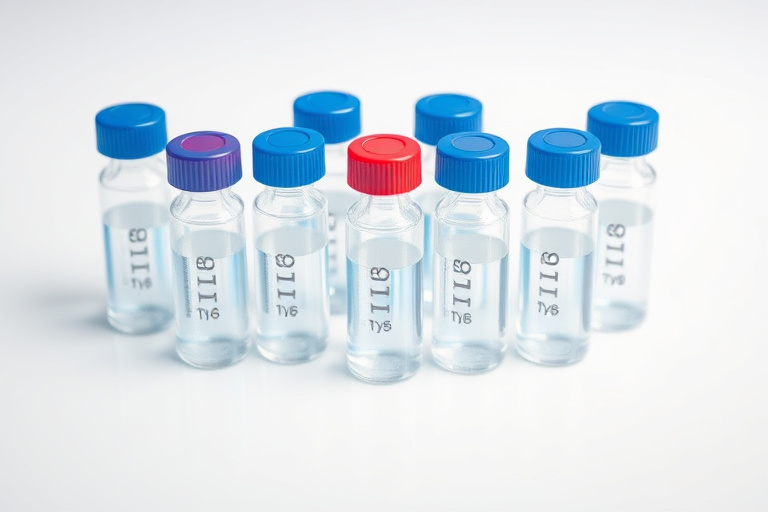
BPC-157 (5 mg vial): - 2 mL BAC water = 2.5 mg/mL (250 mcg = 10 units) - 1 mL BAC water = 5 mg/mL (250 mcg = 5 units)
TB-500 (5 mg vial): - 2 mL BAC water = 2.5 mg/mL (750 mcg = 30 units) - 1 mL BAC water = 5 mg/mL (750 mcg = 15 units)
CJC-1295 / Ipamorelin (varies by vial size): - Typically reconstituted with 2-3 mL depending on the vial concentration - Your provider will specify based on the blend ratio
GHK-Cu (varies): - Usually reconstituted with 1-2 mL depending on the vial size - Follow pharmacy labeling for your specific product
For any peptide, you can plug your numbers into the to see exactly what your concentration and dose measurement will be before you mix.
Use our free to determine the perfect water volume for your vial size and dose.
Step-by-Step: Choosing Your Water Volume
Here's a practical method for deciding how much water to add.
Check your GLP-1 eligibility
Use our free BMI Calculator to see if you may qualify for provider-reviewed GLP-1 therapy.
Try the BMI Calculator →Step 1[2]: Know your vial size. Check the label. It will say something like "5 mg" or "10 mg." This is the total amount of peptide in the vial.
Step 2: Know your prescribed dose. Your provider will tell you something like "250 mcg twice daily." Write this down.
Step 3: Pick a round number. Choose a water volume that gives you a convenient number of syringe units per dose. Round numbers like 5, 10, 15, or 20 units are easiest to measure.
Step 4: Do the math. Concentration (mcg/mL) = Total peptide (mcg) / Water volume (mL). Then: Units per dose = Dose (mcg) / (Concentration (mcg/mL) / 100).
Step 5: Check your result. If the units per dose is a messy decimal, try a different water volume. You want a clean number you can easily find on your syringe.
Example: You have a 5 mg (5,000 mcg) vial and a 250 mcg dose.
- With 1 mL water: 5,000 / 1 = 5,000 mcg/mL. Dose = 250 / 5,000 = 0.05 mL = 5 units. Clean and easy.
- With 2 mL water: 5,000 / 2 = 2,500 mcg/mL. Dose = 250 / 2,500 = 0.1 mL = 10 units. Also clean.
- With 2.5 mL water: 5,000 / 2.5 = 2,000 mcg/mL. Dose = 250 / 2,000 = 0.125 mL = 12.5 units. Less ideal since 12.5 falls between syringe lines on most syringes.
If you want help deciding, the lets you save your reconstitution settings and calculates everything automatically for future doses.
Common Mistakes When Adding Water
These errors come up frequently. Avoiding them saves medication and ensures accuracy.
Adding water too fast. Squirting water forcefully into the vial can damage peptide molecules. Let the water trickle slowly down the glass wall. This protects the delicate peptide structure.
Not measuring the water precisely. Eyeballing it doesn't work. Use a syringe to measure your bacteriostatic water (the same way you'd measure a dose. Every 0.1 mL difference changes your concentration.
Forgetting to record how much water you added. Two weeks from now, you won't remember if you added 1 mL or 2 mL. Write it on the vial label immediately. Better yet, log it in the for a permanent record.
Using the wrong type of water. Always use bacteriostatic water (with 0.9% benzyl alcohol) for multi-dose vials. Plain sterile water has no preservative and must be used in a single session. Read our for more details.
Adding water to the wrong vial. If you have multiple vials, double-check the label before mixing. Once water is added, you can't undo it. Some people mark their vials with colored dots to avoid mix-ups.
Frequently Asked Questions
Can I add more water to a vial after I've already reconstituted it?
Technically yes, but it's not recommended. Adding more water changes the concentration, and you need to recalculate every dose. If you've already started drawing doses at the original concentration, mixing in additional water creates confusion. It's better to finish the vial at the original concentration and adjust with your next vial.
What's the minimum amount of water I can add?
Most providers recommend at least 0.5 mL to ensure the peptide dissolves fully and you can measure doses accurately. Very small volumes create extremely concentrated solutions where a single unit on the syringe represents a large dose. This leaves little room for measurement error.
Does the amount of water affect how well the peptide works?
No. The water is just a vehicle for delivering the peptide. Whether you add 1 mL or 3 mL, the total amount of peptide in the vial is the same. Your body absorbs the same dose regardless of the injection volume. Choose the volume that gives you the most convenient and accurate measurement.
What if my provider doesn't specify how much water to add?
If your provider doesn't specify, use 2 mL as a starting point for most 5 mg vials. This creates a moderate concentration that works well with standard insulin syringes. Then use the to confirm your dose measurement is a clean number on your syringe.
Start your goals Today
Every transformation starts with a single step. Talk to a licensed FormBlends provider about whether this approach is right for you) consultations are free and confidential.
Medical References
- Lincoff AM, Brown-Frandsen K, Colhoun HM, et al. Semaglutide and Cardiovascular Outcomes in Obesity without Diabetes. N Engl J Med. 2023;389(24):2221-2232. [PubMed | ClinicalTrials.gov | DOI]
- Wilding JPH, Batterham RL, Calanna S, et al. Once-Weekly Semaglutide in Adults with Overweight or Obesity. N Engl J Med. 2021;384(11):989-1002. [PubMed | ClinicalTrials.gov | DOI]
- Davies M, Færch L, Jeppesen OK, et al. Semaglutide 2.4 mg once a week in adults with overweight or obesity, and type 2 diabetes (STEP 2). Lancet. 2021;397(10278):971-984. [PubMed | ClinicalTrials.gov | DOI]
- Wadden TA, Bailey TS, Billings LK, et al. Effect of Subcutaneous Semaglutide vs Placebo as an Adjunct to Intensive Behavioral Therapy on Body Weight in Adults With Overweight or Obesity (STEP 3). JAMA. 2021;325(14):1403-1413. [PubMed | ClinicalTrials.gov | DOI]
- Rubino D, Abrahamsson N, Davies M, et al. Effect of Continued Weekly Subcutaneous Semaglutide vs Placebo on Weight Loss Maintenance in Adults With Overweight or Obesity (STEP 4). JAMA. 2021;325(14):1414-1425. [PubMed | ClinicalTrials.gov | DOI]
- Garvey WT, Batterham RL, Bhatt DL, et al. Two-year effects of semaglutide in adults with overweight or obesity (STEP 5). Nat Med. 2022;28(10):2083-2091. [PubMed | ClinicalTrials.gov | DOI]
Sources &. References
- Sikiric P, Hahm KB, Blagaic AB, et al. Stable Gastric Pentadecapeptide BPC 157, Robert's Cytoprotection, Adaptive Cytoprotection, and Therapeutic Effects. Curr Pharm Des. 2018;24(18):1990-2001. Doi:10.2174/1381612824666180515125918
- Chang CH, Tsai WC, Lin MS, et al. The promoting effect of pentadecapeptide BPC 157 on tendon healing involves tendon outgrowth, cell survival, and cell migration. J Appl Physiol. 2011;110(3):774-780. Doi:10.1152/japplphysiol.00945.2010
- Seiwerth S, Brcic L, Vuletic LB, et al. BPC 157 and blood vessels. Curr Pharm Des. 2014;20(7):1121-1125. Doi:10.2174/13816128113199990421
- Bock-Marquette I, Saxena A, White MD, et al. Thymosin beta4 activates integrin-linked kinase and promotes cardiac cell migration, survival and cardiac repair. Nature. 2004;432(7016):466-472. Doi:10.1038/nature03000
- Malinda KM, Sidhu GS, Mani H, et al. Thymosin beta4 accelerates wound healing. J Invest Dermatol. 1999;113(3):364-368. Doi:10.1046/j.1523-1747.1999.00708.x
- Ionescu M, Frohman LA. Pulsatile secretion of growth hormone (GH) persists during continuous stimulation by CJC-1295, a long-acting GH-releasing hormone analog. J Clin Endocrinol Metab. 2006;91(12):4792-4797. Doi:10.1210/jc.2006-1702
This content is provided for informational and educational purposes only. It isn't a substitute for professional medical advice, diagnosis, or treatment. Always seek the advice of a licensed healthcare provider with any questions about a medical condition or treatment plan.
Last updated: 2026-03-24
See your options in about 2 minutes
Take the free quiz and see what fits you. Quick, private, and no commitment to continue.
See my options →