Key Takeaway
If you're recovering from surgery, an injury, or intense training, a well-designed peptide protocol for recovery can support your body's natural healing processes. But with so many peptides available, figuring out where to start can feel overwhelming.
If you're recovering from surgery, an injury, or intense training, a well-designed peptide protocol for recovery can support your body's natural healing processes. But with so many peptides available, figuring out where to start can feel overwhelming. In this guide, we walk through the key steps in building a recovery protocol, from choosing the right peptides to structuring your cycles and tracking your progress.
Key Takeaways: - Step 1: Identify Your Recovery Goals - Step 2: Choose Your Peptides and Stack - Step 3: Structure Your Dosing and Cycle - Step 4: Track Your Progress and Adjust
Step 1: Identify Your Recovery Goals
The first step in building any peptide protocol is getting clear on what you're recovering from. Different injuries and conditions respond to different peptides, so a targeted approach is more effective than a shotgun strategy.
Here are the most common recovery categories and the peptides typically associated with each.
Tendon and ligament repair: BPC-157 is the most studied peptide for this purpose. Preclinical research suggests it may accelerate tendon-to-bone healing and reduce inflammation in connective tissue. TB-500 is often added for its cell migration and anti-inflammatory properties.
Muscle recovery: TB-500 and BPC-157 are both used for muscle healing. Growth hormone peptides like CJC-1295 and Ipamorelin may also support muscle recovery by promoting protein synthesis and cell repair during sleep.
Post-surgical healing: BPC-157 is frequently prescribed for post-surgical recovery due to its potential to promote blood vessel formation and tissue repair. GHK-Cu may be added when skin healing and scar reduction are priorities.
"We now have cardiovascular outcomes data showing semaglutide reduces MACE events by 20% in people with obesity, independent of diabetes status. The SELECT trial[1] changed how we think about these medications.") Dr. A. Michael Lincoff, MD, Cleveland Clinic, lead author of SELECT
Chronic inflammation: BPC-157 has shown anti-inflammatory properties in studies. Some providers also use Thymosin Alpha-1 for immune modulation in cases of chronic inflammation.
Once you know your primary goal, you and your provider can select the peptides that make the most sense. Trying to address too many goals at once can lead to an overly complex protocol that's hard to manage and difficult to evaluate.
For more on how individual peptides work, read .
Step 2: Choose Your Peptides and Stack
After identifying your goals, the next step is selecting specific peptides and deciding whether to stack them. A single peptide may be enough for minor issues. More complex recovery situations often benefit from a thoughtful stack.
The most common recovery stacks include the BPC-157 and TB-500 combination (the Wolverine Stack), the CJC-1295 and Ipamorelin combination for growth hormone support, and various combinations that add GHK-Cu for skin and collagen support.
When choosing a stack, your provider considers several factors. These include the severity of your condition, your medical history, other medications you're taking, and your budget. More peptides aren't always better. A well-chosen pair often outperforms a complex cocktail of four or five compounds.
Your provider will also consider the route of administration. Most recovery peptides are given via subcutaneous injection. Some, like BPC-157, may also be taken orally for gut-related recovery, though the research on oral bioavailability is still developing.
Cost is a real consideration. Each peptide adds to your monthly expenses. Your provider can help you prioritize which peptides offer the highest potential return for your specific situation.
Free Download: Wolverine Stack Protocol Card Get a printable reference card with common recovery peptide protocols, including dosing ranges, cycling schedules, and injection site guidance. Get yours free (we'll email it to you instantly. [Download Now]
Step 3: Structure Your Dosing and Cycle
With your peptides selected, the next step is determining doses, injection frequency, and cycle length. This is where your provider's expertise is important.
From the FormBlends catalog
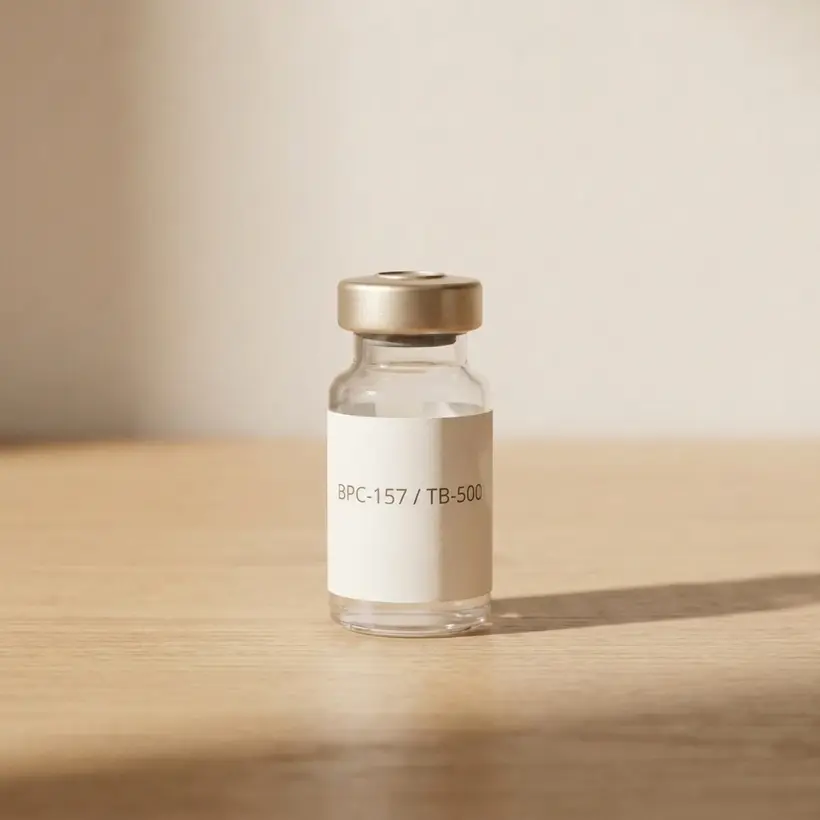
BPC-157 / TB-500 Blend
The ultimate recovery stack in one vial · From $249/mo · compounded by a licensed 503A pharmacy, dispensed only after provider review.
View BPC-157 / TB-500 Blend →Most healing peptides like BPC-157 are prescribed at 250-500 mcg per day, typically administered once or twice daily. TB-500 is usually prescribed at 750 mcg two to three times per week during the loading phase, then reduced to once or twice per week for maintenance.
Growth hormone peptides like CJC-1295 and Ipamorelin are typically dosed at 100-300 mcg each, administered together before bed or upon waking. Some protocols include a post-workout dose as well.
Cycle length for recovery protocols usually runs 4-8 weeks for healing peptides and 8-12 weeks for growth hormone peptides. Your provider may recommend overlapping cycles, where you start a healing peptide first and add growth hormone support a few weeks in.
The timing of your injections matters. BPC-157 works best when injected close to the injury site. Growth hormone peptides should be taken on an empty stomach for maximum effect. Your provider will give you specific instructions for each peptide in your stack.
After each cycle, plan for an off period. This allows your receptors to reset and helps you assess how much progress you made during the cycle. Most providers recommend 2-4 weeks off before starting a new cycle.
For accurate dose preparation, .
Step 4: Track Your Progress and Adjust
A recovery protocol isn't a set-it-and-forget-it plan. You need to track your progress so your provider can make data-driven adjustments.
Start by establishing a baseline before your first injection. Rate your pain on a 1-10 scale. Measure your range of motion. Note what activities you can and can't do. Take photos if the condition is visible. Record how you sleep and your overall energy level.
During your cycle, log your daily dose, injection site, and any observations. Did your pain level change? Was there any swelling? How did you sleep? Even brief notes create a useful dataset over time.
The is designed for exactly this kind of tracking. You can log doses, track symptoms, and generate reports to share with your provider.
At the mid-cycle mark, review your progress. If you aren't seeing any changes after 3-4 weeks, talk to your provider. They may need to adjust your dose, switch a peptide, or investigate whether something else is going on.
After completing a cycle, compare your current measurements to your baseline. This objective comparison is far more reliable than trying to remember how you felt weeks ago. Your provider will use this data to decide whether to repeat the same cycle, modify it, or transition to a maintenance phase.
For a look at how stacking protocols compare, check out .
Frequently Asked Questions
Do I need a prescription for a peptide recovery protocol?
Yes. Peptides prescribed for clinical use should come from a licensed provider and be prepared by a licensed US-based 503A compounding pharmacy. FormBlends connects you with providers who specialize in peptide therapy and can design a personalized recovery protocol.
How much does a peptide recovery protocol cost?
Costs vary based on which peptides you use, dosing, and cycle length. A basic BPC-157 protocol may cost less than a combination stack with growth hormone peptides. Your provider can help you choose the most cost-effective approach for your situation.
Can I use peptides alongside physical therapy?
Yes, many providers recommend combining peptide therapy with physical therapy. The peptides may support tissue repair at the cellular level while physical therapy restores strength, flexibility, and function. Inform both your peptide provider and physical therapist about all treatments you're using.
How do I know which peptides are right for my recovery?
A licensed provider will evaluate your condition, medical history, and goals to recommend the right peptides. Factors like the type of injury, how long it has been present, and whether surgery is involved all influence the recommendation.
What if I don't see results after one cycle?
Recovery isn't always linear. Some conditions take multiple cycles to show significant improvement. If you don't see progress after one complete cycle, your provider may adjust your protocol, add a peptide, or recommend additional diagnostics to rule out underlying issues.
Ready to Take the Next Step?
Your wellness plan is personal) and you deserve a plan that fits. FormBlends connects you with licensed providers who can evaluate your needs and create a personalized protocol.
Medical References
- Lincoff AM, Brown-Frandsen K, Colhoun HM, et al. Semaglutide and Cardiovascular Outcomes in Obesity without Diabetes. N Engl J Med. 2023;389(24):2221-2232. [PubMed | ClinicalTrials.gov | DOI]
- Davies M, Færch L, Jeppesen OK, et al. Semaglutide 2.4 mg once a week in adults with overweight or obesity, and type 2 diabetes (STEP 2). Lancet. 2021;397(10278):971-984. [PubMed | ClinicalTrials.gov | DOI]
- Wadden TA, Bailey TS, Billings LK, et al. Effect of Subcutaneous Semaglutide vs Placebo as an Adjunct to Intensive Behavioral Therapy on Body Weight in Adults With Overweight or Obesity (STEP 3). JAMA. 2021;325(14):1403-1413. [PubMed | ClinicalTrials.gov | DOI]
- Rubino D, Abrahamsson N, Davies M, et al. Effect of Continued Weekly Subcutaneous Semaglutide vs Placebo on Weight Loss Maintenance in Adults With Overweight or Obesity (STEP 4). JAMA. 2021;325(14):1414-1425. [PubMed | ClinicalTrials.gov | DOI]
Sources &. References
- Sikiric P, Hahm KB, Blagaic AB, et al. Stable Gastric Pentadecapeptide BPC 157, Robert's Cytoprotection, Adaptive Cytoprotection, and Therapeutic Effects. Curr Pharm Des. 2018;24(18):1990-2001. Doi:10.2174/1381612824666180515125918
- Chang CH, Tsai WC, Lin MS, et al. The promoting effect of pentadecapeptide BPC 157 on tendon healing involves tendon outgrowth, cell survival, and cell migration. J Appl Physiol. 2011;110(3):774-780. Doi:10.1152/japplphysiol.00945.2010
- Seiwerth S, Brcic L, Vuletic LB, et al. BPC 157 and blood vessels. Curr Pharm Des. 2014;20(7):1121-1125. Doi:10.2174/13816128113199990421
- Bock-Marquette I, Saxena A, White MD, et al. Thymosin beta4 activates integrin-linked kinase and promotes cardiac cell migration, survival and cardiac repair. Nature. 2004;432(7016):466-472. Doi:10.1038/nature03000
- Malinda KM, Sidhu GS, Mani H, et al. Thymosin beta4 accelerates wound healing. J Invest Dermatol. 1999;113(3):364-368. Doi:10.1046/j.1523-1747.1999.00708.x
- Ionescu M, Frohman LA. Pulsatile secretion of growth hormone (GH) persists during continuous stimulation by CJC-1295, a long-acting GH-releasing hormone analog. J Clin Endocrinol Metab. 2006;91(12):4792-4797. Doi:10.1210/jc.2006-1702
Nothing in this article should be construed as medical advice. The information provided is educational only. Always consult with your healthcare provider before beginning, modifying, or discontinuing any medication or treatment. FormBlends connects patients with licensed providers for individualized care.
Last updated: 2026-03-24
Ready when you are
BPC-157 / TB-500 Blend
The ultimate recovery stack in one vial · From $249/mo · compounded by a licensed 503A pharmacy, dispensed only after provider review.
View BPC-157 / TB-500 Blend →