Key Takeaway
Explore how AOD-9604 may support muscle recovery through tissue repair, inflammation modulation, and metabolic improvement. Evidence-based guide for active adults.
Quick Answer: AOD-9604 may support muscle recovery through its tissue-repair properties, anti-inflammatory effects, and influence on fat metabolism. Preclinical research suggests the peptide can promote muscle satellite cell activity and reduce markers of tissue damage. While primarily studied for fat metabolism and cartilage repair, its recovery-enhancing potential is gaining attention in clinical peptide therapy.
What Is AOD-9604?
AOD-9604 is a synthetic peptide consisting of amino acids 177-191 of human growth hormone, with an added tyrosine residue for stability. It was developed to retain the fat-metabolizing properties of growth hormone while avoiding the systemic effects of full-length hGH, including IGF-1 elevation, insulin resistance, and hormonal axis suppression.
Beyond its well-studied metabolic effects, AOD-9604 has demonstrated tissue-repair capabilities that extend to musculoskeletal tissue. This makes it relevant for active adults who want to improve recovery from exercise, support tissue repair after strain or injury, and maintain performance as they age.
How Muscle Recovery
Muscle recovery after exercise involves a complex series of biological events. When you train, particularly during resistance exercise or high-intensity activity, you create microscopic damage to muscle fibers. This damage is actually the stimulus for adaptation and growth, but the recovery process must be completed efficiently for those adaptations to occur.
The recovery process involves several key phases:
- Acute inflammatory response: Within hours of exercise, inflammatory cells infiltrate damaged muscle tissue. This inflammation is necessary for clearing damaged cells and initiating repair, but excessive or prolonged inflammation delays recovery.
- Satellite cell activation: Muscle satellite cells, the resident stem cells of skeletal muscle, are activated by exercise-induced damage. These cells proliferate, differentiate, and fuse with existing muscle fibers to repair damage and support hypertrophy.
- Extracellular matrix remodeling: The connective tissue framework surrounding muscle fibers is repaired and reorganized.
- Protein synthesis: The muscle enters a period of improved protein synthesis to rebuild and reinforce the damaged fibers.
Any intervention that can enhance these processes, accelerate the transition from inflammation to repair, or reduce unnecessary tissue damage has the potential to improve recovery.
How AOD-9604 May Support Muscle Recovery
Satellite Cell Activation and Differentiation
One of AOD-9604's most relevant mechanisms for muscle recovery is its ability to influence stem cell differentiation. Research has demonstrated that AOD-9604 can promote the differentiation of mesenchymal stem cells in cartilage models. Emerging evidence suggests similar effects may occur with muscle satellite cells.
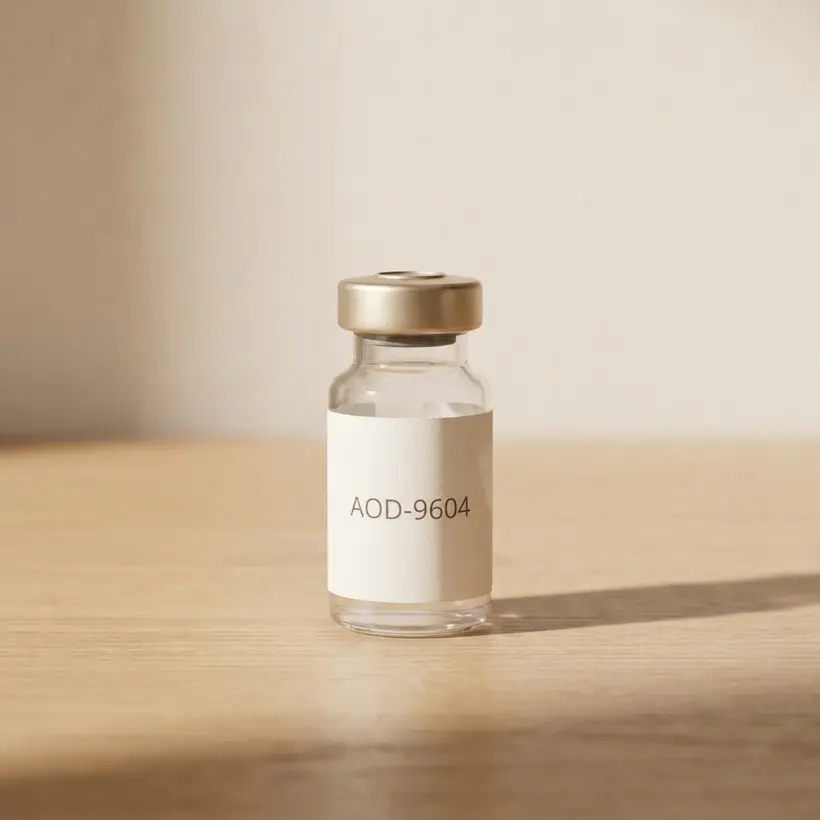
From the FormBlends catalog
AOD-9604
Fat-targeting fragment without growth hormone side effects · From $199/mo · compounded by a licensed 503A pharmacy, dispensed only after provider review.
View AOD-9604 →Satellite cells are the primary drivers of skeletal muscle repair. When activated, they proliferate and differentiate into myoblasts that fuse with damaged muscle fibers, providing new nuclei and supporting the repair and growth of muscle tissue. Enhanced satellite cell activity could translate to faster and more complete muscle recovery after training.
Inflammation Modulation
Post-exercise inflammation follows a carefully orchestrated timeline. The initial pro-inflammatory phase (dominated by M1 macrophages) clears damaged tissue, while the subsequent anti-inflammatory phase (dominated by M2 macrophages) promotes repair and regeneration.
AOD-9604 has demonstrated anti-inflammatory properties in preclinical studies, including the ability to reduce pro-inflammatory cytokine expression. In the context of muscle recovery, this could help manage the inflammatory response, ensuring it serves its necessary purpose without becoming excessive or prolonged. Unresolved inflammation is one of the primary reasons recovery slows with age and accumulated training stress.
Metabolic Support for Recovery
Recovery is an energy-demanding process. The body must mobilize substrates for tissue repair while maintaining normal physiological functions. AOD-9604's influence on fat metabolism may indirectly support recovery by:
- Improving the body's ability to use stored fat as fuel, potentially sparing glycogen and amino acids for repair processes
- Supporting a favorable body composition (lower fat, maintained muscle) that enhances overall metabolic efficiency
- Contributing to better insulin sensitivity, which promotes efficient nutrient partitioning toward muscle tissue
Connective Tissue Support
Muscle recovery doesn't occur in isolation. The tendons, ligaments, and fascial tissues that connect and surround muscles must also recover from training stress. AOD-9604's documented effects on cartilage and connective tissue repair suggest it may support the recovery of these ancillary structures as well.
This is particularly relevant for athletes and active adults who place high demands on their musculoskeletal system, as connective tissue injuries and overuse conditions are among the most common causes of training interruption.
What the Evidence Shows
Growth Hormone Fragments and Muscle Tissue
The relationship between growth hormone and muscle repair is well established. GH promotes protein synthesis, supports satellite cell activation, and enhances collagen production in muscle and tendon tissue. AOD-9604 represents a specific fragment of this molecule, and while it doesn't replicate all of growth hormone's effects, its tissue-repair signaling pathways are relevant to muscle recovery.
Preclinical Tissue Repair Data
Laboratory studies have shown that AOD-9604 promotes cellular differentiation and tissue repair in multiple tissue types. While the most detailed research has focused on cartilage, the underlying mechanisms (stem cell differentiation, extracellular matrix support, inflammation modulation) are shared across musculoskeletal tissues.
Clinical Observations
Physicians prescribing AOD-9604 commonly report that patients experience:
- Reduced delayed-onset muscle soreness (DOMS) following intense training
- Faster return to baseline performance between training sessions
- Improved tolerance of training volume and frequency
- Better recovery from minor strains and overuse injuries
These observations, while clinically meaningful, haven't yet been validated in controlled human trials specifically measuring muscle recovery endpoints. The distinction between anecdotal clinical experience and randomized trial evidence is important for setting appropriate expectations.
Advantage Over Full-Length Growth Hormone
One of the practical advantages of AOD-9604 for recovery purposes is what it avoids. Full-length growth hormone, while effective for recovery, carries significant concerns:
- IGF-1 elevation and associated risks
- Insulin resistance and glucose intolerance
- Fluid retention, joint swelling, and carpal tunnel symptoms
- Suppression of natural GH production
- Regulatory and legal restrictions
AOD-9604 provides targeted tissue-repair and metabolic benefits without these complications, making it a more practical option for long-term recovery support.
Practical Application for Active Adults
Dosing for Recovery
Standard AOD-9604 dosing for recovery support falls within the typical range of 250 to 500 mcg per day via subcutaneous injection. Some practitioners recommend timing the injection in the evening, as the body's natural repair processes are most active during sleep. But morning dosing is also effective, and the best timing depends on individual schedule and preference.
Combining with Training
AOD-9604 is intended to support recovery from training, not replace good training practices. For best results:
- Maintain a structured training program with appropriate periodization
- Ensure adequate protein intake (1.6 to 2.2 grams per kilogram of body weight for active individuals)
- Prioritize sleep quality and duration (7 to 9 hours per night)
- Manage training volume and intensity to allow for recovery between sessions
- Address any movement dysfunction or biomechanical issues that increase injury risk
Combination Protocols
For recovery-focused goals, AOD-9604 is sometimes combined with other peptides:
- BPC-157: Strong evidence for tendon, ligament, and muscle repair. Complements AOD-9604's metabolic and cartilage benefits.
- TB-500 (Thymosin Beta-4): Promotes tissue repair, reduces inflammation, and supports blood vessel formation in damaged tissue.
- CJC-1295/Ipamorelin: Growth hormone secretagogue combination that stimulates natural GH release, supporting broader recovery and body composition goals.
Any combination protocol should be designed and monitored by a physician.
Who May Benefit
- Recreational and competitive athletes seeking to improve recovery between training sessions
- Active adults over 35 who notice that recovery takes longer than it used to
- Individuals recovering from minor muscle strains or overuse conditions
- Patients with concurrent body composition and recovery goals (AOD-9604 addresses both)
- Athletes who want recovery support without the risks and regulatory concerns of growth hormone
AOD-9604 isn't a substitute for proper rehabilitation of significant injuries. Severe muscle tears, tendon ruptures, or other acute injuries require appropriate medical evaluation and treatment.
Safety Considerations
AOD-9604 has a well-established safety profile. In clinical trials, adverse event rates were comparable to placebo. The peptide doesn't affect blood sugar, IGF-1, or hormonal balance at therapeutic doses. Common side effects are limited to mild injection site reactions and occasional headache.
For athletes subject to drug testing, AOD-9604 is prohibited by the World Anti-Doping Agency (WADA) under the category of growth hormone fragments. Athletes competing under WADA-governed organizations shouldn't use this peptide.
For non-competitive active adults, AOD-9604 provides a well-tolerated option for recovery support under physician supervision.
How FormBlends Can Help
FormBlends understands the recovery needs of active adults. The clinical team evaluates each patient's training demands, recovery challenges, health history, and goals to determine whether AOD-9604 is an appropriate part of their wellness strategy.
Physicians design personalized protocols that may include AOD-9604 alone or in combination with complementary peptides, with dosing and timing improved for the patient's training schedule and recovery needs. Ongoing follow-up consultations allow for protocol adjustments based on progress.
All peptides are sourced from licensed compounding pharmacies with verified purity and potency standards.
Frequently Asked Questions
Does AOD-9604 build muscle?
AOD-9604 isn't an anabolic agent and doesn't directly stimulate muscle hypertrophy in the way that growth hormone or anabolic hormones do. Its role in muscle recovery is supportive: it may help repair exercise-induced damage more efficiently, reduce inflammation, and create metabolic conditions favorable for muscle adaptation. Building muscle still requires appropriate training stimulus and nutrition.
When should I take AOD-9604 for recovery?
Most protocols call for once-daily injection on an empty stomach, either in the morning before breakfast or in the evening before bed. Some practitioners prefer evening dosing for recovery applications to align with the body's natural nocturnal repair processes. Your physician will recommend the timing best suited to your protocol.
How quickly will I notice recovery improvements?
Some patients report improvements in soreness and recovery within the first 2 to 4 weeks. More significant and consistent recovery benefits typically develop over 4 to 8 weeks of daily use. Individual timelines vary based on training intensity, age, and overall health.
Can I use AOD-9604 if I compete in sports?
AOD-9604 is prohibited by WADA and is banned in most organized competitive sports. If you compete in any sport governed by anti-doping regulations, don't use AOD-9604. For recreational athletes and non-competitive active adults, the peptide is available through physician-supervised peptide therapy programs.
Is AOD-9604 better than BPC-157 for muscle recovery?
They work through different mechanisms. BPC-157 has stronger direct evidence for soft tissue repair (tendons, ligaments, muscles), while AOD-9604 offers broader metabolic and cartilage benefits alongside its recovery support. Many physicians combine the two for patients with thorough recovery needs.
Medical References
- Goldstein AL, Hannappel E, Sosne G, Kleinman HK. Thymosin beta4: a multi-functional regenerative peptide. Basic properties and clinical applications. Expert Opin Biol Ther. 2012;12(1):37-51. [PubMed | DOI]
Improve Your Recovery with Physician-Supervised Peptide Therapy
Recovery is where adaptation happens. FormBlends physicians can help you determine if AOD-9604 belongs in your recovery toolkit. Schedule your telehealth consultation today.
Ready when you are
AOD-9604
Fat-targeting fragment without growth hormone side effects · From $199/mo · compounded by a licensed 503A pharmacy, dispensed only after provider review.
View AOD-9604 →