Key Takeaway
Proper peptide storage after reconstitution calculator is critical to maintaining your medication's potency. This peptide storage reconstituted fridge resource covers the important information you need to make informed decisions.
Proper peptide storage after reconstitution is critical to maintaining your medication's potency. This peptide storage reconstituted fridge resource covers the important information you need to make informed decisions. Once you add bacteriostatic water to a lyophilized peptide vial, the clock starts ticking. Store it wrong and you risk degraded peptide, bacterial contamination, or wasted money. This guide covers everything about reconstituted peptide storage) refrigeration temperatures, shelf life, and how to keep your peptides effective from the first draw to the last.
Key Takeaways: - Reconstituted Peptide Storage Rules - Lyophilized (Pre-Reconstitution) Storage - Signs Your Peptide Has Degraded - Practical Storage Tips for Daily Use
Reconstituted Peptide Storage Rules
Once you reconstitute a peptide with bacteriostatic water, follow these storage rules without exception.
Refrigerate immediately. Place the reconstituted vial in your refrigerator at 36 to 46 degrees Fahrenheit (2 to 8 degrees Celsius). This is the standard range for any household refrigerator. Don't put it in the freezer (freezing can damage the peptide structure and make it ineffective.
Use within 28 days. Most reconstituted peptides maintain their stability for approximately 28 days when properly refrigerated. After four weeks, the preservative in bacteriostatic water (0.9% benzyl alcohol) may not fully prevent bacterial growth. Discard any remaining solution after this window.
Keep the vial upright. Store vials standing up with the rubber stopper at the top. This minimizes the surface area of solution in contact with the stopper and reduces the chance of leakage.
Protect from light. Many peptides are light-sensitive. Store vials in their original box or wrap them in aluminum foil. Don't leave them sitting on a refrigerator shelf exposed to the light that turns on every time you open the door.
"We now have cardiovascular outcomes data showing semaglutide reduces MACE events by 20% in people with obesity, independent of diabetes status. The SELECT trial[1] changed how we think about these medications.") Dr. A. Michael Lincoff, MD, Cleveland Clinic, lead author of SELECT
Label every vial. Write the reconstitution date and the peptide name directly on the vial with a permanent marker. If you're running multiple peptides, this prevents mix-ups and helps you track when each vial expires.
The lets you log reconstitution dates and sends you reminders when a vial is approaching its 28-day limit.
Lyophilized (Pre-Reconstitution) Storage
Before you add water, your peptide arrives as a lyophilized (freeze-dried) powder. This form is much more stable than the reconstituted liquid version.
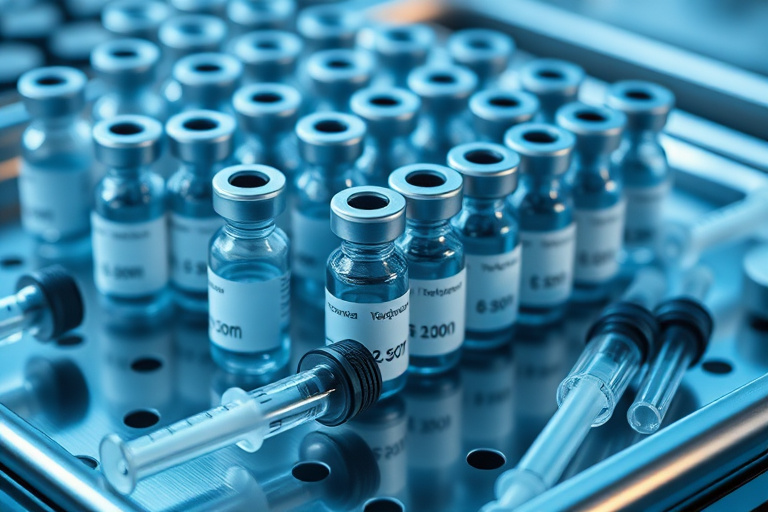
Room temperature is fine for short periods. Lyophilized peptides can be stored at room temperature (59 to 77 degrees Fahrenheit / 15 to 25 degrees Celsius) for weeks to months, depending on the peptide. Most compounding pharmacies ship peptides at room temperature without cold packs for this reason.
Free Download: Dose Conversion Table Track your vial usage and dose calculations with our printable reference table. Covers every common peptide vial size and BAC water combination. Get yours free (we'll email it to you instantly. [Download Now]
Refrigeration extends shelf life. For long-term storage (months), refrigerating lyophilized peptides is ideal. This can extend shelf life to 1 to 2 years for most peptides. Check the expiration date printed on your vial label.
Freezing is acceptable for lyophilized peptides. Unlike reconstituted peptides, you can freeze lyophilized powder without damaging it. Some people store backup vials in the freezer. Just make sure the vial is sealed and dry.
Avoid heat and humidity. Don't store lyophilized peptides near ovens, in bathrooms, or in your car during summer. Heat accelerates degradation. Humidity can cause the powder to absorb moisture and clump.
Signs Your Peptide Has Degraded
Even with proper storage, peptides can degrade. Check your vial each time you draw from it. Here are warning signs.
Get pre-measured GLP-1 doses shipped to your door
No mixing, no guesswork. FormBlends medications come ready to inject with clear dosing instructions.
Start Free Assessment →Cloudiness. A reconstituted peptide solution should be clear. If it turns cloudy, milky, or hazy, don't use it. Cloudiness can indicate bacterial growth or peptide aggregation.
Visible particles. Floaters, specks, or settled particles at the bottom of the vial are red flags. A good solution is uniform and particle-free.
Color change. Some peptides have a slight natural tint, but any significant darkening or color shift from one draw to the next suggests degradation.
Unusual odor. Properly reconstituted peptides are importantly odorless. A noticeable smell) especially a sour or chemical odor (indicates contamination.
Past 28 days. Even if the solution looks fine, the risk of contamination increases after four weeks. Don't try to stretch it.
When in doubt, discard the vial and reconstitute a fresh one. Peptide vials are far cheaper than the health risks of injecting a contaminated solution. Contact your if you have concerns about your peptide's condition.
Practical Storage Tips for Daily Use
Here are some real-world tips that make peptide storage easier in your daily routine.
Designate a spot in your refrigerator. Pick one area) like a small container or a dedicated section on a shelf (where all your peptide vials live. This keeps them organized, prevents them from getting knocked around, and keeps them away from food.
Use a small thermometer. Refrigerator temperatures can vary by shelf and by how often you open the door. A small digital thermometer placed near your peptide storage area confirms you're staying in the 36 to 46 degree Fahrenheit range.
Don't store in the refrigerator door. Door shelves experience the most temperature fluctuation because they swing out into warm room air every time you open the fridge. Keep peptides on an interior shelf.
Travel considerations. If you need to travel with reconstituted peptides, use a small insulated bag with a cold pack. Don't let the vial touch the cold pack directly) wrap it in a cloth to prevent accidental freezing. Keep travel time as short as possible and refrigerate again at your destination.
For details on reconstitution technique and how to draw from your stored vial, see our and the .
Frequently Asked Questions
Can I leave a reconstituted peptide out of the fridge for a few hours?
Brief periods at room temperature (under 2 hours) are unlikely to cause significant degradation. If you accidentally left your vial out overnight, it's safer to discard it and start fresh. Extended room temperature exposure accelerates bacterial growth and peptide breakdown.
Should I freeze my reconstituted peptide to make it last longer?
No. Freezing a reconstituted peptide can cause ice crystals to form, which may damage the peptide structure. Freezing also stresses the rubber stopper seal. Only freeze lyophilized (powder) peptides, never reconstituted solutions.
How do I dispose of expired reconstituted peptides?
Pour the solution into a sealed container with an absorbent material (like coffee grounds or cat litter) and dispose of it in your household trash. Don't pour it down the drain. Dispose of the vial in your sharps container if it has been punctured.
Can I reconstitute a vial, draw one dose, and freeze the rest?
This isn't recommended. Freezing and thawing reconstituted peptides can damage the molecule and alter potency. It's better to keep the vial refrigerated and use it within 28 days.
How do I know if my refrigerator is at the right temperature?
Most household refrigerators are set to around 37 degrees Fahrenheit (3 degrees Celsius) by default, which is within the ideal range. Place a thermometer inside to verify. Adjust the temperature dial if needed to stay between 36 and 46 degrees Fahrenheit.
What's Your Next Move?
You have the information. Now let a licensed provider help you put it into action. FormBlends makes it simple, answer a few questions and get a personalized recommendation.
Medical References
- Lincoff AM, Brown-Frandsen K, Colhoun HM, et al. Semaglutide and Cardiovascular Outcomes in Obesity without Diabetes. N Engl J Med. 2023;389(24):2221-2232. [PubMed | ClinicalTrials.gov | DOI]
Sources &. References
- Sikiric P, Hahm KB, Blagaic AB, et al. Stable Gastric Pentadecapeptide BPC 157, Robert's Cytoprotection, Adaptive Cytoprotection, and Therapeutic Effects. Curr Pharm Des. 2018;24(18):1990-2001. Doi:10.2174/1381612824666180515125918
- Chang CH, Tsai WC, Lin MS, et al. The promoting effect of pentadecapeptide BPC 157 on tendon healing involves tendon outgrowth, cell survival, and cell migration. J Appl Physiol. 2011;110(3):774-780. Doi:10.1152/japplphysiol.00945.2010
- Seiwerth S, Brcic L, Vuletic LB, et al. BPC 157 and blood vessels. Curr Pharm Des. 2014;20(7):1121-1125. Doi:10.2174/13816128113199990421
- Bock-Marquette I, Saxena A, White MD, et al. Thymosin beta4 activates integrin-linked kinase and promotes cardiac cell migration, survival and cardiac repair. Nature. 2004;432(7016):466-472. Doi:10.1038/nature03000
- Malinda KM, Sidhu GS, Mani H, et al. Thymosin beta4 accelerates wound healing. J Invest Dermatol. 1999;113(3):364-368. Doi:10.1046/j.1523-1747.1999.00708.x
- Ionescu M, Frohman LA. Pulsatile secretion of growth hormone (GH) persists during continuous stimulation by CJC-1295, a long-acting GH-releasing hormone analog. J Clin Endocrinol Metab. 2006;91(12):4792-4797. Doi:10.1210/jc.2006-1702
The information in this article is intended for educational use only and shouldn't be considered medical advice. Consult a qualified healthcare provider before making any changes to your medication or supplement regimen. FormBlends helps with connections with licensed providers for personalized medical guidance.
Last updated: 2026-03-24
See your options in about 2 minutes
Take the free quiz and see what fits you. Quick, private, and no commitment to continue.
See my options →