Key Takeaway
You invested in peptide therapy. Your provider prescribed the right peptide for your goals. Your pharmacy prepared it perfectly. Now there's one thing standing between you and results: how you store it. Peptide storage stability directly affects whether your therapy works.
You invested in peptide therapy. Your provider prescribed the right peptide for your goals. Your pharmacy prepared it perfectly. Now there's one thing standing between you and results: how you store it. Peptide storage stability directly affects whether your therapy works. Poor storage can degrade peptides into inactive fragments, wasting your money and your time.
Key Takeaways: - Lyophilized vs. Reconstituted: Different Rules - Temperature: The Most Critical Factor - Light and Contamination Protection - Signs Your Peptide Has Degraded
Peptides are delicate molecules. They're sensitive to heat, light, moisture, and contamination. Proper storage is straightforward once you know the rules. This guide covers everything you need to keep your peptides potent.
Lyophilized vs. Reconstituted: Different Rules
Peptides come in two forms, and each has different storage requirements. Understanding the difference is important.
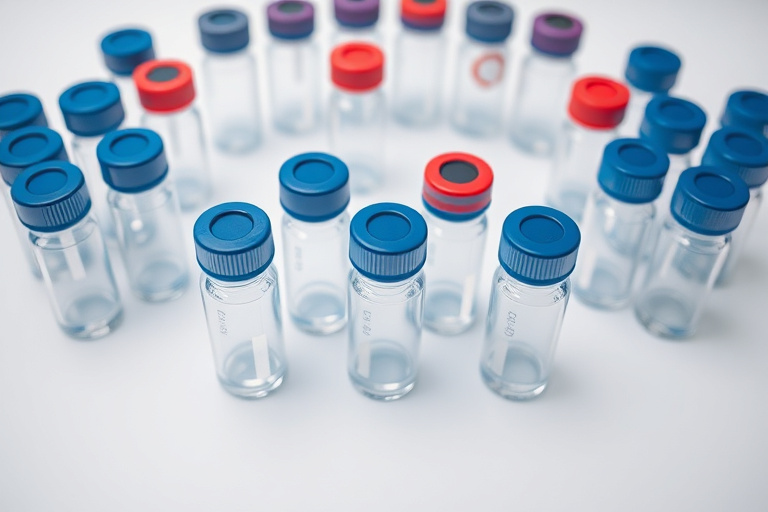
Lyophilized (freeze-dried) peptides are the powder form you receive from your pharmacy. They're the most stable form. When kept sealed and stored properly, lyophilized peptides can last months to years without significant degradation.
"Compounding pharmacies serve a critical role in healthcare, but patients need to understand the difference between a properly regulated 503B facility and an unregulated operation. Ask about PCAB accreditation and third-party testing.") Dr. Scott Brunner, PharmD, Alliance for Pharmacy Compounding
Store lyophilized peptides in the refrigerator at 36 to 46 degrees Fahrenheit (2 to 8 degrees Celsius). Keep them in their original sealed vials. Don't open the vial until you're ready to reconstitute. If you need to store them longer than a few months, some peptides can be frozen at -4 degrees Fahrenheit (-20 degrees Celsius) for extended stability.
Reconstituted peptides (mixed with bacteriostatic water) are much less stable. Once you add water, the clock starts ticking. Most reconstituted peptides remain stable for 2 to 4 weeks in the refrigerator. Some may last longer depending on the specific peptide and solvent used.
Never freeze reconstituted peptides unless your pharmacy specifically instructs you to. Freezing and thawing can damage the peptide structure. Keep reconstituted vials in the refrigerator and use them within the recommended timeframe.
Temperature: The Most Critical Factor
Temperature is the single biggest factor affecting peptide stability. Heat accelerates chemical reactions that break peptide bonds. Even brief exposure to high temperatures can significantly reduce potency.
Free Download: Protocol Planner Track your peptide storage dates and reconstitution schedules with our free planner. Includes expiration reminders and temperature logs. Get yours free (we'll email it to you instantly. [Email Input] [Download Button]
Never leave peptides at room temperature for extended periods. If your package arrives and has been sitting in a hot mailbox, check with your pharmacy about whether the peptide is still viable.
When traveling with peptides, use an insulated cooler bag with ice packs. Don't let the peptide vial directly touch the ice pack, as direct freezing contact can damage reconstituted peptides. Wrap the vial in a cloth or paper towel as a buffer.
In your refrigerator, store peptides toward the back where the temperature is most stable. Avoid the door shelves, which experience temperature fluctuations every time you open the fridge.
If you're using your to prepare peptides, do so in a cool environment. Keep the vial on ice during the mixing process if you're working in a warm room.
Light and Contamination Protection
Light degrades many peptides through photochemical reactions. UV light is the most damaging, but even fluorescent and LED light can contribute to degradation over time.
Check your GLP-1 eligibility
Use our free BMI Calculator to see if you may qualify for provider-reviewed GLP-1 therapy.
Try the BMI Calculator →Store peptide vials in their original packaging or wrap them in aluminum foil. If your pharmacy provides amber vials, they already offer some light protection. Keep vials in a dark area of your refrigerator or in a box.
Contamination is the other major threat to reconstituted peptides. Bacteriostatic water contains benzyl alcohol as a preservative, which helps prevent bacterial growth. But proper sterile technique is still important.
Always clean the vial stopper with an alcohol swab before inserting a needle. Use a new sterile syringe for each draw. Never touch the needle or allow it to contact non-sterile surfaces. If the solution looks cloudy, discolored, or has particles floating in it, discard it and reconstitute a new vial.
Signs Your Peptide Has Degraded
Knowing when a peptide has gone bad can save you from using an ineffective product. Watch for these warning signs.
Visual changes are the most obvious. If a clear solution becomes cloudy, milky, or develops visible particles, the peptide may have degraded or become contaminated. Discard it immediately.
Color changes can indicate degradation. Most peptide solutions should be clear and colorless. Any yellowing, browning, or other color change suggests chemical breakdown.
Reduced effectiveness is a functional sign. If you were getting good results and they suddenly stop despite consistent use, degraded peptide may be the cause. Reconstitute a fresh vial and see if results return.
When in doubt, contact your pharmacy. They can advise whether your peptide is still safe and effective based on the storage conditions you describe. Your can also help troubleshoot if your results plateau unexpectedly.
Frequently Asked Questions
How long do reconstituted peptides last?
Most reconstituted peptides remain stable for 2 to 4 weeks when stored properly in the refrigerator. Some peptides may last longer. Follow your pharmacy's specific guidance for each peptide.
Can I freeze peptides?
Lyophilized (powder) peptides can generally be frozen for long-term storage. Reconstituted peptides shouldn't be frozen unless your pharmacy specifically recommends it. Freeze-thaw cycles can damage peptide structure.
What happens if my peptide was left out overnight?
A single overnight exposure at room temperature may not destroy most peptides, but it can reduce potency. Contact your pharmacy for guidance based on the specific peptide and the temperature of your home. When in doubt, reconstitute a fresh vial.
Does bacteriostatic water expire?
Yes. Bacteriostatic water has an expiration date and should be discarded after it passes. Once opened, use bacteriostatic water within 28 days. Store it in the refrigerator after opening.
Can I travel with peptides?
Yes. Use an insulated cooler bag with gel ice packs. Wrap vials to prevent direct contact with ice. TSA allows medically necessary liquids with appropriate documentation. Carry your prescription label or pharmacy paperwork.
Ready to Take the Next Step?
Your health goals is personal) and you deserve a plan that fits. FormBlends connects you with licensed providers who can evaluate your needs and create a personalized protocol.
Sources &. References
- Pickart L, Vasquez-Soltero JM, Margolina A. GHK Peptide as a Natural Modulator of Multiple Cellular Pathways in Skin Regeneration. BioMed Res Int. 2015;2015:648108. Doi:10.1155/2015/648108
- Pickart L, Vasquez-Soltero JM, Margolina A. GHK and DNA: Resetting the Human Genome to Health. BioMed Res Int. 2014;2014:151479. Doi:10.1155/2014/151479
- Sikiric P, Hahm KB, Blagaic AB, et al. Stable Gastric Pentadecapeptide BPC 157, Robert's Cytoprotection, Adaptive Cytoprotection, and Therapeutic Effects. Curr Pharm Des. 2018;24(18):1990-2001. Doi:10.2174/1381612824666180515125918
- Chang CH, Tsai WC, Lin MS, et al. The promoting effect of pentadecapeptide BPC 157 on tendon healing involves tendon outgrowth, cell survival, and cell migration. J Appl Physiol. 2011;110(3):774-780. Doi:10.1152/japplphysiol.00945.2010
- Seiwerth S, Brcic L, Vuletic LB, et al. BPC 157 and blood vessels. Curr Pharm Des. 2014;20(7):1121-1125. Doi:10.2174/13816128113199990421
- Bock-Marquette I, Saxena A, White MD, et al. Thymosin beta4 activates integrin-linked kinase and promotes cardiac cell migration, survival and cardiac repair. Nature. 2004;432(7016):466-472. Doi:10.1038/nature03000
- Malinda KM, Sidhu GS, Mani H, et al. Thymosin beta4 accelerates wound healing. J Invest Dermatol. 1999;113(3):364-368. Doi:10.1046/j.1523-1747.1999.00708.x
Nothing in this article should be construed as medical advice. The information provided is educational only. Always consult with your healthcare provider before beginning, modifying, or discontinuing any medication or treatment. FormBlends connects patients with licensed providers for individualized care.
Last updated: 2026-03-24
See your options in about 2 minutes
Take the free quiz and see what fits you. Quick, private, and no commitment to continue.
See my options →