Key Takeaway
Understand realistic AOD-9604 before and after outcomes. Learn what clinical research and patient experiences reveal about timelines, body composition changes, and setting proper expectations.
Quick Answer: AOD-9604 results develop gradually over weeks, not days. Most patients begin noticing subtle changes in body composition and recovery within 4 to 8 weeks. The peptide supports fat metabolism and tissue repair but works best alongside proper nutrition and exercise. Individual results vary significantly based on health status, dosage, and lifestyle factors.
What Is AOD-9604?
AOD-9604 is a synthetic fragment of human growth hormone, consisting of amino acids 177-191 with an added tyrosine residue. It was developed at Monash University to isolate the fat-metabolizing properties of growth hormone without the broader hormonal effects of full-length hGH.
The peptide works primarily by stimulating lipolysis (fat breakdown) and inhibiting lipogenesis (fat storage). It has also shown potential for supporting cartilage health and tissue repair. These mechanisms produce real but gradual changes that differ meaningfully from the dramatic transformations sometimes implied in online marketing.
This guide focuses on setting realistic expectations based on clinical data and documented patient experiences.
Setting Realistic Expectations
Before examining timelines and outcomes, several important points deserve emphasis:
AOD-9604 isn't a weight loss drug in the way GLP-1 agonists are. It doesn't suppress appetite or produce the rapid, dramatic weight loss associated with semaglutide or tirzepatide. Its mechanism is more targeted and subtle, influencing how the body processes and stores fat at the cellular level.
Results depend heavily on lifestyle. AOD-9604 enhances the body's fat-metabolizing capacity, but it can't override a caloric surplus. Patients who combine the peptide with appropriate nutrition and regular physical activity consistently report better outcomes than those relying on the peptide alone.
Individual variation is significant. Genetics, metabolic health, body composition starting point, age, and concurrent therapies all influence how a person responds to AOD-9604. Two patients on identical protocols may experience different timelines and magnitudes of change.
Photographic "before and after" images found online should be viewed critically. Many lack verification, may involve multiple interventions simultaneously, or may represent outlier results. The information below is grounded in clinical data and aggregated clinical observations.
Week-by-Week Timeline
Weeks 1-2: Adjustment Period
During the first two weeks, the body is adjusting to the peptide. Most patients don't notice visible changes during this period. What some patients do report includes:
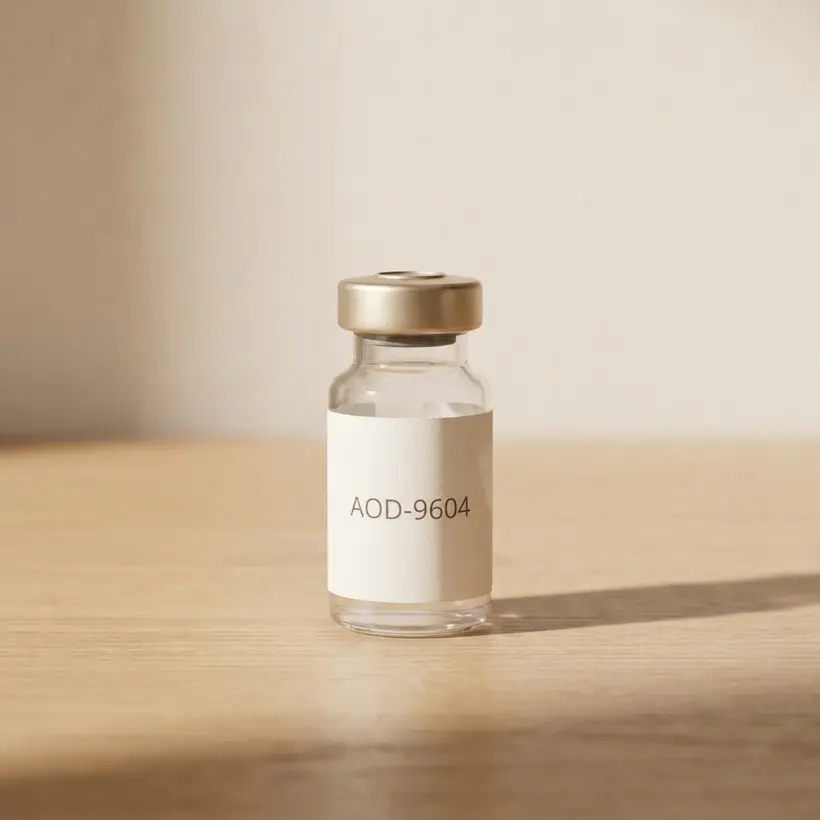
From the FormBlends catalog
AOD-9604
Fat-targeting fragment without growth hormone side effects · From $199/mo · compounded by a licensed 503A pharmacy, dispensed only after provider review.
Learn about AOD-9604 →- Subtle improvements in sleep quality
- Mild increase in energy levels, particularly in the morning
- Slight reduction in post-exercise soreness
These early observations are anecdotal and not universally experienced. The peptide's metabolic effects are beginning at the cellular level but haven't yet produced measurable external changes.
Weeks 3-4: Early Metabolic Shifts
By the third and fourth weeks, some patients begin to notice:
- Clothes fitting slightly differently, particularly around the midsection
- Improved exercise recovery
- More consistent energy throughout the day
- Slight improvements in skin quality (reported by some patients)
Scale weight may or may not change significantly at this stage. Because AOD-9604 targets fat metabolism specifically, patients who are also exercising may be simultaneously building lean tissue, which can mask fat loss on the scale. Body measurements and how clothing fits can be more informative metrics than weight alone during this phase.
Weeks 5-8: Visible Changes Begin
This is the period where most patients begin to see and feel more noticeable differences:
- Measurable reduction in body fat percentage (typically 1-3% over this period, depending on starting point and lifestyle)
- Visible changes in problem areas such as the abdomen, flanks, and thighs
- Improved muscle definition, particularly when combined with resistance training
- Continued improvements in recovery and exercise performance
- Patients with joint concerns may begin noticing reduced discomfort
Weeks 9-12: Cumulative Results
By the end of a standard 8-to-12-week cycle, the cumulative effects become more evident:
- More significant body composition changes, with the most responsive patients seeing meaningful fat reduction in stubborn areas
- Improved body measurements (waist circumference, hip-to-waist ratio)
- Better exercise tolerance and faster recovery between sessions
- Potential improvements in joint comfort and mobility for patients using AOD-9604 for musculoskeletal support
What Clinical Research Shows
The Phase IIb Trial
The largest human clinical trial for AOD-9604 involved over 300 obese participants and ran for 12 weeks. Key findings included:
- Statistically significant weight loss compared to placebo, though the absolute magnitude was modest
- No significant changes in IGF-1, glucose tolerance, or insulin sensitivity
- Adverse event rates comparable to placebo
This trial studied obese subjects using AOD-9604 as a standalone intervention without structured exercise or dietary protocols. The results represent a conservative baseline of what the peptide can accomplish on its own.
Preclinical Fat Metabolism Data
Animal studies have consistently shown more pronounced effects, including significant reductions in body fat without changes in food intake or lean mass. While animal data doesn't directly translate to human outcomes, it supports the biological plausibility of AOD-9604's fat-metabolizing mechanism.
Cartilage and Joint Research
Studies in animal models of osteoarthritis have demonstrated that AOD-9604 can stimulate cartilage repair and reduce degradation. These effects develop over weeks to months, consistent with the slow biological processes of cartilage remodeling. Patients seeking joint benefits should expect a longer timeline than those focused on body composition.
Factors That Influence Results
Starting Body Composition
Patients with higher body fat percentages often see more noticeable initial changes, as there's more metabolically active fat tissue for the peptide to influence. Leaner individuals may see subtler fat loss but may notice improvements in definition, recovery, and body composition ratios.
Diet and Nutrition
AOD-9604 enhances fat oxidation, but this effect is most meaningful when the body is in a slight caloric deficit or at maintenance. Patients who maintain a balanced, protein-adequate diet while using AOD-9604 consistently report better results than those with uncontrolled eating patterns.
Exercise
Physical activity amplifies AOD-9604's effects. Resistance training supports lean mass retention (important for metabolic rate), while cardiovascular exercise provides additional fat oxidation. Patients who exercise regularly during their AOD-9604 cycle tend to see more favorable body composition changes.
Dosage and Consistency
Consistent daily administration at the prescribed dose produces better outcomes than irregular use. Missing doses frequently or using subtherapeutic amounts can significantly limit results.
Concurrent Peptide Therapy
AOD-9604 is sometimes combined with other peptides (such as BPC-157 or CJC-1295/Ipamorelin) as part of a multi-peptide protocol. Combination approaches may produce more thorough results, but these should only be designed by a supervising physician.
Age and Metabolic Health
Younger patients with healthy metabolic function may respond more quickly than older patients or those with metabolic conditions. But older patients and those with metabolic challenges can still benefit from AOD-9604. the timeline may simply be longer.
How to Track Your Progress
Because AOD-9604's effects are gradual and sometimes subtle, having a structured tracking system helps patients recognize real changes that might otherwise go unnoticed.
- Body measurements: Take waist, hip, thigh, and arm circumference measurements every two weeks using a flexible tape measure. Measure at the same points each time.
- Progress photos: Take standardized photos (same lighting, same angles, same time of day) every two weeks. Front, side, and back views provide the most complete picture.
- Body composition testing: If available, periodic DEXA scans or bioimpedance measurements provide objective data on fat mass and lean mass changes.
- Subjective markers: Track energy levels, sleep quality, exercise recovery, and joint comfort using a simple daily or weekly log.
- How clothing fits: Often the most practical indicator of body composition change, especially when the scale isn't moving.
What AOD-9604 Can't Do
Honest expectations require acknowledging limitations:
- AOD-9604 won't produce rapid, dramatic weight loss comparable to GLP-1 receptor agonists
- It can't compensate for a consistently poor diet or sedentary lifestyle
- Results aren't permanent without maintaining supportive habits after discontinuation
- Individual results aren't guaranteed and will vary from person to person
- The peptide doesn't "spot reduce" fat from specific areas, though areas with more metabolically active fat may show earlier changes
Safety Considerations
AOD-9604 has demonstrated a favorable safety profile in clinical trials, with adverse event rates comparable to placebo. Common side effects are limited to mild injection site reactions and occasional headache. The peptide doesn't affect blood sugar, IGF-1 levels, or hormonal balance at therapeutic doses.
Patients should undergo medical evaluation before starting therapy and receive ongoing monitoring throughout their treatment cycle. This allows the prescribing physician to assess progress, adjust dosing if needed, and ensure the therapy remains appropriate.
How FormBlends Can Help
FormBlends provides the clinical framework that gives AOD-9604 therapy the best chance of producing meaningful results. Every patient begins with a thorough medical evaluation to establish baseline health markers and confirm candidacy.
Throughout the treatment cycle, FormBlends physicians monitor progress through scheduled follow-up consultations. If results aren't meeting expectations, the care team can adjust dosing, modify the protocol, or explore complementary approaches.
This structured, physician-supervised model stands in contrast to self-directed peptide use and consistently produces better outcomes for patients.
Frequently Asked Questions
How quickly does AOD-9604 work?
Most patients begin noticing subtle changes within 4 to 8 weeks of consistent daily use. Visible body composition changes typically become more apparent during weeks 5 through 12. The timeline varies based on individual factors including starting body composition, diet, exercise habits, and dosage.
Will I lose weight on AOD-9604?
AOD-9604 supports fat metabolism, which can contribute to weight loss when combined with appropriate nutrition and exercise. But scale weight isn't always the best measure of progress, as patients may simultaneously improve lean mass. Body measurements and body composition testing often tell a more accurate story.
Do AOD-9604 results last after stopping the peptide?
Body composition changes achieved during an AOD-9604 cycle can be maintained if the patient continues supportive nutrition and exercise habits after discontinuation. Without these habits, the body's metabolic patterns may gradually return to their pre-treatment baseline.
Can I use AOD-9604 for multiple cycles?
Yes. Many patients complete multiple AOD-9604 cycles with rest periods of 4 to 6 weeks between them. Each subsequent cycle should be evaluated by the prescribing physician based on the patient's response, health status, and ongoing goals.
Why am I not seeing results from AOD-9604?
If results are slower than expected, common factors include inconsistent dosing, dietary patterns that work against fat metabolism, insufficient physical activity, or simply needing more time. Discuss your progress with your physician, who can evaluate your protocol and make adjustments. Not every patient responds to AOD-9604 at the same rate or magnitude.
Start Your AOD-9604 process with Expert Guidance
Results start with the right protocol, proper monitoring, and realistic expectations. FormBlends physicians provide all three. Schedule your telehealth consultation today to find out if AOD-9604 is right for you.
Ready when you are
AOD-9604
Fat-targeting fragment without growth hormone side effects · From $199/mo · compounded by a licensed 503A pharmacy, dispensed only after provider review.
Learn about AOD-9604 →