Key Takeaway
Sexual dysfunction affects millions of adults, yet it remains one of the least discussed health concerns. PT-141, also known as bremelanotide, is a peptide that has gained attention for its unique approach to this issue.
Sexual dysfunction affects millions of adults, yet it remains one of the least discussed health concerns. PT-141, also known as bremelanotide, is a peptide that has gained attention for its unique approach to this issue. Unlike medications that work on blood flow alone, PT-141 bremelanotide works through the central nervous system to address desire itself.
Key Takeaways: - Learn how pt-141 works differently than other options - Understand what clinical research shows - Dosing, Administration, and What to Expect - Side Effects and Important Safety Information
Originally developed from the tanning peptide melanotan II, PT-141 was found to have a significant effect on sexual arousal during clinical trials. It has since been studied extensively and, in one formulation, received FDA approval for a specific indication. This guide covers how it works, what the research shows, and how to explore it with a licensed provider.
How PT-141 Works Differently Than Other Options
Most medications for sexual dysfunction target blood flow. PDE5 inhibitors, for example, work by relaxing blood vessels in specific tissues. This addresses the physical mechanics but not the underlying desire or arousal signal.
PT-141 takes a fundamentally different approach. It acts on melanocortin receptors (specifically MC3R and MC4R) in the brain. These receptors are part of the neural pathways involved in sexual arousal and desire. By activating these receptors, PT-141 can stimulate the brain's arousal response directly.
This mechanism is significant for several reasons:
It addresses desire, not just function. For people whose primary issue is low desire or reduced arousal, PT-141 targets the root cause rather than working around it.
It works for both men and women. Clinical trials have studied PT-141 in both populations with positive results. The FDA approved an autoinjector formulation of bremelanotide (marketed under a brand name) for hypoactive sexual desire disorder (HSDD) in premenopausal women in 2019.
It doesn't require timing with sexual activity in the same way. While it's typically taken 45 minutes before anticipated activity, its mechanism isn't dependent on physical stimulation to activate.
"GLP-1 receptor agonists represent the most significant advance in obesity pharmacotherapy in decades. For the first time, we have medications that produce weight loss approaching what was previously only achievable through bariatric surgery.") Dr. Robert Kushner, MD, Northwestern University, speaking at ObesityWeek 2023
The melanocortin system plays a role in many processes beyond sexual function, including appetite regulation, inflammation, and skin pigmentation. This is why PT-141 can have effects beyond its primary use, and why medical oversight is important.
If you're exploring peptide therapy for other goals as well, learn about or .
What Clinical Research Shows
PT-141 has been studied in multiple clinical trials, providing a stronger evidence base than many other peptides.
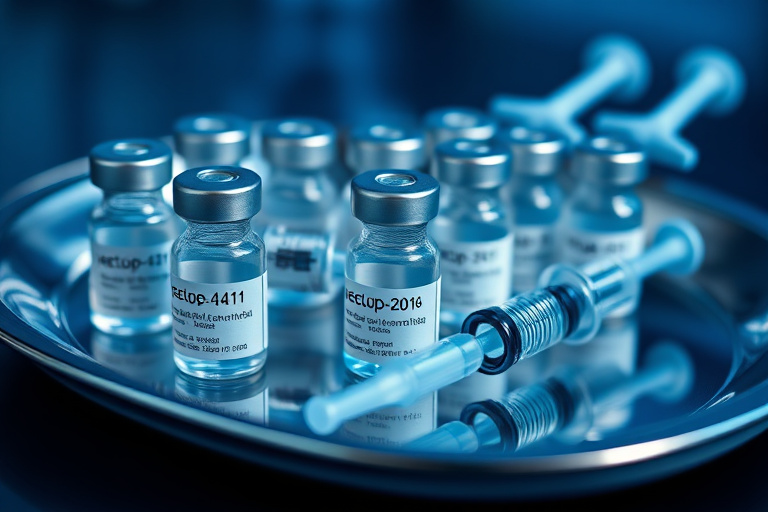
In women: A Phase 3 clinical trial published in Obstetrics &. Gynecology studied over 1,200 premenopausal women with HSDD. The results showed a statistically significant increase in desire and a reduction in distress related to low sexual desire compared to placebo. These findings led to FDA approval of a branded autoinjector formulation.
Free Download: Protocol Planner Organize your peptide protocols and track your response over time. Get yours free (we'll email it to you instantly. [Download Your Protocol Planner]
In men: Research published in the Journal of Sexual Medicine studied PT-141 in men with erectile dysfunction who had not responded adequately to PDE5 inhibitors. The studies showed improved erectile response, suggesting PT-141 may work through a complementary pathway.
Dosing in studies: Clinical trials used subcutaneous injection doses of 1.75 mg for the FDA-approved indication in women. In compounding pharmacy contexts, providers may prescribe different doses based on individual response and whether the patient is male or female.
It's important to emphasize that while the FDA approved one specific branded formulation for HSDD in premenopausal women, compounded versions of PT-141 prescribed through pharmacies like those FormBlends works with are used off-label. Your provider can discuss the evidence and determine if it's appropriate for your situation.
Dosing, Administration, and What to Expect
PT-141 is administered as a subcutaneous injection, similar to other peptides. Here is what a typical experience looks like.
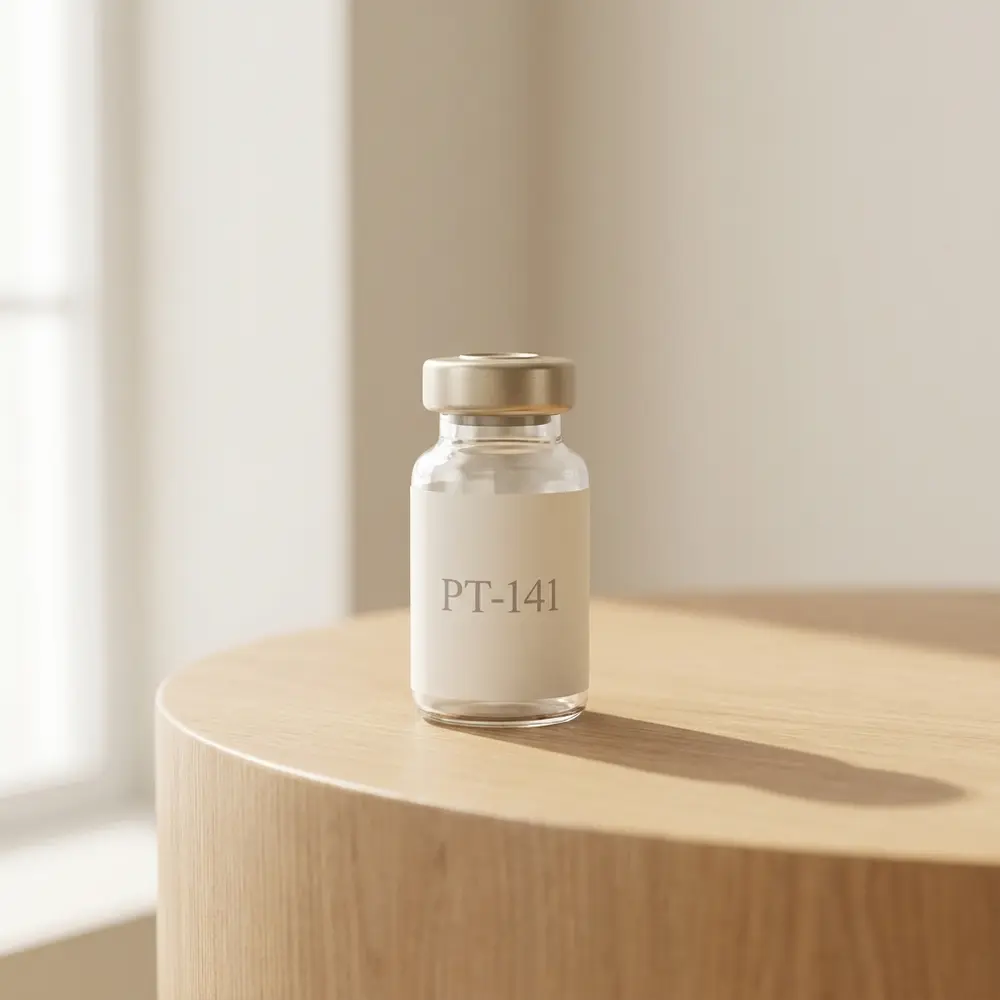
From the FormBlends catalog
PT-141 (Bremelanotide)
for women with low sexual desire. · From $189/mo · compounded by a licensed 503A pharmacy, dispensed only after provider review.
View PT-141 (Bremelanotide) →Before your first dose: Your provider will review your medical history, current medications, and cardiovascular health. PT-141 can cause a transient increase in blood pressure, so patients with uncontrolled hypertension or cardiovascular disease may not be candidates.
Typical dosing: - Women (HSDD): 1.75 mg subcutaneous injection, taken approximately 45 minutes before anticipated sexual activity - Men: Doses typically range from 1 to 2 mg, also taken 45 minutes prior - Frequency limit: Most protocols recommend no more than one dose per 24-hour period and no more than 8 doses per month
What to expect after injection: - Effects typically begin within 30-60 minutes - Duration of effect may last 6-12 hours, though this varies - Some users experience nausea in the first 30 minutes (this is the most common side effect) - Facial flushing and a warm sensation are common and temporary
Unlike daily peptide protocols, PT-141 is used on an as-needed basis. This makes it different from growth hormone peptides or healing peptides that require consistent daily dosing.
For help with peptide preparation, visit our .
Side Effects and Important Safety Information
PT-141 is generally well tolerated, but it does have a specific side effect profile that you should understand before starting.
Common side effects: - Nausea: The most frequently reported side effect, occurring in up to 40% of users in clinical trials. It's usually mild to moderate and resolves within a few hours. Taking an anti-nausea medication 30 minutes before the injection can help. - Facial flushing: A warm, red flush across the face and chest. This is related to melanocortin receptor activation and is temporary. - Headache: Mild headache is reported by some users. - Injection site reactions: Minor redness or tenderness at the injection site.
Less common but important: - Blood pressure elevation: PT-141 can cause a transient increase in blood pressure. This typically resolves within 12 hours. If you have high blood pressure, discuss this risk carefully with your provider. - Skin darkening: Because PT-141 activates melanocortin receptors, some users notice mild skin darkening (hyperpigmentation), particularly with repeated use. This effect is usually temporary.
Contraindications: - Uncontrolled hypertension - Known cardiovascular disease - Use alongside certain blood pressure medications (discuss with your provider)
The FDA-approved label recommends limiting use to no more than 8 doses per month due to the blood pressure effects. Your provider may set similar limits for compounded formulations.
If you're on a , note that nausea is a common side effect of both. Discuss the potential for combined nausea with your provider. They may adjust timing to minimize overlap.
Frequently Asked Questions
How quickly does PT-141 work?
Most users feel the effects within 30 to 60 minutes after injection. The full effect may take up to 2 hours in some individuals. The duration of effect can last 6 to 12 hours, though peak response is typically in the first few hours.
Is PT-141 FDA approved?
A branded autoinjector formulation of bremelanotide was FDA approved in 2019 for hypoactive sexual desire disorder (HSDD) in premenopausal women. Compounded versions of PT-141 available through 503A pharmacies are prescribed off-label by licensed providers for both men and women.
Can PT-141 be used long-term?
Long-term data on PT-141 is limited. The FDA-approved formulation recommends limiting use to no more than 8 doses per month. Most providers using compounded PT-141 follow similar guidelines. Continuous daily use isn't recommended due to potential effects on blood pressure and melanocortin receptor sensitivity.
Does PT-141 work if other medications haven't?
PT-141 works through a different mechanism than PDE5 inhibitors and hormonal treatments. Because it targets the central nervous system arousal pathway rather than blood flow, it may be effective for individuals who haven't responded to other approaches. Your provider can evaluate whether it's a reasonable option based on your specific situation.
Can both men and women use PT-141?
Yes. Clinical research has studied PT-141 in both men and women. The FDA approval was specifically for HSDD in premenopausal women, but compounding pharmacy prescriptions allow licensed providers to prescribe it off-label for men as well based on clinical judgment.
Let's Make This Happen
The research is clear. The options are available. The only question is whether it's right for you. A FormBlends provider can help you decide) no pressure, no commitment.
Sources &. References
- Pickart L, Vasquez-Soltero JM, Margolina A. GHK Peptide as a Natural Modulator of Multiple Cellular Pathways in Skin Regeneration. BioMed Res Int. 2015;2015:648108. Doi:10.1155/2015/648108
- Pickart L, Vasquez-Soltero JM, Margolina A. GHK and DNA: Resetting the Human Genome to Health. BioMed Res Int. 2014;2014:151479. Doi:10.1155/2014/151479
- Sikiric P, Hahm KB, Blagaic AB, et al. Stable Gastric Pentadecapeptide BPC 157, Robert's Cytoprotection, Adaptive Cytoprotection, and Therapeutic Effects. Curr Pharm Des. 2018;24(18):1990-2001. Doi:10.2174/1381612824666180515125918
- Chang CH, Tsai WC, Lin MS, et al. The promoting effect of pentadecapeptide BPC 157 on tendon healing involves tendon outgrowth, cell survival, and cell migration. J Appl Physiol. 2011;110(3):774-780. Doi:10.1152/japplphysiol.00945.2010
- Seiwerth S, Brcic L, Vuletic LB, et al. BPC 157 and blood vessels. Curr Pharm Des. 2014;20(7):1121-1125. Doi:10.2174/13816128113199990421
- Bock-Marquette I, Saxena A, White MD, et al. Thymosin beta4 activates integrin-linked kinase and promotes cardiac cell migration, survival and cardiac repair. Nature. 2004;432(7016):466-472. Doi:10.1038/nature03000
- Malinda KM, Sidhu GS, Mani H, et al. Thymosin beta4 accelerates wound healing. J Invest Dermatol. 1999;113(3):364-368. Doi:10.1046/j.1523-1747.1999.00708.x
The information in this article is intended for educational use only and shouldn't be considered medical advice. Consult a qualified healthcare provider before making any changes to your medication or supplement regimen. FormBlends helps with connections with licensed providers for personalized medical guidance.
Last updated: 2026-03-24
Ready when you are
PT-141 (Bremelanotide)
for women with low sexual desire. · From $189/mo · compounded by a licensed 503A pharmacy, dispensed only after provider review.
View PT-141 (Bremelanotide) →