Executive Summary
Key Takeaways
- Figure 1: Dulaglutide (Trulicity) overview as a once-weekly GLP-1 receptor agonist for type 2 diabetes
- Dulaglutide, marketed as Trulicity by Eli Lilly and Company, is a once-weekly glucagon-like peptide-1 (GLP-1) receptor agonist approved for the treatment of type 2 diabetes mellitus.
- Dulaglutide occupies a distinctive position in the GLP-1 receptor agonist landscape.
- From a clinical standpoint, dulaglutide offers several pragmatic advantages.
- Its ready-to-use, single-dose autoinjector pen requires no reconstitution, dose dialing, or needle attachment, reducing the complexity of self-injection for patients new to injectable therapies.
Dulaglutide, marketed as Trulicity by Eli Lilly and Company, is a once-weekly glucagon-like peptide-1 (GLP-1) receptor agonist approved for the treatment of type 2 diabetes mellitus. Built on an innovative IgG4-Fc fusion protein platform that extends its half-life to approximately five days, dulaglutide became the most widely prescribed GLP-1 receptor agonist by volume in the years following its September 2014 FDA approval, reaching peak annual sales exceeding $7 billion before the emergence of semaglutide-dominant prescribing patterns. The AWARD clinical trial program, encompassing eleven phase 3 studies, established dulaglutide's strong glycemic efficacy across a range of patient populations and comparator therapies, while the landmark REWIND cardiovascular outcomes trial demonstrated a statistically significant 12% reduction in major adverse cardiovascular events over a median follow-up of 5.4 years in a broad population of patients with type 2 diabetes.
Dulaglutide occupies a distinctive position in the GLP-1 receptor agonist landscape. Unlike semaglutide, which has been extensively studied and approved for both diabetes and chronic weight management, dulaglutide's primary regulatory indication remains glycemic control in type 2 diabetes, with weight loss considered a secondary benefit rather than a primary therapeutic endpoint. The REWIND trial was the longest cardiovascular outcomes trial conducted with any GLP-1 receptor agonist at the time of its completion, and it enrolled a broader population than most prior GLP-1 cardiovascular trials, with only 31% of participants having established cardiovascular disease at baseline. This design feature provided evidence of cardiovascular benefit in a primary prevention population, a distinction that earned dulaglutide the first FDA-approved cardiovascular risk reduction indication for both primary and secondary prevention among type 2 diabetes therapies.
Clinical Significance and Market Position
From a clinical standpoint, dulaglutide offers several pragmatic advantages. Its ready-to-use, single-dose autoinjector pen requires no reconstitution, dose dialing, or needle attachment, reducing the complexity of self-injection for patients new to injectable therapies. The four available dose strengths (use our dosing calculator) (0.75 mg, 1.5 mg, 3.0 mg, and 4.5 mg) provide clinicians with flexibility to titrate therapy according to individual patient needs, with the higher doses approved in 2020 based on the AWARD-11 trial data demonstrating incremental HbA1c reductions of 1.7% and 1.9% for the 3.0 mg and 4.5 mg doses, respectively.
The pharmacological architecture of dulaglutide reflects Eli Lilly's deliberate approach to GLP-1 receptor agonist engineering. By covalently linking a modified GLP-1 analog to the Fc portion of a human IgG4 antibody, the molecule achieves sustained receptor activation while minimizing immune-mediated clearance. This fusion protein design differentiates dulaglutide from the acylation-based approach used in semaglutide and liraglutide, which rely on albumin binding for half-life extension. The resulting pharmacokinetic profile supports true once-weekly dosing with peak plasma concentrations occurring approximately 48 hours after subcutaneous injection and steady-state achieved by two to four weeks of weekly administration.
Key Clinical Data Summary
Across the AWARD trial program, dulaglutide 1.5 mg consistently reduced HbA1c by 1.3% to 1.6% from baseline, proving superior to placebo, sitagliptin, exenatide twice daily, and insulin glargine in head-to-head comparisons. The SUSTAIN 7 trial, which directly compared dulaglutide to semaglutide (see our drug comparison hub), demonstrated that while semaglutide achieved statistically greater HbA1c reductions (1.8% vs. 1.4% for semaglutide 1.0 mg vs. dulaglutide 1.5 mg) and weight loss (6.5 kg vs. 3.0 kg), dulaglutide nonetheless provided clinically meaningful improvements in both parameters with a comparable safety profile.
Key Takeaway
Dulaglutide (Trulicity) remains a well-established once-weekly GLP-1 receptor agonist with an extensive clinical evidence base spanning eleven AWARD trials and the REWIND cardiovascular outcomes study. Its IgG4-Fc fusion design, user-friendly autoinjector, four dose strengths, and proven cardiovascular benefit in both primary and secondary prevention populations make it a clinically relevant option for type 2 diabetes management, particularly for patients initiating injectable GLP-1 therapy for the first time.
The safety profile of dulaglutide mirrors that of the broader GLP-1 receptor agonist class, with gastrointestinal adverse events representing the most common treatment-emergent effects. Nausea occurred in approximately 12% to 17% of patients across clinical trials depending on dose, though the majority of gastrointestinal events were mild to moderate in severity and tended to diminish over time. Serious adverse events of concern, including pancreatitis and the class-wide boxed warning regarding thyroid C-cell tumors observed in rodent studies, remain rare in clinical practice but require appropriate patient counseling and monitoring.
This report provides a comprehensive examination of dulaglutide's molecular pharmacology, clinical trial evidence, cardiovascular outcomes data, comparative efficacy against other GLP-1 receptor agonists, dosing considerations, and safety profile. Drawing from peer-reviewed publications, regulatory documents, and real-world evidence, it serves as a complete clinical reference for healthcare professionals. Take our free assessment to find your best option, researchers, and informed patients seeking a thorough understanding of this important diabetes therapy.
Development History
The development of dulaglutide represents a significant chapter in the broader narrative of incretin-based therapeutics for type 2 diabetes. Eli Lilly and Company, drawing on decades of expertise in diabetes pharmacotherapy dating back to its pioneering role in insulin manufacturing, embarked on the development of a once-weekly GLP-1 receptor agonist that would combine strong glycemic efficacy with a patient-friendly dosing regimen. The molecule that would become dulaglutide, initially designated LY2189265, emerged from Lilly's strategic decision to pursue a fusion protein approach to GLP-1 half-life extension, differentiating it from the acylated peptide strategies being pursued by competitor Novo Nordisk.
The Incretin Era and Early GLP-1 Research
The scientific foundation for dulaglutide's development was laid in the 1980s and 1990s, when researchers elucidated the incretin effect and identified GLP-1 as a potent insulinotropic hormone. The observation that oral glucose administration stimulated greater insulin secretion than equivalent intravenous glucose loads led to the identification of gut-derived hormones, particularly GLP-1 and glucose-dependent insulinotropic polypeptide (GIP), as key mediators of postprandial insulin release. Native GLP-1, however, proved impractical as a therapeutic agent due to its extremely short plasma half-life of approximately two minutes, the result of rapid degradation by the ubiquitous enzyme dipeptidyl peptidase-4 (DPP-4) and renal clearance.
The first successful strategy to overcome this limitation came from an unexpected source. In the mid-1990s, John Eng identified exendin-4, a 39-amino acid peptide from the saliva of the Gila monster (Heloderma suspectum), which shared approximately 53% sequence homology with human GLP-1 but was resistant to DPP-4 degradation. This discovery led to the development of exenatide (Byetta), which received FDA approval in 2005 as the first GLP-1 receptor agonist. However, exenatide required twice-daily injections and was associated with a relatively high incidence of injection-site reactions in its extended-release formulation (Bydureon). These limitations created an impetus for the development of longer-acting GLP-1 receptor agonists with improved pharmacokinetic profiles.
Eli Lilly's Fusion Protein Strategy
Eli Lilly's approach to creating a long-acting GLP-1 receptor agonist centered on the concept of fusing a GLP-1 analog to a large carrier protein, specifically the Fc fragment of human immunoglobulin G4 (IgG4). This strategy was informed by several decades of experience in antibody engineering and fusion protein technology across the pharmaceutical industry. The Fc fragment confers multiple pharmacokinetic advantages: it reduces renal clearance by virtue of its large molecular size (approximately 63 kilodaltons for the complete dulaglutide homodimer), it engages the neonatal Fc receptor (FcRn) to undergo recycling through the endosomal pathway, and it shields the peptide moiety from enzymatic degradation.
The selection of IgG4 as the Fc backbone was deliberate. Unlike IgG1, which can activate complement and mediate antibody-dependent cellular cytotoxicity (ADCC), IgG4 possesses minimal effector function. This characteristic was essential for a therapeutic molecule intended for chronic administration, as unintended immune activation could lead to safety concerns over prolonged use. Lilly's scientists introduced specific amino acid substitutions in both the GLP-1 analog portion and the Fc region to optimize receptor binding, reduce immunogenicity, and further diminish any residual Fc effector activity.
Preclinical Development and IND Filing
Preclinical studies of LY2189265 in animal models of type 2 diabetes demonstrated dose-dependent improvements in glycemic control, with sustained reductions in blood glucose and HbA1c levels following once-weekly subcutaneous administration. Pharmacokinetic studies in cynomolgus monkeys confirmed the extended half-life of the fusion protein, supporting the feasibility of weekly dosing in humans. Toxicology studies, conducted in accordance with regulatory requirements for chronic-use biologics, identified the thyroid C-cell findings that would become the basis for the class-wide boxed warning on GLP-1 receptor agonists. In rodents, dulaglutide produced dose-dependent and duration-dependent increases in C-cell hyperplasia and thyroid C-cell tumors, including medullary thyroid carcinoma. However, the relevance of these findings to humans remains uncertain, as rodent thyroid C-cells express significantly higher levels of GLP-1 receptors than human C-cells.
Phase 1 and Phase 2 Clinical Studies
First-in-human studies of dulaglutide were initiated in 2006, with single ascending dose and multiple ascending dose studies establishing the safety, tolerability, and pharmacokinetic profile in healthy volunteers and patients with type 2 diabetes. These early-phase studies confirmed that once-weekly subcutaneous injection of dulaglutide produced sustained GLP-1 receptor activation, with measurable reductions in fasting and postprandial glucose levels. Phase 2 dose-finding studies evaluated weekly doses ranging from 0.1 mg to 3.0 mg, identifying 0.75 mg and 1.5 mg as the optimal doses for further development based on the balance of efficacy and tolerability. These doses were selected to proceed into the comprehensive AWARD phase 3 program.
The AWARD Phase 3 Program (2011-2021)
The AWARD (Assessment of Weekly AdministRation of dulaglutide in Diabetes) clinical trial program represents one of the most extensive phase 3 programs ever conducted for a GLP-1 receptor agonist. Beginning with AWARD-1, which initiated enrollment in 2011, the program eventually encompassed eleven separate phase 3 studies evaluating dulaglutide across diverse patient populations, background therapies, and active comparators. The initial six AWARD trials (AWARD-1 through AWARD-6) evaluated the 0.75 mg and 1.5 mg doses and formed the basis of the original regulatory submission. Subsequent trials expanded the evidence base to include special populations (chronic kidney disease in AWARD-7, pediatric patients in AWARD-PEDS) and higher dose strengths (3.0 mg and 4.5 mg in AWARD-11).
FDA Approval and Label Expansions
On September 18, 2014, the FDA approved Trulicity (dulaglutide) injection for subcutaneous use as an adjunct to diet and exercise to improve glycemic control in adults with type 2 diabetes. The approval was based on data from six AWARD clinical trials involving more than 3,300 patients treated with dulaglutide. The approved doses were 0.75 mg and 1.5 mg administered once weekly via a single-dose autoinjector pen. The European Medicines Agency (EMA) granted marketing authorization in November 2014.
Regulatory Milestones
September 2014: FDA approval of 0.75 mg and 1.5 mg doses for type 2 diabetes. November 2014: EMA marketing authorization. February 2020: FDA approval of cardiovascular risk reduction indication based on REWIND trial. September 2020: FDA approval of 3.0 mg and 4.5 mg doses based on AWARD-11. The cardiovascular indication made Trulicity the first type 2 diabetes therapy approved for MACE reduction in both patients with established cardiovascular disease and those with cardiovascular risk factors alone.
A key moment in dulaglutide's commercial lifecycle came in February 2020, when the FDA approved a new indication for the reduction of major adverse cardiovascular events (MACE) in adults with type 2 diabetes who have established cardiovascular disease or multiple cardiovascular risk factors, based on data from the REWIND trial. This made Trulicity the first and only type 2 diabetes medicine at that time approved for cardiovascular risk reduction in both primary and secondary prevention populations. Seven months later, in September 2020, the FDA approved two additional doses of Trulicity (3.0 mg and 4.5 mg) based on the AWARD-11 trial, providing clinicians with greater dosing flexibility to optimize glycemic control.
Commercial Trajectory and Market Context
Trulicity's commercial success was remarkable. By 2019, it had become the most prescribed GLP-1 receptor agonist worldwide by volume, generating approximately $5.1 billion in annual revenue for Eli Lilly. Sales peaked at approximately $7.4 billion in 2022, driven by the cardiovascular indication expansion and growing adoption of the GLP-1 class. However, the explosive growth of semaglutide (Ozempic and Wegovy), particularly following the broader recognition of GLP-1 receptor agonists for weight management, began to erode dulaglutide's market share. Eli Lilly subsequently pivoted its incretin strategy toward tirzepatide (Mounjaro/Zepbound), the dual GIP/GLP-1 receptor agonist that demonstrated superior efficacy in head-to-head comparisons with semaglutide, while dulaglutide transitioned to a more mature phase of its product lifecycle.
The development of dulaglutide also stimulated important advances in drug delivery technology. Eli Lilly invested substantially in the design of the Trulicity autoinjector, a pre-filled, single-use device that conceals the needle before, during, and after injection. This design innovation addressed a significant barrier to GLP-1 receptor agonist adoption, as many patients with type 2 diabetes expressed reluctance to initiate injectable therapy due to needle phobia. The resulting pen design became a competitive differentiator and contributed to high patient satisfaction scores in real-world studies.
Mechanism of Action
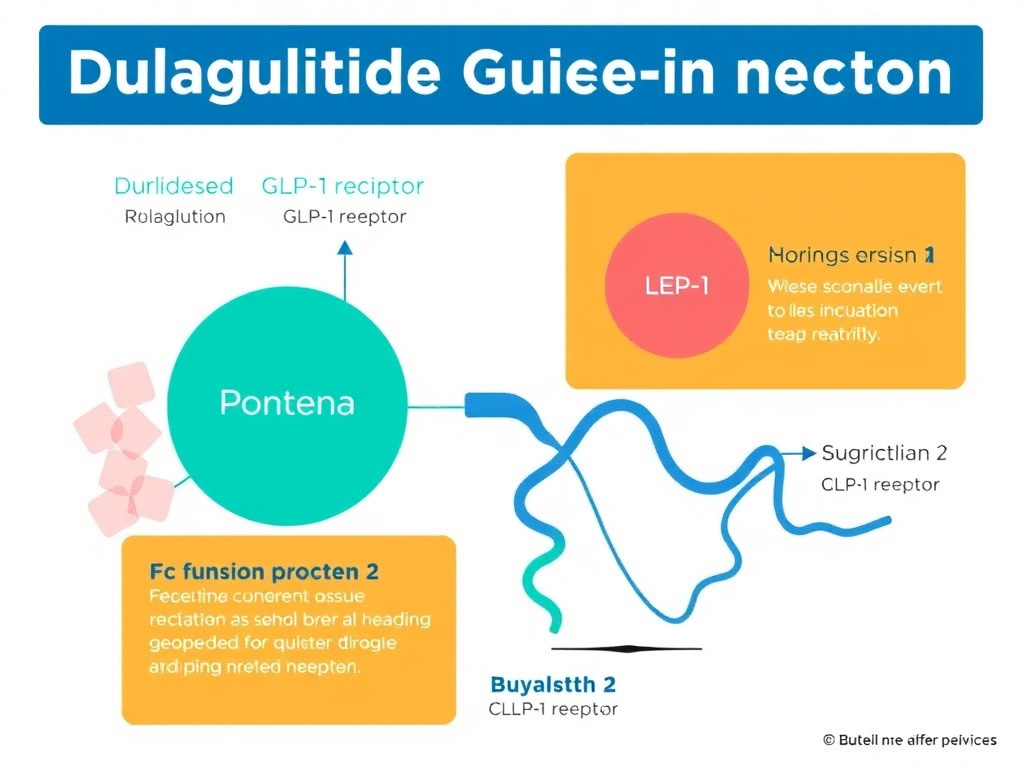
Dulaglutide is a recombinant fusion protein (learn more at our peptide research hub) consisting of two identical disulfide-linked chains, each comprising an N-terminal GLP-1 analog sequence covalently linked to the Fc portion of a modified human immunoglobulin G4 (IgG4) heavy chain via a small peptide linker. This molecular architecture produces a homodimeric protein of approximately 63 kilodaltons that activates the GLP-1 receptor with high affinity while possessing a pharmacokinetic profile that supports once-weekly subcutaneous administration. The resulting half-life of approximately five days represents a significant extension over native GLP-1, which is degraded within minutes of secretion.
Molecular Structure and Design Rationale
The GLP-1 analog component of dulaglutide is based on the native human GLP-1(7-37) sequence but incorporates several amino acid substitutions designed to confer resistance to dipeptidyl peptidase-4 (DPP-4) degradation while preserving receptor binding affinity. At position 8, glycine is substituted with alpha-aminoisobutyric acid (Aib), a sterically bulky non-natural amino acid that prevents DPP-4 from cleaving the peptide at its primary degradation site. Additional substitutions at position 22 (glycine to glutamic acid) and position 36 (arginine to glycine) were introduced to improve solubility and reduce aggregation propensity of the fusion protein. These modifications collectively result in a GLP-1 analog that retains approximately 68% of the in vitro potency of native GLP-1 at the human GLP-1 receptor, a modest reduction that is more than compensated for by the vastly extended circulating half-life of the fusion construct.
The Fc portion is derived from human IgG4 and includes specific mutations in the hinge region to prevent Fab-arm exchange, a phenomenon unique to IgG4 antibodies in which half-molecules can recombine to form bispecific antibodies. The IgG4 Fc was selected over other immunoglobulin subclasses because it exhibits minimal complement fixation and antibody-dependent cellular cytotoxicity (ADCC), properties that are undesirable in a chronically administered therapeutic protein. The small peptide linker connecting the GLP-1 analog to the Fc domain provides sufficient flexibility for the GLP-1 moiety to engage the receptor binding site without steric hindrance from the Fc region.
Half-Life Extension Mechanisms
The extended half-life of dulaglutide results from three complementary mechanisms conferred by the IgG4-Fc fusion design. First, the large molecular size of the homodimer (approximately 63 kDa) exceeds the glomerular filtration threshold, dramatically reducing renal clearance compared to the small native GLP-1 peptide (approximately 3.3 kDa). Second, the Fc region binds to the neonatal Fc receptor (FcRn) on endothelial cells and at acidic pH within endosomes. This pH-dependent binding facilitates the recycling of dulaglutide back to the cell surface and into the circulation rather than being directed to lysosomal degradation. The FcRn-mediated recycling pathway is the same mechanism that accounts for the naturally long half-life of endogenous IgG antibodies (approximately 21 days for IgG4). Third, the Fc fusion design provides a degree of protection against proteolytic enzymes in subcutaneous tissue and plasma, further contributing to the sustained circulating levels that support weekly dosing.
Clinical Pharmacology Note
The pharmacokinetic profile of dulaglutide is characterized by peak plasma concentrations (Tmax) occurring approximately 48 hours after subcutaneous injection, with an elimination half-life of approximately 5 days (120 hours). Steady-state concentrations are typically achieved between 2 and 4 weeks of once-weekly dosing, with an accumulation ratio of approximately 1.56. This profile ensures continuous GLP-1 receptor activation throughout the dosing interval, eliminating the peak-to-trough variability that can compromise glycemic control with shorter-acting agents.
GLP-1 Receptor Signaling
Upon binding to the GLP-1 receptor (GLP-1R), a class B G protein-coupled receptor (GPCR) expressed on pancreatic beta cells, dulaglutide initiates a signaling cascade that begins with the activation of adenylate cyclase through the stimulatory G protein (Gs alpha). This increases intracellular cyclic adenosine monophosphate (cAMP) levels, which in turn activate both protein kinase A (PKA) and exchange protein directly activated by cAMP (Epac2). These parallel signaling pathways converge to enhance glucose-dependent insulin secretion through multiple mechanisms: closure of ATP-sensitive potassium channels (KATP), membrane depolarization, opening of voltage-gated calcium channels, and facilitation of insulin granule exocytosis.
A critical feature of GLP-1 receptor signaling is its glucose dependence. The insulinotropic effect of dulaglutide diminishes as plasma glucose concentrations approach normoglycemic levels, conferring an inherent safety advantage against hypoglycemia when used as monotherapy. This glucose-dependent action reflects the requirement for adequate intracellular glucose metabolism in the beta cell to generate sufficient ATP to trigger KATP channel closure; in the absence of elevated glucose, GLP-1R activation alone is insufficient to drive insulin release to hypoglycemia-inducing levels.
Effects on Pancreatic Alpha Cells
In addition to stimulating insulin secretion from beta cells, dulaglutide suppresses glucagon secretion from pancreatic alpha cells. This effect is mediated both by direct GLP-1 receptor activation on alpha cells and by indirect paracrine mechanisms involving insulin and somatostatin released from neighboring beta and delta cells. The suppression of inappropriate glucagon secretion reduces hepatic glucose production, a major contributor to fasting hyperglycemia in type 2 diabetes. Like the insulinotropic effect, glucagon suppression by dulaglutide is glucose-dependent, preserving the counterregulatory glucagon response to hypoglycemia.
Gastric Emptying and Appetite Regulation
Dulaglutide slows gastric emptying, an effect mediated by GLP-1 receptors in the enteric nervous system and vagal afferent neurons. This deceleration of gastric emptying reduces the rate of postprandial glucose appearance in the circulation, contributing to lower glucose excursions after meals. However, the magnitude of gastric emptying delay observed with dulaglutide is less pronounced than with short-acting GLP-1 receptor agonists such as exenatide twice daily, a finding consistent with the phenomenon of tachyphylaxis to the gastric emptying effect that occurs with sustained GLP-1 receptor activation.
Dulaglutide also exerts central nervous system effects through GLP-1 receptors in hypothalamic nuclei involved in appetite regulation, including the arcuate nucleus and paraventricular nucleus. Activation of these receptors promotes satiety and reduces food intake, contributing to the weight loss observed in clinical trials. Additionally, GLP-1 receptor activation in the nucleus tractus solitarius and area postrema of the brainstem, regions involved in visceral sensory processing and emetic reflexes, accounts for both the appetite-suppressing effects and the nausea that represents the most common adverse effect of the drug class.
Beta-Cell Preservation Effects
Preclinical studies have demonstrated that sustained GLP-1 receptor activation promotes beta-cell proliferation, inhibits apoptosis, and may enhance beta-cell neogenesis from ductal progenitor cells. These trophic effects are mediated through cAMP/PKA and PI3K/Akt signaling pathways and result in preservation or expansion of functional beta-cell mass. While direct evidence of beta-cell mass preservation in humans remains limited due to the impossibility of noninvasive beta-cell quantification, clinical observations with dulaglutide and other GLP-1 receptor agonists consistently demonstrate sustained improvements in beta-cell function markers, including the homeostatic model assessment of beta-cell function (HOMA-B) and the ratio of proinsulin to insulin, suggesting improved beta-cell health during treatment.
Comparison to Other Half-Life Extension Approaches
The Fc fusion approach used in dulaglutide represents one of several strategies for extending GLP-1 receptor agonist half-life. Semaglutide and liraglutide employ fatty acid acylation, whereby a lipophilic side chain is attached to the peptide backbone, promoting non-covalent albumin binding in the circulation. This albumin-bound reservoir slowly releases free peptide for receptor binding. Exenatide extended-release (Bydureon) uses a microsphere encapsulation technology to create a subcutaneous depot from which the peptide is released over days to weeks. Each approach has distinct implications for pharmacokinetic variability, immunogenicity, and manufacturing complexity. The Fc fusion design of dulaglutide offers the advantage of well-characterized manufacturing processes borrowed from monoclonal antibody production, but the larger molecular size results in a lower molar potency compared to the more compact acylated peptide structure of semaglutide.
AWARD Clinical Trial Program
The AWARD (Assessment of Weekly AdministRation of dulaglutide in Diabetes) clinical trial program constitutes the most comprehensive phase 3 development program ever conducted for dulaglutide, encompassing eleven randomized controlled trials that evaluated the efficacy and safety of once-weekly dulaglutide across diverse patient populations, background therapies, and active comparators. Beginning with AWARD-1 in 2011, the program systematically established dulaglutide's position in the type 2 diabetes treatment algorithm, providing the evidentiary foundation for regulatory approvals worldwide and for successive label expansions that broadened the available dose range from the original 0.75 mg and 1.5 mg to include 3.0 mg and 4.5 mg.
HbA1c Reduction by Dulaglutide Dose (AWARD Program)
AWARD-1: Dulaglutide vs Exenatide and Placebo
AWARD-1 (NCT01064687) was a 52-week, randomized, double-blind, placebo-controlled, phase 3 trial comparing dulaglutide 0.75 mg and 1.5 mg once weekly to exenatide 10 mcg twice daily and placebo in 978 patients with type 2 diabetes inadequately controlled on maximally tolerated doses of metformin and pioglitazone. The primary endpoint was change in HbA1c from baseline at 26 weeks. Dulaglutide 1.5 mg demonstrated superior HbA1c reduction compared to both exenatide (-1.51% vs -0.99%, treatment difference -0.52%, p < 0.001) and placebo (-1.51% vs +0.46%, p < 0.001). Dulaglutide 0.75 mg was also superior to exenatide (-1.30% vs -0.99%) and placebo. Weight loss with dulaglutide 1.5 mg was -1.30 kg compared to -1.07 kg with exenatide, a difference that was not statistically significant. The study established dulaglutide as superior to the then-standard twice-daily GLP-1 regimen while offering the convenience of weekly dosing.
AWARD-2: Dulaglutide vs Insulin Glargine
AWARD-2 (NCT01075282) was a 78-week, open-label, phase 3 trial comparing dulaglutide 0.75 mg and 1.5 mg once weekly to insulin glargine (titrated to a fasting glucose target of less than 100 mg/dL) in 807 patients with type 2 diabetes on metformin and glimepiride background therapy. At the primary endpoint of 52 weeks, dulaglutide 1.5 mg was superior to insulin glargine for HbA1c reduction (-1.08% vs -0.63%, treatment difference -0.45%, p < 0.001). Dulaglutide 0.75 mg demonstrated non-inferiority to insulin glargine (-0.76% vs -0.63%). dulaglutide 1.5 mg produced weight loss (-1.87 kg) in contrast to weight gain (+1.44 kg) with insulin glargine, a treatment difference of -3.31 kg that represented a clinically meaningful advantage. The rate of documented symptomatic hypoglycemia was lower with dulaglutide 1.5 mg (0.19 events/patient/year) compared to insulin glargine (0.50 events/patient/year).
AWARD-3: Dulaglutide vs Metformin Monotherapy
AWARD-3 (NCT01126580) evaluated dulaglutide 0.75 mg and 1.5 mg versus metformin in 807 treatment-naive patients with type 2 diabetes over 52 weeks. Both dulaglutide doses demonstrated superior HbA1c reduction compared to metformin at the 26-week primary endpoint: dulaglutide 1.5 mg reduced HbA1c by -0.78% versus -0.56% for metformin (treatment difference -0.22%, p = 0.02), and dulaglutide 0.75 mg achieved -0.71% reduction. This trial was notable for establishing dulaglutide's efficacy in the earliest stages of type 2 diabetes management, though the relatively modest treatment differences reflected the well-established efficacy of metformin as first-line therapy.
AWARD-4: Dulaglutide vs Insulin Glargine (with Prandial Insulin)
AWARD-4 (NCT01191268) was a 52-week, open-label trial comparing dulaglutide 0.75 mg and 1.5 mg once weekly to titrated insulin glargine, all in combination with prandial insulin lispro, in 884 patients with type 2 diabetes. Dulaglutide 1.5 mg achieved a significantly greater HbA1c reduction than insulin glargine (-1.64% vs -1.41%, treatment difference -0.22%, p = 0.005) at 26 weeks. This study was particularly significant because it demonstrated that dulaglutide could be effectively combined with prandial insulin, expanding its potential utility in patients requiring basal-bolus insulin regimens.
AWARD-5: Dulaglutide vs Sitagliptin
AWARD-5 (NCT00734474) was a 104-week, double-blind, phase 3 trial comparing dulaglutide 0.75 mg and 1.5 mg to sitagliptin 100 mg daily in 1,098 patients with type 2 diabetes on metformin background therapy. At the 52-week primary endpoint, dulaglutide 1.5 mg was superior to sitagliptin for HbA1c reduction (-1.10% vs -0.39%, treatment difference -0.71%, p < 0.001). Dulaglutide 1.5 mg also produced significantly greater weight loss than sitagliptin (-3.03 kg vs -1.53 kg, p < 0.001). The magnitude of the HbA1c difference between dulaglutide and sitagliptin reflected the generally greater glycemic efficacy of injectable GLP-1 receptor agonists compared to oral DPP-4 inhibitors, helping to position dulaglutide as a preferred option when intensification beyond oral therapy was needed.
AWARD-6: Dulaglutide vs Liraglutide
AWARD-6 (NCT01624259) was a 26-week, open-label, non-inferiority trial comparing dulaglutide 1.5 mg once weekly to liraglutide 1.8 mg once daily in 599 patients with type 2 diabetes on metformin. The least-squares mean HbA1c reduction was -1.42% with dulaglutide and -1.36% with liraglutide, with a treatment difference of -0.06% (95% CI: -0.19 to 0.07), confirming non-inferiority. Weight loss was similar between groups (-2.90 kg with dulaglutide vs -3.61 kg with liraglutide, treatment difference 0.71 kg, p = 0.011 favoring liraglutide). This head-to-head comparison with the established once-daily GLP-1 receptor agonist was strategically important, demonstrating comparable glycemic efficacy with the added convenience of weekly dosing.
AWARD-7: Dulaglutide in Chronic Kidney Disease
AWARD-7 (NCT01621178) was a 52-week, open-label trial comparing dulaglutide 0.75 mg and 1.5 mg to insulin glargine in 577 patients with type 2 diabetes and moderate-to-severe chronic kidney disease (estimated glomerular filtration rate 15 to 59 mL/min/1.73m2). HbA1c reductions were similar across groups at 26 weeks. dulaglutide 1.5 mg was associated with a significantly smaller decline in estimated GFR compared to insulin glargine (-0.7 vs -3.3 mL/min/1.73m2, p = 0.005), suggesting potential renoprotective effects. This trial provided important safety data in a population often underrepresented in diabetes clinical trials and supported the use of dulaglutide without dose adjustment in patients with moderate-to-severe CKD.
AWARD-8, AWARD-9, and AWARD-10
AWARD-8 (NCT01769378) evaluated dulaglutide 1.5 mg versus placebo as add-on to glimepiride in 300 patients over 24 weeks, demonstrating HbA1c reductions of -1.15% versus -0.10% with placebo. AWARD-9 (NCT02152371) compared dulaglutide 1.5 mg to placebo as add-on to insulin glargine in 300 patients, with HbA1c reductions of -1.44% versus -0.67%. AWARD-10 (NCT02597049) evaluated dulaglutide 1.5 mg versus placebo as add-on to SGLT2 inhibitor therapy in 424 patients, achieving HbA1c reductions of -1.34% versus -0.54%. These studies collectively expanded the evidence base for dulaglutide in combination with various background therapies, confirming its additive glycemic benefit across the treatment algorithm.
AWARD-11: Higher Dose Evaluation (3.0 mg and 4.5 mg)
AWARD-11 (NCT03495102) was a key 52-week, phase 3, double-blind trial comparing dulaglutide 3.0 mg and 4.5 mg to dulaglutide 1.5 mg in 1,842 patients with type 2 diabetes on metformin. At the 36-week primary endpoint, dulaglutide 3.0 mg and 4.5 mg demonstrated significantly greater HbA1c reductions compared to 1.5 mg: -1.71% (3.0 mg) and -1.87% (4.5 mg) versus -1.53% (1.5 mg), with treatment differences of -0.17% (p = 0.003) and -0.34% (p < 0.001), respectively. Weight loss was also dose-dependent: -3.1 kg (1.5 mg), -4.0 kg (3.0 mg, p = 0.001 vs 1.5 mg), and -4.7 kg (4.5 mg, p < 0.001 vs 1.5 mg). The safety profile of the higher doses was similar to that of dulaglutide 1.5 mg, with gastrointestinal events remaining the most commonly reported adverse effects. These data supported the September 2020 FDA approval of the 3.0 mg and 4.5 mg doses.
AWARD Clinical Trial Program: Summary of HbA1c Results
| Trial | N | Comparator | Background Therapy | Dula 1.5mg HbA1c Change | Comparator HbA1c Change | Duration |
|---|---|---|---|---|---|---|
| AWARD-1 | 978 | Exenatide 10mcg BID | Met + Pio | -1.51% | -0.99% | 26 wk |
| AWARD-2 | 807 | Insulin Glargine | Met + Glimepiride | -1.08% | -0.63% | 52 wk |
| AWARD-3 | 807 | Metformin | Drug-naive | -0.78% | -0.56% | 26 wk |
| AWARD-4 | 884 | Insulin Glargine | Insulin Lispro | -1.64% | -1.41% | 26 wk |
| AWARD-5 | 1,098 | Sitagliptin 100mg | Metformin | -1.10% | -0.39% | 52 wk |
| AWARD-6 | 599 | Liraglutide 1.8mg | Metformin | -1.42% | -1.36% | 26 wk |
| AWARD-7 | 577 | Insulin Glargine | Met/Insulin | -1.19% | -1.12% | 26 wk |
| AWARD-11 | 1,842 | Dula 1.5mg | Metformin | -1.53% (1.5mg) | -1.87% (4.5mg) | 36 wk |
AWARD Program Key Finding
Across the AWARD program, dulaglutide 1.5 mg consistently demonstrated superior or non-inferior HbA1c reductions compared to a comprehensive array of active comparators including exenatide twice daily, insulin glargine, sitagliptin, and liraglutide. The 3.0 mg and 4.5 mg doses, evaluated in AWARD-11, provided incremental glycemic and weight benefits for patients requiring further optimization beyond the 1.5 mg dose, establishing a four-dose titration framework that supports individualized therapy.
REWIND Cardiovascular Outcomes Trial
The REWIND (Researching Cardiovascular Events With a Weekly INcretin in Diabetes) trial stands as the definitive cardiovascular outcomes study for dulaglutide and one of the most important trials in the GLP-1 receptor agonist cardiovascular outcomes literature. Published in The Lancet in June 2019 by Gerstein et al., REWIND enrolled 9,901 participants with type 2 diabetes across 371 sites in 24 countries and followed them for a median of 5.4 years, making it the longest-duration cardiovascular outcomes trial completed for any GLP-1 receptor agonist at the time of publication. The trial demonstrated that dulaglutide 1.5 mg once weekly significantly reduced the composite primary endpoint of major adverse cardiovascular events (MACE) compared to placebo, with a hazard ratio of 0.88 (95% CI: 0.79-0.99; p = 0.026).
Study Design and Population
REWIND was a multicenter, randomized, double-blind, placebo-controlled, event-driven trial. Participants were adults aged 50 years or older with type 2 diabetes and either established cardiovascular disease or cardiovascular risk factors. The trial was distinctive among GLP-1 cardiovascular outcomes trials in several important respects. First, only 31.5% of enrolled participants had established cardiovascular disease at baseline, compared to approximately 73% in the LEADER trial (liraglutide) and 83% in the SUSTAIN-6 trial (semaglutide). This meant that approximately two-thirds of REWIND participants were enrolled on the basis of cardiovascular risk factors alone, providing a primary prevention population that had been inadequately studied in prior cardiovascular outcomes trials. Second, the mean baseline HbA1c was 7.3%, substantially lower than in LEADER (8.7%) or SUSTAIN-6 (8.7%), reflecting a broader, more representative type 2 diabetes population. Third, the median follow-up of 5.4 years was considerably longer than the 3.8 years in LEADER and 2.1 years in SUSTAIN-6.
The enrolled population had a mean age of 66.2 years, 46.3% were women (a higher proportion than most cardiovascular outcomes trials), mean BMI was 32.3 kg/m2, and the median diabetes duration was 9.5 years. Background diabetes therapy included metformin in 81.2% of participants, sulfonylureas in 45.9%, and insulin in 23.7%. The primary composite endpoint was the first occurrence of non-fatal myocardial infarction, non-fatal stroke, or death from cardiovascular causes (including unknown causes).
Primary Composite Outcome Results
During the median 5.4-year follow-up, the primary composite MACE endpoint occurred in 594 participants (12.0%) in the dulaglutide group and 663 participants (13.4%) in the placebo group, yielding a hazard ratio of 0.88 (95% CI: 0.79-0.99; p = 0.026). This 12% relative risk reduction was statistically significant and clinically meaningful, establishing superiority for dulaglutide over placebo for the reduction of major adverse cardiovascular events.
Individual MACE Components
Analysis of the individual components of the composite endpoint revealed that the cardiovascular benefit was not uniformly distributed across all three components. Non-fatal stroke showed the most strong reduction, with a hazard ratio of 0.76 (95% CI: 0.61-0.95; p = 0.017), representing a 24% relative risk reduction. Cardiovascular death showed a non-significant trend toward reduction (HR 0.91; 95% CI: 0.78-1.06; p = 0.21). Non-fatal myocardial infarction showed essentially no significant difference (HR 0.96; 95% CI: 0.79-1.16; p = 0.65).
| Endpoint | Dulaglutide (N=4,949) | Placebo (N=4,952) | Hazard Ratio (95% CI) | P-value |
|---|---|---|---|---|
| Primary MACE Composite | 594 (12.0%) | 663 (13.4%) | 0.88 (0.79-0.99) | 0.026 |
| Non-fatal MI | 205 (4.1%) | 212 (4.3%) | 0.96 (0.79-1.16) | 0.65 |
| Non-fatal Stroke | 135 (2.7%) | 175 (3.5%) | 0.76 (0.61-0.95) | 0.017 |
| CV Death | 317 (6.4%) | 346 (7.0%) | 0.91 (0.78-1.06) | 0.21 |
| All-cause Mortality | 536 (10.8%) | 592 (12.0%) | 0.90 (0.80-1.01) | 0.067 |
Stroke Reduction: A Distinguishing Finding
The pronounced reduction in non-fatal stroke observed in REWIND attracted significant attention in the cardiovascular community. An exploratory analysis published by Bhatt et al. in The Lancet in 2020 further characterized this finding, examining all stroke subtypes including fatal and non-fatal ischemic strokes, hemorrhagic strokes, and strokes of unknown type. The analysis showed that dulaglutide reduced the risk of total stroke (fatal and non-fatal combined) with a hazard ratio of 0.76 (95% CI: 0.62-0.94; p = 0.010). The benefit appeared to be driven primarily by a reduction in ischemic stroke events. This finding was consistent with potential mechanisms by which GLP-1 receptor agonists might protect against stroke, including improvements in endothelial function, reductions in systemic inflammation, modest blood pressure lowering, and potential direct neuroprotective effects mediated by GLP-1 receptors expressed in the central nervous system.
Subgroup Analyses
Pre-specified subgroup analyses demonstrated that the cardiovascular benefit of dulaglutide was consistent across key subgroups, including those defined by age, sex, geographic region, BMI, baseline HbA1c, diabetes duration, and the presence or absence of established cardiovascular disease at baseline. The hazard ratio for the primary endpoint was 0.87 (95% CI: 0.74-1.02) in participants with prior cardiovascular disease and 0.87 (95% CI: 0.74-1.03) in those without prior cardiovascular disease, with no significant interaction (p-interaction = 0.97). This finding was key in supporting the FDA's decision to approve dulaglutide's cardiovascular risk reduction indication for both primary and secondary prevention populations, a distinction not initially granted to other GLP-1 receptor agonists.
Clinical Significance of REWIND
REWIND's enrollment of a predominantly primary prevention population (68.5% without established CVD), its longer follow-up duration (median 5.4 years), and the inclusion of a higher proportion of women (46.3%) set it apart from other GLP-1 cardiovascular outcomes trials. The consistent MACE reduction across primary and secondary prevention subgroups supported the broadest cardiovascular indication for any GLP-1 receptor agonist at the time of approval, positioning dulaglutide as a cardiovascular risk reduction strategy applicable to the majority of patients with type 2 diabetes, not only those with established atherosclerotic disease.
Secondary and Exploratory Endpoints
REWIND also evaluated several important secondary endpoints. All-cause mortality showed a non-significant trend favoring dulaglutide (HR 0.90; 95% CI: 0.80-1.01; p = 0.067). The composite of each component of MACE plus revascularization or hospitalization for unstable angina showed a significant reduction (HR 0.88; 95% CI: 0.80-0.97; p = 0.010). Hospitalization for heart failure, an endpoint of growing importance in diabetes therapeutics, was not significantly reduced (HR 0.93; 95% CI: 0.77-1.12; p = 0.46), though post-hoc analyses suggested potential benefit in certain subgroups.
Glycemic outcomes in REWIND confirmed sustained HbA1c reduction with dulaglutide. At 5 years, the mean between-group difference in HbA1c was -0.61%, with fewer dulaglutide-treated patients requiring initiation of new diabetes medications during the trial. Body weight was lower with dulaglutide throughout the trial, with a mean between-group difference of approximately -1.46 kg at 5 years. Systolic blood pressure was reduced by approximately 1.7 mmHg more with dulaglutide than placebo.
Renal Outcomes in REWIND
A prespecified secondary renal composite outcome, defined as the first occurrence of new macroalbuminuria, a sustained decline of 30% or more in estimated GFR, or chronic renal replacement therapy, occurred significantly less frequently in the dulaglutide group compared to placebo (HR 0.85; 95% CI: 0.77-0.93; p = 0.0004). This renal benefit was driven primarily by a reduction in new-onset macroalbuminuria (HR 0.77; 95% CI: 0.68-0.87; p < 0.0001). These findings contributed to the growing recognition that GLP-1 receptor agonists may confer kidney-protective effects in patients with type 2 diabetes, complementing the established renal benefits of SGLT2 inhibitors.
REWIND in the Context of GLP-1 Cardiovascular Outcomes Trials
Placing REWIND in the context of the broader GLP-1 cardiovascular outcomes trial landscape illuminates both its unique contributions and the consistent cardiovascular signal across the drug class. LEADER (liraglutide) demonstrated a 13% MACE reduction (HR 0.87; 95% CI: 0.78-0.97), SUSTAIN-6 (semaglutide) showed a 26% reduction (HR 0.74; 95% CI: 0.58-0.95), and SELECT (semaglutide 2.4 mg in overweight/obese patients without diabetes) demonstrated a 20% reduction (HR 0.80; 95% CI: 0.72-0.90). REWIND's 12% reduction is consistent with this pattern, though the broader population and longer follow-up make direct comparisons challenging. A meta-analysis of all GLP-1 receptor agonist cardiovascular outcomes trials, published by Sattar et al. in The Lancet Diabetes & Endocrinology, confirmed a class-level 14% reduction in MACE (HR 0.86; 95% CI: 0.80-0.93), supporting the view that cardiovascular protection is a class effect of GLP-1 receptor agonists.
Weight Loss as Secondary Outcome
While dulaglutide was developed and approved primarily as a glycemic control agent for type 2 diabetes, body weight reduction has been a consistently observed secondary effect across the AWARD clinical trial program and the REWIND cardiovascular outcomes trial. The magnitude of weight loss with dulaglutide is moderate compared to GLP-1 receptor agonists developed and dosed specifically for obesity, such as semaglutide 2.4 mg (Wegovy), but it remains clinically meaningful for many patients with type 2 diabetes in whom even modest weight reduction can improve insulin sensitivity, cardiovascular risk markers, and quality of life.
Weight Loss Across the AWARD Program
Weight outcomes varied across the AWARD trials depending on the comparator, background therapy, and duration of treatment. In AWARD-1, dulaglutide 1.5 mg produced a mean weight reduction of -1.30 kg at 26 weeks, comparable to exenatide twice daily (-1.07 kg). In AWARD-2, the weight benefit of dulaglutide over insulin glargine was more pronounced: dulaglutide 1.5 mg produced weight loss of -1.87 kg compared to weight gain of +1.44 kg with insulin glargine, yielding a clinically significant treatment difference of -3.31 kg. AWARD-5 demonstrated a -3.03 kg reduction with dulaglutide 1.5 mg compared to -1.53 kg with sitagliptin over 52 weeks. In AWARD-6, weight loss was -2.90 kg with dulaglutide 1.5 mg versus -3.61 kg with liraglutide 1.8 mg at 26 weeks, a statistically significant difference favoring liraglutide but a clinically modest one.
Dose-Dependent Weight Effects in AWARD-11
The AWARD-11 trial provided the most detailed characterization of dose-dependent weight loss with dulaglutide. At 36 weeks, mean weight reductions were -3.1 kg (1.5 mg), -4.0 kg (3.0 mg), and -4.7 kg (4.5 mg), with the differences between 3.0 mg and 1.5 mg (p = 0.001) and 4.5 mg and 1.5 mg (p < 0.001) reaching statistical significance. Exploratory analyses further demonstrated that absolute weight reduction increased with increasing baseline BMI category, while percentage weight loss was relatively consistent across BMI subgroups. At 52 weeks, the weight loss trajectory continued to separate between dose groups, with the 4.5 mg dose producing the most sustained reduction.
| AWARD Trial | Dulaglutide Dose | Weight Change | Comparator | Comparator Weight Change | Duration |
|---|---|---|---|---|---|
| AWARD-1 | 1.5 mg | -1.30 kg | Exenatide BID | -1.07 kg | 26 wk |
| AWARD-2 | 1.5 mg | -1.87 kg | Insulin Glargine | +1.44 kg | 52 wk |
| AWARD-5 | 1.5 mg | -3.03 kg | Sitagliptin | -1.53 kg | 52 wk |
| AWARD-6 | 1.5 mg | -2.90 kg | Liraglutide 1.8mg | -3.61 kg | 26 wk |
| AWARD-11 | 1.5 mg | -3.1 kg | -- | -- | 36 wk |
| AWARD-11 | 3.0 mg | -4.0 kg | Dula 1.5mg | -3.1 kg | 36 wk |
| AWARD-11 | 4.5 mg | -4.7 kg | Dula 1.5mg | -3.1 kg | 36 wk |
Weight Outcomes in REWIND
In the REWIND cardiovascular outcomes trial, the between-group weight difference at 5 years was approximately -1.46 kg favoring dulaglutide 1.5 mg. This relatively modest long-term weight difference must be interpreted in context: REWIND was a cardiovascular outcomes trial, not a weight management study, and participants were not counseled on caloric restriction or physical activity beyond standard diabetes care. Furthermore, the REWIND population had a mean baseline BMI of 32.3 kg/m2 and was receiving multiple background diabetes therapies, some of which (such as insulin and sulfonylureas) promote weight gain. The sustained, if modest, net weight benefit over 5.4 years of follow-up suggests that dulaglutide helps mitigate the weight gain trajectory commonly observed in progressive type 2 diabetes management.
Comparison to Dedicated Obesity Pharmacotherapies
When contextualized against GLP-1 receptor agonists approved specifically for weight management, dulaglutide's weight loss effects are comparatively modest. Semaglutide 2.4 mg (Wegovy) produced mean body weight reductions of approximately 14.9% in the STEP 1 trial over 68 weeks, while tirzepatide (Zepbound) demonstrated weight reductions of 15.0% to 20.9% in the SURMOUNT-1 trial at 72 weeks. Even liraglutide 3.0 mg (Saxenda), approved for chronic weight management, produced approximately 8% mean body weight loss in the SCALE trials. By contrast, dulaglutide 4.5 mg produced weight reductions in the range of 3% to 5% of baseline body weight in the AWARD-11 population, reflecting both its lower doses relative to dedicated obesity formulations and the fact that it was not developed with a weight loss-maximizing dose escalation protocol.
Weight Loss Context
Dulaglutide is not FDA-approved for weight management and should not be prescribed as a weight loss medication. However, the weight-neutral to weight-losing profile it offers is a meaningful clinical advantage over weight-promoting diabetes therapies such as insulin, sulfonylureas, and thiazolidinediones. For patients with type 2 diabetes who require glycemic control and would benefit from modest weight reduction, dulaglutide provides a dual advantage that aligns with current treatment guidelines emphasizing weight-neutral or weight-losing agents when possible.
Mechanisms of Weight Loss with Dulaglutide
The weight-reducing effects of dulaglutide are mediated through multiple physiological pathways common to the GLP-1 receptor agonist class. Central appetite suppression, mediated by GLP-1 receptors in hypothalamic feeding centers and brainstem satiety circuits, reduces caloric intake by promoting meal-related satiety and reducing hunger between meals. Delayed gastric emptying contributes to prolonged postprandial fullness. Additionally, some preclinical evidence suggests that GLP-1 receptor activation may influence energy expenditure through effects on brown adipose tissue thermogenesis, though the clinical relevance of this mechanism in humans remains uncertain. The relatively lower weight loss observed with dulaglutide compared to high-dose semaglutide likely reflects differences in receptor binding affinity, brain penetration, and the overall degree of GLP-1 receptor engagement at the approved doses rather than fundamental mechanistic differences.
Real-world evidence from large pharmacy claims databases and electronic health record studies has generally confirmed the weight outcomes observed in clinical trials. A retrospective cohort study analyzing weight trajectories in over 30,000 dulaglutide-treated patients in the United States found mean weight reductions of approximately 2 to 3 kg at 6 months, with sustained effects at 12 months, consistent with the clinical trial data. Patients who were simultaneously adherent to lifestyle interventions tended to achieve greater weight loss, suggesting that dulaglutide's weight effects are additive to behavioral modification rather than substitutive.
Dulaglutide vs Other GLP-1 Agonists
The GLP-1 receptor agonist class has expanded substantially since the approval of exenatide in 2005, and clinicians now have multiple options with varying pharmacological profiles, dosing frequencies, delivery systems, and clinical evidence bases. Dulaglutide occupies a specific niche within this landscape as a once-weekly, Fc fusion-based agent with proven cardiovascular benefit and a user-friendly autoinjector, though its glycemic and weight loss efficacy is generally regarded as intermediate when compared to newer entrants in the class, particularly semaglutide and tirzepatide.
Dulaglutide vs Semaglutide: The Key Comparison
The most clinically relevant comparison for dulaglutide is against semaglutide, which has become the dominant GLP-1 receptor agonist in both diabetes and obesity indications. The SUSTAIN 7 trial provided the only direct head-to-head comparison, randomizing 1,201 patients with type 2 diabetes to semaglutide 0.5 mg or 1.0 mg once weekly versus dulaglutide 0.75 mg or 1.5 mg once weekly for 40 weeks. At both dose comparisons, semaglutide demonstrated statistically superior HbA1c reductions and weight loss. Semaglutide 0.5 mg reduced HbA1c by -1.5% compared to -1.1% with dulaglutide 0.75 mg (treatment difference -0.40%, p < 0.0001). Semaglutide 1.0 mg reduced HbA1c by -1.8% compared to -1.4% with dulaglutide 1.5 mg (treatment difference -0.41%, p < 0.0001). Weight loss differences were similarly pronounced: semaglutide 0.5 mg produced -4.6 kg versus -2.3 kg with dulaglutide 0.75 mg, and semaglutide 1.0 mg produced -6.5 kg versus -3.0 kg with dulaglutide 1.5 mg.
An indirect treatment comparison published by Pratley et al. further compared semaglutide 1.0 mg to the higher dulaglutide doses (3.0 mg and 4.5 mg) not available at the time of SUSTAIN 7. This analysis found that semaglutide 1.0 mg significantly reduced HbA1c versus dulaglutide 3.0 mg (estimated treatment difference -0.24 percentage points), with comparable reductions versus dulaglutide 4.5 mg. Weight loss remained significantly greater with semaglutide 1.0 mg compared to both higher dulaglutide doses.
Comprehensive Comparison Table
| Parameter | Dulaglutide (Trulicity) | Semaglutide SC (Ozempic) | Liraglutide (Victoza) | Exenatide ER (Bydureon) |
|---|---|---|---|---|
| Dosing Frequency | Once weekly | Once weekly | Once daily | Once weekly |
| Available Doses | 0.75, 1.5, 3.0, 4.5 mg | 0.25, 0.5, 1.0, 2.0 mg | 0.6, 1.2, 1.8 mg | 2 mg |
| HbA1c Reduction (typical) | -1.3% to -1.9% | -1.5% to -1.8% | -1.1% to -1.4% | -1.3% to -1.5% |
| Weight Loss (typical) | -1.5 to -4.7 kg | -4.6 to -6.5 kg | -2.3 to -3.2 kg | -2.0 to -2.5 kg |
| Half-life Extension | IgG4-Fc fusion | Albumin binding (C18 fatty acid) | Albumin binding (C16 fatty acid) | Microsphere depot |
| Delivery Device | Pre-filled autoinjector | Pre-filled pen | Pre-filled pen | Single-dose tray/autoinjector |
| CV Outcomes Trial | REWIND (HR 0.88) | SUSTAIN-6 (HR 0.74) | LEADER (HR 0.87) | EXSCEL (HR 0.91, NS) |
| Approved for Obesity | No | Yes (as Wegovy 2.4mg) | Yes (as Saxenda 3.0mg) | No |
| Oral Formulation | No | Yes (Rybelsus) | No | No |
Dulaglutide vs Liraglutide
The AWARD-6 trial demonstrated non-inferiority of dulaglutide 1.5 mg weekly to liraglutide 1.8 mg daily for HbA1c reduction (-1.42% vs -1.36%), establishing that the transition from daily to weekly GLP-1 dosing did not compromise glycemic efficacy. Weight loss was modestly but significantly greater with liraglutide (-3.61 kg vs -2.90 kg, p = 0.011). From a cardiovascular perspective, both agents demonstrated MACE reduction in their respective outcomes trials: REWIND (dulaglutide, HR 0.88) and LEADER (liraglutide, HR 0.87), with remarkably similar hazard ratios. The primary differentiator is convenience, as weekly dosing with dulaglutide reduces the injection burden by 86% compared to daily liraglutide, a factor that can influence adherence and patient preference.
Dulaglutide vs Tirzepatide
Tirzepatide (Mounjaro/Zepbound), Eli Lilly's own dual GIP/GLP-1 receptor agonist, represents the next generation in incretin-based therapy and has largely superseded dulaglutide in the company's strategic positioning. While no head-to-head trial has compared dulaglutide directly to tirzepatide, indirect comparisons and network meta-analyses consistently demonstrate tirzepatide's superior glycemic and weight loss efficacy. In the SURPASS-2 trial, tirzepatide 15 mg reduced HbA1c by -2.30% and body weight by approximately 12.4 kg, substantially exceeding the reductions observed with any dose of dulaglutide. The cardiovascular outcomes trial for tirzepatide (SURPASS-CVOT) results will determine whether the greater metabolic efficacy translates to enhanced cardiovascular protection.
Dulaglutide vs Exenatide Extended-Release
Both dulaglutide and exenatide extended-release (Bydureon) are once-weekly GLP-1 receptor agonists, but they differ substantially in efficacy and user experience. AWARD-1 demonstrated dulaglutide 1.5 mg's superiority over exenatide twice daily for HbA1c reduction. While no AWARD trial directly compared dulaglutide to Bydureon, indirect comparisons and meta-analyses consistently show greater HbA1c reductions with dulaglutide. The EXSCEL cardiovascular outcomes trial for exenatide extended-release did not demonstrate statistically significant MACE reduction (HR 0.91; 95% CI: 0.83-1.00; p = 0.06), placing it at a disadvantage compared to dulaglutide's positive REWIND result. Additionally, exenatide extended-release requires reconstitution before injection and is associated with injection-site reactions (nodules) due to its microsphere formulation, making dulaglutide's pre-filled autoinjector a more practical choice.
Choosing Among GLP-1 Receptor Agonists
The choice between dulaglutide and alternative GLP-1 receptor agonists depends on treatment priorities, patient preferences, and practical considerations. Semaglutide offers superior glycemic and weight outcomes but at higher cost and without dulaglutide's user-friendly autoinjector design. Tirzepatide provides the greatest efficacy but is newer with less long-term safety data. Dulaglutide remains a reasonable first injectable GLP-1 option for patients prioritizing convenience, proven cardiovascular benefit, and a well-established long-term safety profile spanning more than a decade of clinical use.
Dosing & Administration
Dulaglutide (Trulicity) is administered as a once-weekly subcutaneous injection using a single-dose, pre-filled autoinjector pen. The medication is available in four dose strengths: 0.75 mg, 1.5 mg, 3.0 mg, and 4.5 mg. The recommended starting dose for most patients is 0.75 mg once weekly, with titration to higher doses based on glycemic response and tolerability. This gradual dose escalation strategy is designed to minimize gastrointestinal adverse effects while allowing patients to achieve optimal glycemic control over time.
Dose Escalation Protocol
The standard titration approach begins with dulaglutide 0.75 mg once weekly for at least four weeks. If additional glycemic control is needed, the dose may be increased to 1.5 mg once weekly. For patients who require further HbA1c reduction beyond what 1.5 mg provides, doses can be escalated to 3.0 mg once weekly (after at least four weeks on 1.5 mg) and subsequently to the maximum dose of 4.5 mg once weekly (after at least four weeks on 3.0 mg). Each dose escalation should be separated by a minimum of four weeks to allow assessment of glycemic response and gastrointestinal tolerability at the current dose level.
| Dose Step | Dose | Minimum Duration Before Escalation | Typical Use |
|---|---|---|---|
| Step 1 (Starting dose) | 0.75 mg weekly | 4 weeks | Initial therapy, GLP-1 naive patients |
| Step 2 | 1.5 mg weekly | 4 weeks | Standard maintenance dose for most patients |
| Step 3 | 3.0 mg weekly | 4 weeks | Enhanced glycemic control |
| Step 4 (Maximum dose) | 4.5 mg weekly | Maintenance | Maximum glycemic efficacy |
Injection Technique and Administration
Dulaglutide is injected subcutaneously into the abdomen, thigh, or upper arm. The injection site should be rotated with each weekly injection to minimize the risk of lipodystrophy or localized injection-site reactions. The Trulicity autoinjector pen is designed for ease of use: patients unlock the base cap, place the pen flat against the skin, and press and hold the green injection button until they hear two clicks, indicating the injection is complete. The entire injection process typically takes approximately 5 to 10 seconds. The pen contains a hidden needle that is automatically inserted and retracted, a design feature that reduces needle anxiety and simplifies the injection process for patients unfamiliar with self-injection.
Each pen is intended for single use only and should be discarded after injection. Dulaglutide should be stored in the refrigerator at 2 to 8 degrees Celsius (36 to 46 degrees Fahrenheit) prior to first use. A single pen may be stored at room temperature (up to 30 degrees Celsius or 86 degrees Fahrenheit) for up to 14 days if needed. The product should not be frozen and should be discarded if it has been exposed to freezing temperatures. The solution should be clear and colorless to slightly yellow; if particulate matter or discoloration is observed, the pen should not be used.
Dosing Considerations and Timing
Dulaglutide may be administered at any time of day, with or without meals. The once-weekly injection should be given on the same day each week. If a patient misses a dose, it should be administered as soon as possible if there are at least 3 days (72 hours) until the next scheduled dose. If fewer than 3 days remain until the next scheduled dose, the missed dose should be skipped and the next dose administered on the regularly scheduled day. The day of weekly administration may be changed if necessary, as long as the last dose was administered 3 or more days before the new dosing day.
Practical Dosing Tips
When adding dulaglutide to existing insulin therapy, the prescribing information recommends considering a reduction in insulin dose to mitigate the risk of hypoglycemia. Dulaglutide should not be used in combination with other GLP-1 receptor agonists. If a patient is being switched from another GLP-1 receptor agonist to dulaglutide, the first dose of dulaglutide should be given on the day after the last dose of the prior agent (for daily agents) or on the day the next dose of the prior weekly agent would have been due.
Special Populations
No dose adjustment is required for patients with mild, moderate, or severe renal impairment, including those with end-stage renal disease. The AWARD-7 trial provided clinical evidence supporting the use of dulaglutide in patients with moderate-to-severe chronic kidney disease (eGFR 15 to 59 mL/min/1.73m2). No dose adjustment is required for patients with hepatic impairment, though clinical experience in patients with severe hepatic impairment is limited. For elderly patients, no dose adjustment is recommended based on age alone, though individual tolerability should guide dose escalation decisions.
Dulaglutide has also been studied in pediatric patients aged 10 years and older with type 2 diabetes. In the AWARD-PEDS trial (NCT02963766), published in the New England Journal of Medicine in 2022, once-weekly dulaglutide 0.75 mg and 1.5 mg demonstrated significantly greater HbA1c reduction compared to placebo in youths with type 2 diabetes, leading to FDA approval for pediatric use. The recommended starting dose for pediatric patients is 0.75 mg once weekly, with potential escalation to 1.5 mg after at least 4 weeks. The 3.0 mg and 4.5 mg doses have not been studied in pediatric populations.
Monitoring Recommendations
Patients initiating dulaglutide should have baseline HbA1c measured, with follow-up assessment at 3 to 6 months to evaluate glycemic response. Fasting glucose and postprandial glucose monitoring may be recommended for patients on concurrent insulin or sulfonylurea therapy to detect and manage hypoglycemia. Renal function (serum creatinine and estimated GFR) should be assessed at baseline and monitored periodically, particularly in patients with pre-existing renal impairment or those reporting severe gastrointestinal symptoms that could lead to dehydration. There are post-marketing reports of acute kidney injury in patients treated with GLP-1 receptor agonists, sometimes associated with dehydration from severe nausea, vomiting, or diarrhea.
Patients should be counseled to report symptoms suggestive of pancreatitis (severe persistent abdominal pain, sometimes radiating to the back, which may or may not be accompanied by vomiting) and thyroid tumors (palpable neck mass, dysphagia, dyspnea, persistent hoarseness). Routine monitoring of serum lipase or amylase in asymptomatic patients is not recommended, as elevations in these enzymes are common during GLP-1 receptor agonist therapy and do not reliably predict clinical pancreatitis.
Safety Profile
The safety profile of dulaglutide has been extensively characterized across the AWARD clinical trial program, the REWIND cardiovascular outcomes trial, and more than a decade of post-marketing surveillance since its 2014 approval. Gastrointestinal adverse events represent the most commonly reported side effects, consistent with the broader GLP-1 receptor agonist class. Serious adverse events of clinical concern include pancreatitis, the theoretical risk of medullary thyroid carcinoma reflected in a boxed warning, and rare reports of acute kidney injury associated with volume depletion from severe gastrointestinal symptoms.
Gastrointestinal Adverse Events
Nausea is the most frequently reported adverse effect of dulaglutide, occurring in approximately 12.4% of patients treated with dulaglutide 0.75 mg or 1.5 mg in pooled clinical trial data, compared to 5.3% with placebo. Diarrhea was reported in 8.9% of dulaglutide-treated patients versus 6.7% with placebo, and vomiting in 6.0% versus 2.3%. With the higher doses evaluated in AWARD-11, cumulative gastrointestinal event rates through 52 weeks were somewhat higher: nausea occurred in 14.2% (1.5 mg), 16.1% (3.0 mg), and 17.3% (4.5 mg) of patients; diarrhea in 7.7%, 12.0%, and 11.6%; and vomiting in 6.4%, 9.1%, and 10.1%, respectively.
| Adverse Event | Dulaglutide 0.75-1.5mg | Dulaglutide 3.0mg | Dulaglutide 4.5mg | Placebo |
|---|---|---|---|---|
| Nausea | 12.4% | 16.1% | 17.3% | 5.3% |
| Diarrhea | 8.9% | 12.0% | 11.6% | 6.7% |
| Vomiting | 6.0% | 9.1% | 10.1% | 2.3% |
| Abdominal Pain | 6.5% | 7.3% | 7.8% | 4.9% |
| Decreased Appetite | 4.9% | 6.2% | 7.1% | 1.6% |
| Dyspepsia | 4.1% | 5.0% | 5.3% | 2.3% |
| Fatigue | 2.6% | 3.1% | 3.4% | 1.4% |
the vast majority of gastrointestinal adverse events with dulaglutide are mild to moderate in severity. In the AWARD-11 analysis, severe nausea, vomiting, or diarrhea events occurred in 0.6% or fewer of patients at any dose level. The highest incidences of gastrointestinal symptoms were observed during the initial weeks of treatment (at the 0.75 mg starting dose), with a decline in incidence over time even with subsequent dose escalation. Treatment discontinuation due to gastrointestinal events was low: 1.5% or fewer of patients discontinued due to nausea across all dose groups in AWARD-11. This temporal pattern supports the recommended gradual dose titration approach and suggests that tachyphylaxis to the gastrointestinal effects occurs with continued dosing.
Pancreatitis
Pancreatitis has been reported with dulaglutide and represents a class-wide concern for GLP-1 receptor agonists. In the pooled phase 3 AWARD clinical trial data, pancreatitis-related adverse events were more frequent in dulaglutide-treated patients than in non-incretin comparators (12 cases vs 3 cases), and adjudication identified 5 confirmed pancreatitis cases in the dulaglutide group versus 1 in the non-incretin comparator group. In the REWIND trial, the incidence of acute pancreatitis was 0.3% in the dulaglutide group compared to 0.2% in the placebo group over the median 5.4-year follow-up, a numerical difference that did not reach statistical significance.
Pancreatitis Warning
Patients should be informed of the characteristic symptoms of pancreatitis, including persistent severe abdominal pain that may radiate to the back, with or without vomiting. If pancreatitis is suspected, dulaglutide should be promptly discontinued and appropriate management initiated. If pancreatitis is confirmed, dulaglutide should not be restarted. Dulaglutide has not been studied in patients with a prior history of pancreatitis, and it is unknown whether such patients are at increased risk for recurrence.
Thyroid C-Cell Tumors (Boxed Warning)
Dulaglutide carries a boxed warning regarding the risk of thyroid C-cell tumors based on preclinical findings in rodents. In both rats and mice, dulaglutide caused a dose-related and treatment-duration-dependent increase in the incidence of thyroid C-cell tumors, including adenomas and carcinomas, after lifetime exposure. The relevance of these findings to humans is uncertain. Rodent thyroid C-cells express GLP-1 receptors at much higher density than human C-cells, and the calcitonin response to GLP-1 receptor agonist stimulation observed in rodents has not been consistently demonstrated in human studies. Post-marketing surveillance and long-term clinical trial data, including the 5.4-year REWIND trial, have not identified a signal for increased medullary thyroid carcinoma in dulaglutide-treated patients.
Dulaglutide is contraindicated in patients with a personal or family history of medullary thyroid carcinoma (MTC) and in patients with multiple endocrine neoplasia syndrome type 2 (MEN 2). Patients should be counseled about the potential risk and instructed to report symptoms such as a palpable neck mass, dysphagia, dyspnea, or persistent hoarseness. Routine monitoring of serum calcitonin or thyroid ultrasound is not recommended as a screening measure in the absence of symptoms, as the predictive value of elevated calcitonin for MTC is low in the general population.
Hypoglycemia
The risk of hypoglycemia with dulaglutide monotherapy or in combination with metformin is low due to the glucose-dependent mechanism of insulin secretion stimulation. However, when dulaglutide is used concomitantly with insulin secretagogues (sulfonylureas, meglitinides) or insulin, the risk of hypoglycemia increases. In AWARD-2, which included glimepiride as background therapy, the rate of documented symptomatic hypoglycemia was 0.19 events per patient per year with dulaglutide 1.5 mg compared to 0.50 events per patient per year with insulin glargine. Dose reduction of the concomitant sulfonylurea or insulin may be necessary when initiating dulaglutide to minimize hypoglycemic risk.
Injection Site Reactions
Injection-site reactions with dulaglutide are generally mild and infrequent. In clinical trials, injection-site reactions were reported in approximately 0.5% to 1% of dulaglutide-treated patients. These reactions typically included erythema, pruritus, or induration at the injection site and resolved without intervention. Unlike exenatide extended-release (Bydureon), which is associated with subcutaneous injection-site nodules due to its microsphere formulation, dulaglutide's solution formulation does not produce depot-related nodules.
Immunogenicity
As a large recombinant fusion protein, dulaglutide has the potential to elicit anti-drug antibody (ADA) formation. In clinical trials, approximately 1% to 3% of dulaglutide-treated patients developed treatment-emergent anti-dulaglutide antibodies. Of these, a smaller subset developed neutralizing antibodies. The clinical significance of anti-dulaglutide antibodies appears limited, as no clear association between ADA positivity and reduced efficacy or increased adverse events has been identified in clinical trials. However, the large molecular size of the IgG4-Fc fusion construct may contribute to a somewhat higher immunogenicity profile compared to the smaller acylated peptide GLP-1 agonists.
Acute Kidney Injury
Post-marketing reports have identified cases of acute kidney injury and worsening of chronic renal failure in patients treated with GLP-1 receptor agonists, including dulaglutide. These events have typically occurred in the setting of severe gastrointestinal adverse events (nausea, vomiting, diarrhea) leading to dehydration. Patients with pre-existing renal impairment may be at higher risk. Adequate hydration should be maintained, and renal function should be monitored in patients reporting severe gastrointestinal symptoms, particularly during treatment initiation and dose escalation.
Cardiovascular Safety
The REWIND trial provided strong evidence of cardiovascular safety and benefit with dulaglutide. Heart rate increases of 2 to 4 beats per minute have been observed with dulaglutide, consistent with other GLP-1 receptor agonists. The clinical significance of this small heart rate increase is unclear, but the overall MACE reduction observed in REWIND suggests that it does not translate into adverse cardiovascular outcomes. PR interval prolongation has been reported in some electrocardiographic studies of GLP-1 receptor agonists, but clinically significant conduction abnormalities attributable to dulaglutide have not been identified.
Long-Term Safety Summary
The combined safety database from the AWARD program, REWIND trial (median 5.4 years of exposure), and post-marketing surveillance spanning over a decade provides a mature and reassuring safety profile for dulaglutide. No new safety signals have emerged that would alter the established benefit-risk assessment. The most significant safety considerations remain gastrointestinal tolerability (managed through gradual dose titration), the theoretical thyroid C-cell tumor risk (boxed warning based on rodent data), pancreatitis vigilance, and acute kidney injury prevention through adequate hydration.
Special Populations: Dulaglutide in Complex Clinical Scenarios
Real-world patients don't look like clinical trial participants. They're older, they take more medications, they have conditions that would have excluded them from the AWARD trials, and they face practical challenges that protocol-controlled studies never anticipated. This section addresses how dulaglutide performs and should be managed in populations that are often underrepresented in the clinical literature.
Elderly Patients (Age 75 and Older)
The REWIND trial included patients up to age 82, providing some of the best data on GLP-1 agonist use in older adults. Subgroup analysis showed that dulaglutide's cardiovascular benefits were consistent across age groups, with no evidence of reduced efficacy in patients over 65 or over 75. But older patients deserve special consideration for several reasons.
Sarcopenic obesity, a condition where excess body fat coexists with depleted skeletal muscle mass, is common in elderly patients. Weight loss from any cause in this population can worsen sarcopenia if not accompanied by adequate protein intake and resistance exercise. Dulaglutide's appetite-suppressing effects may reduce protein intake at a time when protein requirements are actually increased. Adults over 65 need 1.0-1.2 g/kg/day of protein, compared to 0.8 g/kg/day for younger adults.
Practical guidance for elderly dulaglutide patients includes ensuring protein intake of at least 1.0-1.2 g/kg of body weight daily, monitoring grip strength or chair stand test as simple measures of muscle function every 3-6 months, incorporating resistance exercise at least twice weekly, monitoring for dehydration which is more common in older patients and can be worsened by GLP-1-induced nausea, and checking renal function at baseline and every 3-6 months.
Falls represent another concern. Dehydration from nausea and reduced fluid intake, combined with potential orthostatic hypotension from weight loss, can increase fall risk. Blood pressure should be checked both seated and standing at each visit, and patients should be counseled about rising slowly from seated or lying positions.
Patients with Chronic Kidney Disease
Dulaglutide does not require dose adjustment in patients with renal impairment, including those with eGFR as low as 15 mL/min/1.73m2. The REWIND trial showed consistent renal benefits across the range of baseline kidney function, with a pre-specified renal composite outcome showing 15% risk reduction compared to placebo.
In practice, the main concern with GLP-1 agonists in CKD patients is the risk of acute kidney injury precipitated by dehydration. The nausea and occasional vomiting during initiation and dose escalation can reduce fluid intake enough to push a CKD patient into AKI. For CKD patients starting dulaglutide, consider slower titration (staying at 0.75 mg for 8 weeks rather than 4), explicit hydration targets (at least 2 liters of non-caffeinated fluids daily), more frequent renal function monitoring (every 2-4 weeks during titration), and clear instructions to hold the medication if unable to maintain oral fluid intake for more than 24 hours.
The GLP-1 research hub covers the FLOW trial and other kidney-specific data that further supports the renal protective effects of GLP-1 receptor agonists as a class.
Patients on Anticoagulants
Dulaglutide slows gastric emptying, which can affect the absorption kinetics of orally administered anticoagulants. For warfarin, more frequent INR monitoring (weekly for the first 4-6 weeks) is prudent. For direct oral anticoagulants like apixaban and rivaroxaban, delayed absorption could theoretically reduce peak drug levels, though clinical studies have not shown meaningful interactions.
Perioperative Management
The 2024 American Society of Anesthesiologists guidelines recommend holding GLP-1 agonists before elective surgery due to concerns about retained gastric contents and aspiration risk during anesthesia. For weekly GLP-1 agonists like dulaglutide, the recommendation is to skip the dose in the week preceding surgery.
This recommendation is based on the risk that delayed gastric emptying could leave food in the stomach despite standard preoperative fasting. Aspiration of gastric contents during intubation is a serious complication. Some anesthesiologists now use point-of-care gastric ultrasound to assess gastric volume before induction, allowing individualized decisions. For urgent surgery, GLP-1 agonist use should be disclosed to the anesthesia team so they can plan rapid sequence induction if appropriate.
Patients with Gastroparesis
Pre-existing gastroparesis is a relative contraindication to GLP-1 agonist therapy. Dulaglutide's further slowing of gastric emptying can worsen symptoms in patients who already have delayed emptying. The FDA updated GLP-1 agonist prescribing information in 2024 to include gastroparesis in warnings and precautions. Mild, symptom-based gastroparesis may not preclude use with close monitoring, but severe gastroparesis with documented gastric retention should prompt consideration of alternative diabetes therapies that don't affect gastric motility.
Drug Interactions, Long-Term Monitoring, and Practical Troubleshooting
Dulaglutide has been on the market since 2014, giving us over a decade of real-world experience with drug interactions, monitoring requirements, and the practical problems patients encounter. This section consolidates that practical knowledge.
Clinically Significant Drug Interactions
Dulaglutide's primary interaction mechanism is its effect on gastric emptying. By slowing transit from the stomach to the small intestine, it can alter absorption profiles of co-administered oral medications.
Oral contraceptives: Delayed absorption of ethinyl estradiol and levonorgestrel could theoretically reduce contraceptive efficacy. Clinical studies have not demonstrated increased pregnancy rates, but patients using oral contraceptives should be aware of the theoretical risk. Non-oral contraceptives (IUD, implant, patch, ring) are unaffected.
Levothyroxine: Thyroid hormone absorption is highly sensitive to food and medication timing. Dulaglutide's effect on gastric emptying adds another variable. TSH should be monitored 6-8 weeks after starting dulaglutide and after any dose changes. Patients on levothyroxine should maintain consistent timing relative to both dulaglutide injections and their thyroid medication.
Sulfonylureas: The combination of dulaglutide with sulfonylureas (glipizide, glyburide, glimepiride) increases hypoglycemia risk. In the AWARD trials, hypoglycemia rates were 2-3 times higher in patients receiving dulaglutide plus a sulfonylurea compared to dulaglutide alone. When adding dulaglutide, consider reducing the sulfonylurea dose by 50% and titrating based on glucose monitoring.
Insulin: Similar to sulfonylureas, combining dulaglutide with insulin increases hypoglycemia risk. The AWARD-9 trial, which added dulaglutide to insulin glargine, showed that basal insulin doses often needed 10-20% reduction to avoid hypoglycemia. Patients should increase glucose monitoring frequency during the transition.
Long-Term Safety Monitoring Protocol
For patients on continuous dulaglutide therapy, a structured monitoring protocol helps detect potential complications early.
Every 3 months: HbA1c, fasting glucose, body weight, blood pressure, GI symptom assessment, medication adherence review.
Every 6 months: Comprehensive metabolic panel including kidney function, lipid panel, review of injection technique and site rotation.
Annually: Thyroid function (TSH, free T4), amylase and lipase (baseline for pancreatitis comparison), dilated eye exam for diabetes patients, screening for depression and disordered eating.
As needed: Calcitonin level if symptoms suggestive of medullary thyroid carcinoma develop (neck mass, hoarseness, difficulty swallowing), gallbladder ultrasound if right upper quadrant pain develops (cholelithiasis risk increases with rapid weight loss), gastric emptying study if gastroparesis symptoms emerge.
Common Problems and Practical Solutions
Persistent nausea: While most patients experience nausea during the first 2-4 weeks at each dose level, approximately 5-8% have persistent nausea. Strategies include eating smaller, more frequent meals, avoiding high-fat foods, taking the injection in the evening so peak nausea occurs during sleep, adding ginger supplements (250-500 mg 2-3 times daily), and considering dose reduction to 0.75 mg if nausea significantly affects nutrition or quality of life.
Injection site reactions: About 1-2% of users develop injection site redness, swelling, or nodules. The Trulicity pen's hidden needle design reduces injection anxiety but can sometimes cause more tissue trauma if patients push too forcefully. Site rotation is essential, with each injection at least 2 inches from the previous site. The abdomen provides the most consistent absorption and ample real estate for rotation.
Weight loss plateau: Initial weight loss with dulaglutide typically plateaus after 3-6 months due to adaptive thermogenesis. Strategies include increasing physical activity (particularly resistance training), reviewing dietary intake for caloric creep, and considering transition to a more potent agent like semaglutide 2.4 mg or tirzepatide for patients where greater weight loss is a priority.
Transitioning Between GLP-1 Agonists
Patients may need to switch from dulaglutide for various reasons including inadequate efficacy, formulary changes, or desire for greater weight loss.
Dulaglutide to semaglutide: Both are weekly injections, making transition straightforward. Start semaglutide at 0.25 mg on the day the next dulaglutide dose would have been due. Follow standard semaglutide titration regardless of the dulaglutide dose being replaced.
Dulaglutide to tirzepatide: Start tirzepatide at 2.5 mg weekly on the day the next dulaglutide dose would have been due. Tirzepatide activates both GLP-1 and GIP receptors, which means slightly different side effects. Patients sometimes report more diarrhea and less nausea compared to pure GLP-1 agonists.
Dulaglutide to liraglutide: This switches from weekly to daily dosing. Start liraglutide at 0.6 mg daily beginning approximately 5-7 days after the last dulaglutide injection. Titrate per standard schedule.
Cost and Access Considerations
Trulicity's list price in the United States is approximately $950-$1,050 per month for a four-pen carton (one month supply at any dose). With insurance coverage, typical copays range from $25 to $150 per month depending on the plan and formulary tier. Eli Lilly offers a savings card for commercially insured patients that can reduce copays to as low as $25 per month.
For uninsured patients, Eli Lilly's patient assistance program (Lilly Cares) provides Trulicity at no cost to qualifying patients with household incomes below 400% of the federal poverty level. The application requires documentation of income and a prescription from a licensed provider.
As Trulicity's market share has declined relative to newer agents (semaglutide and tirzepatide), some pharmacy benefit managers have placed it on preferred formulary tiers as a cost-effective GLP-1 option. This means patients whose plans restrict access to semaglutide or tirzepatide may find dulaglutide more easily accessible. The free assessment can help patients navigate coverage options and identify the most accessible GLP-1 therapy for their situation.
Compounded alternatives are available for patients who need GLP-1 therapy but can't access or afford branded formulations. Compounded semaglutide and compounded tirzepatide offer the same active ingredients at substantially lower cost, typically $200-$400 per month through established compounding pharmacies.
Emerging Research: Dulaglutide Beyond Diabetes
While dulaglutide's primary indications are type 2 diabetes and cardiovascular risk reduction, ongoing research is exploring its potential in several additional clinical areas. These emerging applications reflect the growing understanding that GLP-1 receptor activation has systemic effects far beyond glucose metabolism.
Nonalcoholic Fatty Liver Disease (NAFLD/MASH)
Nonalcoholic fatty liver disease affects approximately 25-30% of the global adult population, and its inflammatory form, metabolic dysfunction-associated steatohepatitis (MASH, formerly NASH), affects 3-5%. There are very few approved treatments for MASH, creating enormous unmet medical need. GLP-1 agonists have emerged as some of the most promising candidates.
Dulaglutide's effects on the liver include reduced hepatic de novo lipogenesis (the liver's production of new fat molecules), enhanced hepatic fatty acid oxidation, direct anti-inflammatory effects through GLP-1 receptors on hepatic stellate cells and Kupffer cells, and indirect benefits from weight loss and improved insulin sensitivity.
A post-hoc analysis of the AWARD-1 trial showed that dulaglutide 1.5 mg reduced ALT (a marker of liver inflammation) by 18% more than placebo over 52 weeks. A dedicated liver imaging study using MRI-derived proton density fat fraction found that dulaglutide reduced hepatic fat content by approximately 30% over 24 weeks. These improvements were partially but not entirely explained by weight loss, suggesting direct hepatoprotective effects.
While semaglutide has more advanced liver-specific clinical data (the ESSENCE trial for MASH), dulaglutide's consistent metabolic benefits and established long-term safety make it a reasonable option for patients with NAFLD who are starting GLP-1 therapy. The GLP-1 research hub tracks liver-related clinical trials across all GLP-1 agonists.
Cognitive Function and Neurodegeneration
Type 2 diabetes approximately doubles the risk of Alzheimer's disease and other dementias, likely through shared mechanisms including insulin resistance, chronic inflammation, and vascular damage. GLP-1 receptors are expressed throughout the brain, including regions critical for memory and cognitive function (hippocampus, entorhinal cortex, prefrontal cortex).
The REWIND trial included cognitive assessments as an exploratory endpoint. Over a median follow-up of 5.4 years, dulaglutide-treated patients showed significantly less cognitive decline on the Montreal Cognitive Assessment (MoCA) and the Digit Symbol Substitution Test (DSST) compared to placebo. The hazard ratio for substantial cognitive impairment was 0.86 (95% CI 0.75-0.99), representing a 14% relative risk reduction.
This finding is particularly notable because REWIND is one of the longest GLP-1 agonist trials completed, and cognitive effects may require years of treatment to manifest. Shorter trials of other GLP-1 agonists may have missed cognitive benefits that only become apparent with extended follow-up. The mechanisms likely include reduced neuroinflammation, improved cerebral insulin signaling, enhanced cerebral blood flow through improved endothelial function, and reduced formation of advanced glycation end products that contribute to neurotoxicity.
Polycystic Ovary Syndrome (PCOS)
PCOS affects approximately 8-13% of reproductive-age women and is characterized by hyperandrogenism, ovulatory dysfunction, and polycystic ovarian morphology. It's strongly associated with insulin resistance and obesity, making it a natural target for GLP-1 agonist therapy.
Small clinical trials of dulaglutide in PCOS patients have shown reduced body weight (as expected), improved menstrual regularity (reflecting improved ovulatory function), reduced total and free testosterone levels, improved insulin sensitivity as measured by HOMA-IR, and improved fertility outcomes in some patients. A 2023 study of 60 women with PCOS treated with dulaglutide 1.5 mg weekly showed that 65% achieved regular menstrual cycles within 6 months, compared to 25% in the lifestyle intervention-only control group.
While dulaglutide isn't specifically approved for PCOS, its dual benefits for weight management and insulin sensitivity make it a rational choice for overweight or obese PCOS patients who also have prediabetes or type 2 diabetes. The free assessment can help PCOS patients explore whether GLP-1 therapy might address multiple aspects of their condition.
Heart Failure with Preserved Ejection Fraction (HFpEF)
Heart failure with preserved ejection fraction, previously called diastolic heart failure, is strongly associated with obesity and metabolic syndrome. Unlike heart failure with reduced ejection fraction (HFrEF), which has numerous effective drug therapies, HFpEF has had limited treatment options until recently.
The SELECT trial showed that semaglutide reduced cardiovascular events in patients with established cardiovascular disease and obesity, and sub-analyses specifically addressing heart failure outcomes are being published. While dulaglutide's REWIND trial predated the intense focus on HFpEF as a GLP-1 target, the cardiovascular benefits observed in REWIND (12% reduction in MACE) are consistent with improvements in cardiac function that would benefit HFpEF patients.
The mechanisms by which GLP-1 agonists may help HFpEF include weight reduction (reducing mechanical cardiac load), improved myocardial energy metabolism (shifting from fatty acid to glucose oxidation), reduced epicardial fat (which produces inflammatory mediators that impair diastolic relaxation), improved endothelial function, and reduced systemic inflammation. For dulaglutide specifically, its renal protective effects provide an additional benefit, as kidney disease and heart failure frequently coexist and worsen each other through the cardiorenal syndrome.
Dulaglutide's Position in the Current Treatment Landscape
As the GLP-1 agonist market continues to evolve with newer, more potent agents, dulaglutide's role is shifting. It's no longer the most effective option for maximum weight loss or the most potent for glycemic control. But it retains important advantages that keep it relevant.
Its once-weekly dosing with the simple, pre-filled Trulicity pen remains one of the most user-friendly injection experiences available. The pen's hidden needle eliminates injection anxiety for needle-phobic patients. Its established 10+ year safety database provides a level of long-term confidence that newer agents like tirzepatide haven't yet accumulated. Its REWIND trial provides unique evidence for cardiovascular and cognitive benefits in a lower-risk diabetes population, complementing the higher-risk population data from SUSTAIN-6 and SELECT.
For clinicians and patients making treatment decisions, dulaglutide may be the optimal choice when long-term safety data are prioritized, when simplicity of injection device is important, when the primary goal is cardiovascular protection rather than maximum weight loss, when formulary restrictions make newer agents inaccessible, or when the patient has responded well to dulaglutide and sees no reason to change.
The comparison hub provides detailed side-by-side analysis of all GLP-1 agonists to help with these treatment decisions.
Molecular Pharmacology: Understanding Dulaglutide's Unique Structure

Dulaglutide's molecular design tells an important story about peptide drug engineering. It's a fusion protein consisting of a modified GLP-1 analog linked to a modified human immunoglobulin G4 (IgG4) Fc domain, creating a large molecule (approximately 63 kDa) that behaves quite differently from the native GLP-1 hormone (approximately 3.3 kDa) or from acylated GLP-1 analogs like semaglutide.
The GLP-1 Component
The GLP-1 portion of dulaglutide is based on the native GLP-1(7-37) sequence with two key amino acid substitutions. Position 8 replaces alanine with glycine, preventing DPP-4 cleavage (the same strategy used in exenatide). Position 22 replaces glycine with glutamic acid, improving molecular stability without affecting receptor binding. These substitutions maintain full GLP-1 receptor agonism while dramatically extending plasma residence time.
The binding affinity of dulaglutide's GLP-1 component for the GLP-1 receptor is approximately 10-fold lower than native GLP-1 (Ki of approximately 3-5 nM vs. 0.3-0.5 nM for native GLP-1). This reduced affinity is a deliberate design choice. The IgG4 Fc domain creates a slow-release depot that continuously exposes GLP-1 receptors to the drug. If the binding affinity were as high as native GLP-1, the sustained exposure would cause excessive receptor desensitization. The lower affinity allows for continuous receptor engagement without complete receptor internalization and downregulation.
The IgG4 Fc Domain
The IgG4 Fc domain serves multiple functions. First, it dramatically increases the molecular size, preventing renal filtration (the kidney filters molecules below approximately 60 kDa, and dulaglutide at 63 kDa is just above this cutoff). Second, it enables binding to the neonatal Fc receptor (FcRn) in endothelial cells. FcRn normally recycles IgG antibodies by binding them in acidic endosomes and shuttling them back to the cell surface, preventing lysosomal degradation. Dulaglutide hijacks this recycling pathway, extending its plasma half-life to approximately 5 days (120 hours), which supports once-weekly dosing.
The IgG4 Fc domain has been specifically modified to reduce effector functions. Native IgG4 can still activate complement and bind to Fc gamma receptors on immune cells, potentially triggering immune-mediated reactions. Dulaglutide's Fc domain contains mutations that minimize these interactions, reducing the risk of injection site reactions, immune complex formation, and anti-drug antibody development.
Anti-dulaglutide antibodies develop in approximately 1-3% of patients, but these are generally low-titer, non-neutralizing antibodies that don't affect drug efficacy or safety. For comparison, anti-drug antibody rates for semaglutide are approximately 0.5-1% and for exenatide approximately 45% (the latter's higher immunogenicity reflects its non-human sequence derived from the Gila monster).
Pharmacokinetic Profile
After subcutaneous injection, dulaglutide is absorbed slowly from the injection site, reaching peak plasma concentration (Tmax) at approximately 48 hours. The large molecular size limits lymphatic drainage, which is the primary absorption pathway for proteins of this size. Once in the bloodstream, dulaglutide distributes primarily in the vascular compartment due to its large size, with limited penetration into tissues.
The steady-state volume of distribution is approximately 19.2 liters, much smaller than for acylated GLP-1 analogs like semaglutide (approximately 12.5 liters but with extensive tissue penetration via albumin binding). This limited tissue distribution has important implications for central nervous system effects: dulaglutide's large size restricts its ability to cross the blood-brain barrier, potentially explaining why it produces less weight loss than semaglutide (which crosses the BBB more readily via albumin-mediated transcytosis).
The elimination half-life of approximately 5 days means that steady-state plasma levels are reached after approximately 2-4 weeks of weekly dosing. When transitioning from dulaglutide to another GLP-1 agonist, clinicians should account for the persistent drug levels for 2-3 weeks after the last dose, which could cause additive effects if the new agent is started immediately.
Signal Bias and Downstream Signaling
An emerging area of GLP-1 pharmacology is the concept of biased agonism, where different GLP-1 receptor agonists activate the same receptor but produce different ratios of intracellular signaling responses. The two main signaling pathways downstream of the GLP-1 receptor are G protein-mediated signaling (primarily Gs-coupled cAMP production, which drives insulin secretion) and beta-arrestin-mediated signaling (which promotes receptor internalization and activates separate downstream pathways including ERK and p38 MAPK).
Dulaglutide appears to be relatively balanced between G protein and beta-arrestin signaling, whereas semaglutide may be slightly biased toward G protein signaling. This subtle difference could contribute to the different clinical profiles of these drugs, though the clinical significance of signaling bias for GLP-1 agonists is still being established. The science page provides additional information on GLP-1 receptor pharmacology.
Real-World Evidence: What a Decade of Trulicity Prescribing Has Taught Us
Clinical trials tell you how a drug works under controlled conditions. But the real test comes when millions of patients take a medication in the messy complexity of everyday life. Dulaglutide has been prescribed to over 15 million patients since its 2014 launch, generating one of the largest real-world evidence databases for any GLP-1 agonist.
Adherence and Persistence in Practice
Real-world adherence data paint a different picture from clinical trial adherence. In AWARD trials, adherence exceeded 90% because patients were monitored weekly and had strong incentives to stay in the study. In everyday practice, adherence is substantially lower, though dulaglutide performs well relative to other GLP-1 agonists.
A 2023 retrospective analysis of commercial insurance claims data from over 200,000 GLP-1 agonist users found that 12-month persistence rates (proportion of patients still filling prescriptions) were: dulaglutide 56%, semaglutide (weekly) 54%, liraglutide (daily) 38%, and exenatide (weekly) 42%. Dulaglutide's relatively high persistence may reflect its user-friendly pen device, consistent efficacy, and manageable side effect profile.
The most common reasons for discontinuation in real-world studies are cost and insurance issues (30-40% of discontinuations), GI side effects, particularly nausea (20-25%), inadequate efficacy for the patient's expectations (15-20%), and transition to a newer agent, primarily semaglutide or tirzepatide (10-15%). For patients considering starting GLP-1 therapy, understanding these real-world discontinuation patterns helps set realistic expectations. The free assessment includes a personalized evaluation to help identify the GLP-1 agonist most likely to match your needs and goals.
Weight Loss in Clinical Practice vs. Trials
Real-world weight loss with dulaglutide tends to be more modest than trial results. The AWARD program reported average weight loss of 2-4 kg with dulaglutide 1.5 mg, but this was in patients primarily treated for diabetes, not obesity. Real-world analyses of patients using dulaglutide specifically for weight management (off-label at 1.5 mg) show average weight loss of approximately 3-5% of body weight at 6 months, compared to 8-15% with semaglutide 2.4 mg and 15-22% with tirzepatide.
This difference in weight loss efficacy is the primary reason many patients and clinicians are transitioning from dulaglutide to newer agents when weight management is a priority. However, for patients whose primary goal is glycemic control and cardiovascular risk reduction with modest weight loss as a secondary benefit, dulaglutide remains an excellent choice.
Post-Marketing Safety Signals
Over a decade of post-marketing surveillance has identified several safety signals worth noting, though none have fundamentally altered dulaglutide's benefit-risk assessment:
Gallbladder events: GLP-1 agonists as a class are associated with increased gallbladder-related adverse events, including cholelithiasis (gallstones) and cholecystitis (gallbladder inflammation). The mechanism likely involves altered gallbladder motility from GLP-1-induced smooth muscle relaxation, combined with bile composition changes during rapid weight loss. The incidence is approximately 1-3% per year, compared to approximately 0.5-1% in the general population. Patients should be counseled about gallbladder symptoms (right upper quadrant pain, especially after meals) and seek evaluation if they develop them.
Intestinal obstruction: Rare cases of intestinal obstruction have been reported with GLP-1 agonists, potentially related to severe gastroparesis. The FDA added intestinal obstruction to the warnings section of GLP-1 agonist labeling in 2024. Patients with risk factors for obstruction (previous abdominal surgery, known adhesions, strictures) should be monitored closely.
Aspiration events during anesthesia: As discussed in the perioperative section, delayed gastric emptying from GLP-1 agonists can increase aspiration risk during procedures requiring general anesthesia. The ASA's 2024 guidelines on pre-procedure GLP-1 management have raised awareness of this issue, though actual aspiration events remain rare.
Patient Satisfaction and Quality of Life
Patient-reported outcome data from real-world surveys consistently show high satisfaction with dulaglutide therapy. The once-weekly dosing, simple pen device, and manageable side effect profile contribute to positive treatment experiences. In head-to-head patient preference studies, dulaglutide consistently ranks among the top GLP-1 agonists for ease of use and injection experience, though it lags behind newer agents for weight loss satisfaction.
Quality of life improvements with dulaglutide are driven by improved glycemic control (reducing the anxiety and burden of high blood glucose), weight reduction (even modest weight loss improves physical functioning and self-image), reduced medication burden (replacing multiple daily diabetes medications with a single weekly injection), and cardiovascular risk reassurance (knowing that the medication provides cardioprotection beyond glucose lowering).
The REWIND trial included quality of life assessments and found that dulaglutide-treated patients reported significantly better physical functioning, general health perceptions, and social functioning compared to placebo-treated patients at 5 years. These improvements persisted throughout the trial, suggesting sustained quality of life benefits with long-term use. The GLP-1 research hub provides ongoing updates on real-world evidence and patient outcome data across all GLP-1 agonists.
Clinical Decision-Making: When to Choose Dulaglutide Over Other GLP-1 Agonists
With multiple GLP-1 receptor agonists available, the decision of which one to prescribe for a given patient isn't always straightforward. Semaglutide gets the most attention for its superior weight loss and cardiovascular data, tirzepatide dominates the headlines with its dual-agonist approach, and liraglutide has the longest track record. So where does dulaglutide fit? The answer depends on clinical priorities, patient characteristics, and practical factors that clinical trials don't always capture.
The Cardiovascular Primary Prevention Case
This is arguably dulaglutide's strongest differentiation. The REWIND trial is unique among GLP-1 cardiovascular outcomes trials because it enrolled patients with cardiovascular risk factors rather than established cardiovascular disease. Only 31% of REWIND participants had a prior cardiovascular event at baseline, compared to 83% in SUSTAIN-6 (semaglutide) and 73% in LEADER (liraglutide). And REWIND still showed a statistically significant 12% reduction in major adverse cardiovascular events.
What this means in practice is that dulaglutide is the GLP-1 agonist with the strongest evidence for cardiovascular benefit in patients who don't already have heart disease but who are at elevated risk. A 58-year-old with type 2 diabetes, hypertension, and dyslipidemia but no history of heart attack or stroke is exactly the patient where REWIND's data are most applicable. For this patient, dulaglutide's cardiovascular benefit isn't being extrapolated from a higher-risk population - it was demonstrated directly in their risk category.
The REWIND stroke data deserve particular attention. Dulaglutide reduced non-fatal stroke by 24%, a larger and more statistically strong effect than seen in other GLP-1 cardiovascular trials. For patients with additional stroke risk factors - atrial fibrillation, carotid stenosis, prior TIA - this stroke-specific benefit may tip the prescribing decision toward dulaglutide even if other aspects of the clinical picture might favor a different agent.
The Kidney Protection Argument
REWIND also provided some of the earliest evidence for GLP-1 agonist kidney protection. The composite renal outcome (new macroalbuminuria, sustained decline in eGFR of 30% or more, or chronic renal replacement therapy) was reduced by 15% with dulaglutide. More recent dedicated kidney trials with semaglutide (FLOW trial) have shown even more impressive renal benefits, but dulaglutide remains a reasonable choice for patients who need both cardiovascular and renal protection, particularly in the primary prevention setting where REWIND's data are most applicable.
For patients with established CKD, the dosing simplicity of dulaglutide is an advantage. No dose adjustment is needed for renal impairment, and the drug has been studied in patients with eGFR as low as 15 mL/min/1.73m2. This pharmacokinetic flexibility means that as kidney function declines, dulaglutide can be continued without the dose recalculations required with some other diabetes medications. The GLP-1 research hub covers the comparative renal evidence across GLP-1 agonists in more detail.
The Ease-of-Use Advantage
Dulaglutide's pre-filled, pre-mixed pen device (the Trulicity pen) is often described as the easiest GLP-1 agonist to use. There's no reconstitution, no mixing, no visible needle (the needle is hidden within the pen and automatically retracts after injection), and the injection process requires just two steps: unlock and press. For patients with needle anxiety, limited dexterity (from conditions like arthritis, neuropathy, or stroke-related disability), or cognitive challenges with complex medication regimens, this simplicity can be the deciding factor.
The importance of device usability shouldn't be underestimated. Medication adherence data consistently show that more complex regimens have lower adherence, and lower adherence means worse outcomes regardless of how effective the medication is in controlled conditions. A patient who consistently uses dulaglutide every week will get better real-world results than a patient who inconsistently uses a theoretically more effective medication because the injection process is intimidating or confusing.
Real-world adherence data support this. In pharmacy claims analyses, dulaglutide consistently shows among the highest persistence rates in the GLP-1 class. One large US database study found 12-month persistence of approximately 58% for dulaglutide, compared to 54% for semaglutide and 39% for liraglutide. While the differences aren't enormous, over a 5-year treatment horizon, even small adherence advantages compound into meaningful differences in cumulative drug exposure and clinical benefit.
When Weight Loss Is Not the Primary Goal
In an era where semaglutide and tirzepatide dominate headlines for their dramatic weight loss results, it's worth remembering that not every patient needs or wants maximum weight loss. Dulaglutide produces moderate weight loss - typically 3-5 kg over 6-12 months at the 1.5 mg dose, and 4-7 kg at the 4.5 mg dose. For patients whose primary treatment goal is glycemic control and cardiovascular protection rather than substantial weight loss, this moderate weight effect may be perfectly adequate.
Some patients also prefer the more gradual weight loss associated with dulaglutide. Rapid weight loss can cause gallbladder issues, loose skin, loss of lean mass, and social disruption that some patients find difficult to manage. The more moderate pace of weight loss with dulaglutide gives the body more time to adapt, may preserve more lean mass, and is less likely to attract unwanted attention or commentary from colleagues and acquaintances.
For patients with a history of eating disorders, the gentler appetite suppression of dulaglutide compared to higher-efficacy agents may be more appropriate. The intense appetite suppression from maximum-dose semaglutide or tirzepatide can trigger anxiety in patients with restrictive eating disorder histories, as the forced reduction in food intake can feel uncomfortably similar to their previous pathological patterns. Dulaglutide's more moderate effect on appetite allows patients to maintain a more normal relationship with food while still benefiting from improved glycemic control.
The Cost and Insurance Calculation
Drug pricing and insurance coverage vary by plan, but dulaglutide has historically had favorable formulary positioning with many commercial and Medicare Part D plans. Eli Lilly has maintained competitive pricing and copay assistance programs that, for many patients, make dulaglutide more affordable than newer alternatives. When the total out-of-pocket cost difference between agents is $200-400 per month, cost legitimately factors into clinical decision-making.
For patients without insurance coverage for any GLP-1 agonist, the cost comparison shifts. Compounded semaglutide from 503B pharmacies is substantially less expensive than any brand-name GLP-1 agonist, and for patients prioritizing affordability, compounded semaglutide or compounded tirzepatide may be more practical options regardless of clinical preference for dulaglutide.
The cost calculator can help patients estimate monthly expenses for different treatment options, factoring in dose, insurance coverage, and copay assistance programs.
Transitioning To and From Dulaglutide: Clinical Protocols
Patients don't always start with the right medication, and they don't always stay on the same medication indefinitely. Understanding how to transition patients to and from dulaglutide - whether they're switching from liraglutide for convenience, from dulaglutide to semaglutide for more weight loss, or from another medication class entirely - requires attention to pharmacokinetics, dose equivalency, and practical timing.
Switching From Daily Liraglutide to Weekly Dulaglutide
This is one of the most common transitions in GLP-1 prescribing. Patients on daily liraglutide who want the convenience of weekly dosing are natural candidates for dulaglutide. The transition is generally straightforward: take the last liraglutide dose, wait one day, then administer the first dulaglutide injection the following day.
Dose equivalency isn't perfectly established, but clinical experience suggests that patients on liraglutide 1.2 mg daily can start dulaglutide at 0.75 mg weekly, while those on liraglutide 1.8 mg daily should start at 1.5 mg weekly. Most patients experience a brief period (1-2 weeks) of slightly less glycemic control during the transition as steady-state levels of the new medication are established. Warning patients about this transient gap helps set expectations and prevents unnecessary alarm about blood glucose values.
Gastrointestinal side effects during transition are usually mild because the patient has already adapted to GLP-1 receptor agonism. However, some patients experience a brief recurrence of nausea with the switch, possibly because the pharmacokinetic profile of weekly dulaglutide produces different peak-to-trough concentration ratios compared to daily liraglutide.
Switching From Dulaglutide to Semaglutide
This transition has become increasingly common as patients and providers seek greater weight loss or cardiovascular benefit beyond what dulaglutide provides. The general approach is to discontinue dulaglutide and start semaglutide one week later (replacing what would have been the next dulaglutide dose with the first semaglutide dose).
The critical question is what semaglutide dose to start with. While the standard semaglutide initiation protocol begins at 0.25 mg weekly, patients transitioning from dulaglutide already have significant GLP-1 receptor exposure. Many practitioners skip the lowest semaglutide dose and start at 0.5 mg weekly for patients coming from dulaglutide 1.5 mg, or even 1.0 mg for those on dulaglutide 3.0-4.5 mg. This approach reduces the period of subtherapeutic GLP-1 activity during the transition.
However, caution is warranted because semaglutide and dulaglutide have different receptor binding characteristics and different pharmacokinetic profiles. The potency difference between the two medications means that dose-for-dose comparisons are misleading. Even patients who tolerated dulaglutide 4.5 mg without any GI side effects may experience significant nausea at semaglutide 1.0 mg because of semaglutide's stronger receptor affinity and different signaling bias. A conservative approach with room for dose escalation is generally safer than aggressive starting doses.
Transitioning From Insulin to Dulaglutide
For patients with type 2 diabetes whose glycemic control could be improved or simplified by adding a GLP-1 agonist, the transition from insulin-heavy regimens to dulaglutide-inclusive regimens requires careful planning. The goal is usually to reduce insulin burden (fewer injections, lower doses) while maintaining or improving glycemic control.
The safest approach is additive rather than substitutive - start dulaglutide while maintaining current insulin doses, then gradually reduce insulin as dulaglutide's effects become established. Basal insulin can typically be reduced by 10-20% at the time of dulaglutide initiation, with further reductions guided by glucose monitoring over the following 4-8 weeks. Mealtime insulin is reduced more cautiously, starting with the meal where the patient experiences the least appetite (often lunch or dinner during GLP-1 therapy) and eliminating that dose first.
Some patients on moderate insulin doses (30-50 units total daily) can eventually discontinue insulin entirely after achieving steady-state on dulaglutide, particularly if their remaining beta-cell function is adequate. This transition takes 3-6 months and requires close blood glucose monitoring throughout. For patients on high insulin doses (>80 units daily), complete insulin discontinuation is less likely, but significant dose reductions are common.
Stopping Dulaglutide: What to Expect
When patients discontinue dulaglutide for any reason - cost, side effects, pregnancy planning, or switching to a different medication - they should understand the pharmacokinetic timeline. Dulaglutide has a half-life of approximately 5 days, meaning that pharmacologically active levels persist for roughly 2-3 weeks after the last injection. Blood glucose may not begin rising for 7-10 days after discontinuation, creating a false sense that the medication wasn't necessary.
For patients stopping GLP-1 therapy entirely (not transitioning to another agent), alternative glycemic management should be in place before the dulaglutide washes out. This might mean restarting or increasing basal insulin, adding an SGLT2 inhibitor, or resuming a sulfonylurea. The timing of these alternative medications should overlap with the final weeks of dulaglutide activity to prevent a gap in glycemic coverage.
Weight regain after dulaglutide discontinuation follows a predictable pattern. Most patients begin regaining weight within 1-2 months of stopping, with approximately 60-80% of lost weight returning within 12 months. This isn't a failure of the patient or the medication - it reflects the biological reality that GLP-1 agonists treat the neurohormonal dysregulation underlying obesity, and when that treatment is removed, the dysregulation returns. Setting this expectation helps patients make informed decisions about whether long-term therapy is appropriate for their goals. The lifestyle hub provides strategies for maintaining weight loss that can complement or partially offset the effects of medication discontinuation.
Patient Communication, Expectation Management, and Counseling Strategies
The clinical data and prescribing guidelines for dulaglutide are well-established. But the actual conversation with the patient - explaining what the medication does, setting realistic expectations, addressing fears and misconceptions, and building the rapport needed for long-term treatment adherence - is where therapy succeeds or fails. Good patient counseling at the outset prevents phone calls, emergency visits, and treatment abandonment down the line.
Setting Realistic Weight Loss Expectations
This is where dulaglutide prescribers face their biggest communication challenge. Patients walk in having seen news coverage of semaglutide and tirzepatide producing 15-25% weight loss, and they expect similar results from dulaglutide. When they lose 3-5% of body weight instead of 15%, they feel the medication isn't working - even though 5% weight loss produces meaningful improvements in glycemic control, blood pressure, lipid levels, and liver fat.
The conversation needs to happen at the first visit: "Dulaglutide is an excellent medication for blood sugar control and heart protection, and you'll likely lose some weight too - most patients lose about 5-10 pounds over the first 6 months. If your primary goal is significant weight loss, we should discuss that separately, because there are options specifically designed for that. But for your diabetes management and reducing your heart attack and stroke risk, dulaglutide is a strong choice."
This framing positions dulaglutide's strengths (glucose control, cardiovascular protection, ease of use) as the primary value proposition while honestly acknowledging that more effective weight loss options exist. Patients who understand this from the start are more satisfied with their treatment and less likely to abandon dulaglutide prematurely.
Addressing GI Side Effect Concerns
Nausea is the most common reason patients hesitate about or discontinue GLP-1 therapy. Addressing it proactively - before the first injection, not after the patient calls feeling terrible - significantly improves adherence. The key messages are: nausea is common (approximately 20-30% of patients at the starting dose), it's usually mild to moderate, it almost always improves within 2-4 weeks, and there are practical strategies to minimize it.
Those practical strategies include eating smaller, more frequent meals; avoiding fatty and spicy foods during the first few weeks; eating slowly and stopping before feeling completely full; staying well-hydrated; and keeping ginger tea, peppermint, or anti-nausea medications available. For patients with significant nausea history (motion sickness, pregnancy-related nausea), prescribing ondansetron 4 mg to have on hand during the first few weeks of therapy is a reasonable preemptive step.
Injection Anxiety and Technique
Even with dulaglutide's hidden-needle pen design, many patients have significant injection anxiety. For some, the mere concept of self-injection is overwhelming, regardless of whether they can see the needle. Taking time during the first visit to demonstrate the pen, let the patient practice with a demo device, and walk through the injection step by step is time well invested.
Common technique issues include: not holding the pen firmly enough against the skin (resulting in incomplete injection), injecting into the same spot every time (risking lipodystrophy), and not waiting the full 5-10 seconds after the click before removing the pen. These are easily corrected with initial education but difficult to fix later if they become habitual.
For patients whose injection anxiety is so severe that it prevents treatment initiation, referral to a diabetes educator or nurse specialist who can provide hands-on coaching is appropriate. Some patients also benefit from cognitive behavioral techniques for needle phobia, which can be surprisingly effective - about 80-90% of patients with specific phobias respond to targeted exposure therapy within a few sessions.
The Cost Conversation
Many providers avoid discussing medication costs, but patients think about it constantly, and financial stress is one of the leading causes of medication non-adherence. Being straightforward about dulaglutide's cost, available assistance programs, and realistic out-of-pocket estimates builds trust and allows patients to plan financially for long-term treatment.
Specific talking points include: the list price (approximately $900-1,000 per month without insurance), typical insured copays ($25-100 per month for most commercial plans), Eli Lilly's copay assistance programs (which can reduce costs to $25 per month for eligible patients), and Medicare Part D coverage (where dulaglutide is widely covered but copays depend on plan design and coverage phase). For patients without adequate insurance, discussing alternative options including compounded GLP-1 formulations that may be more affordable ensures they have access to treatment even if brand-name dulaglutide is financially out of reach.
The getting started page helps patients navigate the process of initiating GLP-1 therapy, from initial consultation through medication access and ongoing management.
Dulaglutide and Non-Alcoholic Fatty Liver Disease: A Detailed Analysis
Non-alcoholic fatty liver disease (NAFLD) affects an estimated 25-30% of the global population and up to 70-80% of patients with type 2 diabetes. Its progressive form, non-alcoholic steatohepatitis (NASH), can lead to cirrhosis, liver failure, and hepatocellular carcinoma. The overlap between type 2 diabetes and NAFLD is so extensive that managing one condition without considering the other is clinically incomplete. And dulaglutide, as a widely prescribed diabetes medication, has accumulated substantial evidence for hepatic benefits that go beyond glucose control.
Mechanisms of Hepatoprotection
Dulaglutide's effects on the liver operate through both direct and indirect pathways. The indirect pathway is straightforward - weight loss reduces hepatic steatosis. Even modest weight loss of 3-5% reduces liver fat content by 20-30%, and the weight loss typically achieved with dulaglutide falls within this therapeutic range. For patients who achieve 7-10% weight loss (more common at higher dulaglutide doses), histological improvement in NASH, including resolution of inflammation and reduction in fibrosis, has been documented with other GLP-1 agonists.
The direct hepatic effects are more nuanced. GLP-1 receptors are present on hepatocytes, though at lower density than in the pancreas, and receptor activation directly reduces hepatic lipogenesis through AMPK-dependent pathways. Dulaglutide reduces the expression of SREBP-1c, a key transcription factor that drives fatty acid synthesis in the liver. It also enhances hepatic fatty acid oxidation through upregulation of PPAR-alpha target genes, effectively shifting hepatic metabolism from fat storage to fat burning.
Additionally, dulaglutide reduces hepatic insulin resistance - a central driver of NAFLD pathogenesis. Improved hepatic insulin sensitivity reduces de novo lipogenesis, decreases hepatic glucose output, and improves VLDL secretion patterns. These metabolic shifts collectively reduce the intrahepatic triglyceride accumulation that defines steatosis.
The anti-inflammatory effects of dulaglutide are particularly relevant for NASH, where hepatic inflammation drives the progression from simple steatosis to fibrosis. GLP-1 receptor activation reduces pro-inflammatory cytokine production (TNF-alpha, IL-6, MCP-1) in Kupffer cells (the liver's resident macrophages) and decreases oxidative stress markers in hepatocytes. This anti-inflammatory effect may explain why some patients show improvements in liver histology that exceed what would be expected from weight loss alone.
Clinical Evidence for Liver Benefits
The AWARD clinical trial program didn't specifically study liver outcomes, but post-hoc analyses have revealed consistent liver enzyme improvements. Across the AWARD trials, dulaglutide reduced ALT by approximately 15-25% compared to placebo or active comparators, with the most pronounced reductions seen in patients with elevated baseline ALT. This ALT reduction serves as a surrogate marker for reduced hepatic inflammation and steatosis.
More direct evidence comes from smaller studies using imaging-based liver fat quantification. In a 24-week study of 64 patients with type 2 diabetes and NAFLD, dulaglutide 1.5 mg weekly reduced hepatic fat fraction (measured by MRI-PDFF) from a mean of 18.2% to 11.4% - a relative reduction of approximately 37%. Patients who achieved greater weight loss showed correspondingly greater liver fat reduction, but even patients with minimal weight loss showed some improvement in hepatic steatosis, supporting the concept of direct hepatic effects.
Liver stiffness, measured by transient elastography (FibroScan), also improved with dulaglutide therapy in several studies. Reductions in liver stiffness suggest decreased hepatic fibrosis, though confirming this with biopsy-based studies would provide stronger evidence. The liver stiffness improvements were modest but clinically meaningful, particularly in patients with baseline values in the significant fibrosis range (F2 or higher).
Dulaglutide vs. Other GLP-1 Agonists for Liver Disease
Semaglutide has more dedicated NASH trial data than dulaglutide, particularly from the phase 2 NASH study that showed NASH resolution in 59% of patients on semaglutide 0.4 mg daily (a dose higher than current commercial doses). This has led many clinicians to favor semaglutide for patients where liver disease is a primary concern. And tirzepatide, with its greater weight loss and dual incretin mechanism, may ultimately prove even more effective for NAFLD/NASH.
But dulaglutide's position isn't as weak as these comparisons might suggest. For patients who are already well-managed on dulaglutide for diabetes and who have concurrent NAFLD, switching to semaglutide solely for liver benefits isn't always warranted - particularly if the dulaglutide is providing adequate glycemic control and cardiovascular protection. The liver benefits from dulaglutide, while potentially less dramatic than semaglutide, are clinically meaningful and well-documented.
For patients where NAFLD is the primary clinical driver and diabetes is secondary, or where NASH with advanced fibrosis is present, the argument for semaglutide or tirzepatide is stronger. But even in these cases, if insurance or cost considerations favor dulaglutide, it remains a reasonable choice that will provide measurable hepatic improvement. The comparison hub provides detailed side-by-side analyses for patients and providers weighing these options.
Practical Liver Monitoring During Dulaglutide Therapy
For patients with known NAFLD or elevated baseline liver enzymes, a structured monitoring protocol helps document treatment response and guide clinical decisions. Baseline testing should include a comprehensive metabolic panel (with ALT, AST, and alkaline phosphatase), a lipid panel, HbA1c, and ideally either MRI-PDFF or FibroScan to quantify liver fat and stiffness.
Follow-up liver enzymes at 3 and 6 months provide early evidence of treatment response. A decrease in ALT of 30% or more from baseline correlates well with histological improvement and can be used as a non-invasive marker of treatment efficacy. If ALT doesn't improve or worsens, consideration should be given to dose escalation (if not yet at maximum dose), addition of lifestyle modifications targeting liver health, or evaluation for alternative causes of liver disease.
Repeat imaging at 12 months is reasonable for patients with significant baseline steatosis. Demonstrating a reduction in hepatic fat fraction provides stronger evidence of treatment benefit than liver enzymes alone and helps motivate patients to continue therapy. For patients with advanced fibrosis, serial FibroScan measurements every 12 months track fibrosis progression or regression.
Dulaglutide in the Elderly Population: Unique Considerations and Benefits
The fastest-growing demographic of type 2 diabetes patients is adults over 65, and this population has clinical characteristics that make dulaglutide a particularly attractive option. Older adults with diabetes face unique challenges: polypharmacy (average of 6-8 medications), increased hypoglycemia risk, cognitive decline affecting medication management, frailty and sarcopenia, and competing health priorities that make aggressive glycemic targets inappropriate.
Hypoglycemia Risk Reduction
Hypoglycemia is the most feared adverse event in elderly diabetes management, and for good reason. In patients over 65, severe hypoglycemia is associated with a 2-fold increase in mortality risk, a 3-fold increase in fall risk, and accelerated cognitive decline. Unlike sulfonylureas and insulin, dulaglutide's glucose-dependent mechanism of action means it stimulates insulin secretion only when glucose levels are elevated. This dramatically reduces hypoglycemia risk - in the AWARD trials, the incidence of documented symptomatic hypoglycemia with dulaglutide monotherapy was consistently below 5%, compared to 15-30% with sulfonylureas.
For elderly patients on complex insulin regimens who are experiencing recurrent hypoglycemia, transitioning to a dulaglutide-based regimen (potentially combined with a simplified basal insulin dose) can maintain glycemic control while virtually eliminating hypoglycemia. This isn't just about convenience - it's about reducing the risk of falls, fractures, hospitalizations, and cognitive deterioration that hypoglycemia causes in older adults.
Cognitive and Functional Considerations
Dulaglutide's once-weekly dosing with a ready-to-use pen device is uniquely suited for patients with early cognitive decline. Managing a daily medication requires remembering it every day and integrating it into daily routines. A weekly injection on the same day each week is a simpler cognitive task, and family members or caregivers can easily assist with or supervise the injection. The pen's two-step operation (unlock and press) doesn't require dose calculation, mixing, or needle handling - all of which can be challenging for patients with cognitive impairment or limited dexterity.
For patients in assisted living facilities or nursing homes, the weekly dosing schedule reduces nursing staff burden compared to daily injections. One injection per week versus 1-4 injections per day (common with insulin regimens) significantly reduces the time, documentation, and error risk associated with medication administration in institutional settings.
The GLP-1 class as a whole has shown intriguing signals for neuroprotective effects. GLP-1 receptors are present throughout the brain, and GLP-1 agonists have demonstrated neuroprotective effects in preclinical models of Alzheimer's disease and Parkinson's disease. While clinical trial data for cognitive protection are still being collected, the epidemiological association between GLP-1 agonist use and reduced dementia incidence in diabetes patients is consistent across multiple large database studies. For elderly patients already at risk for cognitive decline, this potential secondary benefit adds to dulaglutide's appeal.
Cardiovascular Protection in the Elderly
The REWIND trial specifically included a substantial proportion of patients over 65, making its cardiovascular benefit data directly applicable to this age group. In subgroup analyses, the cardiovascular benefit of dulaglutide was consistent across age strata, with no evidence of diminished efficacy in older patients. The stroke reduction signal (24% relative risk reduction for non-fatal stroke) is particularly relevant for elderly patients, who carry the highest absolute risk for cerebrovascular events.
Older adults with diabetes have a 5-year cardiovascular event rate approximately 2-3 times higher than younger adults with the same metabolic profile. This higher absolute risk means that the relative risk reductions from dulaglutide translate into larger absolute benefit in elderly patients. A 12% relative reduction in MACE applied to a population with a 15% 5-year baseline risk prevents 18 events per 1,000 patients treated - nearly double the absolute benefit seen in younger, lower-risk populations.
Weight Loss and Sarcopenia Concerns
In elderly patients, weight loss is a double-edged sword. While reducing excess adiposity improves metabolic health, the loss of lean mass (sarcopenia) that accompanies any weight loss intervention can worsen frailty, increase fall risk, and reduce functional independence. This concern is amplified with more potent weight loss agents like semaglutide and tirzepatide, which produce more lean mass loss alongside their greater fat loss.
Dulaglutide's moderate weight loss effect may actually be advantageous in this context. The 3-5 kg typical weight loss is sufficient to improve metabolic parameters without the magnitude of lean mass loss that concerns geriatricians. Combined with resistance training and adequate protein intake (1.0-1.2 g/kg body weight, higher than the standard recommendation for older adults), dulaglutide can help elderly patients achieve modest, safe weight loss while preserving the muscle mass they need for functional independence.
For elderly patients who are underweight or at risk for malnutrition - a scenario more common than many realize, affecting approximately 15% of community-dwelling adults over 75 - dulaglutide's appetite-suppressing effects may be unwanted. In these patients, the glycemic and cardiovascular benefits of dulaglutide need to be weighed against the risk of further appetite and weight reduction. Careful monitoring of nutritional status, including regular weight checks and periodic assessment of albumin and prealbumin levels, helps identify patients who are losing more weight than is clinically desirable.
The science page covers the latest research on GLP-1 agonists across different patient populations, including emerging data on optimal management strategies for elderly patients with type 2 diabetes.
Gastrointestinal Effects: Understanding, Managing, and Working Through GI Side Effects
Gastrointestinal side effects are the Achilles heel of GLP-1 receptor agonist therapy. They're the most common reason patients stop taking these medications, they drive more phone calls to prescriber offices than any other issue, and they're often poorly managed because the standard advice ("they'll get better in a few weeks") doesn't address the specific GI manifestations that different patients experience. A deeper understanding of the mechanisms, patterns, and management strategies for dulaglutide's GI effects helps clinicians retain patients on therapy who might otherwise give up.
Mechanism Behind the Nausea
GLP-1 receptor agonists cause nausea through at least three distinct pathways, and understanding which pathway dominates in a given patient helps guide management. The most significant mechanism is central - GLP-1 receptors in the area postrema and nucleus tractus solitarius of the brainstem directly stimulate nausea circuits when activated. This is the same pathway activated by chemotherapy-induced nausea, which is why ondansetron (a 5-HT3 antagonist used for chemotherapy nausea) can be effective for GLP-1-related nausea.
The second mechanism is peripheral gastroparesis. GLP-1 agonists significantly delay gastric emptying - by approximately 20-40% with dulaglutide. Food that would normally leave the stomach in 90 minutes may take 130-150 minutes, leading to prolonged fullness, early satiety, and a heavy, uncomfortable feeling after meals. This mechanism is partly therapeutic (delayed gastric emptying reduces postprandial glucose spikes) but becomes pathological when it causes significant discomfort.
The third mechanism involves gallbladder motility. GLP-1 receptors in the gallbladder modulate bile secretion and gallbladder contraction. Altered biliary dynamics can contribute to upper abdominal discomfort, bloating, and in some cases, gallstone formation with longer-term use. This biliary component is often overlooked when managing GI symptoms but may explain why some patients experience upper right quadrant discomfort that doesn't respond to standard anti-nausea approaches.
GI Side Effect Patterns by Week
Understanding the temporal pattern of GI effects helps set expectations and identify patients who need intervention. With dulaglutide, the typical pattern follows this timeline:
Weeks 1-2: Approximately 15-20% of patients experience some nausea, usually mild. The nausea tends to peak 1-3 days after injection and improve toward the end of the weekly dosing interval. Some patients notice that their appetite decreases before nausea appears - this can actually be a positive sign that the medication is working as intended.
Weeks 3-6: For most patients, nausea is improving. By week 4, roughly half of initially nauseated patients report resolution. However, this is also when constipation may emerge as the dominant GI symptom, because the delayed gastric emptying and reduced food intake combine to slow colonic transit. Constipation is often more persistent than nausea and may require active management with osmotic laxatives, increased fiber intake, and adequate hydration.
Weeks 6-12 (dose escalation period): If the dose is increased from 0.75 mg to 1.5 mg at week 4, a transient recurrence of nausea is common. This "re-escalation nausea" is typically milder than the initial episode because partial receptor adaptation has already occurred. Each subsequent dose increase (to 3.0 mg and 4.5 mg) may produce a similar brief nausea episode, though the pattern becomes increasingly predictable and manageable with each step.
Beyond week 12: Most patients who make it to week 12 have adapted to the GI effects. Persistent nausea beyond 12 weeks at a stable dose is unusual and should prompt evaluation for other causes - gastroparesis from diabetic neuropathy, gallbladder pathology, or concurrent medications that delay gastric emptying (anticholinergics, opioids).
Advanced Management Strategies
When standard advice (smaller meals, avoiding greasy food, ginger supplements) isn't enough, more targeted interventions can help retain patients on therapy:
Meal timing relative to injection: Most patients inject dulaglutide in the morning, which means peak drug levels coincide with dinner and the following day's meals. Some patients find that switching to Friday evening injection lets them experience the peak nausea over the weekend when they're less active and can manage symptoms more comfortably. Others prefer injecting before bed so they sleep through the initial nausea peak.
Dietary composition shifts: High-protein, moderate-fat meals are generally better tolerated than high-carbohydrate meals during the adaptation phase. Protein stimulates less gastric acid secretion and produces less gastric distension per calorie than carbohydrates. Liquid and semi-liquid meals (smoothies, soups, yogurt) empty from the stomach faster than solid foods, which can help patients who are experiencing significant gastroparesis effects.
Pharmacological support: For moderate-to-severe nausea, ondansetron 4-8 mg taken 30 minutes before meals for the first 2-3 days after each injection can be highly effective. Metoclopramide, which directly enhances gastric motility, might seem logical but is generally avoided in combination with GLP-1 agonists because it opposes the beneficial gastroparesis effect. Ginger root extract (250 mg four times daily) has modest antiemetic efficacy and is well-tolerated as a complementary approach.
Extended titration: For patients who are particularly GI-sensitive, extending the titration schedule from the standard 4 weeks per dose step to 6-8 weeks allows more complete adaptation. Some clinicians even use intermediate doses (splitting 0.75 mg doses with longer intervals) for extremely sensitive patients, though this off-label approach requires more complex injection scheduling.
Diarrhea vs. Constipation: The GI Paradox
An interesting clinical observation is that some patients on dulaglutide develop diarrhea while others develop constipation - seemingly opposite effects from the same medication. This apparent paradox has a physiological explanation. The delayed gastric emptying favors constipation by slowing transit throughout the GI tract. But the increased intestinal peptide YY (PYY) secretion stimulated by GLP-1 agonists can enhance colonic secretion and motility in some patients. The balance between these opposing effects varies by individual, which is why GI side effects are unpredictable between patients.
For patients with diarrhea, which affects approximately 8-12% of dulaglutide users, the approach depends on timing and severity. Diarrhea during the first 2-3 weeks often resolves spontaneously. If it persists, evaluating for concurrent lactose intolerance (which may be unmasked by altered GI transit), celiac disease, or exocrine pancreatic insufficiency is warranted. Loperamide can be used symptomatically for episodes of troublesome diarrhea, and fiber supplementation (particularly psyllium, which adds bulk to both loose and hard stools) can help normalize bowel habits in either direction.
The GLP-1 resource hub provides additional practical guidance for managing side effects during the first months of therapy, and the dosing calculator can help plan titration schedules that minimize GI disruption.
Exercise Performance, Body Composition, and Physical Function on Dulaglutide
The intersection of GLP-1 therapy and physical performance is getting more attention as patients increasingly ask how their medication will affect their ability to exercise, build muscle, and maintain an active lifestyle. For dulaglutide specifically, the effects on exercise capacity and body composition are nuanced - the medication creates both advantages and challenges that patients and their trainers need to understand.
Impact on Exercise Capacity
During the first 4-6 weeks of dulaglutide therapy, exercise capacity often temporarily decreases. Reduced caloric intake, potential dehydration from GI effects, and the body's adjustment to altered metabolic pathways can leave patients feeling weaker and more fatigued during workouts. This is a transitional phase, and patients should be counseled to reduce exercise intensity by 20-30% during this period rather than pushing through at pre-medication levels. Forcing high-intensity exercise during the adaptation phase increases the risk of hypoglycemia, dehydration, and exercise-induced nausea.
After the adaptation period, most patients find their exercise capacity returns to baseline or improves. The weight loss from dulaglutide reduces the mechanical burden of carrying excess body mass, making cardiovascular exercise more comfortable and efficient. Walking pace tends to increase naturally, exercise duration tolerance improves, and activities that were previously uncomfortable (like running, cycling, or swimming) become accessible again. Patients who were previously limited to low-impact exercise may find they can now participate in higher-intensity activities.
Glycemic management during exercise improves with dulaglutide. Patients on sulfonylureas or insulin who exercise face a constant risk of hypoglycemia during and after physical activity. Dulaglutide's glucose-dependent mechanism means that hypoglycemia during exercise is much less likely, allowing patients to exercise more freely without the need for pre-exercise carbohydrate loading or post-exercise blood glucose monitoring that insulin-dependent patients require.
Muscle Mass Preservation Strategies
The concern about lean mass loss during weight loss applies to all GLP-1 agonists, including dulaglutide - though the concern is somewhat less acute with dulaglutide because of its more moderate weight loss. Approximately 25-35% of weight lost with GLP-1 agonists comes from lean mass rather than fat mass. For a patient who loses 5 kg on dulaglutide, roughly 1.25-1.75 kg of that may be lean tissue, including muscle.
Resistance training is the most effective intervention for preserving lean mass during weight loss. Patients on dulaglutide should be encouraged to perform resistance training at least twice weekly, targeting all major muscle groups. Compound movements (squats, deadlifts, bench press, rows) are more efficient than isolation exercises for preserving overall lean mass, and they also produce the metabolic stimulus needed to maintain basal metabolic rate during weight loss.
Protein intake takes on additional significance during GLP-1-mediated weight loss. The reduced appetite and food intake caused by dulaglutide can lead to inadequate protein consumption if patients don't consciously prioritize protein at every meal. The recommendation is 1.2-1.6 g of protein per kilogram of body weight daily, front-loaded toward the first half of the day when appetite is typically better. For a 90 kg patient, this means 108-144 grams of protein daily - a target that requires deliberate meal planning, particularly when total caloric intake is reduced.
Protein supplementation with whey or casein protein shakes can help patients meet their protein targets when whole-food intake is limited by reduced appetite. The timing of protein intake relative to resistance training matters - consuming 20-40 grams of protein within 2 hours of resistance exercise maximizes muscle protein synthesis. Some patients find that a protein shake is more tolerable than a full meal during the early weeks of dulaglutide therapy, making supplementation both a practical and physiological advantage.
Endurance vs. Strength Training Considerations
Both endurance and strength training have a role in the treatment plan for dulaglutide patients, but the emphasis may need to shift depending on the patient's clinical priorities. For patients where cardiovascular fitness is the primary goal, moderate-intensity aerobic exercise (walking, cycling, swimming at 50-70% of maximum heart rate) for 150+ minutes per week remains the foundation. Dulaglutide's cardiovascular benefits complement the exercise-mediated cardiovascular improvements, and the combination likely produces greater cardioprotection than either intervention alone.
For patients where body composition optimization is the priority, a combination of resistance training and high-intensity interval training (HIIT) may be more effective than steady-state cardio. HIIT produces a larger excess post-exercise oxygen consumption (EPOC) effect, meaning more calories are burned in the hours after exercise. It also preserves lean mass better than prolonged moderate-intensity cardio, which can accelerate lean mass loss during caloric restriction.
Patients with type 2 diabetes on dulaglutide should also consider the glycemic effects of different exercise modalities. Aerobic exercise tends to lower blood glucose during and immediately after the activity. Resistance training can acutely increase blood glucose (through counter-regulatory hormone release) before lowering it over the subsequent 24-48 hours. Understanding these patterns helps patients and their providers manage expectations about blood glucose readings around exercise sessions.
Sport-Specific Considerations
Recreational athletes on dulaglutide may notice changes in their sport-specific performance that require adjustment. Endurance athletes (runners, cyclists, triathletes) often find that their performance improves as weight decreases, but they need to pay attention to fueling during long training sessions because GLP-1-mediated appetite suppression may prevent them from consuming adequate carbohydrates during prolonged exercise. Under-fueling during endurance events can cause bonking (glycogen depletion), which is particularly risky for patients with diabetes.
Strength athletes and bodybuilders may be concerned about the lean mass loss effects. For these patients, the moderate weight loss from dulaglutide is less threatening than what they might experience with semaglutide or tirzepatide. Combined with high protein intake, adequate caloric intake (targeting a modest deficit of 250-500 kcal/day rather than the larger deficits that GLP-1 appetite suppression can produce), and progressive resistance training, lean mass preservation on dulaglutide is very achievable.
Swimmers may notice changes in buoyancy as body composition shifts during treatment. A loss of 5 kg of fat changes body position in the water, which can affect swimming efficiency and technique. While this is a minor consideration for recreational swimmers, competitive swimmers may need to adjust their technique as their body composition changes.
For patients who want to optimize both their GLP-1 therapy outcomes and their physical performance, the lifestyle hub provides evidence-based guidance on integrating exercise with pharmacological treatment, and the getting started page includes physical activity recommendations tailored to GLP-1 therapy.
Global Perspectives: Dulaglutide Access, Regulatory Status, and International Evidence
Dulaglutide is approved and marketed in over 60 countries worldwide, but access, pricing, and prescribing patterns vary dramatically across regions. Understanding these global variations provides context for patients and providers navigating the international landscape and highlights how different healthcare systems have addressed the challenge of integrating GLP-1 agonists into diabetes care.
In the United States, dulaglutide (as Trulicity) is covered by most commercial insurance plans and Medicare Part D, though copay amounts vary substantially. The list price is approximately $900-1,000 per month, but most insured patients pay significantly less through copay assistance programs. Eli Lilly's patient assistance programs cover uninsured patients who meet income qualifications, though the application process can be burdensome.
European countries take varied approaches. In the UK, the National Institute for Health and Care Excellence (NICE) has approved dulaglutide for type 2 diabetes with specific prescribing criteria - typically requiring failure of dual oral therapy before GLP-1 agonist initiation. Germany provides broader access through its statutory health insurance system, while some Eastern European countries restrict GLP-1 agonists to specialist prescribing only. The cost to European health systems is generally lower than in the US due to negotiated pricing agreements.
Japan represents an interesting case study. The Japanese approval of dulaglutide includes a 0.75 mg dose as the maximum rather than the 4.5 mg maximum available in the US and Europe. This reflects differences in the Japanese diabetes population - lower average BMI, different phenotypic characteristics, and different treatment response curves. Japanese clinical data suggest that lower doses achieve comparable glycemic control in the Japanese population, which has higher insulin sensitivity at baseline than Western populations.
In many developing countries, GLP-1 agonists remain largely inaccessible due to cost. The global burden of type 2 diabetes falls disproportionately on low- and middle-income countries, where insulin itself is often unaffordable, let alone newer agents like dulaglutide. International organizations have called for tiered pricing structures that would make GLP-1 agonists accessible in these settings, but progress has been slow. The expiration of key patents on dulaglutide in the coming years may eventually enable biosimilar production, which could dramatically reduce costs globally.
Clinical trial data from non-Western populations have generally confirmed dulaglutide's efficacy across ethnic groups, though some differences exist. East Asian patients tend to achieve greater HbA1c reductions at the same doses compared to Western patients, possibly reflecting differences in beta-cell function and insulin sensitivity. South Asian populations, who have particularly high rates of type 2 diabetes at lower BMI thresholds, may benefit from dulaglutide's cardiovascular protection even more than Western populations given their elevated baseline cardiovascular risk. Middle Eastern and African diabetes populations remain understudied in GLP-1 trials, representing a significant gap in the evidence base that ongoing research is beginning to address.
For patients traveling internationally while on dulaglutide, practical considerations include medication storage during transit (the pen should be kept between 2-8 degrees Celsius before first use, or at room temperature below 30 degrees Celsius for up to 14 days after first use), carrying a prescription or medical letter in case of customs questions, and understanding that dulaglutide may be marketed under different brand names in different countries. The GLP-1 resource hub provides travel guidance for patients on injectable medications.
Frequently Asked Questions
Dulaglutide, sold under the brand name Trulicity, is a once-weekly injectable glucagon-like peptide-1 (GLP-1) receptor agonist manufactured by Eli Lilly and Company. It is FDA-approved for two indications: improving glycemic control in adults (and children aged 10 and older) with type 2 diabetes mellitus as an adjunct to diet and exercise, and reducing the risk of major adverse cardiovascular events (heart attack, stroke, or cardiovascular death) in adults with type 2 diabetes who have established cardiovascular disease or multiple cardiovascular risk factors. Dulaglutide works by mimicking the natural incretin hormone GLP-1, stimulating glucose-dependent insulin secretion, suppressing glucagon release, and slowing gastric emptying.
Trulicity works through a fundamentally different mechanism than insulin. While insulin directly lowers blood glucose by facilitating cellular glucose uptake, dulaglutide activates the GLP-1 receptor to enhance the body's own insulin secretion in a glucose-dependent manner, meaning it stimulates insulin release primarily when blood sugar is elevated. This glucose-dependent mechanism significantly reduces the risk of hypoglycemia compared to insulin. Additionally, dulaglutide suppresses inappropriate glucagon secretion, slows gastric emptying, and reduces appetite through central nervous system effects, collectively contributing to both glycemic control and modest weight loss. In contrast, insulin therapy frequently leads to weight gain and carries a higher risk of hypoglycemia.
The REWIND trial enrolled 9,901 participants with type 2 diabetes and followed them for a median of 5.4 years. The trial demonstrated that dulaglutide 1.5 mg once weekly significantly reduced the risk of major adverse cardiovascular events (MACE) by 12% compared to placebo (hazard ratio 0.88; 95% CI: 0.79-0.99; p = 0.026). The primary composite endpoint included non-fatal myocardial infarction, non-fatal stroke, and cardiovascular death. Non-fatal stroke showed the greatest individual benefit (HR 0.76, p = 0.017), representing a 24% risk reduction. approximately 69% of participants did not have established cardiovascular disease at enrollment, making REWIND the first GLP-1 trial to demonstrate cardiovascular benefit in a predominantly primary prevention population.
In the SUSTAIN 7 head-to-head trial, semaglutide demonstrated statistically superior HbA1c reduction and weight loss compared to dulaglutide at matched dose levels. Semaglutide 1.0 mg reduced HbA1c by 1.8% versus 1.4% with dulaglutide 1.5 mg, and produced 6.5 kg of weight loss versus 3.0 kg. However, dulaglutide offers advantages in its user-friendly autoinjector design (no needle visible), four available dose strengths for flexible titration, and a more established long-term safety database. Both agents have demonstrated cardiovascular benefit in outcomes trials (REWIND for dulaglutide, SUSTAIN-6 for semaglutide). The choice between them often depends on the relative priority placed on maximum glycemic and weight efficacy versus injection convenience and patient familiarity with the device.
The most common side effects of Trulicity are gastrointestinal in nature. Nausea occurs in approximately 12% to 17% of patients depending on dose, diarrhea in 8% to 12%, vomiting in 6% to 10%, abdominal pain in approximately 7%, and decreased appetite in approximately 5% to 7%. Most of these symptoms are mild to moderate in severity and tend to decrease over time with continued use. Severe gastrointestinal events occur in fewer than 1% of patients. Starting at the lower dose of 0.75 mg and gradually titrating upward over several weeks can help minimize these side effects. Eating smaller, more frequent meals and avoiding high-fat or heavily spiced foods may also help manage gastrointestinal symptoms during the initial weeks of therapy.
Weight loss with dulaglutide is moderate and dose-dependent. In clinical trials, the 1.5 mg dose produced average weight loss of approximately 1.5 to 3.0 kg (3 to 7 pounds) over 6 to 12 months. The higher 3.0 mg and 4.5 mg doses, approved in 2020, demonstrated weight reductions of approximately 4.0 kg and 4.7 kg, respectively, in the AWARD-11 trial at 36 weeks. These results are less than what is observed with semaglutide 2.4 mg (approximately 15% body weight loss) or tirzepatide (15% to 21% weight loss), which are specifically developed for weight management. Dulaglutide is not approved for weight loss as a standalone indication, but the weight reduction it provides is a beneficial secondary effect for patients with type 2 diabetes.
Trulicity is injected subcutaneously once weekly on the same day each week, at any time of day, with or without food. The recommended starting dose is 0.75 mg weekly. After at least 4 weeks, the dose may be increased to 1.5 mg weekly if additional glycemic control is needed. For patients requiring further HbA1c reduction, the dose can be escalated to 3.0 mg after at least 4 weeks on 1.5 mg, and subsequently to the maximum dose of 4.5 mg after at least 4 weeks on 3.0 mg. Injection sites include the abdomen, thigh, or upper arm, and the site should be rotated weekly. If a dose is missed, it should be administered as soon as possible if at least 3 days remain before the next scheduled dose.
No. Trulicity (dulaglutide) is not FDA-approved for weight management in individuals without type 2 diabetes. Unlike semaglutide, which is available as Wegovy at a 2.4 mg dose for chronic weight management, and tirzepatide, available as Zepbound for obesity, dulaglutide has only been approved for glycemic control and cardiovascular risk reduction in type 2 diabetes. While dulaglutide does produce modest weight loss as a secondary effect, it has not been studied in dedicated obesity clinical trials at doses optimized for weight management. Prescribing Trulicity off-label solely for weight loss in non-diabetic patients is not supported by clinical evidence and is not recommended by current guidelines.
Dulaglutide can be used in patients with kidney disease, including those with moderate-to-severe chronic kidney disease, without dose adjustment. The AWARD-7 trial specifically evaluated dulaglutide in 577 patients with type 2 diabetes and estimated GFR of 15 to 59 mL/min/1.73m2 and found it to be effective and well-tolerated. dulaglutide 1.5 mg was associated with a significantly smaller decline in eGFR compared to insulin glargine, suggesting possible renoprotective effects. In the REWIND trial, dulaglutide reduced the renal composite endpoint by 15% (HR 0.85; p = 0.0004), driven primarily by a reduction in new-onset macroalbuminuria. However, patients should be monitored for dehydration from gastrointestinal side effects, as severe volume depletion can worsen renal function.
Trulicity carries a boxed warning regarding thyroid C-cell tumors because dulaglutide caused thyroid C-cell tumors (including medullary thyroid carcinoma) in rodent studies at clinically relevant doses. However, it is unknown whether dulaglutide causes thyroid C-cell tumors, including medullary thyroid carcinoma, in humans. Rodent thyroid C-cells express GLP-1 receptors at much higher levels than human C-cells, and the relevance of the rodent findings to humans is uncertain. Over a decade of post-marketing surveillance and the 5.4-year REWIND trial have not identified an increased risk of medullary thyroid carcinoma in dulaglutide-treated patients. Dulaglutide is contraindicated in patients with a personal or family history of medullary thyroid carcinoma or multiple endocrine neoplasia syndrome type 2.
Both dulaglutide (Trulicity) and tirzepatide (Mounjaro/Zepbound) are manufactured by Eli Lilly and Company, but they differ in their mechanisms of action and clinical profiles. Dulaglutide is a GLP-1 receptor agonist only, while tirzepatide is a dual GIP/GLP-1 receptor agonist that activates both the glucose-dependent insulinotropic polypeptide (GIP) and GLP-1 receptors. In clinical trials, tirzepatide has demonstrated substantially greater HbA1c reductions (up to 2.30%) and weight loss (up to 20.9% of body weight) compared to dulaglutide. Tirzepatide is also approved for chronic weight management (as Zepbound), while dulaglutide is not. Dulaglutide offers the advantages of a longer track record, established cardiovascular outcomes data from the REWIND trial, and a well-characterized safety profile over more than a decade of clinical use.
Dulaglutide begins lowering blood glucose within days of the first injection, with measurable reductions in fasting glucose typically apparent within the first week. However, the full glycemic effect develops gradually as steady-state plasma concentrations are achieved over approximately 2 to 4 weeks of weekly dosing. Most clinical trials assessed the primary HbA1c endpoint at 26 to 36 weeks, with substantial HbA1c reductions evident by 12 weeks. Patients should expect a progressive improvement in glycemic control over the first 3 to 6 months, with additional incremental benefit possible if doses are titrated upward. Gastrointestinal side effects, if they occur, tend to be most noticeable during the first few weeks and usually diminish over time.
Yes. Dulaglutide has been extensively studied in combination with metformin, and this represents the most common background therapy across the AWARD trial program. The combination of dulaglutide with metformin is well-tolerated and provides additive glycemic benefit. Dulaglutide can also be used with insulin, as demonstrated in AWARD-4 (with prandial insulin lispro) and AWARD-9 (with basal insulin glargine). When adding dulaglutide to insulin or sulfonylurea therapy, clinicians should consider reducing the dose of the insulin or sulfonylurea to minimize the risk of hypoglycemia. Dulaglutide has also been studied in combination with SGLT2 inhibitors (AWARD-10), pioglitazone (AWARD-1), and as add-on to glimepiride (AWARD-8), confirming its compatibility with the major diabetes drug classes.
If you miss a dose of Trulicity, the approach depends on how much time remains before your next scheduled dose. If there are at least 3 days (72 hours) until the next scheduled dose, take the missed dose as soon as possible and then resume your regular weekly schedule. If fewer than 3 days remain until the next scheduled dose, skip the missed dose entirely and take the next dose on your regularly scheduled day. Do not take two doses of Trulicity within 3 days of each other. If you wish to change your regular injection day, you may do so as long as your last injection was given at least 3 days before the new day. Setting a weekly reminder on your phone or calendar can help maintain consistent dosing.
References
- Wysham C, Blevins T, Arakaki R, et al. Efficacy and safety of dulaglutide added onto pioglitazone and metformin versus exenatide in type 2 diabetes in a randomized controlled trial (AWARD-1). Diabetes Care. 2014;37(8):2159-2167. doi:10.2337/dc13-2760
- Giorgino F, Benroubi M, Sun JH, et al. Efficacy and safety of once-weekly dulaglutide versus insulin glargine in patients with type 2 diabetes on metformin and glimepiride (AWARD-2). Diabetes Care. 2015;38(12):2241-2249. doi:10.2337/dc14-1625
- Umpierrez G, Tofe Povedano S, Perez Manghi F, et al. Efficacy and safety of dulaglutide monotherapy versus metformin in type 2 diabetes in a randomized controlled trial (AWARD-3). Diabetes Care. 2014;37(8):2168-2176. doi:10.2337/dc13-2759
- Blonde L, Jendle J, Gross J, et al. Once-weekly dulaglutide versus bedtime insulin glargine, both in combination with prandial insulin lispro, in patients with type 2 diabetes (AWARD-4): a randomised, open-label, phase 3, non-inferiority study. Lancet. 2015;385(9982):2057-2066. doi:10.1016/S0140-6736(15)60936-9
- Nauck M, Weinstock RS, Umpierrez GE, et al. Efficacy and safety of dulaglutide versus sitagliptin after 52 weeks in type 2 diabetes in a randomized controlled trial (AWARD-5). Diabetes Care. 2014;37(8):2149-2158. doi:10.2337/dc13-2761
- Dungan KM, Povedano ST, Forst T, et al. Once-weekly dulaglutide versus once-daily liraglutide in metformin-treated patients with type 2 diabetes (AWARD-6): a randomised, open-label, phase 3, non-inferiority trial. Lancet. 2014;384(9951):1349-1357. doi:10.1016/S0140-6736(14)60976-4
- Tuttle KR, Lakshmanan MC, Rayner B, et al. Dulaglutide versus insulin glargine in patients with type 2 diabetes and moderate-to-severe chronic kidney disease (AWARD-7): a multicentre, open-label, randomised trial. Lancet Diabetes Endocrinol. 2018;6(8):605-617. doi:10.1016/S2213-8587(18)30104-9
- Pozzilli P, Norwood P, Jodar E, et al. Placebo-controlled, randomized trial of the addition of once-weekly glucagon-like peptide-1 receptor agonist dulaglutide to titrated daily insulin glargine in patients with type 2 diabetes (AWARD-9). Diabetes Obes Metab. 2017;19(7):1024-1031. doi:10.1111/dom.12937
- Ludvik B, Frias JP, Tinahones FJ, et al. Dulaglutide as add-on therapy to SGLT2 inhibitors in patients with inadequately controlled type 2 diabetes (AWARD-10): a 24-week, randomised, double-blind, placebo-controlled trial. Lancet Diabetes Endocrinol. 2018;6(5):370-381. doi:10.1016/S2213-8587(18)30023-8
- Frias JP, Bonora E, Nevarez Ruiz L, et al. Efficacy and safety of dulaglutide 3.0 mg and 4.5 mg versus dulaglutide 1.5 mg in metformin-treated patients with type 2 diabetes in a randomized controlled trial (AWARD-11). Diabetes Care. 2021;44(3):765-773. doi:10.2337/dc20-1473
- Araki E, Inagaki N, Tanizawa Y, et al. Efficacy and safety of once-weekly dulaglutide in combination with sulphonylurea and/or diet and exercise therapy in Japanese patients with type 2 diabetes. Endocr J. 2015;62(10):885-895.
- Gerstein HC, Colhoun HM, Dagenais GR, et al. Dulaglutide and cardiovascular outcomes in type 2 diabetes (REWIND): a double-blind, randomised placebo-controlled trial. Lancet. 2019;394(10193):121-130. doi:10.1016/S0140-6736(19)31149-3
- Gerstein HC, Colhoun HM, Dagenais GR, et al. Dulaglutide and renal outcomes in type 2 diabetes: an exploratory analysis of the REWIND randomised, placebo-controlled trial. Lancet. 2019;394(10193):131-138. doi:10.1016/S0140-6736(19)31150-X
- Bhatt DL, Bain SC, Gerstein HC, et al. The effect of dulaglutide on stroke: an exploratory analysis of the REWIND trial. Lancet Diabetes Endocrinol. 2020;8(2):106-114. doi:10.1016/S2213-8587(19)30423-1
- Branch KRH, Dagenais GR, Bhatt DL, et al. Dulaglutide and cardiovascular and heart failure outcomes in patients with and without heart failure: a post-hoc analysis from the REWIND randomized trial. Eur J Heart Fail. 2022;24(10):1805-1812. doi:10.1002/ejhf.2670
- Pratley RE, Aroda VR, Lingvay I, et al. Semaglutide versus dulaglutide once weekly in patients with type 2 diabetes (SUSTAIN 7): a randomised, open-label, phase 3b trial. Lancet Diabetes Endocrinol. 2018;6(4):275-286. doi:10.1016/S2213-8587(18)30024-X
- Pratley RE, Nauck MA, Barnett AH, et al. An indirect treatment comparison of the efficacy of semaglutide 1.0 mg versus dulaglutide 3.0 and 4.5 mg. Diabetes Obes Metab. 2021;23(11):2513-2520. doi:10.1111/dom.14497
- Bonora E, Frias JP, Tinahones FJ, et al. Effect of dulaglutide 3.0 and 4.5 mg on weight in patients with type 2 diabetes: Exploratory analyses of AWARD-11. Diabetes Obes Metab. 2021;23(10):2242-2250. doi:10.1111/dom.14465
- Frias JP, Bonora E, Ruiz LN, et al. Glycaemic efficacy of an expanded dose range of dulaglutide according to baseline glycated haemoglobin (HbA1c) subgroup: Post hoc analysis of AWARD-11. Diabetes Obes Metab. 2021;23(11):2625-2631. doi:10.1111/dom.14533
- Jendle J, Grunberger G, Blevins T, et al. Efficacy and safety of dulaglutide in the treatment of type 2 diabetes: a comprehensive review of the dulaglutide clinical data focusing on the AWARD phase 3 clinical trial program. Diabetes Metab Res Rev. 2016;32(8):776-790. doi:10.1002/dmrr.2810
- Marso SP, Bain SC, Consoli A, et al. Semaglutide and cardiovascular outcomes in patients with type 2 diabetes. N Engl J Med. 2016;375(19):1834-1844. doi:10.1056/NEJMoa1607141
- Marso SP, Daniels GH, Poulter NR, et al. Liraglutide and cardiovascular outcomes in type 2 diabetes. N Engl J Med. 2016;375(4):311-322. doi:10.1056/NEJMoa1603827
- Holman RR, Bethel MA, Mentz RJ, et al. Effects of once-weekly exenatide on cardiovascular outcomes in type 2 diabetes. N Engl J Med. 2017;377(13):1228-1239. doi:10.1056/NEJMoa1612917
- Sattar N, Lee MMY, Kristensen SL, et al. Cardiovascular, mortality, and kidney outcomes with GLP-1 receptor agonists in patients with type 2 diabetes: a systematic review and meta-analysis of randomised trials. Lancet Diabetes Endocrinol. 2021;9(10):653-662. doi:10.1016/S2213-8587(21)00203-5
- Lisco G, De Tullio A, Jirillo E, et al. GLP-1 receptor agonists and thyroid cancer: a review of the literature. Int J Mol Sci. 2023;24(2):1891. doi:10.3390/ijms24021891
- Trulicity (dulaglutide) prescribing information. Eli Lilly and Company. Indianapolis, IN. Revised 2025.
- US Food and Drug Administration. FDA approves Trulicity (dulaglutide), Lilly's once-weekly therapy for adults with type 2 diabetes. September 18, 2014.
- US Food and Drug Administration. FDA approves additional doses of Trulicity (dulaglutide) for the treatment of type 2 diabetes. September 2020.
- Eli Lilly and Company. Trulicity (dulaglutide) is the first and only type 2 diabetes medicine approved to reduce cardiovascular events in adults with and without established cardiovascular disease. Press release. February 21, 2020.
- Nauck MA, Quast DR, Wefers J, Meier JJ. GLP-1 receptor agonists in the treatment of type 2 diabetes - state-of-the-art. Mol Metab. 2021;46:101102. doi:10.1016/j.molmet.2020.101102
- Thompson PL, Davis TME. Cardiovascular effects of glucose-lowering therapies for type 2 diabetes: A meta-analysis. Curr Med Res Opin. 2017;33(9):1519-1527.
- Drucker DJ. Mechanisms of action and therapeutic application of glucagon-like peptide-1. Cell Metab. 2018;27(4):740-756. doi:10.1016/j.cmet.2018.03.001
- Muller TD, Finan B, Bloom SR, et al. Glucagon-like peptide 1 (GLP-1). Mol Metab. 2019;30:72-130. doi:10.1016/j.molmet.2019.09.010
- Meier JJ. GLP-1 receptor agonists for individualized treatment of type 2 diabetes mellitus. Nat Rev Endocrinol. 2012;8(12):728-742. doi:10.1038/nrendo.2012.140
- Kristensen SL, Rorth R, Jhund PS, et al. Cardiovascular, mortality, and kidney outcomes with GLP-1 receptor agonists in patients with type 2 diabetes: a systematic review and meta-analysis of cardiovascular outcome trials. Lancet Diabetes Endocrinol. 2019;7(10):776-785. doi:10.1016/S2213-8587(19)30249-9
- Aroda VR, Ahmann A, Cariou B, et al. Comparative efficacy, safety, and cardiovascular outcomes with once-weekly subcutaneous semaglutide in the treatment of type 2 diabetes: Insights from the SUSTAIN 1-7 trials. Diabetes Metab. 2019;45(5):409-418. doi:10.1016/j.diabet.2019.01.008
- Wilding JPH, Batterham RL, Calanna S, et al. Once-weekly semaglutide in adults with overweight or obesity. N Engl J Med. 2021;384(11):989-1002. doi:10.1056/NEJMoa2032183
- Jastreboff AM, Aronne LJ, Ahmad NN, et al. Tirzepatide once weekly for the treatment of obesity. N Engl J Med. 2022;387(4):327-340. doi:10.1056/NEJMoa2206038
- Lincoff AM, Brown-Frandsen K, Colhoun HM, et al. Semaglutide and cardiovascular outcomes in obesity without diabetes. N Engl J Med. 2023;389(24):2221-2232. doi:10.1056/NEJMoa2307563
- Goldenberg RM, Steen O. Semaglutide: Review and place in therapy for adults with type 2 diabetes. Can J Diabetes. 2019;43(2):136-145. doi:10.1016/j.jcjd.2018.05.008
- American Diabetes Association Professional Practice Committee. Standards of care in diabetes - 2025. Diabetes Care. 2025;48(Suppl 1):S1-S352.
- Grunberger G, Chang A, Garcia Soria G, et al. Gastrointestinal tolerability of once-weekly dulaglutide 3.0 mg and 4.5 mg: A post hoc analysis of the incidence and prevalence of nausea, vomiting, and diarrhea in AWARD-11. Diabetes Ther. 2021;12(10):2595-2609. doi:10.1007/s13300-021-01140-9
- Araki E, Terauchi Y, Watada H, et al. Efficacy and safety of dulaglutide in Japanese patients with type 2 diabetes: a phase 3 study. J Diabetes Investig. 2019;10(4):1068-1078.
- Weinstock RS, Guerci B, Umpierrez G, et al. Safety and efficacy of once-weekly dulaglutide versus sitagliptin after 2 years in metformin-treated patients with type 2 diabetes (AWARD-5): a randomized, phase III study. Diabetes Obes Metab. 2015;17(9):849-858. doi:10.1111/dom.12479
- Tamborlane WV, Barrientos-Perez M, Fainberg U, et al. Liraglutide in children and adolescents with type 2 diabetes. N Engl J Med. 2019;381(7):637-646. doi:10.1056/NEJMoa1903822
- Arslanian SA, Hannon T, Engorn B, et al. Once-weekly dulaglutide for the treatment of youths with type 2 diabetes. N Engl J Med. 2022;387(5):433-443. doi:10.1056/NEJMoa2204601
- Gerstein HC, Sattar N, Engoren B, et al. Total cardiovascular or fatal events in people with type 2 diabetes and cardiovascular risk factors treated with dulaglutide in the REWIND trial: a post hoc analysis. Cardiovasc Diabetol. 2020;19(1):199. doi:10.1186/s12933-020-01179-1
- Cox DJ, Singh G, Engel SS, et al. Effect of expanded dulaglutide weekly doses (3.0 mg and 4.5 mg) on cardiovascular disease risk factors in participants with type 2 diabetes at increased cardiovascular disease risk: a post hoc analysis of the AWARD-11 study. Diabetes Obes Metab. 2022;24(8):1564-1573. doi:10.1111/dom.14762
- Hernandez AF, Green JB, Janmohamed S, et al. Albiglutide and cardiovascular outcomes in patients with type 2 diabetes and cardiovascular disease (Harmony Outcomes): a double-blind, randomised placebo-controlled trial. Lancet. 2018;392(10157):1519-1529. doi:10.1016/S0140-6736(18)32261-X
- Husain M, Birkenfeld AL, Donsmark M, et al. Oral semaglutide and cardiovascular outcomes in patients with type 2 diabetes. N Engl J Med. 2019;381(9):841-851. doi:10.1056/NEJMoa1901118
- Vallon V, Verma S. Effects of SGLT2 inhibitors on kidney and cardiovascular function. Annu Rev Physiol. 2021;83:503-528. doi:10.1146/annurev-physiol-031620-095920