Deep research
About Liraglutide
Liraglutide is a modified analog of human GLP-1(7-37) with a molecular weight of 3,751.2 Da. The modification consists of an Arg34Lys substitution and the attachment of a C16 fatty acid (palmitic acid) via a gamma-glutamic acid spacer at position 26. This acylation enables non-covalent albumin binding, extending the half-life from the 2-minute native GLP-1 to approximately 13 hours. CAS number: 204656-20-2. The peptide retains 97% sequence homology with native human GLP-1(7-37).
Liraglutide binds to and activates the GLP-1 receptor, a class B GPCR, with an affinity approximately 2-fold lower than native GLP-1 but with dramatically longer receptor exposure due to its extended half-life. Receptor activation triggers the Gs-adenylyl cyclase-cAMP-PKA signaling cascade. In the hypothalamus, this activates anorexigenic POMC neurons and suppresses orexigenic NPY/AgRP neurons. In pancreatic beta cells, it potentiates glucose-dependent insulin secretion and suppresses glucagon from alpha cells. Liraglutide also slows gastric emptying through vagal afferent modulation, though this effect attenuates somewhat with chronic dosing (tachyphylaxis), which is one reason its weight loss magnitude is lower than longer-acting agents like semaglutide.
The SCALE Obesity and Prediabetes trial (N=3,731), published in the New England Journal of Medicine in 2015 (DOI: 10.1056/NEJMoa1411892), demonstrated 8.0% mean body weight loss with liraglutide 3.0mg daily versus 2.6% with placebo over 56 weeks. 63.2% of participants achieved at least 5% weight loss (vs 27.1% placebo), and 33.1% achieved at least 10% (vs 10.6% placebo). Among participants with prediabetes at baseline, liraglutide reduced the risk of progression to type 2 diabetes by 79% during the 56-week treatment period. The SCALE Diabetes trial showed 6.0% weight loss in patients with type 2 diabetes.
The LEADER cardiovascular outcomes trial (N=9,340, NEJM 2016, DOI: 10.1056/NEJMoa1603827) demonstrated a 13% reduction in the composite MACE endpoint (cardiovascular death, non-fatal MI, non-fatal stroke) with liraglutide 1.8mg in patients with type 2 diabetes at high cardiovascular risk (HR 0.87, 95% CI 0.78-0.97). Cardiovascular mortality was reduced by 22%. This trial established the cardiovascular safety and benefit of the GLP-1 receptor agonist class and ran for a median of 3.8 years, providing long-term safety data.
Liraglutide has a plasma half-life of approximately 13 hours, requiring once-daily subcutaneous injection. Peak plasma concentration is reached 8-12 hours post-injection. Steady state is achieved after 4-5 days of daily dosing. The relatively shorter half-life compared to semaglutide (13 hours vs 165 hours) means liraglutide clears faster if discontinued, which some researchers view as advantageous for dose titration and managing tolerability. Liraglutide is metabolized endogenously by DPP-4 and neutral endopeptidases, with no single organ identified as a major route of elimination. Less than 6% is excreted intact in urine or feces.
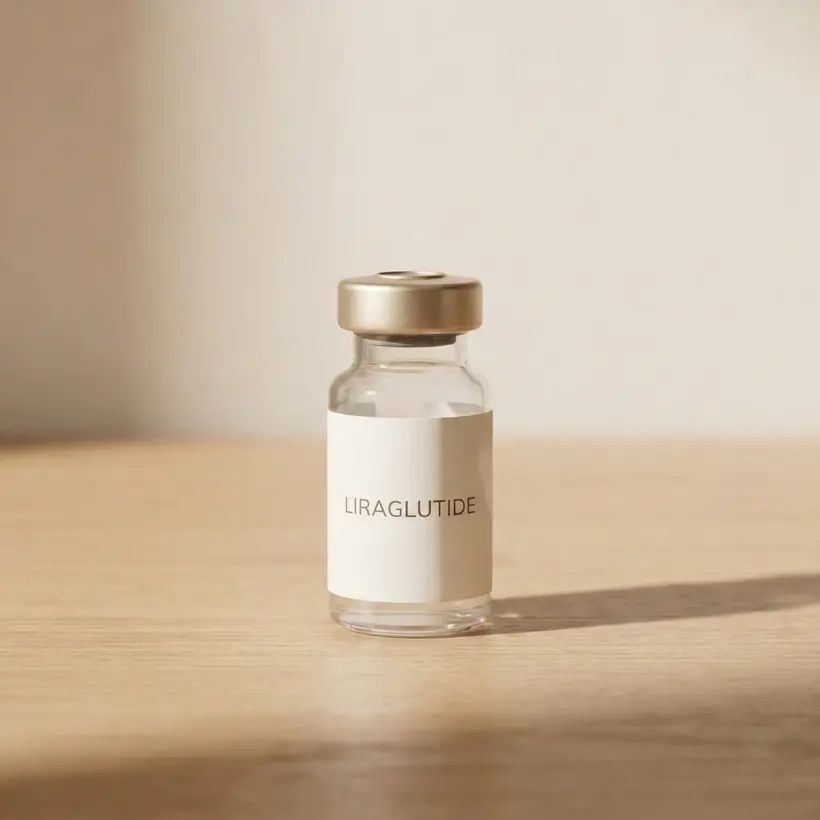
Lyophilized liraglutide should be stored at -20C before reconstitution. Reconstitute with bacteriostatic water, directing the stream to the vial wall, and swirl gently. Do not vortex or shake. Reconstituted solution should be stored at 2-8C and used within 30 days. Liraglutide is stable at pH 7.5-8.5 in aqueous solution. Protect from light and do not freeze reconstituted vials. If traveling, liraglutide can tolerate temperatures up to 30C for limited periods (under 14 days) without significant degradation.
Liraglutide has been studied for GLP-1 receptor pharmacology, incretin-based beta-cell preservation, appetite neuroscience, NAFLD, and cardiovascular inflammation. Its shorter half-life makes it useful in acute dosing studies where rapid washout is desirable. Preclinical research has explored liraglutide's effects on neuroinflammation, Alzheimer's disease biomarkers, and polycystic ovary syndrome.
The safety profile of liraglutide is the most extensively characterized of any GLP-1 agonist, with over a decade of post-market data. In SCALE, the most common adverse events were nausea (39.3% vs 13.8% placebo), diarrhea (20.9% vs 9.9%), constipation (19.4% vs 8.5%), and vomiting (15.7% vs 3.5%). GI events were most frequent during the first 4-8 weeks and diminished over time. Gallbladder events occurred in 2.5% of liraglutide vs 1.0% of placebo participants. Mean heart rate increased by 2.4 bpm, consistent with the GLP-1 class effect.