Quick Answer
No clinical evidence shows semaglutide directly causes anxiety. STEP trials did not identify it as a significant side effect. Anxiety during treatment typically falls into three categories: injection anxiety (very common, resolves within weeks), body change and identity anxiety (adjusting to rapid physical transformation), and social anxiety about weight loss being noticed. Many patients report anxiety improving as weight loss boosts confidence and reduces inflammation. If anxiety is significantly impacting your life, a therapist or psychiatrist can help alongside your weight loss treatment.
Medical Disclaimer: This article is for informational purposes only. Semaglutide is a prescription medication. If you are experiencing significant anxiety, panic attacks, or mental health changes, consult a mental health professional. Do not stop or adjust psychiatric medications without medical guidance.
Does Semaglutide Directly Cause Anxiety?
The clinical evidence says no. The STEP 1[1], 2, and 3 trials tracked adverse events across thousands of patients, and anxiety was not identified as a statistically significant side effect of semaglutide compared to placebo (Wilding et al., NEJM 2021, DOI: 10.1056/NEJMoa2032183). This is meaningful: if the drug directly triggered anxiety through its pharmacological mechanism, trial data would have captured it.
View data table
| Category | Treatment Progress (%) | Detail |
|---|---|---|
| Week 1-2 | 25 | Appetite reduction begins |
| Month 1 | 45 | Nausea subsides, energy improves |
| Month 3 | 70 | Visible weight loss (~5-8%) |
| Month 6 | 85 | Significant results (~10-15%) |
| Month 12 | 95 | Full therapeutic benefit |
GLP-1 receptors do exist in the brain, and semaglutide does cross the blood-brain barrier. However, the central effects documented in trials are appetite reduction and satiety signaling, not mood destabilization. Some preliminary research actually suggests GLP-1 signaling may have neuroprotective and anti-inflammatory effects in the brain, which could theoretically benefit rather than worsen anxiety.
This does not mean your anxiety during treatment is not real. It means the cause is likely situational and psychological rather than pharmacological. Understanding this distinction helps because it means the solutions are behavioral and therapeutic rather than requiring medication changes.
Injection Anxiety: The Most Common Form
Needle phobia or needle anxiety affects an estimated 20-25% of adults. For semaglutide patients who self-inject weekly, this is often the first and most intense anxiety they face. The anticipation of inserting a needle into your own body activates a primal fear response that can be disproportionate to the actual discomfort involved.
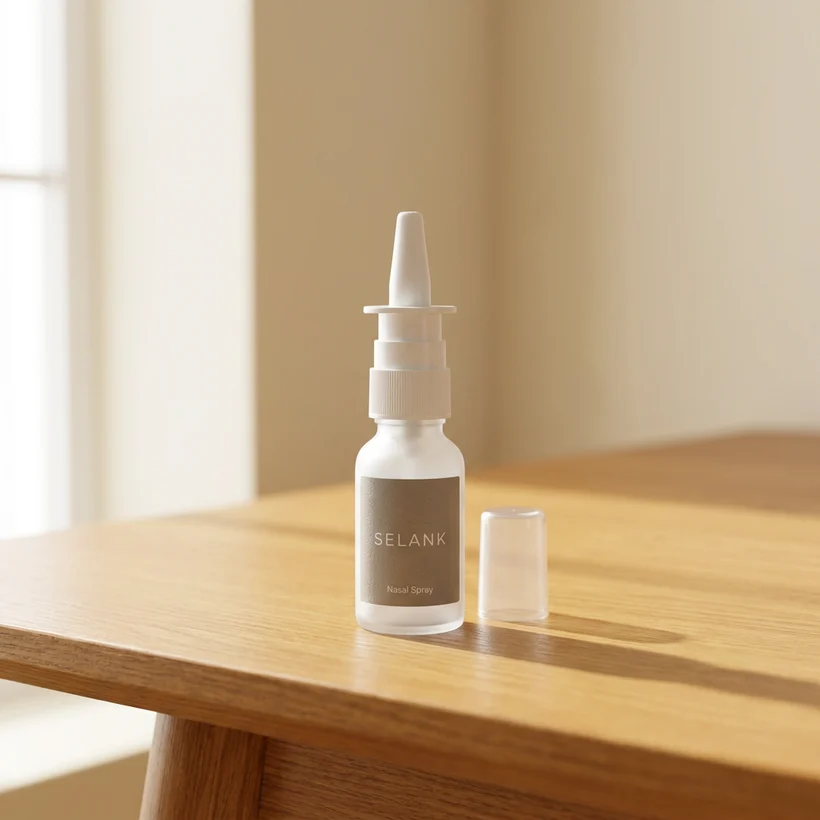
From the FormBlends catalog
Selank Nasal Spray
Anxiolytic peptide spray for stress relief without sedation or dependence · From $169/mo · compounded by a licensed 503A pharmacy, dispensed only after provider review.
View Selank Nasal Spray →The reality: semaglutide needles are 30-32 gauge, thinner than a human hair (0.23-0.31mm). The injection volume is tiny. The actual insertion and delivery take seconds. The vast majority of patients describe the sensation as nothing or a brief pinch. By the third or fourth injection, most patients describe it as routine and unremarkable.
Strategies for injection anxiety: have someone else present for the first injection (support helps). Ice the injection site for 30 seconds beforehand (numbs the area). Do not watch the needle enter. Use auto-inject pens if available. Breathe slowly and deliberately. Reward yourself after the injection to create a positive association. See our injection pain tips and starting fears guide for comprehensive strategies.
Body Change and Identity Anxiety
Rapid physical transformation can be psychologically destabilizing even when it is positive. Your body has been a certain way for years or decades. When it changes quickly, your internal sense of self needs time to catch up. This mismatch between how you look and how you feel inside can produce anxiety, disorientation, and emotional volatility.
Common manifestations: anxiety about whether the weight loss will last, anxiety about excess skin, anxiety about how others perceive your new body, anxiety about deserving the change, and anxiety about the loss of identity associated with being larger. For patients whose weight has been central to their self-concept (for better or worse), losing it can feel like losing a part of themselves.
This is normal and does not mean something is wrong. Identity adjustment during significant life changes is a well-understood psychological process. Therapy can be particularly helpful during this transition because a therapist provides a safe space to process the emotional complexity of transformation. FormBlends encourages patients to invest in mental health support alongside physical health treatment.
When Anxiety Improves on Semaglutide
Many patients report that semaglutide treatment actually reduces their overall anxiety over time. The mechanisms include improved self-confidence from weight loss, reduced systemic inflammation (chronic inflammation affects brain chemistry and is linked to anxiety and depression), improved sleep quality (especially if weight loss resolves or improves sleep apnea), increased physical activity (one of the most effective anxiety treatments), and freedom from food-related anxiety (the constant mental burden of dieting, binging, and food guilt).
The disappearance of "food noise" that many patients describe is itself a form of anxiety reduction. The persistent mental chatter about what to eat, when to eat, how much to eat, and guilt about eating quiets down on semaglutide. For patients whose food relationship has been a source of chronic anxiety, this quiet can be profoundly relieving.
Anti-Anxiety Medication and Absorption
Semaglutide slows gastric emptying, which can theoretically affect the absorption timing of oral medications. For anti-anxiety medications (SSRIs like sertraline and escitalopram, SNRIs like venlafaxine, benzodiazepines like alprazolam), the total amount absorbed typically remains the same, but peak blood levels may be delayed or slightly reduced.
In practice, most patients on psychiatric medications do not need dose adjustments when starting semaglutide. However, if you notice that your medication feels less effective (breakthrough anxiety, return of symptoms that were previously controlled), discuss timing adjustments with your prescriber. Taking psychiatric medication on an empty stomach or at a consistent time relative to meals can help maintain reliable absorption.
Critical guidance: never stop or reduce psychiatric medications because you started semaglutide. Never adjust doses without medical guidance. If your anti-anxiety medication needs adjustment, that decision should be made by your prescriber in coordination with your FormBlends provider. For more on medication interactions, see our antidepressants guide.
What 39 Reddit Threads Reveal
r/Semaglutide: "I know I just posted about anxiety but... I DID IT"
369 upvotes
One of the most upvoted anxiety-related posts. The poster had previously shared their intense anxiety about starting semaglutide and then returned to announce they had taken their first injection. The 369 upvotes represent a community celebrating someone overcoming a barrier they collectively understand. The comment section was filled with encouragement, personal stories of similar anxiety, and congratulations. This thread captures the most common anxiety arc: anticipatory anxiety that resolves once you actually do the thing you feared.
Most resonant comment: "The anxiety about starting is always worse than starting itself. Every single time."
r/Semaglutide: Anxiety discussion threads
39 threads touching on anxiety topics
Across 39 anxiety-related threads, the community discussion splits into two camps. Many patients report that semaglutide reduced their overall anxiety because food noise disappeared, confidence improved, and physical health gains reduced health-related worry. Others describe new anxiety related to body changes, social attention, and the fear of regaining weight. The most common advice: therapy alongside medication, give yourself grace during the transition, and remember that anxiety about change is not the same as the medication causing anxiety.
Community wisdom: "My anxiety about my weight was worse than any anxiety semaglutide has caused. I traded one for a much smaller one."
Clinical gap: Validated anxiety scales (GAD-7) were not used as endpoints in STEP trials. Prospective measurement of anxiety before, during, and after GLP-1 treatment would quantify the psychological impact of rapid weight loss and help identify patients who would benefit from concurrent mental health support.
When to Talk to a Professional
Seek professional mental health support if anxiety is new and significantly impacts your daily functioning (avoiding activities, difficulty sleeping, persistent worry). If you are having panic attacks (sudden intense fear with physical symptoms like racing heart, sweating, shaking). If anxiety prevents you from continuing semaglutide treatment despite wanting to. If existing anxiety worsens progressively over weeks despite your best coping efforts.
If anxiety is accompanied by depression, social isolation, or intrusive thoughts. If your relationship with food shifts from problematic overeating to problematic undereating or fear of food. If body dysmorphia develops (seeing yourself as larger than you are despite weight loss). Therapy, particularly cognitive behavioral therapy (CBT), is highly effective for the types of anxiety that arise during weight loss. Your FormBlends provider can help coordinate mental health referrals.
Frequently Asked Questions
Does semaglutide cause anxiety?
No direct evidence. STEP trials did not identify anxiety as a significant side effect. Anxiety during treatment is typically injection anxiety, body change anxiety, or social anxiety, all of which are situational and treatable.
Is injection anxiety normal?
Very normal. Affects 20-25% of adults. Almost universally resolves within 3-4 weeks as injections become routine. The needle is thinner than a human hair.
Can semaglutide affect anti-anxiety medication?
Slowed gastric emptying may alter absorption timing of oral medications. Total absorption is usually unchanged. Never adjust psychiatric medications without your prescriber's guidance.
Will weight loss improve my anxiety?
For many patients, yes. Improved confidence, reduced inflammation, better sleep, and freedom from food noise all reduce anxiety. Some patients experience temporary adjustment anxiety during rapid body changes.
When should I talk to a psychiatrist?
If anxiety significantly impacts daily life, you are having panic attacks, anxiety prevents continuing treatment, or it worsens progressively despite coping efforts. Therapy alongside semaglutide is a strong combination.
Medical References
- Wilding JPH, Batterham RL, Calanna S, et al. Once-Weekly Semaglutide in Adults with Overweight or Obesity. N Engl J Med. 2021;384(11):989-1002. [PubMed | ClinicalTrials.gov | DOI]
Ready when you are
Selank Nasal Spray
Anxiolytic peptide spray for stress relief without sedation or dependence · From $169/mo · compounded by a licensed 503A pharmacy, dispensed only after provider review.
View Selank Nasal Spray →
Social Anxiety During Weight Loss
Weight loss attracts attention. Colleagues, friends, and family members notice and comment. For some patients, this attention is welcome and validating. For others, it triggers intense social anxiety. Comments about appearance can feel invasive. Questions about "how you did it" force decisions about disclosure. Compliments on your new body can feel like implicit criticism of your old one.
Patients who have not disclosed their semaglutide use face additional anxiety about being "found out." The stigma around GLP-1 medications, though decreasing, still exists. The mental overhead of managing a semi-secret medical treatment while fielding appearance-related comments adds a layer of social stress that can be draining. Our privacy guide covers strategies for managing disclosure on your own terms.