Key Takeaway
BPC-157, TB-500, CJC-1295/Ipamorelin, and growth hormone secretagogues are the most researched peptides for muscle growth and recovery. Here is what the clinical and preclinical evidence actually shows for each one.
Medically reviewed by FormBlends Clinical Review · Clinical Pharmacist · Reviewed by FormBlends Medical Team · Last updated March 2026
Quick Answer: The peptides with the most research supporting muscle growth and recovery include BPC-157, TB-500, CJC-1295 with DAC, ipamorelin, and GHRP-6. Most evidence comes from animal studies and small human trials. No peptide is FDA-approved specifically for muscle growth.
GH secretagogues like CJC-1295/ipamorelin have the most direct mechanism for promoting lean mass by increasing growth hormone output.
Which Peptides Actually Work for Muscle Growth?
Growth hormone secretagogues like CJC-1295 and ipamorelin have the strongest mechanistic basis for promoting muscle growth, with human trials showing GH increases of 200 to 600% above baseline. But "muscle growth peptide" is a broad category that includes compounds working through very different pathways, from direct GH stimulation to tissue repair to myostatin inhibition.
The honest answer is that no peptide will replace progressive overload and adequate protein intake for building muscle. What peptides can do is support recovery, improve hormonal output, and potentially accelerate the repair processes that underlie hypertrophy. The gap between what you see marketed online and what the research actually supports is significant.
Below we break down each peptide category with the actual evidence, not the marketing claims. We cover mechanism, research quality, typical protocols, and whether the data justifies the cost.
Does BPC-157 Help with Muscle Growth?
BPC-157 doesn't directly stimulate muscle hypertrophy, but animal research consistently shows it accelerates muscle tissue repair after injury. A 2010 study in the Journal of Physiology found that rats treated with BPC-157 after muscle crush injuries recovered muscle function 40% faster than untreated controls. The mechanism involves upregulation of growth hormone receptors and increased VEGF expression at injury sites.
View data table
| Category | Clinical Interest Score | Detail |
|---|---|---|
| BPC-157 | 88 | Tissue repair and gut healing |
| TB-500 | 82 | Injury recovery |
| Sermorelin | 78 | Growth hormone support |
| Ipamorelin | 75 | Anti-aging and recovery |
| GHK-Cu | 70 | Skin and tissue repair |
For athletes and lifters, the practical application is recovery rather than raw growth. Faster repair of microdamage from training means faster return to productive training volume. This indirect benefit has made BPC-157 popular among strength athletes, although human clinical trials for musculoskeletal applications remain limited.
Typical research-referenced doses for BPC-157 range from 200 to 500mcg per day via subcutaneous injection. Most users run 4 to 8 week cycles. The peptide is generally well tolerated in animal studies with minimal reported adverse effects.
It isn't FDA-approved for any human use.
What Does TB-500 Do for Muscle Recovery?
TB-500 (thymosin beta-4) promotes tissue repair through upregulation of actin, a protein critical for cell migration and wound healing. A 2012 study in the Annals of the New York Academy of Sciences demonstrated that thymosin beta-4 treatment improved cardiac muscle repair and reduced fibrosis in mouse models of heart injury. While not a direct muscle-building agent, its tissue repair properties extend to skeletal muscle.
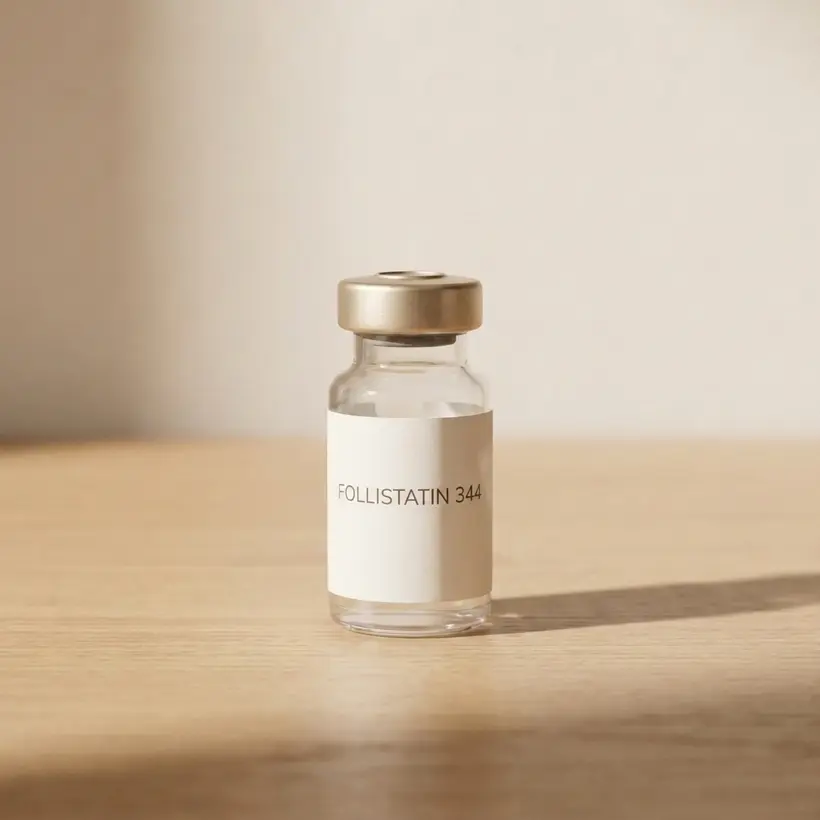
From the FormBlends catalog
Follistatin 344
Myostatin inhibitor studied for enhanced muscle growth · From $149/mo · compounded by a licensed 503A pharmacy, dispensed only after provider review.
Learn about Follistatin 344 →The equine research on TB-500 is actually more extensive than human data. It has been used in horse racing for tendon and ligament recovery for decades. The mechanism, promoting cell migration to injury sites and reducing inflammatory fibrosis, has clear relevance to anyone dealing with training-related muscle damage or chronic overuse injuries.
TB-500 is typically dosed at 2 to 2.5mg twice per week during a loading phase (4 to 6 weeks), then reduced to 2mg once per week for maintenance. It's frequently stacked with BPC-157 for a combined recovery protocol. Like BPC-157, it isn't FDA-approved for human use.
How Does CJC-1295/Ipamorelin Promote Muscle Growth?
CJC-1295 combined with ipamorelin is the most commonly prescribed peptide stack for GH improvement, and it has the most direct mechanism for supporting muscle growth. A 2006 study in the Journal of Clinical Endocrinology and Metabolism showed that CJC-1295 increased mean GH levels by 200 to 1000% and IGF-1 levels by 30 to 65% in healthy adults over 2 to 8 weeks of dosing.
Ipamorelin adds to this by triggering GH release through the ghrelin receptor without significantly increasing cortisol or prolactin. The combination produces a combined effect: CJC-1295 extends GH release duration while ipamorelin amplifies pulse amplitude. The result is increased GH and IGF-1 levels that support protein synthesis, nitrogen retention, and lean mass accretion.
Standard clinical protocols use CJC-1295 at 100 to 300mcg combined with ipamorelin at 100 to 300mcg, injected subcutaneously before bed 5 nights per week. Results typically become measurable in body composition at 8 to 12 weeks. This stack is available through peptide therapy clinics with a prescription.
| Parameter | CJC-1295 (with DAC) | CJC-1295 (no DAC / Mod GRF) |
|---|---|---|
| Half-life | 6 to 8 days | 30 minutes |
| GH elevation | Sustained baseline rise | Acute pulsatile release |
| Dosing frequency | 1 to 2x per week | 1 to 3x daily |
| Typical dose | 1 to 2mg weekly | 100 to 300mcg per injection |
| Best for | Sustained IGF-1 elevation | Mimicking natural GH pulses |
Are GHRP-6 and GHRP-2 Effective for Muscle Mass?
GHRP-6 and GHRP-2 are growth hormone-releasing peptides that act on the ghrelin receptor to stimulate GH release. A 2004 study in the European Journal of Endocrinology found that GHRP-6 increased GH output by 3 to 6 fold in healthy men after a single subcutaneous injection of 1mcg/kg. GHRP-2 produced similar GH elevations with somewhat less appetite stimulation.
The main practical difference between GHRPs and the CJC/ipamorelin stack is side effect profile. GHRP-6 notably increases appetite through ghrelin activation, which can be beneficial for hardgainers trying to eat in a surplus but counterproductive for anyone managing body composition. GHRP-2 causes less hunger but may increase cortisol and prolactin at higher doses.
Both peptides are typically dosed at 100 to 300mcg two to three times daily, with the most important dose taken before bed to amplify the natural nocturnal GH pulse. They have largely been superseded by ipamorelin in clinical practice due to ipamorelin's cleaner side effect profile, but they remain available and effective options.
Do Follistatin and Myostatin Inhibitors Work?
Follistatin-344 and ACE-031 represent a different approach to muscle growth: inhibiting myostatin, a protein that limits muscle development. A landmark 2007 study published in the New England Journal of Medicine showed that blocking myostatin signaling in mice produced dramatic increases in skeletal muscle mass, sometimes doubling muscle size. This generated enormous interest in myostatin inhibitors as potential muscle-building agents.
The reality has been more complicated. ACE-031 (a soluble activin receptor) was tested in boys with Duchenne muscular dystrophy but was halted due to nosebleeds and gum bleeding, likely from effects on vascular endothelial growth. Follistatin-344 has been used in gene therapy research with promising results in animal models, but injectable follistatin peptides available from research suppliers have questionable bioavailability and potency.
At this point, myostatin inhibition remains more theoretical than practical for muscle building. The biology is compelling, but the delivery and safety challenges haven't been solved for mainstream use. We wouldn't recommend follistatin peptides for muscle growth given current evidence.
How Do Muscle Growth Peptides Compare Head-to-Head?
The following table summarizes the key differences between the most commonly discussed muscle growth peptides based on available research, typical dosing, and practical considerations. Evidence quality ranges from strong (multiple human trials) to limited (primarily animal data) to theoretical (mechanistic basis without adequate clinical data).
| Peptide | Primary Mechanism | Evidence Quality | Monthly Cost | Best For |
|---|---|---|---|---|
| CJC-1295/Ipamorelin | GH secretion | Strong (human trials) | $200 to $400 | Lean mass, body composition |
| BPC-157 | Tissue repair, angiogenesis | Moderate (animal) | $80 to $200 | Injury recovery, gut healing |
| TB-500 | Cell migration, repair | Moderate (animal/equine) | $100 to $250 | Tendon/ligament recovery |
| GHRP-6 | GH secretion via ghrelin | Strong (human trials) | $100 to $200 | GH elevation, appetite increase |
| GHRP-2 | GH secretion via ghrelin | Strong (human trials) | $100 to $200 | GH elevation, less hunger |
| Follistatin-344 | Myostatin inhibition | Limited (animal) | $300 to $600 | Experimental only |
| Tesamorelin | GHRH analog | Strong (Phase III) | $300 to $1,500 | Visceral fat loss, GH elevation |
What Are the Best Peptide Stacks for Muscle Growth?
The most common evidence-informed peptide stacks combine a GH secretagogue for anabolic signaling with a recovery peptide for tissue repair. The CJC-1295/ipamorelin base plus BPC-157 for recovery is probably the most widely used combination in peptide therapy clinics. This approach targets both the hormonal improvement and tissue repair sides of muscle development.
A second popular approach combines BPC-157 and TB-500 for a pure recovery stack. This is particularly common among athletes dealing with chronic injuries or heavy training loads who want to accelerate repair without directly manipulating growth hormone levels. Typical protocols run these together for 6 to 8 weeks.
We strongly recommend working with a qualified provider who can monitor bloodwork (IGF-1, metabolic panel, inflammatory markers) when running any peptide stack. Self-administering multiple peptides without monitoring creates unnecessary risk and makes it impossible to know what is actually working.
| Stack | Components | Goal | Duration |
|---|---|---|---|
| GH Improvement | CJC-1295 + Ipamorelin | Lean mass, fat loss | 12 to 16 weeks |
| Recovery Focus | BPC-157 + TB-500 | Injury repair, reduced inflammation | 6 to 8 weeks |
| Full Protocol | CJC-1295 + Ipamorelin + BPC-157 | Growth + recovery | 12 weeks |
| Budget Option | Ipamorelin only | GH pulse improvement | 8 to 12 weeks |
Are Muscle Growth Peptides Safe and Legal?
No peptide discussed in this guide is FDA-approved for muscle growth, and the regulatory situation has shifted significantly since 2023. The FDA has increased scrutiny of compounding pharmacies producing peptides, and some previously available compounds have become harder to source through legitimate channels. Legal status varies: peptides prescribed by a licensed provider through a registered pharmacy are legal to use, but purchasing research-grade peptides for self-administration occupies a gray area.
Safety profiles vary by compound. GH secretagogues like CJC-1295 and ipamorelin are generally well tolerated in clinical settings, with side effects like water retention, joint stiffness, and transient blood sugar changes being the most commonly reported. BPC-157 and TB-500 have clean safety profiles in animal research but lack large human safety datasets.
The biggest practical risk is sourcing. Peptides purchased from unregulated suppliers may be underdosed, contaminated, or contain the wrong compound entirely. Third-party testing through services like Janoshik or how to read a COA verification is the minimum standard before using any research peptide.
Working with a prescribing provider who sources from licensed pharmacies eliminates this risk.
Frequently Asked Questions
Which peptide is best for building muscle fast?
CJC-1295 combined with ipamorelin has the most direct anabolic mechanism through increased growth hormone and IGF-1. Most users notice body composition changes at 8 to 12 weeks. No peptide produces fast muscle gains comparable to anabolic steroids, and anyone claiming otherwise is misleading you.
Can peptides replace steroids for muscle growth?
No. Peptides work through different and much milder mechanisms than anabolic steroids. GH secretagogues may add 2 to 5 pounds of lean mass over a 12 week cycle in conjunction with proper training and nutrition.
Steroids produce significantly larger and faster effects but carry substantially greater health risks.
Do you need a prescription for muscle growth peptides?
To obtain peptides from a licensed pharmacy, yes, you need a prescription from a licensed healthcare provider. Research-grade peptides can be purchased without a prescription but are labeled "not for human consumption." We recommend the prescription route for both safety and quality assurance.
How long do you need to take peptides to see muscle growth?
Most clinical data shows measurable body composition changes at 8 to 12 weeks for GH secretagogues. Recovery peptides like BPC-157 may show subjective improvements in soreness and recovery within 1 to 2 weeks. Minimum recommended cycle lengths are typically 8 weeks for any peptide protocol targeting muscle growth.
Are peptides for muscle growth worth the cost?
That depends on your baseline and goals. For someone with suboptimal GH levels, poor recovery, or chronic injuries limiting training, peptides can meaningfully improve outcomes. For a healthy 25-year-old with normal hormone levels, the marginal benefit relative to cost is much smaller.
Get bloodwork done first to identify whether hormonal improvement is even relevant for you.
Related guides
- Peptides for Muscle Growth: Evidence-Based Guide to Performance Peptides | FormBlends
- Peptides for Muscle Building: The Evidence-Based Guide to What Works, What Doesn't, and What's Actually Safe
- Best Oral Peptides for Muscle Growth: What the Evidence Actually Shows | FormBlends
- Best Peptides for Muscle Growth Reddit: What the Evidence Actually Shows | FormBlends
- Best Peptide for Muscle Growth Reddit: What the Evidence Actually Shows | FormBlends
- Peptide Stack for Muscle Growth: Evidence, Protocols & What Actually Works | FormBlends
References
- Teichman SL, et al. Prolonged stimulation of growth hormone (GH) and insulin-like growth factor I secretion by CJC-1295. J Clin Endocrinol Metab. 2006;91(3):799-805.
- Bowers CY, et al. On the actions of growth hormone-releasing peptide GHRP-6. Eur J Endocrinol. 2004;150(1):53-60.
- Chang CH, et al. BPC-157 promotes muscle healing. J Physiol Pharmacol. 2010;61(1):7-16.
- Goldstein AL, et al. Thymosin beta-4: a multifunctional regenerative peptide. Ann N Y Acad Sci. 2012;1270:82-87.
- Lee SJ, et al. Regulation of muscle mass by myostatin. N Engl J Med. 2007;356(24):2520-2521.
Medical References
- Goldstein AL, Hannappel E, Sosne G, Kleinman HK. Thymosin beta4: a multi-functional regenerative peptide. Basic properties and clinical applications. Expert Opin Biol Ther. 2012;12(1):37-51. [PubMed | DOI]
Ready when you are
Follistatin 344
Myostatin inhibitor studied for enhanced muscle growth · From $149/mo · compounded by a licensed 503A pharmacy, dispensed only after provider review.
Learn about Follistatin 344 →