Key Takeaway
One of the biggest risks of rapid weight loss on GLP-1 medication is losing muscle along with fat. This prevent muscle loss GLP-1 resource covers the important information you need to make informed decisions.
One of the biggest risks of rapid weight loss on GLP-1 medication is losing muscle along with fat. This prevent muscle loss GLP-1 resource covers the important information you need to make informed decisions. If you want to prevent muscle loss on GLP-1, you need a strategy that covers three pillars: protein, resistance training, and smart supplementation. Skip any one of these and your results suffer.
Key Takeaways: - The Muscle Loss Problem: Why It Happens - Pillar 1: Protein Intake - Pillar 2: Resistance Training - Pillar 3: Smart Supplementation - Putting It All Together: Your Daily Checklist
This isn't optional. Available evidence indicates that without intervention, up to 40% of weight lost on GLP-1 medication can come from lean mass. That means for every 10 pounds you lose, 4 could be muscle. Let's make sure that doesn't happen to you.
The Muscle Loss Problem: Why It Happens
Your body doesn't like being in a calorie deficit. When you eat less than you burn, your body looks for energy sources. Fat is one source. Muscle is another. Without a clear signal to keep muscle, your body will break it down for fuel.
GLP-1 medications create a significant calorie deficit by reducing appetite. Many people on treatment eat 1,000-1,500 calories per day without trying. That's a large deficit, and large deficits accelerate muscle breakdown.
A landmark study on semaglutide found that participants lost an average of 15% of their body weight. Body composition analysis revealed that approximately 39% of that loss was lean mass. For someone who lost 40 pounds, that's roughly 16 pounds of muscle gone.
Why does this matter? Muscle is your metabolic engine. Each pound of muscle burns 6-10 calories per day at rest. Lose 15 pounds of muscle and your daily calorie burn drops by 90-150 calories. Over a year, that's 10-15 pounds of fat your body would have burned but now doesn't.
Muscle loss also affects how you look and feel. People who lose weight without preserving muscle often describe looking "soft" or "deflated" even at a lower weight. They feel weaker, tire more easily, and have a harder time maintaining their results.
The good news: this is almost entirely preventable.
Pillar 1: Protein Intake
Protein is the most critical factor in muscle preservation. It provides the amino acids your muscles need to repair and maintain themselves. Without enough protein, resistance training alone can't fully protect your muscle mass.
View data table
| Category | Impact on Treatment Outcomes (%) | Detail |
|---|---|---|
| Protein Intake | 90 | Preserves muscle mass |
| Exercise | 85 | Enhances weight loss |
| Sleep Quality | 78 | Supports metabolism |
| Hydration | 72 | Reduces side effects |
| Stress Mgmt | 65 | Cortisol reduction |

How much protein do you need?
"Compounding pharmacies serve a critical role in healthcare, but patients need to understand the difference between a properly regulated 503B facility and an unregulated operation. Ask about PCAB accreditation and third-party testing.") Dr. Scott Brunner, PharmD, Alliance for Pharmacy Compounding
Aim for 0.7-1.0 grams of protein per pound of your current body weight. If you weigh 200 pounds, that's 140-200 grams per day. If you weigh 160 pounds, it's 112-160 grams per day.
This is more protein than most people are used to eating. And on GLP-1 medication, when your appetite is reduced, hitting these numbers takes planning.
Free Download: GLP-1 Strength Training Program (12-Week) Includes a complete protein timing guide, meal templates, and a workout tracker designed to maximize muscle retention on GLP-1 treatment. Get yours free (we'll email it to you instantly.
[Download Your Free Program]
Practical strategies to hit your protein targets:
- Eat protein first at every meal. Before vegetables, before carbs, eat your protein source. This ensures you get the most important macronutrient even if you can't finish your plate.
- Use protein shakes. A quality whey or plant-based shake delivers 25-30 grams of protein in a form that's easy to consume even when nauseous.
- Spread protein across 4-5 eating occasions. Your body can only use about 30-40 grams of protein at once for muscle synthesis. Eating 100 grams at dinner and nothing else isn't as effective as spreading it out.
- Keep high-protein snacks ready. Greek yogurt, string cheese, jerky, hard-boiled eggs, and are all convenient options.
Track your protein with the . What gets measured gets managed.
Pillar 2: Resistance Training
Patient Perspective: "I started resistance training three times a week when I began semaglutide, specifically to protect muscle mass. After 6 months, my body fat dropped from 38% to 27%, but I actually gained 2 pounds of lean mass. The strength training made a huge difference.") Tom H., 50, FormBlends patient (name changed for privacy)
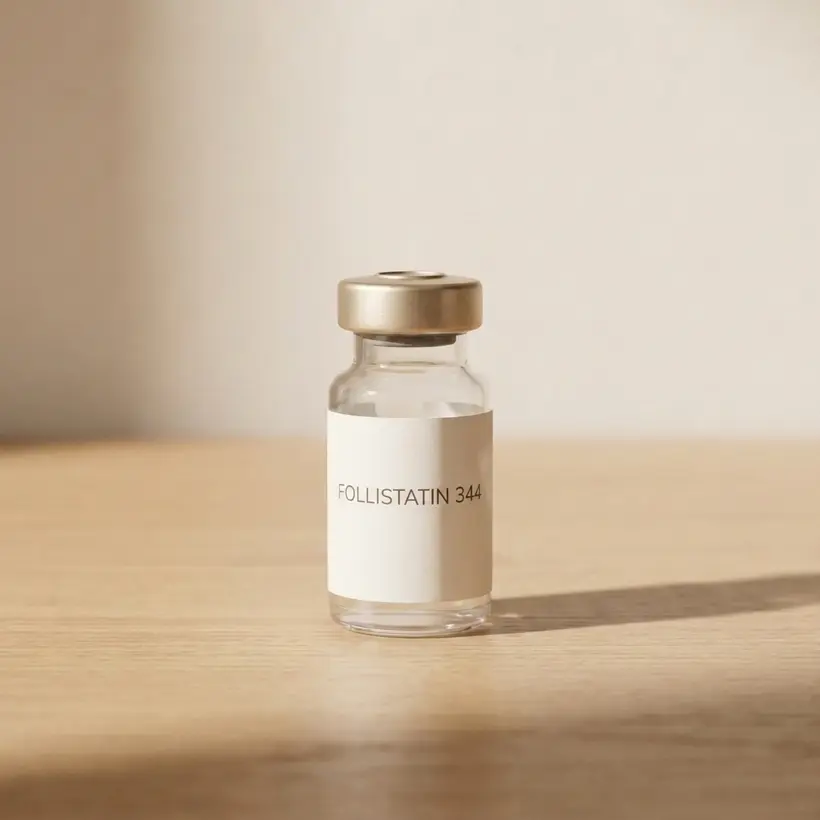
From the FormBlends catalog
Follistatin 344
Myostatin inhibitor studied for enhanced muscle growth · From $149/mo · compounded by a licensed 503A pharmacy, dispensed only after provider review.
Learn about Follistatin 344 →
Protein provides the building blocks. Resistance training provides the signal. Together, they tell your body: "Keep this muscle. Burn fat instead."
You need a minimum of three resistance training sessions per week. Here's what matters:
Progressive overload. Your training must progressively challenge your muscles. This means gradually increasing weight, reps, or sets over time. Doing the same workout with the same weights for months provides a diminishing signal to preserve muscle.
Compound movements. Focus on exercises that work multiple muscle groups at once: squats, deadlifts, bench press, rows, and overhead press. These exercises stimulate the most muscle tissue per movement and give you the most bang for your limited recovery buck.
Adequate intensity. Your working sets should be challenging. Aim for a weight where the last 2-3 reps of each set feel difficult but doable with good form. If you're breezing through every set, you need more weight.
Recovery management. On reduced calories, your body recovers more slowly. Don't train the same muscle group two days in a row. Consider an upper/lower split or push/pull/legs structure that allows 48-72 hours between sessions for the same muscles.
A 2020 meta-analysis in the British Journal of Sports Medicine confirmed that resistance training during calorie restriction preserved an average of 93% more lean mass compared to calorie restriction alone. The evidence is clear.
Pillar 3: Smart Supplementation
The third pillar focuses on supplements that have strong evidence for muscle preservation during weight loss. Not fancy pre-workouts or fat burners. Just the basics that actually work.
Creatine monohydrate is the most researched sports supplement in existence. It helps your muscles retain water, produce energy during workouts, and recover afterward. Studies show creatine helps preserve lean mass during calorie restriction.
- Dose: 3-5 grams per day
- Timing: any time of day, consistency matters more than timing
- No known interaction with GLP-1 medications
- May cause a small increase in scale weight (1-3 pounds) due to water retention in muscles, which is a good thing
Vitamin D is important if your levels are low. Many overweight individuals are deficient in vitamin D, and low levels are associated with muscle weakness and increased muscle loss. Ask your provider to check your levels.
Omega-3 fatty acids may support muscle protein synthesis, particularly in older adults. Research suggests 2-3 grams of combined EPA/DHA daily can help. Fish oil supplements are the most common source.
What not to waste money on: BCAAs (your protein intake covers this), testosterone boosters (they don't work), and most products marketed as "anti-catabolic."
Check with your before adding any supplement to your regimen. They can advise based on your specific health profile and medications.
Putting It All Together: Your Daily Checklist
Here's what a muscle-preserving day looks like on GLP-1 medication:
Morning: - Protein-rich breakfast (30g protein minimum) - Creatine supplement (3-5g) - Vitamin D if prescribed
Mid-morning: - High-protein snack (15-20g protein)
Lunch: - Protein-first meal (30g protein minimum) - Vegetables and complex carbs
Afternoon: - Pre-workout snack if training (20g protein + light carbs) - Resistance training session (45-60 minutes) - Post-workout protein shake (25-30g protein)
Dinner: - Protein-rich dinner (30g protein minimum) - Omega-3 supplement with food
Before bed: - Casein protein or cottage cheese (optional, for overnight muscle repair)
This framework ensures you're hitting your protein targets, training with purpose, and supporting recovery. Adjust quantities based on your body weight and calorie needs.
Monitor your and adjust meal timing around your injection schedule. The goal is consistency over perfection.
Frequently Asked Questions
How much muscle will I lose on GLP-1 medication without doing anything?
Preliminary data suggest that 25-40% of weight lost on GLP-1 medication can come from lean mass if you don't take steps to preserve it. For someone losing 30 pounds, that could mean 8-12 pounds of muscle loss. Resistance training and adequate protein can reduce this to under 10%.
Is creatine safe to take with semaglutide or tirzepatide?
There are no known interactions between creatine monohydrate and GLP-1 medications. Creatine is one of the most studied supplements in sports science with an excellent safety profile. The standard dose is 3-5 grams daily. Consult your provider if you have kidney concerns.
How do I know if I'm losing muscle on GLP-1?
Signs include declining strength in the gym, feeling weaker in daily activities, a "soft" appearance despite weight loss, and increased fatigue. Body composition scans (DEXA) provide the most accurate measurement. Some smart scales estimate body fat percentage, though they're less precise.
Can I build muscle while on GLP-1 medication?
It's challenging but possible for beginners and people returning to exercise after a long break. The calorie deficit from GLP-1 medication limits muscle growth potential. Experienced lifters should focus on maintaining their existing muscle mass rather than trying to add new tissue.
What's more important for muscle retention: protein or exercise?
Both are important, but if forced to choose, protein intake has a slightly larger impact. A high-protein diet without exercise preserves more muscle than a low-protein diet with exercise. But combining both produces the best results by far. Don't skip either.
Start your protocol Today
Every transformation starts with a single step. Talk to a licensed FormBlends provider about whether this approach is right for you, consultations are free and confidential.
Medical References
- Wilding JPH, Batterham RL, Calanna S, et al. Once-Weekly Semaglutide in Adults with Overweight or Obesity. N Engl J Med. 2021;384(11):989-1002. [PubMed | ClinicalTrials.gov | DOI]
- Davies M, Færch L, Jeppesen OK, et al. Semaglutide 2.4 mg once a week in adults with overweight or obesity, and type 2 diabetes (STEP 2). Lancet. 2021;397(10278):971-984. [PubMed | ClinicalTrials.gov | DOI]
- Wadden TA, Bailey TS, Billings LK, et al. Effect of Subcutaneous Semaglutide vs Placebo as an Adjunct to Intensive Behavioral Therapy on Body Weight in Adults With Overweight or Obesity (STEP 3). JAMA. 2021;325(14):1403-1413. [PubMed | ClinicalTrials.gov | DOI]
- Garvey WT, Batterham RL, Bhatt DL, et al. Two-year effects of semaglutide in adults with overweight or obesity (STEP 5). Nat Med. 2022;28(10):2083-2091. [PubMed | ClinicalTrials.gov | DOI]
Sources &. References
- Wilding JPH, et al. STEP 1[1] (Wilding et al., NEJM, 2021) Supplementary Appendix. Body composition analysis via DXA. N Engl J Med. 2021;384(11). Doi:10.1056/NEJMoa2032183
- Stierman B, Afful J, Carroll MD, et al. National Health and Nutrition Examination Survey 2017-March 2020 Prepandemic Data Files. NCHS Data Brief. No. 492. CDC/NCHS. 2023.
- Sumithran P, Prendergast LA, Delbridge E, et al. Long-Term Persistence of Hormonal Adaptations to Weight Loss. N Engl J Med. 2011;365(17):1597-1604. Doi:10.1056/NEJMoa1105816
- Wilding JPH, Batterham RL, Calanna S, et al. Once-Weekly Semaglutide in Adults with Overweight or Obesity. N Engl J Med. 2021;384(11):989-1002. Doi:10.1056/NEJMoa2032183
- Davies M, Færch L, Jeppesen OK, et al. Semaglutide 2.4 mg once a week in adults with overweight or obesity, and type 2 diabetes (STEP 2 (Davies et al., Lancet, 2021)). Lancet. 2021;397(10278):971-984. Doi:10.1016/S0140-6736(21)00213-0
- Wadden TA, Bailey TS, Billings LK, et al. Effect of Subcutaneous Semaglutide vs Placebo as an Adjunct to Intensive Behavioral Therapy on Body Weight in Adults With Overweight or Obesity (STEP 3 (Wadden et al., JAMA, 2021)). JAMA. 2021;325(14):1403-1413. Doi:10.1001/jama.2021.1831
- Garvey WT, Batterham RL, Bhatt DL, et al. Two-Year Effects of Semaglutide in Adults with Overweight or Obesity (STEP 5 (Garvey et al., Nat Med, 2022)). Nat Med. 2022;28:2083-2091. Doi:10.1038/s41591-022-02026-4
- Lincoff AM, Brown-Frandsen K, Colhoun HM, et al. Semaglutide and Cardiovascular Outcomes in Obesity without Diabetes. N Engl J Med. 2023;389(24):2221-2232. Doi:10.1056/NEJMoa2307563
This article is for educational purposes only and doesn't constitute medical advice. Always consult with a licensed healthcare provider before starting, changing, or stopping any medication or supplement. FormBlends connects you with licensed providers who can evaluate your individual health needs.
Last updated: 2026-03-24
Ready when you are
Follistatin 344
Myostatin inhibitor studied for enhanced muscle growth · From $149/mo · compounded by a licensed 503A pharmacy, dispensed only after provider review.
Learn about Follistatin 344 →