Key Takeaway
Chronic inflammation drives many of the health problems people deal with every day. Joint pain, digestive issues, skin conditions, and fatigue can all be linked to an overactive inflammatory response.
Chronic inflammation drives many of the health problems people deal with every day. Joint pain, digestive issues, skin conditions, and fatigue can all be linked to an overactive inflammatory response. KPV peptide is a naturally occurring tripeptide that has gained significant attention for its potent anti-inflammatory properties, particularly for gut-related inflammation.
Key Takeaways: - Learn how kpv reduces inflammation - KPV and Gut Health: What the Research Shows - Learn how kpv is administered - Safety, Side Effects, and Stacking With Other Peptides
KPV stands for its three amino acids: lysine-proline-valine. It's derived from the C-terminal end of alpha-melanocyte stimulating hormone (alpha-MSH), one of your body's built-in anti-inflammatory signals. Research suggests KPV retains the anti-inflammatory power of alpha-MSH but with better stability and fewer side effects. Here is what you need to know.
How KPV Reduces Inflammation
Alpha-MSH is a peptide hormone your body produces naturally. It plays a role in pigmentation, appetite, and immune regulation. One of its most important functions is controlling inflammation. The KPV fragment (the last three amino acids of alpha-MSH) appears to carry most of the anti-inflammatory activity.
KPV works through several mechanisms:
NF-kB pathway inhibition. Nuclear factor kappa B (NF-kB) is one of the master switches for inflammation in your body. When NF-kB is activated, it turns on genes that produce inflammatory cytokines like TNF-alpha, IL-6, and IL-1 beta. KPV has been shown to inhibit NF-kB activation, effectively turning down the inflammatory response at its source.
Direct entry into cells. Unlike many anti-inflammatory compounds that work on cell surface receptors, research published in the Journal of Biological Chemistry found that KPV can enter inflammatory cells directly. Once inside, it interacts with NF-kB signaling machinery. This direct intracellular action may explain why KPV is effective at very low concentrations.
Immune cell modulation. KPV can influence the behavior of macrophages and other immune cells, shifting them from a pro-inflammatory state toward a resolution state. This doesn't suppress your immune system. Instead, it helps redirect immune activity from damage-causing inflammation toward repair.
Gut-specific effects. Research has shown that KPV can reduce inflammatory markers specifically in intestinal tissue. This has made it particularly interesting for conditions involving gut inflammation.
The fact that KPV is a fragment of a naturally occurring hormone gives it a favorable safety profile compared to synthetic anti-inflammatory drugs. Your body already produces and recognizes this peptide sequence.
"We now have cardiovascular outcomes data showing semaglutide reduces MACE events by 20% in people with obesity, independent of diabetes status. The SELECT trial[1] changed how we think about these medications.") Dr. A. Michael Lincoff, MD, Cleveland Clinic, lead author of SELECT
For information on other peptides that support tissue repair, see our .
KPV and Gut Health: What the Research Shows
The gut health applications of KPV represent the most compelling area of current research. Inflammatory bowel conditions affect millions of people, and existing treatments often come with significant side effects. KPV offers a different approach.
View data table
| Category | Clinical Interest Score | Detail |
|---|---|---|
| BPC-157 | 88 | Tissue repair and gut healing |
| TB-500 | 82 | Injury recovery |
| Sermorelin | 78 | Growth hormone support |
| Ipamorelin | 75 | Anti-aging and recovery |
| GHK-Cu | 70 | Skin and tissue repair |
Colitis research. A key study published in PLoS ONE examined KPV in a mouse model of colitis. The researchers found that both systemic (injected) and oral KPV significantly reduced colon inflammation. Mice treated with KPV showed reduced inflammatory cell infiltration, less tissue damage, and lower levels of pro-inflammatory cytokines compared to controls.
Free Download: Protocol Planner Track your KPV protocol alongside gut health markers and symptoms. Get yours free (we'll email it to you instantly. [Download Your Protocol Planner]
Oral bioavailability. One of the most exciting findings is that KPV may be effective when taken orally. Many peptides are destroyed by stomach acid, but KPV's small size (just three amino acids) may allow it to survive digestion and reach intestinal tissue in an active form. Some researchers have explored encapsulating KPV in nanoparticles for even better targeted delivery to inflamed gut tissue.
Intestinal barrier support. Chronic gut inflammation damages the intestinal lining, contributing to increased permeability (often called "leaky gut"). By reducing inflammation in the gut wall, KPV may help support the integrity of the intestinal barrier. This is important because a compromised gut barrier allows inflammatory molecules to enter the bloodstream and trigger systemic inflammation.
Microbiome considerations. Unlike antibiotics and some immunosuppressant medications used for gut inflammation, KPV doesn't appear to disrupt the gut microbiome. This is a meaningful advantage for people who need long-term inflammatory support without compromising their beneficial gut bacteria.
These findings come primarily from animal studies. Human clinical trials for KPV in inflammatory bowel conditions are still needed. But the consistency of the animal data and the peptide's favorable safety profile have led many providers to prescribe it off-label for patients with gut inflammation.
If you're managing your weight with a and experiencing GI side effects, discuss KPV with your provider as a potential support option.
How KPV Is Administered
KPV can be administered through several routes, each suited to different clinical goals.
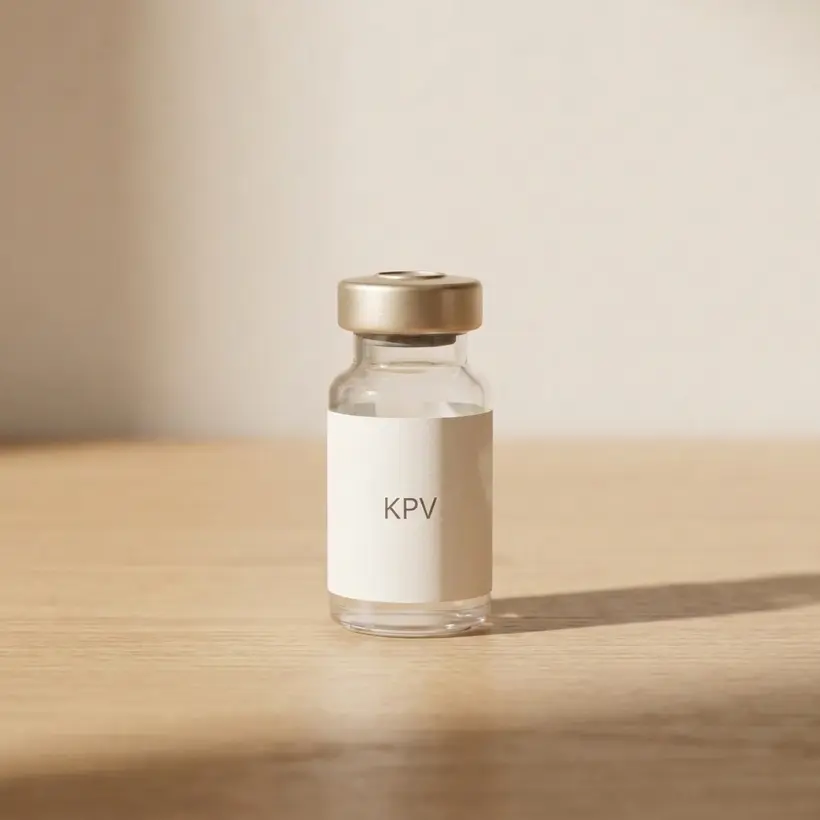
From the FormBlends catalog
KPV
Anti-inflammatory tripeptide for gut and systemic health · From $44/mo · compounded by a licensed 503A pharmacy, dispensed only after provider review.
Learn about KPV →Oral capsules. For gut-specific applications, oral KPV is the most direct route. The peptide travels through the digestive system and can interact with inflamed intestinal tissue along the way.
- Typical dose: 200-500 mcg per day (oral)
- Timing: Usually taken on an empty stomach
- Cycle: 4-8 weeks, with provider monitoring
Subcutaneous injection. For systemic anti-inflammatory effects (joints, skin, whole-body inflammation), subcutaneous injection delivers KPV into the bloodstream.
- Typical dose: 200-500 mcg per day
- Injection site: Abdominal area or near affected tissue
- Cycle: 4-8 weeks
Topical application. KPV has been studied for skin conditions involving inflammation. Topical formulations can be applied directly to affected areas.
- Best for: Localized skin inflammation, wound healing support
- Application: As directed by your provider
The choice of administration route depends on your primary concern. Gut inflammation typically calls for oral dosing. Joint or systemic inflammation may respond better to injection. Skin conditions benefit from topical application. Your provider will determine the best approach.
For injectable peptide preparation, use the to ensure accurate mixing and dosing.
Safety, Side Effects, and Stacking With Other Peptides
KPV has a favorable safety profile based on available research. As a fragment of a naturally occurring hormone, it's well recognized by your body's systems.
Reported side effects are minimal: - Mild injection site irritation (with subcutaneous route) - Occasional mild GI discomfort (with oral route, usually temporary) - Rare mild headache
Serious adverse events haven't been reported in the published literature. But full human safety data from large clinical trials isn't yet available.
Stacking KPV with other peptides:
KPV is commonly used alongside other peptides for combined effects:
- KPV + BPC-157: A popular combination for gut healing. BPC-157 supports tissue repair while KPV reduces inflammation. Together, they address two sides of the same problem. Learn more in our .
- KPV + GH peptides: Some providers include KPV in broader wellness protocols alongside ipamorelin or CJC-1295 for combined anti-inflammatory and recovery support.
- KPV + GLP-1 medications: For patients on semaglutide or tirzepatide who experience GI inflammation, KPV may offer complementary gut support.
All peptide combinations should be prescribed and monitored by a licensed provider. Log your symptoms and any changes in the to help your provider improve your protocol.
Frequently Asked Questions
Can KPV help with inflammatory bowel disease (IBD)?
Animal studies have shown that KPV can significantly reduce colonic inflammation in models of colitis. These results are promising, but human clinical trials haven't been completed. Some providers prescribe KPV off-label for patients with inflammatory bowel conditions as part of a full treatment plan. It shouldn't replace standard medical treatment for IBD without your gastroenterologist's involvement.
How quickly does KPV work for gut inflammation?
Anecdotal reports suggest some patients notice improvements in digestive symptoms within one to two weeks of starting oral KPV. But significant reduction in gut inflammation may take four to six weeks. Response times vary based on the severity of inflammation and individual factors.
Is KPV safe to take long-term?
Long-term safety data from human clinical trials isn't available. Most providers prescribe KPV in cycles of four to eight weeks with breaks between cycles. The peptide's favorable safety profile in animal studies and its origin as a naturally occurring peptide fragment are reassuring, but ongoing provider monitoring is important.
Does KPV suppress the immune system?
No. KPV modulates the inflammatory response rather than suppressing immune function broadly. It helps redirect immune activity from destructive inflammation toward resolution. This is an important distinction from immunosuppressant drugs, which reduce overall immune capacity.
Can I take KPV orally, or does it need to be injected?
KPV can be taken orally, which is particularly convenient for gut-focused applications. Research suggests the peptide's small size allows it to survive digestion and reach intestinal tissue. For systemic anti-inflammatory effects, subcutaneous injection may be more effective. Your provider will recommend the appropriate route based on your specific needs.
What's Your Next Move?
You have the information. Now let a licensed provider help you put it into action. FormBlends makes it simple) answer a few questions and get a personalized recommendation.
Medical References
- Lincoff AM, Brown-Frandsen K, Colhoun HM, et al. Semaglutide and Cardiovascular Outcomes in Obesity without Diabetes. N Engl J Med. 2023;389(24):2221-2232. [PubMed | ClinicalTrials.gov | DOI]
Sources &. References
- Pickart L, Vasquez-Soltero JM, Margolina A. GHK Peptide as a Natural Modulator of Multiple Cellular Pathways in Skin Regeneration. BioMed Res Int. 2015;2015:648108. Doi:10.1155/2015/648108
- Pickart L, Vasquez-Soltero JM, Margolina A. GHK and DNA: Resetting the Human Genome to Health. BioMed Res Int. 2014;2014:151479. Doi:10.1155/2014/151479
- Sikiric P, Hahm KB, Blagaic AB, et al. Stable Gastric Pentadecapeptide BPC 157, Robert's Cytoprotection, Adaptive Cytoprotection, and Therapeutic Effects. Curr Pharm Des. 2018;24(18):1990-2001. Doi:10.2174/1381612824666180515125918
- Chang CH, Tsai WC, Lin MS, et al. The promoting effect of pentadecapeptide BPC 157 on tendon healing involves tendon outgrowth, cell survival, and cell migration. J Appl Physiol. 2011;110(3):774-780. Doi:10.1152/japplphysiol.00945.2010
- Seiwerth S, Brcic L, Vuletic LB, et al. BPC 157 and blood vessels. Curr Pharm Des. 2014;20(7):1121-1125. Doi:10.2174/13816128113199990421
- Bock-Marquette I, Saxena A, White MD, et al. Thymosin beta4 activates integrin-linked kinase and promotes cardiac cell migration, survival and cardiac repair. Nature. 2004;432(7016):466-472. Doi:10.1038/nature03000
- Malinda KM, Sidhu GS, Mani H, et al. Thymosin beta4 accelerates wound healing. J Invest Dermatol. 1999;113(3):364-368. Doi:10.1046/j.1523-1747.1999.00708.x
This content is provided for informational and educational purposes only. It isn't a substitute for professional medical advice, diagnosis, or treatment. Always seek the advice of a licensed healthcare provider with any questions about a medical condition or treatment plan.
Last updated: 2026-03-24
Ready when you are
KPV
Anti-inflammatory tripeptide for gut and systemic health · From $44/mo · compounded by a licensed 503A pharmacy, dispensed only after provider review.
Learn about KPV →