Key Takeaway
Your gut is more than a digestive organ. It's your immune system's command center, your second brain, and the gateway for nutrient absorption. When your gut lining is compromised, everything suffers.
Your gut is more than a digestive organ. It's your immune system's command center, your second brain, and the gateway for nutrient absorption. When your gut lining is compromised, everything suffers. Peptides gut health healing protocols offer a targeted approach to repairing and protecting this critical barrier.
Key Takeaways: - BPC-157: The Gut Healing Workhorse - KPV: The Anti-Inflammatory Specialist - LL-37 and Gut Microbiome Support - Building a complete Gut Protocol
Chronic inflammation, poor diet, stress, medications, and infections can all damage your gut lining. When the barrier breaks down, molecules that should stay in your intestines leak into your bloodstream. This triggers immune responses and systemic inflammation. Several peptides show promise for reversing this damage.
BPC-157: The Gut Healing Workhorse
Stands for Body Protection Compound 157. It's derived from a protein found in human gastric juice, making it a natural fit for gut applications. Preclinical research, primarily in animal models, indicates that BPC-157 accelerates the healing of damaged intestinal tissue.
Studies in animal models have shown BPC-157 can protect against NSAID-induced gut damage, alcohol-related gastric injury, and inflammatory bowel conditions. It appears to work by promoting blood vessel growth in damaged tissue, reducing inflammatory cytokines, and stimulating growth factors involved in tissue repair.
"Compounding pharmacies serve a critical role in healthcare, but patients need to understand the difference between a properly regulated 503B facility and an unregulated operation. Ask about PCAB accreditation and third-party testing.") Dr. Scott Brunner, PharmD, Alliance for Pharmacy Compounding
For gut health specifically, BPC-157 can be administered orally or via subcutaneous injection. Oral administration delivers the peptide directly to the gastrointestinal tract, which some providers prefer for gut-specific applications. Injectable use may provide broader systemic benefits alongside gut healing.
Typical gut health protocols run 4 to 8 weeks. Your provider will determine the route of administration, dose, and duration based on the severity and nature of your gut issues.
KPV: The Anti-Inflammatory Specialist
Is a tripeptide fragment of alpha-MSH that specializes in reducing inflammation. For gut health, KPV is particularly interesting because research suggests it can suppress NF-kB, a key inflammatory pathway involved in intestinal inflammation.
Free Download: Protocol Planner Track your gut healing protocol with our free planner. Includes symptom logs, food diaries, and peptide dosing schedules. Get yours free (we will email it to you instantly. [Email Input] [Download Button]
Animal studies have shown KPV can reduce colitis severity when administered both systemically and orally. The oral route is especially promising because KPV is small enough and stable enough to survive transit through the stomach.
Some compounding pharmacies prepare KPV as enteric-coated capsules that dissolve in the intestines rather than the stomach. This targeted delivery may maximize the peptide's effect on intestinal inflammation.
KPV and BPC-157 work through different mechanisms and may complement each other when combined. BPC-157 promotes tissue repair and blood vessel growth, while KPV suppresses the inflammatory signals that cause ongoing damage. Your can design a combination protocol if appropriate.
LL-37 and Gut Microbiome Support
The antimicrobial peptide plays a natural role in gut defense. Your intestinal lining produces LL-37 to help maintain the balance between helpful and harmful bacteria.
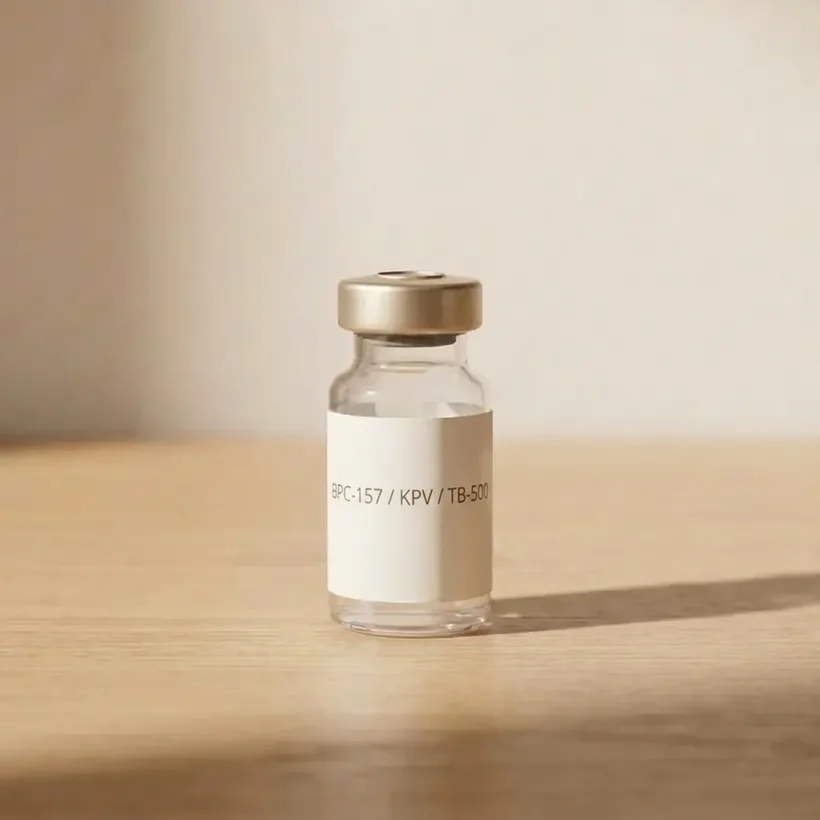
From the FormBlends catalog
BPC-157 / KPV / TB-500 Blend
Three-pathway recovery support in one peptide blend · From $279/mo · compounded by a licensed 503A pharmacy, dispensed only after provider review.
View BPC-157 / KPV / TB-500 Blend →When LL-37 production is low, pathogenic bacteria can gain a foothold and disrupt your gut microbiome. Biofilm formation by harmful bacteria is another concern. LL-37 has biofilm-disrupting properties that may help break down these protective bacterial shields.
LL-37 therapy for gut health is more investigational than BPC-157 or KPV. It's primarily used in cases of suspected chronic gut infections or dysbiosis that hasn't responded to conventional treatments. Your provider will determine if LL-37 is appropriate for your situation.
Supporting your body's natural LL-37 production through adequate vitamin D levels is a simpler first step. Vitamin D is a key regulator of LL-37 expression. Ensuring your vitamin D levels are improved may boost your natural antimicrobial defense in the gut.
Building a in-depth Gut Protocol
Peptides work best as part of a full gut health strategy. They're powerful tools, but they aren't the only tools. Your protocol should also address diet, stress, sleep, and any underlying conditions.
Dietary modifications provide the foundation. An anti-inflammatory diet rich in fiber, fermented foods, and omega-3 fatty acids supports gut healing. Removing trigger foods identified through an elimination diet can reduce inflammatory burden.
A proper that emphasizes whole foods and adequate protein supports tissue repair. Your body needs building blocks to heal, and peptides provide the signals to use those building blocks effectively.
Stress management matters because chronic stress directly damages gut lining integrity through cortisol-mediated pathways. Incorporate stress-reduction practices alongside your peptide protocol for best results.
Probiotic support may complement peptide therapy by helping restore a healthy microbiome balance. Your provider may recommend specific probiotic strains based on your gut health profile.
Frequently Asked Questions
Can I take gut healing peptides orally?
Yes. BPC-157 and KPV are both available in oral formulations for gut-specific applications. Oral delivery places the peptide directly where it's needed in the gastrointestinal tract. Your provider will recommend the best delivery method for your situation.
How long does gut healing take with peptides?
Most gut healing protocols run 4 to 8 weeks. Some people notice symptom improvement within 1 to 2 weeks. Full barrier restoration may take longer. Chronic conditions may require repeated courses with breaks in between.
Can I use gut peptides alongside probiotics?
Yes. Peptides and probiotics work through different mechanisms and may complement each other. The peptides support tissue repair and inflammation reduction, while probiotics help restore microbial balance. Discuss timing and specific products with your .
Do I need a specific diet while using gut peptides?
While peptides can support healing without dietary changes, results are significantly better when combined with an anti-inflammatory diet. Reducing processed foods, sugar, alcohol, and known trigger foods gives your gut the best chance to heal.
How do I know if my gut is actually healing?
Symptom improvement is the most obvious sign. Reduced bloating, improved bowel regularity, less pain, and better energy all suggest healing. Your provider may also use stool tests or other markers to objectively assess gut health before and after treatment.
Let's Make This Happen
The research is clear. The options are available. The only question is whether it's right for you. A FormBlends provider can help you decide) no pressure, no commitment.
Sources &. References
- Pickart L, Vasquez-Soltero JM, Margolina A. GHK Peptide as a Natural Modulator of Multiple Cellular Pathways in Skin Regeneration. BioMed Res Int. 2015;2015:648108. Doi:10.1155/2015/648108
- Pickart L, Vasquez-Soltero JM, Margolina A. GHK and DNA: Resetting the Human Genome to Health. BioMed Res Int. 2014;2014:151479. Doi:10.1155/2014/151479
- Sikiric P, Hahm KB, Blagaic AB, et al. Stable Gastric Pentadecapeptide BPC 157, Robert's Cytoprotection, Adaptive Cytoprotection, and Therapeutic Effects. Curr Pharm Des. 2018;24(18):1990-2001. Doi:10.2174/1381612824666180515125918
- Chang CH, Tsai WC, Lin MS, et al. The promoting effect of pentadecapeptide BPC 157 on tendon healing involves tendon outgrowth, cell survival, and cell migration. J Appl Physiol. 2011;110(3):774-780. Doi:10.1152/japplphysiol.00945.2010
- Seiwerth S, Brcic L, Vuletic LB, et al. BPC 157 and blood vessels. Curr Pharm Des. 2014;20(7):1121-1125. Doi:10.2174/13816128113199990421
- Bock-Marquette I, Saxena A, White MD, et al. Thymosin beta4 activates integrin-linked kinase and promotes cardiac cell migration, survival and cardiac repair. Nature. 2004;432(7016):466-472. Doi:10.1038/nature03000
- Malinda KM, Sidhu GS, Mani H, et al. Thymosin beta4 accelerates wound healing. J Invest Dermatol. 1999;113(3):364-368. Doi:10.1046/j.1523-1747.1999.00708.x
The information in this article is intended for educational use only and shouldn't be considered medical advice. Consult a qualified healthcare provider before making any changes to your medication or supplement regimen. FormBlends helps with connections with licensed providers for personalized medical guidance.
Last updated: 2026-03-24
Ready when you are
BPC-157 / KPV / TB-500 Blend
Three-pathway recovery support in one peptide blend · From $279/mo · compounded by a licensed 503A pharmacy, dispensed only after provider review.
View BPC-157 / KPV / TB-500 Blend →