Key Takeaway
Chronic inflammation is at the root of many health problems. From gut issues to joint pain to skin conditions, inflammation drives damage when it goes unchecked. KPV peptide inflammation research has opened an exciting door in peptide therapy.
Chronic inflammation is at the root of many health problems. From gut issues to joint pain to skin conditions, inflammation drives damage when it goes unchecked. KPV peptide inflammation research has opened an exciting door in peptide therapy. This tiny peptide, derived from a naturally occurring hormone, may offer powerful anti-inflammatory benefits without the side effects of traditional medications.
Key Takeaways: - Understand what is kpv and how does it reduce inflammation - Gut Health: The Most Promising Application - Dosing and Administration - Safety Profile and Side Effects
KPV is a tripeptide fragment of alpha-melanocyte-stimulating hormone (alpha-MSH). It's just three amino acids long, but its effects can be significant. Here is what the research says and what you need to know.
What Is KPV and How Does It Reduce Inflammation?
KPV consists of three amino acids: lysine, proline, and valine. It's the C-terminal fragment of alpha-MSH, a hormone your body makes naturally. Alpha-MSH is known for its role in skin pigmentation, but it also has strong anti-inflammatory properties.
What makes KPV special is that it retains the anti-inflammatory benefits of alpha-MSH without causing skin darkening. Researchers isolated this fragment specifically because it suppresses inflammatory pathways while being too small to activate melanocortin receptors responsible for pigmentation.
"What makes tirzepatide particularly interesting is the dual GIP/GLP-1 mechanism. We're seeing that GIP receptor activation appears to amplify the metabolic effects in ways we didn't fully anticipate from the preclinical data.") Dr. Ania Jastreboff, MD, PhD, Yale School of Medicine, lead author of SURMOUNT-1[1]
KPV works by entering cells and interacting directly with inflammatory signaling molecules. Studies show it can suppress NF-kB, one of the master switches that turns on inflammation. When NF-kB is overactive, your body produces excess inflammatory cytokines like TNF-alpha and IL-6. KPV may help dial this back.
The peptide also appears to cross cell membranes easily due to its small size. This means it can work inside cells where inflammation starts, rather than just blocking signals at the surface.
Gut Health: The Most Promising Application
The gut health applications of KPV are getting the most attention in current research. Studies in animal models of colitis have shown remarkable results. KPV reduced inflammation in the colon and helped restore the gut barrier when administered both systemically and orally.
View data table
| Category | Clinical Interest Score | Detail |
|---|---|---|
| BPC-157 | 88 | Tissue repair and gut healing |
| TB-500 | 82 | Injury recovery |
| Sermorelin | 78 | Growth hormone support |
| Ipamorelin | 75 | Anti-aging and recovery |
| GHK-Cu | 70 | Skin and tissue repair |
Free Download: Protocol Planner Plan your KPV protocol with our free planner. Includes dosing schedules, symptom tracking, and notes for provider visits. Get yours free, we'll email it to you instantly. [Email Input] [Download Button]
One reason KPV is exciting for gut health is its stability. Many peptides break down in stomach acid. KPV is small enough and stable enough that it may survive oral administration and reach the colon intact. Some providers prescribe it as an oral capsule specifically for gut inflammation.
People dealing with inflammatory bowel conditions, leaky gut, or chronic digestive inflammation often explore KPV with their provider. It isn't a replacement for standard medical treatment. But it may be a helpful addition to a detailed gut health protocol.
KPV can also be administered subcutaneously for systemic anti-inflammatory effects. Your can help determine the best route of administration for your specific needs.
Dosing and Administration
KPV dosing varies based on the route of administration and the condition being addressed. For subcutaneous injection, typical doses range from 200 mcg to 500 mcg per day. Some protocols use it daily for a set period, while others use it a few times per week.
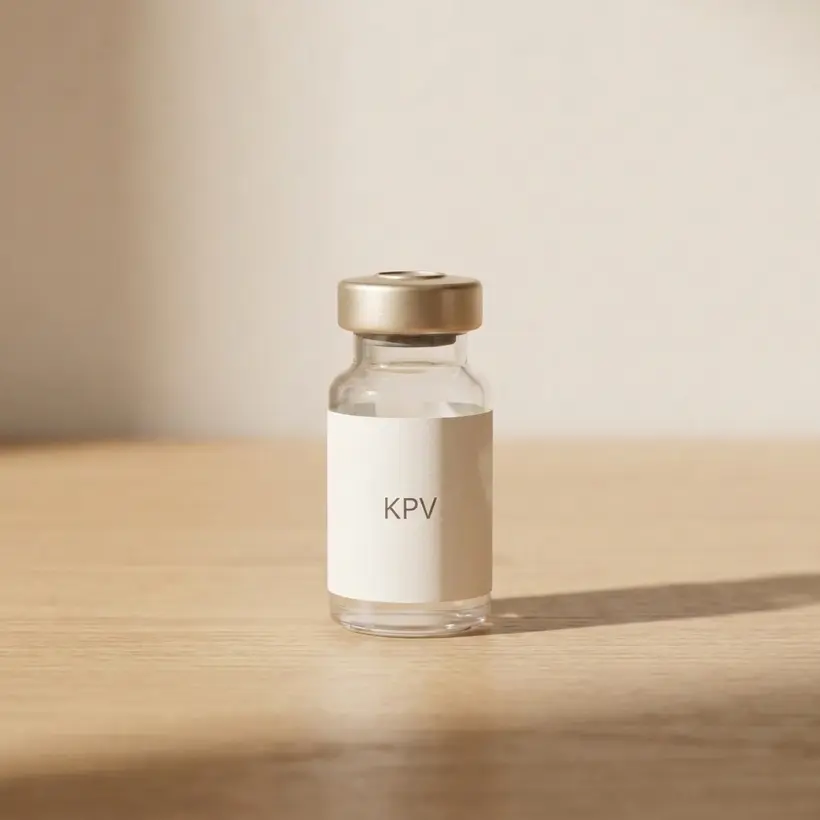
From the FormBlends catalog
KPV
Anti-inflammatory tripeptide for gut and systemic health · From $44/mo · compounded by a licensed 503A pharmacy, dispensed only after provider review.
Learn about KPV →For oral use targeting gut inflammation, doses may be higher since not all of the peptide reaches the target tissue. Your provider will determine the appropriate oral dose based on your situation. Some compounding pharmacies prepare KPV in enteric-coated capsules to protect it from stomach acid.
Injectable KPV requires proper . Follow your pharmacy's instructions for mixing and storage. Use bacteriostatic water and store the reconstituted peptide in the refrigerator.
Many people use KPV alongside other anti-inflammatory peptides like for enhanced gut healing. This combination approach should always be supervised by a licensed provider who can monitor your response and adjust as needed.
Safety Profile and Side Effects
KPV has a favorable safety profile based on available research. Because it's a fragment of a naturally occurring hormone, your body recognizes it well. Side effects are uncommon and generally mild.
The most reported side effects include mild injection site reactions like redness or soreness. Some people experience mild fatigue in the first few days of use. These effects typically resolve quickly.
Because KPV is derived from alpha-MSH, there's sometimes concern about skin darkening. But KPV doesn't activate melanocortin receptors at standard therapeutic doses. The risk of pigmentation changes is very low compared to full-length alpha-MSH or peptides like Melanotan II.
KPV is still an emerging therapy. Long-term human safety data is limited. Work closely with your provider and report any unusual symptoms. Regular check-ins help ensure your protocol stays safe and effective.
If you're taking immunosuppressive medications, let your provider know before starting KPV. The peptide modulates immune function, and interactions with immunosuppressants haven't been well studied. to discuss your options.
Frequently Asked Questions
Can KPV be taken orally?
Yes. KPV is one of the few peptides stable enough for oral administration. Some compounding pharmacies prepare it in capsule form specifically for gut health applications. Your provider can prescribe the appropriate formulation.
How long does it take for KPV to work?
Many people notice reduced inflammation symptoms within 2 to 4 weeks. Gut health improvements may take longer, often 4 to 8 weeks. Consistency is important for best results.
Can I use KPV with BPC-157?
Yes. KPV and are commonly used together for gut healing protocols. They work through different mechanisms and may complement each other. Always combine peptides under provider supervision.
Is KPV FDA approved?
No. KPV isn't FDA approved as a drug. It's available through licensed compounding pharmacies when prescribed by a licensed provider for specific clinical indications.
Does KPV cause skin darkening?
At standard therapeutic doses, KPV doesn't typically cause skin darkening. Unlike full-length alpha-MSH or Melanotan II, KPV is too small to activate the melanocortin receptors responsible for pigmentation.
Your Personalized Plan Is Waiting
No two patients are the same, and your protocol shouldn't be either. FormBlends providers create customized treatment plans based on your health profile, goals, and preferences.
Medical References
- Jastreboff AM, Aronne LJ, Ahmad NN, et al. Tirzepatide Once Weekly for the Treatment of Obesity. N Engl J Med. 2022;387(3):205-216. [PubMed | ClinicalTrials.gov | DOI]
Sources &. References
- Pickart L, Vasquez-Soltero JM, Margolina A. GHK Peptide as a Natural Modulator of Multiple Cellular Pathways in Skin Regeneration. BioMed Res Int. 2015;2015:648108. Doi:10.1155/2015/648108
- Pickart L, Vasquez-Soltero JM, Margolina A. GHK and DNA: Resetting the Human Genome to Health. BioMed Res Int. 2014;2014:151479. Doi:10.1155/2014/151479
- Sikiric P, Hahm KB, Blagaic AB, et al. Stable Gastric Pentadecapeptide BPC 157, Robert's Cytoprotection, Adaptive Cytoprotection, and Therapeutic Effects. Curr Pharm Des. 2018;24(18):1990-2001. Doi:10.2174/1381612824666180515125918
- Chang CH, Tsai WC, Lin MS, et al. The promoting effect of pentadecapeptide BPC 157 on tendon healing involves tendon outgrowth, cell survival, and cell migration. J Appl Physiol. 2011;110(3):774-780. Doi:10.1152/japplphysiol.00945.2010
- Seiwerth S, Brcic L, Vuletic LB, et al. BPC 157 and blood vessels. Curr Pharm Des. 2014;20(7):1121-1125. Doi:10.2174/13816128113199990421
- Bock-Marquette I, Saxena A, White MD, et al. Thymosin beta4 activates integrin-linked kinase and promotes cardiac cell migration, survival and cardiac repair. Nature. 2004;432(7016):466-472. Doi:10.1038/nature03000
- Malinda KM, Sidhu GS, Mani H, et al. Thymosin beta4 accelerates wound healing. J Invest Dermatol. 1999;113(3):364-368. Doi:10.1046/j.1523-1747.1999.00708.x
This article is for educational purposes only and doesn't constitute medical advice. Always consult with a licensed healthcare provider before starting, changing, or stopping any medication or supplement. FormBlends connects you with licensed providers who can evaluate your individual health needs.
Last updated: 2026-03-24
Ready when you are
KPV
Anti-inflammatory tripeptide for gut and systemic health · From $44/mo · compounded by a licensed 503A pharmacy, dispensed only after provider review.
Learn about KPV →