Key Takeaway
Your gut is more than a digestive organ. It's a command center for your immune system, mood, and overall health. When gut function breaks down, you feel it everywhere. Bloating, discomfort, food sensitivities, low energy, and even brain fog can trace back to gut issues.
Your gut is more than a digestive organ. It's a command center for your immune system, mood, and overall health. When gut function breaks down, you feel it everywhere. Bloating, discomfort, food sensitivities, low energy, and even brain fog can trace back to gut issues. Research into peptides for gut health has grown significantly, with several peptides showing promise for supporting gut lining integrity and digestive function when prescribed by a licensed provider.
Key Takeaways: - Discover why gut health matters for your whole body - Key Peptides Studied for Gut Health - Building a Gut Health Peptide Protocol - Supporting Your Protocol with Nutrition and Lifestyle
Why Gut Health Matters for Your Whole Body
Before getting into peptides, it helps to understand why gut health is so foundational.
Your gut lining is a single-cell-thick barrier that separates the contents of your digestive tract from the rest of your body. When this barrier functions properly, it allows nutrients through while keeping harmful substances out. When it's compromised, partially digested food particles and bacteria can trigger immune responses throughout your body.
This is sometimes called increased intestinal permeability. It has been linked to chronic inflammation, autoimmune conditions, skin problems, and metabolic dysfunction in research studies.
Your gut also houses roughly 70% of your immune system. The bacteria living in your digestive tract, your microbiome, influence everything from vitamin production to neurotransmitter synthesis. Serotonin, your primary mood-regulating neurotransmitter, is produced mostly in the gut.
"GLP-1 receptor agonists represent the most significant advance in obesity pharmacotherapy in decades. For the first time, we have medications that produce weight loss approaching what was previously only achievable through bariatric surgery.") Dr. Robert Kushner, MD, Northwestern University, speaking at ObesityWeek 2023
When patients come to their provider with widespread, hard-to-pin-down symptoms, gut health is increasingly the first place clinicians look. Peptide therapy may offer targeted support for gut repair that complements traditional approaches.
Free Download: Wolverine Stack Protocol Card Track your gut health peptide protocol with our printable schedule card. Includes space for symptom logging and meal tracking alongside your doses. Get yours free (we'll email it to you instantly.
[Download CTA Button]
Key Peptides Studied for Gut Health
Several peptides have research supporting their potential role in gut health and digestive function.
stands out as the most studied peptide for gut applications. It's derived from a protein found naturally in gastric juice. Animal studies suggest it may protect the gut lining, accelerate healing of ulcers and mucosal damage, reduce inflammation in the GI tract, and counteract some of the gut damage caused by NSAIDs and alcohol. BPC-157 can be administered subcutaneously or orally, depending on the provider's protocol. Some providers prefer oral dosing for gut-specific issues since the peptide contacts the digestive tract directly.
TB-500 may complement BPC-157 by supporting cell migration and tissue remodeling. While it's more commonly associated with musculoskeletal healing, its anti-inflammatory and tissue-repair properties may benefit gut tissue as well.
Larazotide is a peptide being studied specifically for its ability to regulate tight junction permeability in the gut lining. While not widely available through compounding pharmacies yet, it represents an exciting area of research.
GHK-Cu has broad tissue-remodeling properties that may extend to gut tissue. Some providers include it in thorough gut healing protocols.
Your provider will determine which peptides are appropriate based on your specific gut issues, symptoms, and health history.
Building a Gut Health Peptide Protocol
A gut health peptide protocol is typically one component of a broader healing plan. Here is how providers generally approach it.
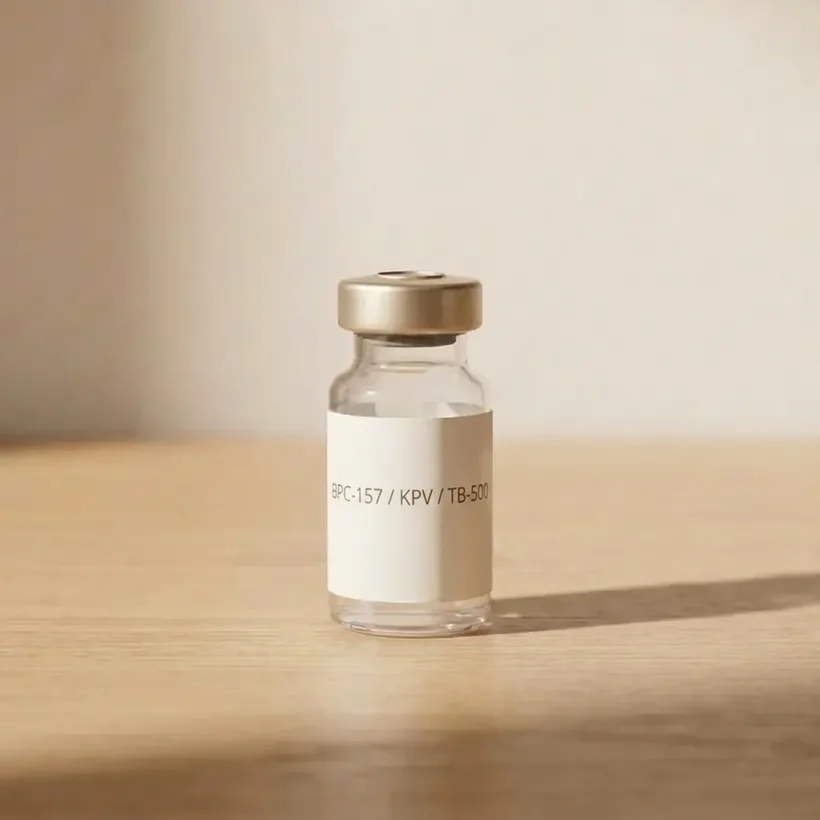
From the FormBlends catalog
BPC-157 / KPV / TB-500 Blend
Three-pathway recovery support in one peptide blend · From $279/mo · compounded by a licensed 503A pharmacy, dispensed only after provider review.
View BPC-157 / KPV / TB-500 Blend →Step 1[1]: Identify the problem. Your provider will take a thorough history and may order testing. This could include detailed stool analysis, food sensitivity panels, inflammatory markers, or breath testing for SIBO. The peptide protocol is designed around the specific issues found.
Step 2: Address diet and lifestyle first. Before starting peptides, most providers recommend cleaning up your diet. Removing common irritants, increasing fiber, and supporting the microbiome with fermented foods creates a better environment for healing. A that supports gut health is important.
Step 3: Start the peptide protocol. BPC-157 is often the first-line peptide for gut issues. Typical protocols run 4-8 weeks. Some providers prefer oral BPC-157 capsules for gut-specific concerns, while others use subcutaneous injections.
Step 4: Stack if needed. If BPC-157 alone isn't producing sufficient results, your provider may add TB-500 or other supportive peptides. The combination addresses healing and inflammation through multiple pathways.
Step 5: Monitor and adjust. Track your symptoms daily using the . Note changes in bloating, bowel habits, energy levels, and any new symptoms. This data guides your provider's decisions about dose adjustments and protocol duration.
Supporting Your Protocol with Nutrition and Lifestyle
Peptides work with your body, not in place of good habits. These strategies support gut healing alongside your protocol.
Eat gut-friendly foods. Bone broth provides collagen and amino acids that support gut lining repair. Fermented foods like sauerkraut, kimchi, and yogurt introduce beneficial bacteria. Cooked vegetables are easier to digest than raw during a healing phase.
Eliminate known irritants. Common gut irritants include alcohol, NSAIDs (like ibuprofen), excess caffeine, and highly processed foods. During your healing protocol, reducing or eliminating these gives your gut the best chance to repair.
Manage stress. Your gut and brain communicate directly through the vagus nerve. Chronic stress increases cortisol, which can damage the gut lining and reduce digestive enzyme production. Daily stress management practices, even 10 minutes of deep breathing, can make a measurable difference.
Chew your food thoroughly. This sounds basic, but digestion starts in your mouth. Proper chewing reduces the burden on your stomach and intestines. Slow down during meals.
Space out meals. Constant grazing doesn't give your digestive system time to rest and perform maintenance. The migrating motor complex, your gut's self-cleaning mechanism, only activates during fasting periods between meals.
If you're also taking a , discuss how to coordinate it with your gut health protocol. GLP-1 medications slow gastric emptying, which may interact with oral peptide timing.
Frequently Asked Questions
Can I take BPC-157 orally instead of injecting it?
Yes. Some providers prescribe oral BPC-157 specifically for gut-related issues. Oral dosing allows the peptide to contact the digestive tract directly. Your provider will determine whether oral or injectable BPC-157 is more appropriate for your situation.
How long does it take for peptides to improve gut health?
Many people notice reduced bloating and improved digestion within 2-3 weeks. Significant gut lining repair may take 4-8 weeks or longer depending on the severity of the issue. Your provider will set expectations based on your specific condition.
Can peptides cure leaky gut?
Peptides don't cure any condition. Research suggests certain peptides like BPC-157 may support gut lining integrity and reduce inflammation, which could help manage increased intestinal permeability. They work best as part of a complete approach that includes dietary changes, stress management, and addressing root causes.
Are gut health peptides safe to take with probiotics?
Generally, yes. Probiotics and peptides work through different mechanisms and are typically compatible. But always disclose all supplements and medications to your prescribing provider so they can check for any potential interactions.
Do I need a diagnosis to start a gut health peptide protocol?
A formal diagnosis isn't always required, but your provider will evaluate your symptoms and may order testing before prescribing peptides. This ensures the peptide protocol is targeting the right issues and that no underlying conditions need different treatment. to discuss your symptoms.
What's Your Next Move?
You have the information. Now let a licensed provider help you put it into action. FormBlends makes it simple) answer a few questions and get a personalized recommendation.
Medical References
- Wilding JPH, Batterham RL, Calanna S, et al. Once-Weekly Semaglutide in Adults with Overweight or Obesity. N Engl J Med. 2021;384(11):989-1002. [PubMed | ClinicalTrials.gov | DOI]
- Davies M, Færch L, Jeppesen OK, et al. Semaglutide 2.4 mg once a week in adults with overweight or obesity, and type 2 diabetes (STEP 2). Lancet. 2021;397(10278):971-984. [PubMed | ClinicalTrials.gov | DOI]
- Wadden TA, Bailey TS, Billings LK, et al. Effect of Subcutaneous Semaglutide vs Placebo as an Adjunct to Intensive Behavioral Therapy on Body Weight in Adults With Overweight or Obesity (STEP 3). JAMA. 2021;325(14):1403-1413. [PubMed | ClinicalTrials.gov | DOI]
- Rubino D, Abrahamsson N, Davies M, et al. Effect of Continued Weekly Subcutaneous Semaglutide vs Placebo on Weight Loss Maintenance in Adults With Overweight or Obesity (STEP 4). JAMA. 2021;325(14):1414-1425. [PubMed | ClinicalTrials.gov | DOI]
- Garvey WT, Batterham RL, Bhatt DL, et al. Two-year effects of semaglutide in adults with overweight or obesity (STEP 5). Nat Med. 2022;28(10):2083-2091. [PubMed | ClinicalTrials.gov | DOI]
Sources &. References
- Sikiric P, Hahm KB, Blagaic AB, et al. Stable Gastric Pentadecapeptide BPC 157, Robert's Cytoprotection, Adaptive Cytoprotection, and Therapeutic Effects. Curr Pharm Des. 2018;24(18):1990-2001. Doi:10.2174/1381612824666180515125918
- Chang CH, Tsai WC, Lin MS, et al. The promoting effect of pentadecapeptide BPC 157 on tendon healing involves tendon outgrowth, cell survival, and cell migration. J Appl Physiol. 2011;110(3):774-780. Doi:10.1152/japplphysiol.00945.2010
- Seiwerth S, Brcic L, Vuletic LB, et al. BPC 157 and blood vessels. Curr Pharm Des. 2014;20(7):1121-1125. Doi:10.2174/13816128113199990421
- Bock-Marquette I, Saxena A, White MD, et al. Thymosin beta4 activates integrin-linked kinase and promotes cardiac cell migration, survival and cardiac repair. Nature. 2004;432(7016):466-472. Doi:10.1038/nature03000
- Malinda KM, Sidhu GS, Mani H, et al. Thymosin beta4 accelerates wound healing. J Invest Dermatol. 1999;113(3):364-368. Doi:10.1046/j.1523-1747.1999.00708.x
- Ionescu M, Frohman LA. Pulsatile secretion of growth hormone (GH) persists during continuous stimulation by CJC-1295, a long-acting GH-releasing hormone analog. J Clin Endocrinol Metab. 2006;91(12):4792-4797. Doi:10.1210/jc.2006-1702
Nothing in this article should be construed as medical advice. The information provided is educational only. Always consult with your healthcare provider before beginning, modifying, or discontinuing any medication or treatment. FormBlends connects patients with licensed providers for individualized care.
Last updated: 2026-03-24
Ready when you are
BPC-157 / KPV / TB-500 Blend
Three-pathway recovery support in one peptide blend · From $279/mo · compounded by a licensed 503A pharmacy, dispensed only after provider review.
View BPC-157 / KPV / TB-500 Blend →