Key Takeaway
If you train hard, you know that recovery is where results actually happen. This peptide stacking muscle growth resource covers the important information you need to make informed decisions.
If you train hard, you know that recovery is where results actually happen. This peptide stacking muscle growth resource covers the important information you need to make informed decisions. Peptide stacking for muscle growth and recovery has become one of the most talked-about topics in the performance improvement space. Combining specific peptides under medical supervision can target multiple pathways at once, potentially supporting both muscle development and the repair process that follows intense training.
Key Takeaways: - Understand what is peptide stacking for muscle growth - Popular Muscle Growth and Recovery Stacks - Training Considerations While on a Peptide Stack - Understand what results can you realistically expect
What Is Peptide Stacking for Muscle Growth?
Peptide stacking means using two or more peptides together in a coordinated protocol. Each peptide targets a different biological mechanism. When combined thoughtfully, they can complement each other for a more thorough effect than any single peptide alone.
For muscle growth and recovery, stacks typically target three areas. First, growth hormone improvement. Peptides like CJC-1295 and Ipamorelin stimulate your body's natural GH production, which supports muscle protein synthesis and fat metabolism. Second, tissue repair. Peptides like and TB-500 may accelerate healing of muscle fibers, tendons, and connective tissue damaged during intense training. Third, inflammation management. Some peptides have anti-inflammatory properties that can reduce the excessive inflammation that slows recovery.
The key word is "coordinated." You can't just pick random peptides and throw them together. A licensed provider designs your stack based on your specific goals, training level, health history, and bloodwork. The doses, timing, and cycling all need to work together.
FormBlends connects you with providers who specialize in peptide therapy. to discuss whether stacking is appropriate for your goals.
"Compounding pharmacies serve a critical role in healthcare, but patients need to understand the difference between a properly regulated 503B facility and an unregulated operation. Ask about PCAB accreditation and third-party testing.") Dr. Scott Brunner, PharmD, Alliance for Pharmacy Compounding
Free Download: Wolverine Stack Protocol Card Map out your muscle recovery stack with our printable protocol planner. Track each peptide's dose, timing, and cycle dates. Get yours free (we'll email it to you instantly.
[Download CTA Button]
Popular Muscle Growth and Recovery Stacks
Here are some commonly prescribed peptide combinations for people focused on training performance and recovery.
The Growth Hormone Stack: CJC-1295 + Ipamorelin. This is the foundational stack for GH improvement. CJC-1295 provides sustained growth hormone releasing hormone signaling. Ipamorelin adds pulsatile GH release through the ghrelin pathway. Together, they may support muscle protein synthesis, fat metabolism, deeper sleep, and faster recovery between training sessions.
The Recovery Stack: . Often called the Wolverine Stack, this combination targets tissue healing from different angles. BPC-157 may promote angiogenesis and tendon repair. TB-500 may support cell migration and reduce inflammation. Athletes dealing with chronic soreness, tendon issues, or muscle strains often ask their providers about this combination.
The Complete Stack: CJC-1295 + Ipamorelin + BPC-157. Some providers prescribe all three for clients who want both GH improvement and enhanced recovery. This requires careful timing and cycling to avoid overstimulation and to keep costs manageable.
GHK-Cu Addition: Some providers add GHK-Cu to any of the above stacks for its potential collagen-supporting and anti-inflammatory properties.
Each of these stacks requires a prescription and medical oversight. Your provider determines doses and timing based on your individual profile.
Training Considerations While on a Peptide Stack
Peptides aren't magic. They work best when combined with intelligent training and nutrition.
From the FormBlends catalog
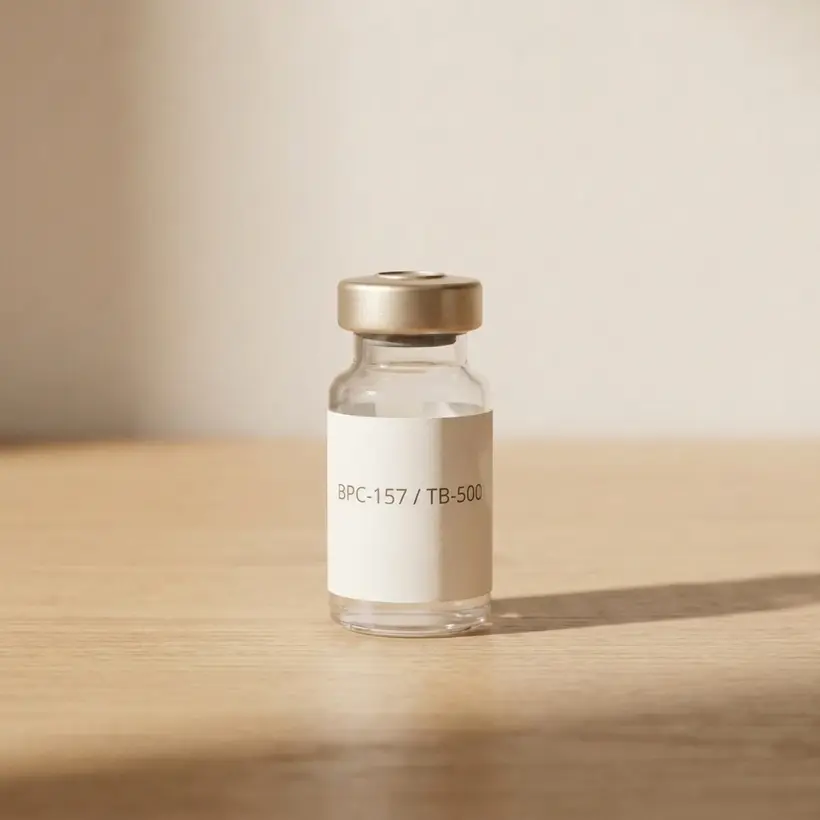
BPC-157 / TB-500 Blend
The ultimate recovery stack in one vial · From $249/mo · compounded by a licensed 503A pharmacy, dispensed only after provider review.
View BPC-157 / TB-500 Blend →Progressive overload still matters. Peptides may support recovery, but you still need to provide the training stimulus. Continue following a structured program that challenges your muscles progressively. Without the stimulus, there's nothing to recover from.
Recovery days are still important. Even with peptide support, your body needs rest days. The peptides may help you recover faster, but they don't eliminate the need for planned deload weeks and adequate sleep.
Nutrition is the foundation. Growth hormone improvement means nothing if you aren't eating enough protein to build muscle. Aim for at least 0.7-1 gram of protein per pound of body weight daily. Check our for practical meal ideas.
Track everything. Use the to log your injections, training sessions, body measurements, and recovery metrics. This data helps your provider adjust your protocol and helps you see progress that the mirror might not show week to week.
Stay hydrated. Growth hormone peptides can cause mild water retention initially. Staying well-hydrated helps manage this and supports overall muscle function.
What Results Can You Realistically Expect?
Setting honest expectations keeps you motivated and helps you evaluate whether the protocol is working.
Weeks 1-2: Improved sleep quality is often the first change people notice. You may also feel slightly more energized during the day. These are early signs that GH levels are responding.
Weeks 3-4: Recovery between workouts may improve. You might notice less soreness after hard sessions, or you may be able to handle slightly more training volume without feeling overtrained.
Weeks 5-8: Body composition changes may become visible. This typically means a gradual reduction in body fat and improved muscle fullness, not dramatic overnight transformations. Strength gains from training may feel more consistent.
Weeks 8-12: Cumulative benefits peak during this window. This is often when people see the most noticeable changes in how they look and perform.
These timelines are general estimates. Individual results vary significantly based on age, training experience, nutrition quality, sleep habits, and genetics. Peptides support your biology. They don't override it.
Frequently Asked Questions
Do I need to be an advanced lifter to benefit from peptide stacking?
No. Peptide stacking can benefit anyone with training goals, from beginners to advanced athletes. But your provider will consider your training experience when designing your protocol. Beginners may see dramatic results from training and nutrition alone before adding peptides.
How much does a peptide stack cost per month?
Costs vary based on which peptides are prescribed and the doses required. A basic CJC-1295/Ipamorelin stack through FormBlends typically costs less than brand-name alternatives. for current rates and transparent cost breakdowns.
Can women use peptide stacks for muscle growth?
Absolutely. Peptide therapy isn't gender-specific. Providers adjust protocols based on individual hormone profiles, body composition, and goals. Many women use growth hormone peptides and healing peptides for training support and recovery.
Will I lose my gains if I stop the peptide stack?
Muscle built through training and nutrition doesn't disappear when you stop peptides. You may notice slightly slower recovery without GH support, but your hard-earned muscle mass is maintained through continued training and adequate protein intake.
Can I stack peptides with GLP-1 medications?
Some providers prescribe peptide stacks alongside for patients who are managing weight while also wanting to preserve muscle mass. This requires careful coordination between the different medications. Discuss this with your provider.
Start your weight loss Today
Every transformation starts with a single step. Talk to a licensed FormBlends provider about whether this approach is right for you) consultations are free and confidential.
Sources &. References
- Sikiric P, Hahm KB, Blagaic AB, et al. Stable Gastric Pentadecapeptide BPC 157, Robert's Cytoprotection, Adaptive Cytoprotection, and Therapeutic Effects. Curr Pharm Des. 2018;24(18):1990-2001. Doi:10.2174/1381612824666180515125918
- Chang CH, Tsai WC, Lin MS, et al. The promoting effect of pentadecapeptide BPC 157 on tendon healing involves tendon outgrowth, cell survival, and cell migration. J Appl Physiol. 2011;110(3):774-780. Doi:10.1152/japplphysiol.00945.2010
- Seiwerth S, Brcic L, Vuletic LB, et al. BPC 157 and blood vessels. Curr Pharm Des. 2014;20(7):1121-1125. Doi:10.2174/13816128113199990421
- Bock-Marquette I, Saxena A, White MD, et al. Thymosin beta4 activates integrin-linked kinase and promotes cardiac cell migration, survival and cardiac repair. Nature. 2004;432(7016):466-472. Doi:10.1038/nature03000
- Malinda KM, Sidhu GS, Mani H, et al. Thymosin beta4 accelerates wound healing. J Invest Dermatol. 1999;113(3):364-368. Doi:10.1046/j.1523-1747.1999.00708.x
- Ionescu M, Frohman LA. Pulsatile secretion of growth hormone (GH) persists during continuous stimulation by CJC-1295, a long-acting GH-releasing hormone analog. J Clin Endocrinol Metab. 2006;91(12):4792-4797. Doi:10.1210/jc.2006-1702
This content is provided for informational and educational purposes only. It isn't a substitute for professional medical advice, diagnosis, or treatment. Always seek the advice of a licensed healthcare provider with any questions about a medical condition or treatment plan.
Last updated: 2026-03-24
Ready when you are
BPC-157 / TB-500 Blend
The ultimate recovery stack in one vial · From $249/mo · compounded by a licensed 503A pharmacy, dispensed only after provider review.
View BPC-157 / TB-500 Blend →