Key Takeaway
One of the most common early benefits people report from growth hormone peptides is better sleep. This growth hormone peptides sleep resource covers the important information you need to make informed decisions.
One of the most common early benefits people report from growth hormone peptides is better sleep. This growth hormone peptides sleep resource covers the important information you need to make informed decisions. If you have been researching peptides like ipamorelin, CJC-1295, or sermorelin, you have probably seen this mentioned repeatedly in forums and patient testimonials. But is there real science behind the connection between growth hormone peptides and sleep quality?
Key Takeaways: - The Science Behind Growth Hormone and Sleep - Understand what patients report about sleep on gh peptides - Learn how to improve a gh peptide protocol for sleep - GH Peptides vs. Traditional Sleep Aids
The short answer is yes. Growth hormone and sleep are deeply connected. This article explains that connection, what the research shows, and how a peptide protocol may support your sleep as part of a broader health strategy.
The Science Behind Growth Hormone and Sleep
Growth hormone and sleep have a bidirectional relationship. Your body produces the largest pulse of growth hormone during the first cycle of deep slow-wave sleep, typically within the first 90 minutes after you fall asleep. Research published in the Journal of Clinical Endocrinology &. Metabolism has shown that up to 75% of daily GH secretion occurs during sleep.
This means poor sleep leads to lower GH output. And lower GH levels may contribute to poorer sleep quality. It becomes a cycle that feeds on itself.
As you age, both growth hormone production and deep sleep decline. Clinical data indicate that GH secretion drops by roughly 14% per decade after age 30. At the same time, the amount of slow-wave sleep you get decreases. These two trends aren't a coincidence. They're physiologically linked.
"The key to successful GLP-1 therapy is setting realistic expectations and supporting patients through the titration phase. The side effects are manageable for most people, but they need to know what to expect.") Dr. Caroline Apovian, MD, Harvard Medical School
Growth hormone peptides like ipamorelin and work by stimulating your pituitary gland to release more of your own GH. When taken before bed, they amplify that natural nighttime GH pulse. The result, according to patient reports and preliminary research, is deeper and more restorative sleep.
This isn't the same as a sleeping pill. GH peptides don't sedate you. Instead, they may support the physiological processes that make deep sleep happen naturally.
What Patients Report About Sleep on GH Peptides
Improved sleep is consistently one of the first benefits people notice when starting a GH peptide protocol. Most report changes within the first five to ten days. Here is what you might experience:
Faster sleep onset. Many users say they fall asleep more quickly after starting a pre-bedtime dose of ipamorelin or a combination of ipamorelin and CJC-1295.
Deeper sleep. The most common report is a subjective feeling of deeper, more restorative sleep. People describe waking up feeling "actually rested" rather than groggy.
More vivid dreams. Increased REM activity is a frequently reported experience. Vivid or lucid dreams can be a sign that your sleep architecture is shifting in a positive direction.
Free Download: Peptide Protocol Planner (12-Week) Track your peptide doses, sleep quality, and recovery in one place. Get yours free, we'll email it to you instantly. [Download Your Protocol Planner]
Fewer nighttime awakenings. Some users report sleeping through the night more consistently. This is particularly notable for people over 40 who have experienced increasing sleep fragmentation.
It's these are observational reports, not controlled clinical trials. Individual results vary. But the consistency of sleep improvement reports across thousands of users is notable and aligns with what we know about the GH-sleep connection.
If you're currently tracking your health metrics, the lets you log sleep quality alongside your peptide doses so you and your provider can spot trends.
How to Improve a GH Peptide Protocol for Sleep
If sleep improvement is one of your primary goals, there are specific ways to structure your protocol for the best results.
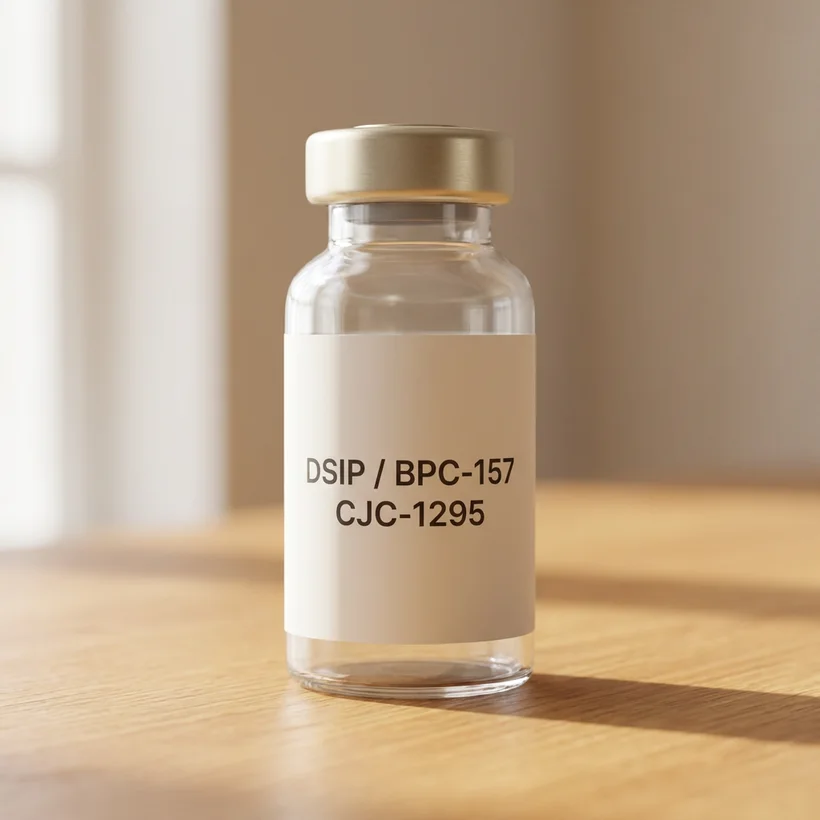
From the FormBlends catalog
Sleep + Recovery Stack
Sleep and repair support with DSIP, BPC-157, and CJC · From $299/mo · compounded by a licensed 503A pharmacy, dispensed only after provider review.
View Sleep + Recovery Stack →Time your dose right. Take your evening dose of ipamorelin (or ipamorelin plus CJC-1295) 20 to 30 minutes before you plan to fall asleep. Do it on an empty stomach. Eating raises insulin, which blunts GH release. Most providers recommend stopping food intake at least two hours before your bedtime dose.
Keep your bedroom cool. Growth hormone release is enhanced in cooler sleeping environments. Aim for a room temperature between 65 and 68 degrees Fahrenheit. This is a simple change that supports both natural GH production and peptide effectiveness.
Prioritize consistency. GH peptides work best with consistent dosing. Taking your bedtime dose at the same time each night helps your body establish a predictable GH rhythm. Skipping doses or varying your timing can reduce effectiveness.
Stack strategically. The combination of CJC-1295 (without DAC) and ipamorelin is considered the standard GH peptide stack for sleep and recovery support. CJC-1295 extends the duration of the GH pulse while ipamorelin increases its peak. Together, they create a stronger signal than either peptide alone.
Address underlying sleep issues. GH peptides aren't a substitute for good sleep hygiene. If you have untreated sleep apnea, chronic insomnia, or other sleep disorders, address those with your provider first. Peptides work best on a foundation of healthy sleep habits.
If you're on a and experiencing sleep disruption as a side effect, talk to your provider about whether a GH peptide protocol might help.
GH Peptides vs. Traditional Sleep Aids
Traditional sleep aids like benzodiazepines, Z-drugs (zolpidem), and antihistamines work by sedating you. They force your brain into a sleep-like state, but research shows they may actually suppress the deep slow-wave sleep where GH is released. This is a significant tradeoff.
GH peptides take a fundamentally different approach. They don't sedate you. Instead, they support the hormonal environment that promotes natural deep sleep. This distinction matters for several reasons:
- No morning grogginess. GH peptides don't cause the hangover effect common with sleep medications.
- No dependency risk. Unlike benzodiazepines and Z-drugs, GH peptides don't create physical dependence.
- Supports sleep architecture. Rather than suppressing certain sleep stages, GH peptides may enhance the stages where your body does its most important repair work.
This doesn't mean GH peptides are a replacement for all sleep interventions. If you have a diagnosed sleep disorder, work with your provider on a full plan. But for age-related sleep quality decline, GH peptides represent a physiologically targeted option worth discussing with your clinician.
Learn more about how peptides fit into your broader health protocol by visiting our .
Frequently Asked Questions
How quickly do GH peptides improve sleep?
Most users report noticeable sleep improvements within the first five to ten days of starting a protocol that includes a pre-bedtime dose. Deeper, more consistent sleep is typically the first benefit people notice, often before any body composition changes appear.
Which GH peptide is best for sleep?
Ipamorelin taken before bed is the most commonly recommended single peptide for sleep support. The combination of ipamorelin and CJC-1295 (without DAC) is considered even more effective. Your provider will determine the best option based on your individual needs and lab results.
Can GH peptides cause insomnia?
In rare cases, some users report difficulty sleeping during the first few days of a new protocol. This usually resolves as your body adjusts. If sleep disruption persists, contact your provider. Adjusting the dose or timing often resolves the issue.
Do I need to take GH peptides at night for sleep benefits?
The pre-bedtime dose is the most important one for sleep quality because it amplifies your natural nighttime GH pulse. If your protocol includes multiple daily doses, the bedtime dose should be prioritized. Morning doses provide other benefits but have less direct impact on sleep.
Are GH peptides safe to combine with melatonin?
Many providers allow the use of low-dose melatonin (0.5 to 1 mg) alongside GH peptides. In fact, some research suggests melatonin itself can support GH release. But always confirm with your prescribing provider before combining any supplements with your peptide protocol.
Your Personalized Plan Is Waiting
No two patients are the same, and your protocol shouldn't be either. FormBlends providers create customized treatment plans based on your health profile, goals, and preferences.
Sources &. References
- Ionescu M, Frohman LA. Pulsatile secretion of growth hormone (GH) persists during continuous stimulation by CJC-1295, a long-acting GH-releasing hormone analog. J Clin Endocrinol Metab. 2006;91(12):4792-4797. Doi:10.1210/jc.2006-1702
This article is for educational purposes only and doesn't constitute medical advice. Always consult with a licensed healthcare provider before starting, changing, or stopping any medication or supplement. FormBlends connects you with licensed providers who can evaluate your individual health needs.
Last updated: 2026-03-24
Ready when you are
Sleep + Recovery Stack
Sleep and repair support with DSIP, BPC-157, and CJC · From $299/mo · compounded by a licensed 503A pharmacy, dispensed only after provider review.
View Sleep + Recovery Stack →