Key Takeaway
Aging is inevitable. This growth hormone peptides anti-aging resource covers the important information you need to make informed decisions. But how you age isn't entirely out of your control.
Aging is inevitable. This growth hormone peptides anti-aging resource covers the important information you need to make informed decisions. But how you age isn't entirely out of your control. Growth hormone peptides for anti-aging have become one of the most talked-about topics in longevity and regenerative medicine. As your natural growth hormone levels decline with age, many of the changes you associate with getting older accelerate. GH peptides may help slow some of those changes.
Key Takeaways: - Discover why growth hormone declines with age and why it matters - Learn how gh peptides may support healthy aging - Best GH Peptides for Anti-Aging Protocols - Setting Realistic Anti-Aging Expectations
This guide covers the science behind GH peptides and aging, which peptides show the most promise, and what realistic results look like.
Why Growth Hormone Declines with Age and Why It Matters
Growth hormone production peaks during puberty and your 20s. After that, it drops by roughly 14% per decade. By age 60, you may be producing a fraction of what you did at 25. This decline is sometimes called somatopause.
The effects of declining GH are familiar to anyone over 40. You may notice increased body fat, especially around the midsection. Muscle mass decreases, even if you stay active. Recovery from exercise takes longer. Skin becomes thinner, drier, and more prone to wrinkles. Sleep quality deteriorates. Energy levels drop.
These changes aren't solely caused by GH decline, but growth hormone plays a meaningful role in each one. Research published in the New England Journal of Medicine demonstrated that restoring GH levels in older adults led to measurable improvements in lean body mass, bone density, and skin thickness.
GH peptides offer a way to support your body's natural GH production without introducing exogenous growth hormone directly. By stimulating your pituitary gland, peptides like CJC-1295 and Ipamorelin can raise GH and IGF-1 levels in a way that mimics your body's natural patterns.
The goal isn't to turn back the clock to age 20. It's to support your body's declining systems so you can maintain function, vitality, and quality of life as you age.
"What makes tirzepatide particularly interesting is the dual GIP/GLP-1 mechanism. We're seeing that GIP receptor activation appears to amplify the metabolic effects in ways we didn't fully anticipate from the preclinical data.") Dr. Ania Jastreboff, MD, PhD, Yale School of Medicine, lead author of SURMOUNT-1[1]
How GH Peptides May Support Healthy Aging
Clinical research and provider observations suggest several ways that GH peptides can address age-related changes.
Skin quality and collagen production. Growth hormone directly stimulates collagen synthesis. Collagen is the structural protein that gives skin its firmness and elasticity. As GH declines, collagen production slows, leading to thinner skin, wrinkles, and slower wound healing. GH peptides may reverse some of this decline. Many patients report improved skin texture and reduced fine lines within 3 to 6 months of starting a protocol.
Body composition. The age-related shift from lean muscle to body fat is partly driven by declining GH. Peptide therapy may support fat metabolism and lean muscle preservation. Combined with regular and proper nutrition, GH peptides can help maintain a healthier body composition as you age.
Bone density. Growth hormone and IGF-1 play important roles in bone metabolism. Preliminary data suggest that GH therapy can improve bone mineral density, particularly in postmenopausal women and older men. Stronger bones mean reduced fracture risk and better overall mobility.
Cognitive function. Emerging Current Available data suggest that GH and IGF-1 support brain health, including memory, processing speed, and mood regulation. Some patients report improved mental clarity and reduced brain fog on GH peptide protocols.
Immune function. Growth hormone supports immune cell production and function. Age-related immune decline (immunosenescence) may be partially mitigated by maintaining healthier GH levels.
Free Download: Peptide Protocol Planner (12-Week) Start your anti-aging peptide protocol with our 12-week planner. Includes dosing logs, lab tracking, and wellness metrics to monitor your progress. Get yours free, we'll email it to you instantly.
[Download CTA Button]
Best GH Peptides for Anti-Aging Protocols
Several GH peptides are commonly prescribed for anti-aging purposes. Each has different characteristics that may make it more or less suitable depending on your goals and health profile.
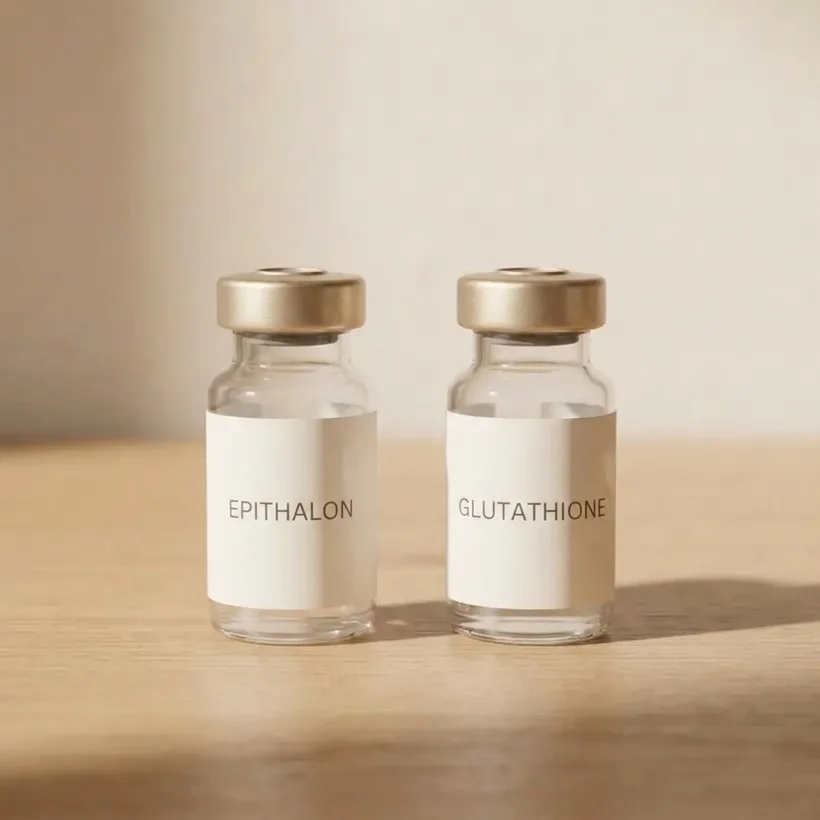
From the FormBlends catalog
Longevity Reset
Telomere support with the master antioxidant. · Bundle from $270 · provider-reviewed peptide bundle.
View Longevity Reset →CJC-1295 plus Ipamorelin. This combination is the most widely prescribed GH peptide protocol for anti-aging. The combined effect produces proven GH elevation while maintaining a natural release pattern. It covers multiple aging concerns simultaneously: sleep, body composition, skin, recovery, and energy.
Sermorelin. With decades of clinical use, Sermorelin has a strong safety record. It produces a more moderate GH pulse than the CJC-1295/Ipamorelin combination. Some anti-aging specialists prefer it for patients who want a conservative, well-established approach.
Tesamorelin. This GHRH analog is FDA-approved for reducing visceral fat in HIV patients with lipodystrophy. Some providers prescribe it off-label for anti-aging, particularly for patients with significant abdominal fat. It has been shown to reduce visceral adipose tissue by 15 to 18% in clinical trials.
GHK-Cu. While not a traditional GH secretagogue, GHK-Cu (copper peptide) is often included in anti-aging protocols. It supports wound healing, collagen synthesis, and has antioxidant properties. It can be used topically for skin or systemically for broader anti-aging effects.
Your provider will select the right peptide or combination based on your age, health status, lab work, and specific goals. Explore the full range of peptide options at .
Interested in combining anti-aging peptides with weight management? to see if you qualify.
Setting Realistic Anti-Aging Expectations
Anti-aging peptide therapy requires patience and realistic expectations. Here is what the science supports and what it doesn't.
What GH peptides can reasonably do:
- Improve skin thickness, hydration, and elasticity over 3 to 6 months
- Support fat loss and lean muscle maintenance when combined with exercise and nutrition
- Enhance sleep quality, often within the first 2 weeks
- Improve energy levels and recovery capacity
- Support bone density maintenance over longer protocols
- Potentially improve cognitive function and mood
What GH peptides can't do:
- Reverse aging entirely
- Replace healthy lifestyle habits
- Compensate for poor nutrition, lack of exercise, or chronic sleep deprivation
- Guarantee specific aesthetic results
- Serve as a substitute for other necessary medical treatments
The best results come from people who view GH peptides as one component of a detailed anti-aging strategy. That strategy includes regular strength training, adequate protein intake, quality sleep, stress management, and preventive medical care.
For nutrition guidance that complements your anti-aging protocol, check out our . For recovery-specific peptides, read about the .
How long should you stay on an anti-aging protocol? Most providers recommend 3 to 6 month cycles with breaks in between. Some patients use lower maintenance doses for longer periods under close medical supervision. Your provider will monitor labs and adjust your approach over time.
Frequently Asked Questions
At what age should I start considering GH peptides for anti-aging?
Most providers begin discussing GH peptide therapy with patients in their late 30s to 40s, when natural GH decline becomes measurable. But age alone isn't the determining factor. Lab work showing declining IGF-1 levels, combined with symptoms like poor sleep, increased body fat, and slow recovery, guides the decision.
Are GH peptides safer than HGH injections for anti-aging?
GH peptides stimulate your body's own GH production, which preserves the natural pulsatile release pattern. This may result in fewer side effects compared to exogenous HGH, which provides a constant, non-physiological GH level. But both approaches carry risks and require medical supervision.
How much do anti-aging peptide protocols cost?
Costs vary by provider, peptide selection, and protocol duration. FormBlends offers transparent pricing with no hidden fees. Visit our for current rates and treatment options.
Can I combine GH peptides with other anti-aging treatments?
Yes. Many patients use GH peptides alongside other longevity-focused interventions such as NAD+ therapy, hormone replacement therapy, and targeted supplementation. Always discuss combinations with your provider to avoid interactions.
Will I lose the anti-aging benefits when I stop GH peptides?
Some benefits, like improved body composition and sleep habits, may persist if you maintain healthy lifestyle practices. Others, like the direct effects on skin collagen production, will gradually diminish as GH levels return to baseline. Cycling protocols help maintain long-term benefits while minimizing risks.
Your Personalized Plan Is Waiting
No two patients are the same, and your protocol shouldn't be either. FormBlends providers create customized treatment plans based on your health profile, goals, and preferences.
Medical References
- Jastreboff AM, Aronne LJ, Ahmad NN, et al. Tirzepatide Once Weekly for the Treatment of Obesity. N Engl J Med. 2022;387(3):205-216. [PubMed | ClinicalTrials.gov | DOI]
Sources &. References
- Ionescu M, Frohman LA. Pulsatile secretion of growth hormone (GH) persists during continuous stimulation by CJC-1295, a long-acting GH-releasing hormone analog. J Clin Endocrinol Metab. 2006;91(12):4792-4797. Doi:10.1210/jc.2006-1702
Nothing in this article should be construed as medical advice. The information provided is educational only. Always consult with your healthcare provider before beginning, modifying, or discontinuing any medication or treatment. FormBlends connects patients with licensed providers for individualized care.
Last updated: 2026-03-24
See your options in about 2 minutes
Take the free quiz and see what fits you. Quick, private, and no commitment to continue.
See my options →