Key Takeaway
Inflammation is a double-edged sword. This TB-500 inflammation anti-inflammatory resource covers the important information you need to make informed decisions. You need it for healing. Too much of it causes pain, slows recovery, and contributes to chronic disease.
Inflammation is a double-edged sword. This TB-500 inflammation anti-inflammatory resource covers the important information you need to make informed decisions. You need it for healing. Too much of it causes pain, slows recovery, and contributes to chronic disease. That's why TB-500's anti-inflammatory properties have attracted significant research attention. Knowing how TB-500 affects inflammation helps you make informed decisions about whether this peptide might be part of your care plan.
Key Takeaways: - Learn how inflammation works in your body - Learn how tb-500 modulates inflammation - TB-500 vs Traditional Anti-Inflammatory Approaches - Clinical Applications Being Explored
This guide covers what the research shows about TB-500 and inflammation, how it differs from traditional anti-inflammatory approaches, and what clinical applications are being explored.
How Inflammation Works in Your Body
Before understanding how TB-500 may modulate inflammation, you need to understand inflammation itself.
Acute inflammation is your friend. When you sprain an ankle, cut your finger, or get an infection, your immune system sends inflammatory signals. White blood cells rush to the area. Blood flow increases. The area swells, reddens, and warms. This is your body's repair team arriving at the scene. Without acute inflammation, wounds wouldn't heal and infections would spread.
Chronic inflammation is the problem. When inflammation persists beyond its useful phase) weeks, months, or years (it starts causing harm. Chronic inflammation is linked to joint degeneration, cardiovascular disease, metabolic dysfunction, and impaired tissue repair.
The inflammatory cascade is complex. Dozens of signaling molecules (cytokines, chemokines, prostaglandins) orchestrate the inflammatory response. Pro-inflammatory signals ramp up the response. Anti-inflammatory signals calm it down. Health depends on balance between these forces.
"The conversation about obesity needs to shift from willpower to biology. These medications work because obesity is a neuroendocrine disease, not a character flaw.") Dr. Fatima Cody Stanford, MD, MPH, Massachusetts General Hospital
Common conditions involving chronic inflammation include: - Tendinopathy and chronic tendon pain - Osteoarthritis and joint degeneration - Chronic muscle soreness and delayed recovery - Post-surgical inflammation that persists too long - Autoimmune-related tissue inflammation
Traditional anti-inflammatory treatments (NSAIDs like ibuprofen, corticosteroids) work by broadly suppressing inflammatory pathways. This reduces pain but can also impair the beneficial aspects of inflammation, including tissue repair.
How TB-500 Modulates Inflammation
TB-500's approach to inflammation appears to be more nuanced than simple suppression. Research suggests it may help regulate the inflammatory response rather than broadly shut it down.

Inflammatory cytokine modulation. Animal Laboratory and animal Preliminary data suggest that thymosin beta-4 may reduce levels of pro-inflammatory cytokines like TNF-alpha and IL-1beta in injured tissue. These cytokines are major drivers of the inflammatory pain and swelling you feel after an injury. By reducing their levels, TB-500 may dial down excessive inflammation without eliminating it entirely.
NF-kB pathway effects. Some Preclinical research, including the landmark Bock-Marquette et al. Study (Nature, 2004), demonstrates that thymosin beta-4 may influence the NF-kB signaling pathway (a master regulator of inflammatory gene expression. Modulating this pathway could have broad anti-inflammatory effects across multiple tissue types.
Free Download: Peptide Protocol Planner (12-Week) Track your TB-500 protocol and monitor how your inflammation markers change over time. Includes space for pain levels, swelling notes, and provider communication. Get yours free) we'll email it to you instantly. [Email Input] [Download Button]
Tissue-specific anti-inflammatory effects. What makes TB-500 interesting is that its anti-inflammatory effects appear to be context-dependent. Rather than globally suppressing inflammation like an NSAID, TB-500 may preferentially reduce inflammation in tissues that are actively repairing. This selective action could preserve beneficial inflammation while reducing harmful excess.
Pro-resolution activity. Emerging research in immunology distinguishes between anti-inflammatory actions (stopping inflammation) and pro-resolution actions (actively promoting the resolution of inflammation and return to normal tissue function). Some evidence suggests TB-500 may have pro-resolution properties, helping tissues complete the inflammatory cycle and move into repair mode.
Immune cell modulation. Thymosin Beta-4 was originally identified in the thymus gland, which is central to immune function. Its effects on immune cells, including macrophages and T cells, may contribute to its anti-inflammatory profile. By influencing how immune cells behave at injury sites, TB-500 may help prevent the excessive immune response that characterizes chronic inflammation.
TB-500 vs Traditional Anti-Inflammatory Approaches
Knowing how TB-500 compares to familiar anti-inflammatory treatments helps put it in context.
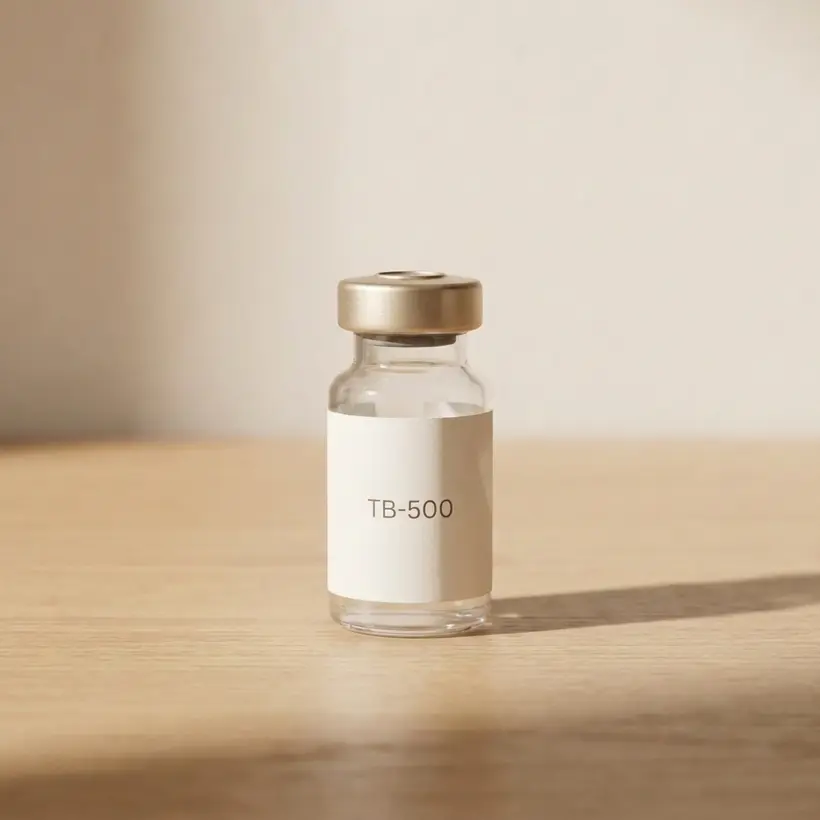
From the FormBlends catalog
TB-500 (Thymosin Beta-4)
Universal repair peptide for tissue regeneration · From $49/mo · compounded by a licensed 503A pharmacy, dispensed only after provider review.
Learn about TB-500 (Thymosin Beta-4) →NSAIDs (ibuprofen, naproxen). NSAIDs block the COX enzyme, which reduces prostaglandin production. This is effective for pain and swelling but also inhibits prostaglandins involved in tissue repair, gut lining maintenance, and kidney function. Chronic NSAID use carries risks including GI bleeding, kidney damage, and potentially impaired tendon healing. TB-500 works through different mechanisms and doesn't share these specific risks.
Corticosteroids. Powerful anti-inflammatory drugs used for severe inflammation. Corticosteroids broadly suppress the immune response. While effective short-term, chronic use causes serious side effects including bone loss, muscle wasting, and immune suppression. Corticosteroid injections into tendons may actually weaken the tissue over time. TB-500's tissue-supportive properties contrast with corticosteroids' tissue-degenerative potential.
Ice and compression. Physical anti-inflammatory measures that reduce blood flow to the area. Effective for acute injury management but don't address the underlying inflammatory cascade. Some research now questions whether excessive icing may delay healing by impeding the beneficial inflammatory response.
Dietary anti-inflammatory approaches. Omega-3 fatty acids, turmeric (curcumin), and anti-inflammatory diets can reduce systemic inflammation markers. These approaches are generally safe and complementary to other treatments, including peptide therapy.
TB-500 isn't a replacement for any of these approaches. It may be a complement (especially for people whose conditions haven't responded adequately to conventional anti-inflammatory treatments. Your can help determine where TB-500 fits in your overall management plan.
Clinical Applications Being Explored
Providers are exploring TB-500's anti-inflammatory properties in several clinical contexts.
Chronic tendon pain. Tendons with chronic inflammation (tendinopathy) often develop a cycle of damage and inflammation that standard treatments struggle to break. TB-500's combination of anti-inflammatory and tissue-repair properties may help interrupt this cycle. See our for more.
Joint inflammation. Chronic joint inflammation leads to cartilage breakdown and pain. TB-500's ability to reduce inflammatory markers while supporting tissue repair is being explored as part of joint care approaches.
Post-injury inflammation. The inflammatory response after acute injuries (sprains, strains, contusions) is necessary but can become excessive. TB-500 may help modulate post-injury inflammation to support optimal healing. Athletes often explore this application) read our .
Post-surgical inflammation. Surgery triggers significant inflammation. While some is necessary for healing, excessive post-surgical inflammation delays recovery. TB-500 is being explored as part of post-surgical recovery protocols.
Combined peptide approaches. Some providers pair TB-500 with for enhanced anti-inflammatory and tissue repair effects. The combines both peptides' mechanisms for a multi-target approach.
Frequently Asked Questions
Can TB-500 replace my anti-inflammatory medication?
Don't stop any prescribed medication without your provider's guidance. TB-500 may complement your existing anti-inflammatory treatments, but it isn't a proven replacement for NSAIDs, corticosteroids, or other prescribed anti-inflammatory drugs. Discuss your complete treatment plan with your provider.
How long does it take for TB-500 to reduce inflammation?
Some people report reduced pain and swelling within 1-2 weeks of starting TB-500. More significant anti-inflammatory effects typically develop over 4-8 weeks. Chronic inflammatory conditions may take longer to respond. Your provider will monitor your progress and adjust your protocol accordingly.
Does TB-500 suppress the immune system?
TB-500 doesn't appear to broadly suppress immune function the way corticosteroids do. Its anti-inflammatory effects seem more targeted toward modulating excessive inflammation in damaged tissue rather than suppressing systemic immune response. But because it influences immune cells, discuss any immunological concerns with your provider.
Can I take TB-500 for autoimmune inflammation?
Autoimmune conditions involve complex immune dysregulation. While TB-500's immune-modulating properties are interesting, autoimmune conditions require specialized management. If you have an autoimmune condition, discuss TB-500 with both your rheumatologist or immunologist and your FormBlends provider before starting treatment.
Is TB-500 better than BPC-157 for inflammation?
Both peptides have anti-inflammatory properties, but they work through different mechanisms. BPC-157 may be particularly effective for gut-related inflammation. TB-500 may offer broader systemic anti-inflammatory effects. Some providers use both together for conditions involving significant inflammation. Your provider can recommend the best approach for your specific situation.
Let's Make This Happen
The research is clear. The options are available. The only question is whether it's right for you. A FormBlends provider can help you decide) no pressure, no commitment.
Medical References
- Goldstein AL, Hannappel E, Sosne G, Kleinman HK. Thymosin beta4: a multi-functional regenerative peptide. Basic properties and clinical applications. Expert Opin Biol Ther. 2012;12(1):37-51. [PubMed | DOI]
Sources &. References
- Bock-Marquette I, Saxena A, White MD, et al. Thymosin beta4 activates integrin-linked kinase and promotes cardiac cell migration, survival and cardiac repair. Nature. 2004;432(7016):466-472. Doi:10.1038/nature03000
- Malinda KM, Sidhu GS, Mani H, et al. Thymosin beta4 accelerates wound healing. J Invest Dermatol. 1999;113(3):364-368. Doi:10.1046/j.1523-1747.1999.00708.x
The information in this article is intended for educational use only and shouldn't be considered medical advice. Consult a qualified healthcare provider before making any changes to your medication or supplement regimen. FormBlends helps with connections with licensed providers for personalized medical guidance.
Last updated: 2026-03-24
Ready when you are
TB-500 (Thymosin Beta-4)
Universal repair peptide for tissue regeneration · From $49/mo · compounded by a licensed 503A pharmacy, dispensed only after provider review.
Learn about TB-500 (Thymosin Beta-4) →