Key Takeaway
Joint pain can steal your quality of life. Whether it's a knee that aches every time you climb stairs, a shoulder that won't let you sleep on your side, or hands that feel stiff every morning) chronic joint discomfort changes everything.
Joint pain can steal your quality of life. Whether it's a knee that aches every time you climb stairs, a shoulder that won't let you sleep on your side, or hands that feel stiff every morning) chronic joint discomfort changes everything. If you've been exploring options beyond traditional approaches, TB-500 for joint pain may have come up in your research.
Key Takeaways: - Learn how tb-500 may address joint pain - Understand what types of joint pain may respond to tb-500 - Combining TB-500 with Other Recovery Approaches - Setting Realistic Expectations
TB-500 is a synthetic version of Thymosin Beta-4, a naturally occurring peptide in your body that plays a role in tissue repair and inflammation. Prescribed by licensed providers, it's gaining attention as a recovery tool for people dealing with joint-related concerns.
Let's look at what the science says, how it works, and what you should know before talking to a provider.
How TB-500 May Address Joint Pain
Joint pain usually comes from one of two places: structural damage to the joint itself, or inflammation in the surrounding tissues. Often it's both. TB-500 may address the inflammatory component through several mechanisms.
First, Thymosin Beta-4 has been shown in preclinical studies to downregulate pro-inflammatory cytokines. These are signaling molecules that tell your body to ramp up the inflammatory response. When inflammation becomes chronic (lasting weeks or months instead of days) it can damage healthy tissue and make pain worse. By modulating this response, TB-500 may help break the inflammation cycle.
"GLP-1 receptor agonists represent the most significant advance in obesity pharmacotherapy in decades. For the first time, we have medications that produce weight loss approaching what was previously only achievable through bariatric surgery.", Dr. Robert Kushner, MD, Northwestern University, speaking at ObesityWeek 2023
Second, TB-500 promotes cell migration. This is a fancy way of saying it helps repair cells get where they need to go. In a joint with damaged cartilage, synovial lining, or connective tissue, getting repair cells to the injury site faster could support the healing process.
Third, TB-500 upregulates actin, a protein critical to cell structure and movement. Research published in the Annals of the New York Academy of Sciences has explored how Thymosin Beta-4 influences actin-dependent processes that are important for tissue remodeling.
None of this means TB-500 is a cure for arthritis or joint disease. But it may offer a tool that supports your body's ability to manage inflammation and repair tissue (especially when combined with other approaches your provider recommends.
What Types of Joint Pain May Respond to TB-500?
Not all joint pain is the same. Here's a look at the types of joint concerns that providers most commonly consider TB-500 for.
Overuse injuries. If you're a runner with knee pain, a tennis player with elbow issues, or a lifter with shoulder discomfort, overuse injuries involve repetitive stress on joint tissues. TB-500 may help support recovery between activity sessions and reduce the inflammatory burden that accumulates over time.
Post-injury recovery. After a sprain, strain, or other acute joint injury, your body goes through a healing process that can take weeks or months. Some providers include TB-500 in post-injury protocols to support this natural timeline.
Free Download: Peptide Protocol Planner (12-Week) Track your joint pain levels, map your TB-500 doses, and log improvements week by week. Get yours free) we'll email it to you instantly. [Download Your Free Protocol Planner]
Age-related joint stiffness. As you get older, joint tissues naturally lose some of their regenerative capacity. Inflammation can become more persistent. TB-500's role in cell migration and tissue repair may offer support for the general wear and tear that comes with aging (though results vary significantly between individuals.
Post-surgical joint recovery. Some providers prescribe TB-500 as part of a recovery plan following joint procedures. The goal is to support the body's healing response during the critical weeks after surgery. This should always be coordinated with your surgical team.
If you're unsure whether your specific type of joint pain is a good fit for TB-500, a provider consultation is the best starting point. They can evaluate your situation and determine whether peptide therapy makes sense as part of your overall plan.
Combining TB-500 with Other Recovery Approaches
TB-500 works best as part of a full approach to joint health. It's not a standalone solution) and no responsible provider would present it that way.
From the FormBlends catalog
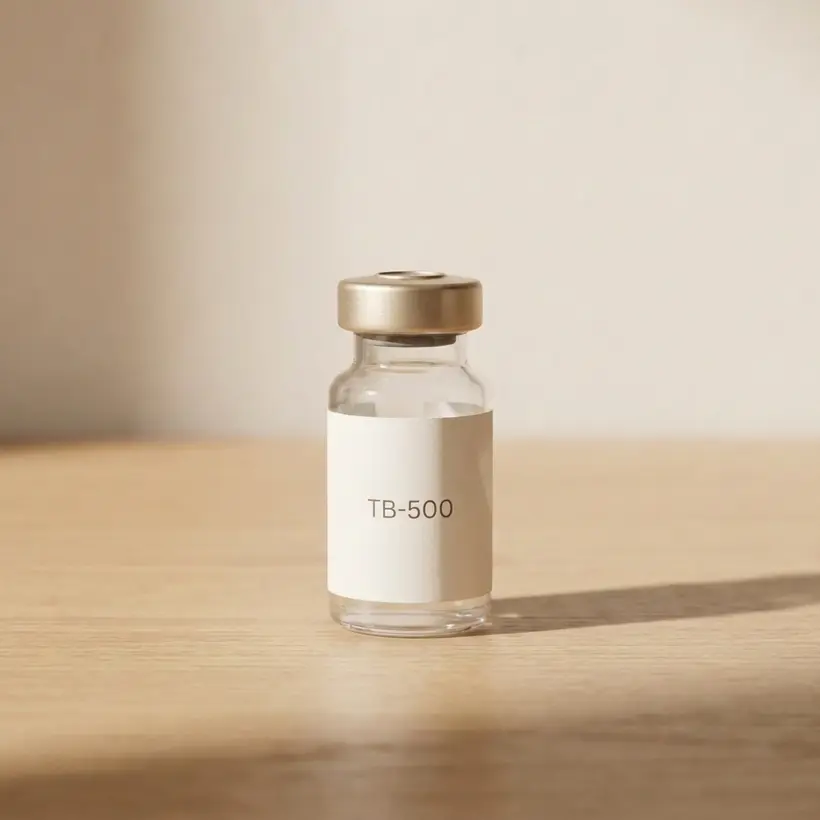
TB-500 (Thymosin Beta-4)
Universal repair peptide for tissue regeneration · From $49/mo · compounded by a licensed 503A pharmacy, dispensed only after provider review.
Learn about TB-500 (Thymosin Beta-4) →Physical therapy and movement remain foundational. Strengthening the muscles around a painful joint helps stabilize it and reduce stress on damaged tissue. TB-500 may help you recover faster between therapy sessions, but it doesn't replace the work.
Nutrition matters more than most people realize. An anti-inflammatory diet rich in omega-3 fatty acids, colorful vegetables, and lean protein gives your body the building blocks it needs for repair. Check out our for practical nutrition strategies that support recovery.
Other peptides may complement TB-500. Many providers prescribe TB-500 alongside in what's known as a stacking protocol. BPC-157 has its own set of mechanisms related to gut healing and tissue repair. The combination (sometimes called the ) is one of the most popular peptide pairings for recovery support.
Tracking your progress is important for knowing whether your protocol is working. Use the to log pain levels, range of motion, and daily activity. Over time, this data helps your provider fine-tune your approach.
Setting Realistic Expectations
Honesty matters here. TB-500 isn't a miracle cure for joint pain. It won't regenerate destroyed cartilage or reverse advanced joint disease. If someone promises you that, they're not being straight with you.
What TB-500 may do is support your body's natural repair processes, reduce inflammatory markers, and help you recover more effectively. Many people report gradual improvements over several weeks. Some notice reduced stiffness. Others find they can be more active with less discomfort.
Results vary from person to person. Your age, the severity of your joint issues, your overall health, and your commitment to complementary approaches like exercise and nutrition all play a role.
The loading phase of a typical TB-500 protocol lasts 4 to 6 weeks, followed by a maintenance phase. Most providers recommend at least 8 to 12 weeks before making a judgment about effectiveness. This is a marathon, not a sprint.
If you don't see meaningful improvement, your provider may adjust your protocol, consider adding another peptide, or recommend a different approach entirely. That's the advantage of working with a licensed provider (you have a partner in the process, not just a product.
Frequently Asked Questions
Can TB-500 help with arthritis?
TB-500 isn't a treatment for arthritis. But some providers prescribe it to help manage inflammation associated with joint conditions. It may support the body's natural repair processes, but it doesn't cure or reverse arthritic changes. Discuss your specific situation with a licensed provider.
How long does TB-500 take to help joint pain?
Most people begin to notice changes within 3 to 6 weeks of starting a protocol, though individual results vary significantly. Joint pain involves complex tissue systems, so gradual improvement is more realistic than overnight relief. Consistent dosing and tracking are important.
Can I use TB-500 instead of surgery for a joint injury?
TB-500 isn't a substitute for surgical intervention when surgery is medically indicated. Some providers include TB-500 in pre-surgical or post-surgical protocols to support recovery. Always follow your orthopedic surgeon's recommendations for structural joint problems.
Is TB-500 better than cortisone injections for joint pain?
TB-500 and cortisone work through different mechanisms. Cortisone is a powerful anti-inflammatory that provides relatively quick symptom relief. TB-500 may support tissue repair and modulate inflammation over a longer timeline. Your provider can help you decide which approach) or combination, is right for you.
Can I exercise while taking TB-500 for joint pain?
Most providers encourage appropriate exercise during TB-500 protocols. Movement supports joint health and recovery. But you should follow your provider's guidance on activity levels, especially during the early weeks. Avoid pushing through sharp pain or engaging in activities that aggravate your condition.
Your Personalized Plan Is Waiting
No two patients are the same, and your protocol shouldn't be either. FormBlends providers create customized treatment plans based on your health profile, goals, and preferences.
Medical References
- Goldstein AL, Hannappel E, Sosne G, Kleinman HK. Thymosin beta4: a multi-functional regenerative peptide. Basic properties and clinical applications. Expert Opin Biol Ther. 2012;12(1):37-51. [PubMed | DOI]
Sources &. References
- Bock-Marquette I, Saxena A, White MD, et al. Thymosin beta4 activates integrin-linked kinase and promotes cardiac cell migration, survival and cardiac repair. Nature. 2004;432(7016):466-472. Doi:10.1038/nature03000
- Malinda KM, Sidhu GS, Mani H, et al. Thymosin beta4 accelerates wound healing. J Invest Dermatol. 1999;113(3):364-368. Doi:10.1046/j.1523-1747.1999.00708.x
This article is for educational purposes only and doesn't constitute medical advice. Always consult with a licensed healthcare provider before starting, changing, or stopping any medication or supplement. FormBlends connects you with licensed providers who can evaluate your individual health needs.
Last updated: 2026-03-24
Ready when you are
TB-500 (Thymosin Beta-4)
Universal repair peptide for tissue regeneration · From $49/mo · compounded by a licensed 503A pharmacy, dispensed only after provider review.
Learn about TB-500 (Thymosin Beta-4) →