Key Takeaway
Your TB-500 arrived as a small vial of white powder. Before you can use it, you need to reconstitute it) meaning mix it with sterile water to create an injectable solution. This TB-500 reconstitution mixing guide walks you through every step so you get it right the first time.
Your TB-500 arrived as a small vial of white powder. Before you can use it, you need to reconstitute it) meaning mix it with sterile water to create an injectable solution. This TB-500 reconstitution mixing guide walks you through every step so you get it right the first time.
Key Takeaways: - Understand what you need before starting - Step-by-Step Reconstitution Process - Dose Calculation Made Simple - Storage Instructions - Common Reconstitution Mistakes to Avoid
Proper reconstitution isn't complicated. But it does require attention to detail. Getting it wrong can mean inaccurate dosing, contamination, or degraded peptide. Follow these steps carefully.
What You Need Before Starting
Gather everything before you begin. Working with a clean, organized space reduces the chance of errors or contamination.
Required supplies: - TB-500 vial (lyophilized powder from your pharmacy) - Bacteriostatic water (BAC water), this contains 0.9% benzyl alcohol as a preservative - Insulin syringes (typically 1mL/100 unit syringes with 29-31 gauge needles) - Alcohol swabs - A clean, flat work surface
Don't use: - Sterile water for injection (it lacks preservatives (use only if your pharmacy specifically instructs it) - Tap water or distilled water (not sterile) - Used or previously opened bacteriostatic water vials that have been open for more than 28 days
Before you start: - Wash your hands thoroughly with soap and water - Wipe your work surface with a clean cloth - Check the expiration dates on your TB-500 vial and bacteriostatic water - Make sure the TB-500 vial cap is intact and undamaged
"Compounding pharmacies serve a critical role in healthcare, but patients need to understand the difference between a properly regulated 503B facility and an unregulated operation. Ask about PCAB accreditation and third-party testing.") Dr. Scott Brunner, PharmD, Alliance for Pharmacy Compounding
Step-by-Step Reconstitution Process
Follow these steps exactly as described. Take your time. There's no rush.
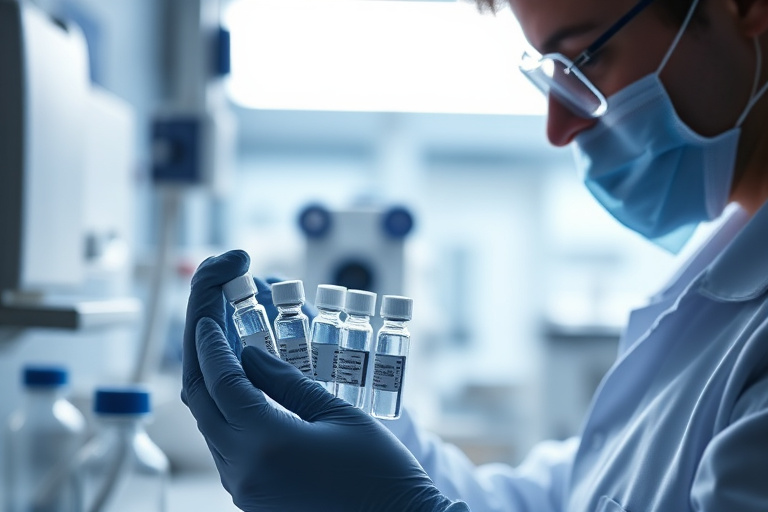
Step 1[1]: Calculate your water volume. The amount of bacteriostatic water you add determines the concentration of your solution. Use the to determine the right amount based on your vial size and prescribed dose. This ensures each injection contains the correct amount of TB-500.
Free Download: Peptide Protocol Planner (12-Week) Includes a dose conversion table, injection log, and site rotation diagram. Keep your reconstitution math and protocol organized in one place. Get yours free (we'll email it to you instantly. [Email Input] [Download Button]
Step 2: Clean the vial tops. Wipe the rubber stopper of both the TB-500 vial and the bacteriostatic water vial with separate alcohol swabs. Let them air dry for 10 seconds. Don't blow on them.
Step 3: Draw the bacteriostatic water. Using a clean insulin syringe, draw the calculated amount of bacteriostatic water from its vial. Pull back on the plunger slowly and steadily. Remove any air bubbles by tapping the syringe and pushing air out.
Step 4: Add water to the TB-500 vial. Insert the needle through the rubber stopper of the TB-500 vial. Aim the needle at the inside wall of the vial) not directly onto the powder. Slowly depress the plunger, letting the water run down the glass wall. This gentle approach prevents damaging the peptide.
Step 5: Let it dissolve. Don't shake the vial. Gently swirl it in a circular motion, or simply let it sit for 5-10 minutes. TB-500 typically dissolves quickly. The solution should be clear and colorless. If it appears cloudy, milky, or contains particles, don't use it (contact your pharmacy.
Step 6: Label the vial. Write the date of reconstitution, the concentration (for example, the dose per 0.1mL), and your initials on the vial. This prevents confusion later, especially if you have multiple peptides in your refrigerator.
Step 7: Store immediately. Place the reconstituted vial in the refrigerator right away. See storage instructions below.
For a general reference on peptide reconstitution principles, our covers the process for all common peptides.
Dose Calculation Made Simple
Once your TB-500 is reconstituted, you need to know how much liquid to draw for each injection. This depends on two factors: how much peptide is in the vial and how much water you added.
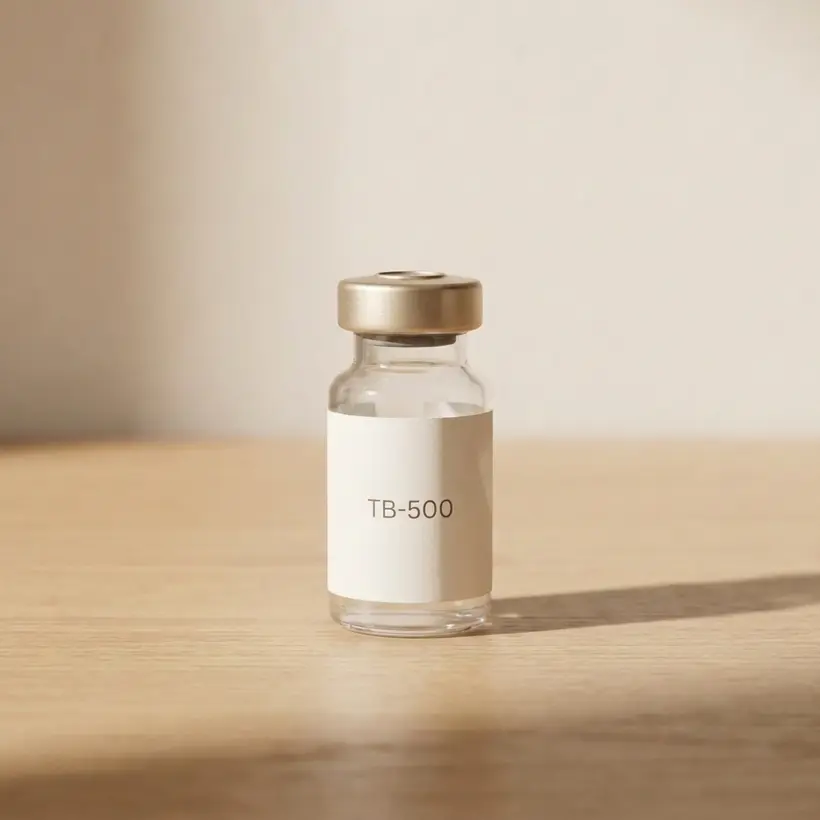
From the FormBlends catalog
TB-500 (Thymosin Beta-4)
Universal repair peptide for tissue regeneration · From $49/mo · compounded by a licensed 503A pharmacy, dispensed only after provider review.
Learn about TB-500 (Thymosin Beta-4) →Example calculation: - Vial contains 5mg of TB-500 - You added 1mL of bacteriostatic water - Concentration = 5mg per 1mL - If your prescribed dose is 2.5mg, you draw 0.5mL (or 50 units on an insulin syringe)
Another example: - Vial contains 5mg of TB-500 - You added 2mL of bacteriostatic water - Concentration = 2.5mg per 1mL - If your prescribed dose is 2.5mg, you draw 1mL (or 100 units on an insulin syringe)
Skip the math entirely with the . Enter your vial size, water volume, and prescribed dose. It tells you exactly how many units to draw on your syringe.
Log each injection in the ) date, time, dose, injection site, and any notes. This gives your provider accurate data for your follow-up visits.
Storage Instructions
Proper storage keeps your TB-500 effective and safe throughout your treatment cycle.
Before reconstitution (powder form): - Store at room temperature or in the refrigerator - Keep away from direct sunlight and heat - Lyophilized peptides are relatively stable as powder - Check the expiration date on the vial
After reconstitution (liquid form): - Refrigerate immediately at 36-46 degrees Fahrenheit (2-8 degrees Celsius) - Use within 3-4 weeks (follow your pharmacy's specific guidance) - Never freeze reconstituted peptides (freezing can denature the peptide and create insoluble particles - Keep the vial upright in the refrigerator - Don't expose to light for extended periods
Signs your reconstituted TB-500 has gone bad: - Cloudy or milky appearance (should be clear) - Visible particles floating in solution - Change in color (should be colorless) - Unusual odor - Past the recommended use-by date
If you notice any of these signs, discard the vial and reconstitute a fresh one. Don't risk injecting degraded peptide. Contact your pharmacy if you have concerns about your supply.
Common Reconstitution Mistakes to Avoid
Spraying water directly on the powder. This can denature the peptide. Always aim the stream at the vial wall and let it run down gently.
Shaking the vial. Vigorous shaking creates foam and can damage peptide bonds. Gentle swirling is sufficient. If the powder doesn't dissolve within 10 minutes of gentle swirling, let it sit in the refrigerator for 30 minutes and try again.
Using the wrong water. Bacteriostatic water is the standard for multi-dose vials. It contains a preservative that inhibits bacterial growth. Regular sterile water lacks this preservative and should only be used if you plan to use the entire vial in a single injection.
Contaminating the rubber stopper. Always swab with alcohol before every needle insertion. Even touching the stopper with clean fingers introduces bacteria.
Not labeling vials. If you use multiple peptides (like TB-500 and for the ), unlabeled vials lead to confusion and potential dosing errors.
Frequently Asked Questions
How much bacteriostatic water should I add to TB-500?
The amount depends on your vial size and prescribed dose. Common approaches are 1mL or 2mL of bacteriostatic water per 5mg vial. Use the FormBlends reconstitution calculator to determine the exact amount based on your specific vial and dose. Your provider or pharmacy may also specify a preferred concentration.
Can I travel with reconstituted TB-500?
Yes, but keep it cold. Use an insulated bag with ice packs. Reconstituted peptides should stay refrigerated. For air travel, pack your prescribed medication with your prescription documentation in a clear bag. TSA allows medically necessary liquids and syringes with proper documentation.
What happens if I accidentally freeze my TB-500?
Freezing can damage the peptide structure. If your reconstituted TB-500 has frozen, it may contain aggregated particles even if it looks clear after thawing. It's safest to discard a previously frozen vial and reconstitute a fresh one. Contact your pharmacy about a replacement.
How do I know if my dose is accurate?
Use the FormBlends reconstitution calculator to verify your math. Double-check that you're reading your insulin syringe correctly) each small line typically represents 1 unit (0.01mL). If you're unsure, ask your provider or pharmacist to walk you through the measurement during your next appointment.
Can I use the same syringe to draw from the vial multiple times?
No. Use a fresh, sterile syringe for each injection. Reusing syringes introduces bacteria into the vial and increases infection risk. Insulin syringes are inexpensive and widely available.
Your Personalized Plan Is Waiting
No two patients are the same, and your protocol shouldn't be either. FormBlends providers create customized treatment plans based on your health profile, goals, and preferences.
Medical References
- Wilding JPH, Batterham RL, Calanna S, et al. Once-Weekly Semaglutide in Adults with Overweight or Obesity. N Engl J Med. 2021;384(11):989-1002. [PubMed | ClinicalTrials.gov | DOI]
- Davies M, Færch L, Jeppesen OK, et al. Semaglutide 2.4 mg once a week in adults with overweight or obesity, and type 2 diabetes (STEP 2). Lancet. 2021;397(10278):971-984. [PubMed | ClinicalTrials.gov | DOI]
- Wadden TA, Bailey TS, Billings LK, et al. Effect of Subcutaneous Semaglutide vs Placebo as an Adjunct to Intensive Behavioral Therapy on Body Weight in Adults With Overweight or Obesity (STEP 3). JAMA. 2021;325(14):1403-1413. [PubMed | ClinicalTrials.gov | DOI]
- Rubino D, Abrahamsson N, Davies M, et al. Effect of Continued Weekly Subcutaneous Semaglutide vs Placebo on Weight Loss Maintenance in Adults With Overweight or Obesity (STEP 4). JAMA. 2021;325(14):1414-1425. [PubMed | ClinicalTrials.gov | DOI]
- Garvey WT, Batterham RL, Bhatt DL, et al. Two-year effects of semaglutide in adults with overweight or obesity (STEP 5). Nat Med. 2022;28(10):2083-2091. [PubMed | ClinicalTrials.gov | DOI]
Sources &. References
- Bock-Marquette I, Saxena A, White MD, et al. Thymosin beta4 activates integrin-linked kinase and promotes cardiac cell migration, survival and cardiac repair. Nature. 2004;432(7016):466-472. Doi:10.1038/nature03000
- Malinda KM, Sidhu GS, Mani H, et al. Thymosin beta4 accelerates wound healing. J Invest Dermatol. 1999;113(3):364-368. Doi:10.1046/j.1523-1747.1999.00708.x
The information in this article is intended for educational use only and shouldn't be considered medical advice. Consult a qualified healthcare provider before making any changes to your medication or supplement regimen. FormBlends helps with connections with licensed providers for personalized medical guidance.
Last updated: 2026-03-24
Ready when you are
TB-500 (Thymosin Beta-4)
Universal repair peptide for tissue regeneration · From $49/mo · compounded by a licensed 503A pharmacy, dispensed only after provider review.
Learn about TB-500 (Thymosin Beta-4) →