Key Takeaway
Complete TB-500 storage instructions covering temperature requirements, shelf life, reconstituted vs lyophilized storage, travel tips, and signs of degradation.
Proper TB-500 storage instructions can mean the difference between an effective peptide and an expensive vial of degraded protein. We cover every storage scenario, from long-term freezer storage to travel considerations, so your peptide stays potent.
Why Storage Matters for Peptides
Peptides are chains of amino acids held together by peptide bonds. These bonds and the overall three-dimensional structure of the molecule are sensitive to heat, light, moisture, and pH changes . When storage conditions are poor, the peptide degrades, meaning it loses its biological shape and function. A degraded TB-500 molecule may still look the same in the vial, but it won't produce the tissue repair, anti-inflammatory, or angiogenic effects you're counting on.
Unlike small-molecule drugs that can sit in a medicine cabinet for years, peptides require more careful handling. The good news is that proper storage isn't complicated once you understand the rules.
Storage by Form: Lyophilized vs Reconstituted
Lyophilized (Unreconstituted) TB-500
Lyophilized TB-500 is the powder form as it arrives from the supplier. This is the most stable form of the peptide because the water has been removed, dramatically slowing degradation reactions.

| Storage Condition | Temperature | Estimated Shelf Life | Notes |
|---|---|---|---|
| Freezer (ideal) | -20 degrees C (-4 degrees F) | 24 to 36 months | Best for long-term storage |
| Refrigerator | 2 to 8 degrees C (36 to 46 degrees F) | 12 to 18 months | Good for medium-term storage |
| Room temperature | 20 to 25 degrees C (68 to 77 degrees F) | 1 to 3 months | Acceptable for short periods only |
| Above 30 degrees C (86 degrees F) | Varies | Days to weeks | Avoid entirely |
Reconstituted TB-500
Once you add bacteriostatic water to your TB-500 vial (see our TB-500 how to reconstitute guide), the clock starts ticking. Water reintroduces the possibility of hydrolysis (bond breakdown) and bacterial contamination.
| Storage Condition | Temperature | Estimated Shelf Life | Notes |
|---|---|---|---|
| Refrigerator (required) | 2 to 8 degrees C (36 to 46 degrees F) | 21 to 28 days | Standard recommendation with BAC water |
| Room temperature | 20 to 25 degrees C (68 to 77 degrees F) | Hours to 1 to 2 days max | Strongly discouraged |
| Freezer | Below 0 degrees C | Not recommended | Freeze-thaw damages reconstituted peptides |
If you reconstituted with plain sterile water (no preservative), the usable window drops to approximately 24 hours, as there's no benzyl alcohol to inhibit bacterial growth.
Detailed Storage Guidelines
Temperature Control
Temperature is the single most important storage variable. Heat accelerates peptide degradation through multiple mechanisms:
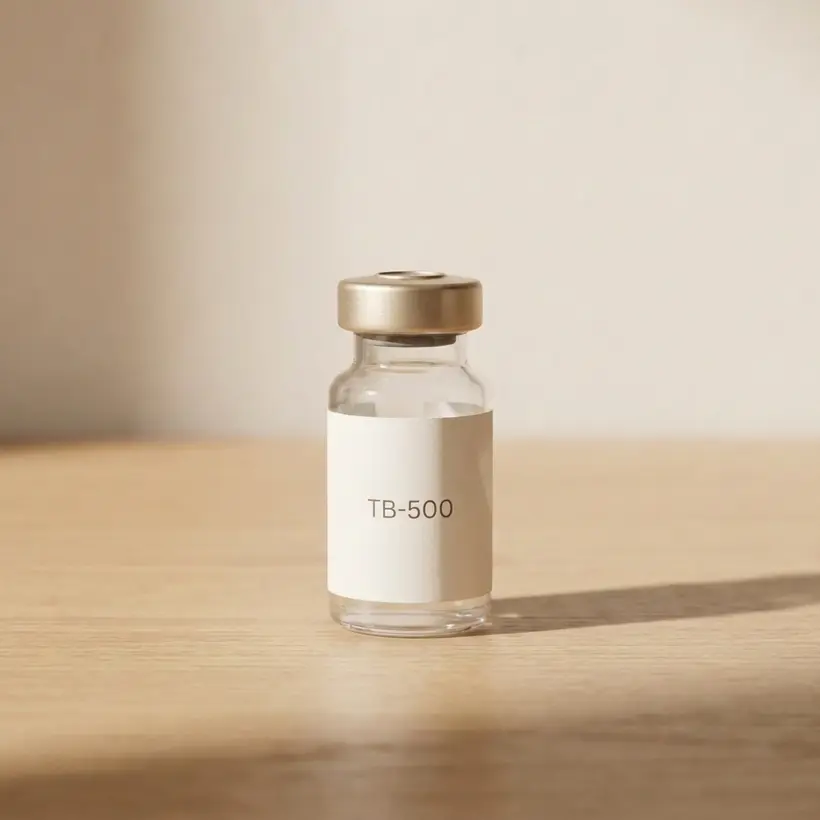
From the FormBlends catalog
TB-500 (Thymosin Beta-4)
Universal repair peptide for tissue regeneration · From $49/mo · compounded by a licensed 503A pharmacy, dispensed only after provider review.
Learn about TB-500 (Thymosin Beta-4) →- Deamidation: Asparagine and glutamine residues in the peptide chain can convert to aspartate and glutamate at improved temperatures, altering the peptide's structure and function.
- Oxidation: Methionine residues are susceptible to oxidation, which increases with temperature and can reduce biological activity.
- Aggregation: Heat can cause peptide molecules to clump together, forming inactive aggregates.
The practical takeaway: keep lyophilized TB-500 in the freezer if you won't use it within a few months. Keep reconstituted TB-500 in the refrigerator at all times except during the brief period needed to draw your dose.
Light Protection
UV light and even strong visible light can trigger photodegradation of certain amino acid residues in the peptide chain . While TB-500 isn't as light-sensitive as some compounds, we still recommend:
- Storing vials in their original box or wrapping them in aluminum foil
- Keeping vials in a dark section of the refrigerator or freezer
- Not leaving vials on countertops under fluorescent or direct lighting
Moisture Protection
For lyophilized TB-500, moisture is the enemy. The entire point of freeze-drying is to remove water. If moisture gets into the sealed vial (through a damaged seal or repeated needle access without proper technique), it can initiate degradation before you intentionally reconstitute.
- Inspect vial seals before storage
- Don't open lyophilized vials until you're ready to reconstitute
- If you notice the powder has changed texture or become sticky before reconstitution, moisture contamination may have occurred
Practical Storage Scenarios
Scenario 1: You Ordered Multiple Vials
Store all unopened vials in the freezer at -20 degrees C. Only remove a vial when you're ready to reconstitute it. This approach maximizes the shelf life of your supply and ensures each vial is at peak potency when you start using it.
Scenario 2: You Reconstituted a Vial and Need It to Last
With bacteriostatic water and proper refrigeration, you have approximately 3 to 4 weeks. Plan your reconstitution timing to align with your dosing schedule. For example, if you're in a loading phase injecting 2.5 mg twice weekly, a 5 mg vial will last exactly one week (two doses). There's no need to worry about the 28-day window because you'll use it all within days.
If you're in a maintenance phase injecting once every two weeks, consider using smaller vials (2 mg) so each vial is used up quickly rather than sitting reconstituted for weeks.
Scenario 3: Traveling with TB-500
Travel presents unique storage challenges:
- Short trips (1 to 3 days): A small insulated bag with an ice pack can maintain refrigerator-range temperatures for reconstituted TB-500. Don't let the ice pack directly contact the vial, as freezing can damage reconstituted peptides.
- Longer trips: If possible, bring lyophilized (unreconstituted) vials and reconstitute at your destination. Lyophilized peptides tolerate temperature fluctuations much better than reconstituted solutions.
- Air travel: TSA allows medications and needles in carry-on luggage. Keeping peptides in a labeled container with associated documentation reduces the chance of questions at security.
Scenario 4: Power Outage
If your refrigerator loses power:
- Keep the door closed. A closed refrigerator maintains safe temperatures for approximately 4 hours.
- Reconstituted TB-500 that has been at room temperature for more than 6 to 8 hours should be discarded as a precaution.
- Lyophilized TB-500 in the freezer is more resilient. A full freezer stays cold for approximately 48 hours. a half-full freezer for about 24 hours.
Signs of Degraded TB-500
Knowing when your peptide has gone bad can save you from wasting time on an ineffective protocol:
- Cloudiness or turbidity: A properly reconstituted TB-500 solution should be completely clear. Any cloudiness suggests aggregation or contamination.
- Particles or floaters: Visible particles in the solution indicate degradation or contamination. Don't use.
- Color change: TB-500 solution should be colorless. Yellow, brown, or any tint suggests chemical degradation.
- Unusual smell: Reconstituted TB-500 with BAC water should have a faint benzyl alcohol scent at most. Strong or unusual odors indicate contamination.
- Powder texture change (lyophilized): If the unreconstituted powder has become sticky, discolored, or formed a solid mass that doesn't dissolve properly, degradation has likely occurred.
Storage Do's and Don'ts
| Do | Don't |
|---|---|
| Store lyophilized vials in the freezer for long-term | Leave vials in a hot car or near a window |
| Refrigerate reconstituted TB-500 immediately | Freeze reconstituted peptide solutions |
| Protect vials from light | Store vials under direct fluorescent lighting |
| Use bacteriostatic water for multi-dose vials | Use plain sterile water if the vial will last more than 24 hours |
| Clean the vial stopper before every access | Touch the rubber stopper with your fingers |
| Label vials with reconstitution date | Guess how long ago you reconstituted |
| Reconstitute only what you'll use in 3 to 4 weeks | Reconstitute your entire supply at once |
Frequently Asked Questions
Can I store TB-500 in a regular kitchen refrigerator?
Yes. A standard kitchen refrigerator operating at 2 to 8 degrees C (36 to 46 degrees F) is perfectly adequate. Place the vial toward the back of the refrigerator where temperatures are most stable, rather than in the door where temperatures fluctuate with opening and closing.
How do I know if my TB-500 is still good after being shipped?
Reputable suppliers ship lyophilized TB-500 at ambient temperature with cold packs for warmer weather. Lyophilized peptides tolerate several days at room temperature without significant degradation. If the powder looks normal (white, dry, intact) when it arrives, it's almost certainly fine. If you're concerned, check whether the supplier includes stability data or batch testing results.
What happens if I accidentally freeze my reconstituted TB-500?
A single freeze-thaw cycle may reduce potency but might not completely destroy the peptide. Multiple freeze-thaw cycles are more damaging. If your reconstituted vial froze once, you can still try using it, but the effectiveness may be reduced. We recommend discarding it if possible and starting with a fresh vial.
Should I store TB-500 away from other medications in the fridge?
There's no chemical reason to separate TB-500 from other refrigerated items, as the vial is sealed. The main concern is organization: keep your peptides in a designated container or bag within the fridge so they're easy to find and less likely to be knocked over or exposed to temperature changes from frequent door openings.
How long can reconstituted TB-500 sit out while I prepare my injection?
Brief exposure to room temperature during dose preparation (5 to 10 minutes) isn't a concern. The 28-day shelf life assumes the vial spends the vast majority of its time refrigerated with only brief excursions to room temperature for dose drawing. Don't leave the vial out for hours at a time.
Summary
TB-500 storage is straightforward: freezer for long-term lyophilized storage, refrigerator for reconstituted vials, and protection from light and heat at all times. Label your vials with the reconstitution date, use bacteriostatic water for multi-dose vials, and inspect the solution before each use. These simple habits ensure you get the full benefit from every vial.
Getting started with TB-500? Read our TB-500 for beginners guide for a complete overview, or learn how to reconstitute TB-500 with our step-by-step instructions.
Ready when you are
TB-500 (Thymosin Beta-4)
Universal repair peptide for tissue regeneration · From $49/mo · compounded by a licensed 503A pharmacy, dispensed only after provider review.
Learn about TB-500 (Thymosin Beta-4) →