Key Takeaway
An evidence-based guide to sermorelin dosing. Learn about typical dosage ranges, timing protocols, cycling strategies, and why individualized dosing matters.
Quick Answer: Sermorelin dosages typically range from 100 mcg to 500 mcg per day, administered via subcutaneous injection before bedtime. The right dose depends on your age, baseline growth hormone levels, body composition, and treatment goals. Dosing should always be determined and monitored by a licensed physician.
What Is Sermorelin?
Sermorelin acetate is a synthetic 29-amino-acid peptide that replicates the biologically active portion of growth hormone-releasing hormone (GHRH). It stimulates the pituitary gland to produce and release growth hormone (GH) through the body's own regulatory pathways, preserving the natural pulsatile pattern of GH secretion.
Because sermorelin doesn't bypass the body's feedback mechanisms, dosing is both more forgiving and more nuanced than exogenous GH. The pituitary will only release as much GH as it's capable of producing, which provides a built-in safety margin. But this also means that optimal dosing requires clinical expertise to match the stimulus to the individual's physiology and goals.
Typical Sermorelin Dosage Ranges
Dosages used in clinical practice generally fall within the following ranges. These are guidelines, not prescriptions. Your clinician will determine the appropriate dose based on your individual evaluation.

Starting Dose
Most adult protocols begin at 100 mcg to 200 mcg per day. This conservative approach allows the clinician to assess your body's response and tolerability before increasing the dose. Starting low also minimizes the likelihood of side effects during the adjustment period.
Therapeutic Dose
Once tolerability is established, doses are often titrated upward to 200 mcg to 500 mcg per day, depending on the patient's response, lab results (particularly IGF-1 levels), and clinical goals. Most adults on maintenance therapy fall somewhere within this range.
Higher-Dose Protocols
Some clinicians use doses above 500 mcg in specific clinical scenarios, though this is less common and requires closer monitoring. Higher doses don't always produce proportionally greater GH release due to receptor saturation and the pituitary's inherent capacity limits.
Pediatric Dosing (Historical Context)
When sermorelin was FDA-approved for pediatric growth hormone deficiency, the standard dose was approximately 30 mcg/kg of body weight per day. Adult dosing follows different principles, as the goal is improvement rather than growth stimulation.
Timing and Administration
When to Inject
Sermorelin is best administered 30 to 60 minutes before bedtime, on an empty stomach (at least 2 hours after your last meal). This timing is deliberate and important for two reasons:
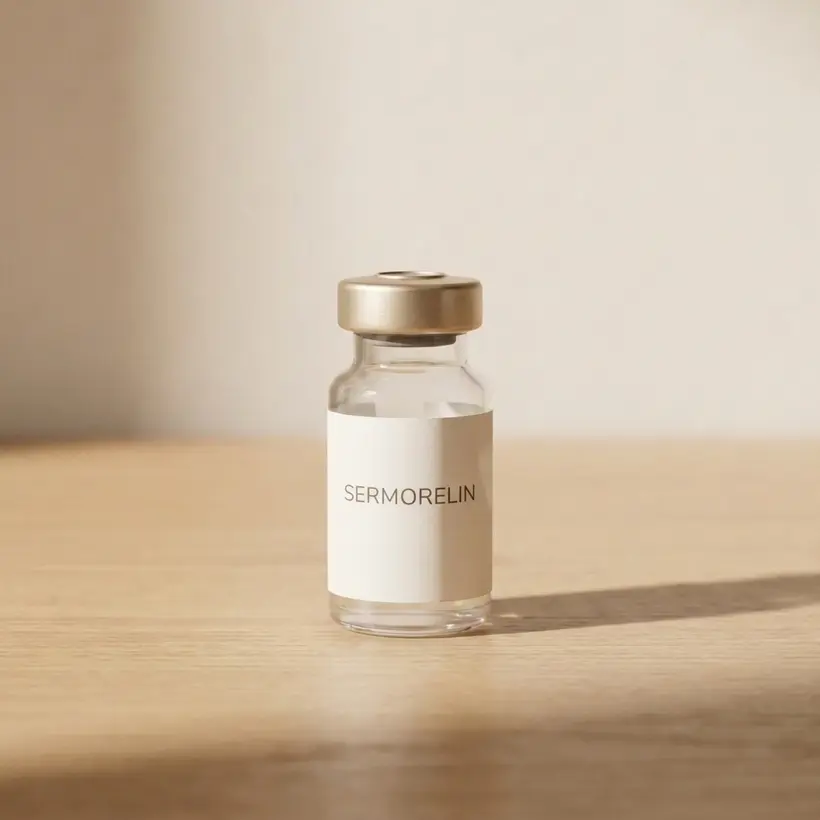
From the FormBlends catalog
Sermorelin
Bioidentical GHRH analog for natural growth hormone pulsatility · From $175/mo · compounded by a licensed 503A pharmacy, dispensed only after provider review.
View Sermorelin →- Alignment with natural GH secretion: The largest natural pulse of growth hormone occurs during the first phase of deep sleep. Injecting sermorelin before bed amplifies this natural pulse rather than creating an off-cycle spike.
- Food interference: improved blood sugar and insulin levels blunt GH release. Fasting for at least 2 hours before injection ensures that insulin isn't competing with the GHRH signal.
Injection Frequency
The standard protocol involves daily subcutaneous injections, typically 5 to 7 days per week. Some clinicians prescribe a 5-days-on, 2-days-off schedule to prevent receptor desensitization, though the evidence for this approach over daily dosing is primarily empirical rather than derived from controlled trials.
Injection Sites
Common subcutaneous injection sites include the lower abdomen (at least 2 inches from the navel), the outer thigh, and the back of the upper arm. Rotating injection sites is important to avoid lipodystrophy (changes in fat tissue at the injection site) and to minimize local irritation.
Cycling Sermorelin
There's ongoing clinical discussion about whether sermorelin should be cycled (used for a defined period, then paused before resuming). The rationale for cycling relates to potential GHRH receptor desensitization with prolonged, uninterrupted use.
Common Cycling Protocols
- Continuous use: Daily injections without breaks, with periodic lab monitoring to confirm continued GH axis responsiveness.
- 5-on, 2-off weekly: Injections on weekdays with weekends off. This is a widely used approach that balances efficacy with potential receptor sensitivity preservation.
- Monthly cycling: Some protocols involve 3 to 4 weeks on therapy followed by 1 to 2 weeks off. This is more common in combination protocols with other peptides.
- Macro cycling: 3 to 6 months of therapy followed by a 1-month washout period. This allows for reassessment of baseline GH levels and clinical response.
Your clinician will recommend a cycling approach based on your response data and treatment duration.
Factors That Influence Your Optimal Dose
Age
Pituitary responsiveness to GHRH declines with age. Older patients may require higher doses to achieve the same GH response as younger patients, though the ceiling of what the pituitary can produce also decreases. This is why lab monitoring (especially IGF-1) is important for dosage improvement.
Body Composition
Patients with higher body fat percentages tend to have lower baseline GH levels and may respond differently to GHRH stimulation. Body weight can also influence pharmacokinetics, though sermorelin dosing isn't strictly weight-based in adult protocols.
Baseline GH and IGF-1 Levels
Pre-treatment lab work establishes your starting point. Patients with significantly low IGF-1 levels may see more dramatic responses, while those with mildly reduced levels may require more subtle dose adjustments.
Treatment Goals
A patient focused primarily on sleep improvement may achieve their goals at a lower dose than one aiming for measurable changes in body composition or recovery capacity. Your clinician will align your dose with your specific objectives.
Concurrent Medications and Peptides
If sermorelin is used in combination with other GH secretagogues (such as ipamorelin or GHRP-6), the total GH stimulus needs to be considered when determining the sermorelin dose. Combination protocols often use lower individual doses of each peptide.
How Dosing Is Monitored and Adjusted
Responsible sermorelin therapy involves ongoing monitoring, not a set-it-and-forget-it approach. Key monitoring touchpoints include:
- Baseline labs: IGF-1, thorough metabolic panel, fasting glucose and insulin, and any additional markers your clinician deems relevant.
- 4 to 6 week follow-up: Reassessment of symptoms, side effects, and initial lab response. Dose adjustments are commonly made at this point.
- Ongoing periodic labs: IGF-1 levels every 3 to 6 months to ensure the GH axis is responding appropriately and that levels remain within the therapeutic range.
- Clinical reassessment: Regular evaluation of whether therapy goals are being met and whether continued use is appropriate.
Safety Considerations
Sermorelin's safety profile is well-established in published literature. Because the pituitary's somatostatin feedback loop remains intact, the risk of excessive GH levels is lower than with exogenous GH. Common side effects at therapeutic doses are mild and typically include injection site reactions, facial flushing, and headache.
But sermorelin is a prescription medication that requires proper medical oversight. Self-dosing without clinical guidance or using products obtained from unregulated sources introduces unnecessary risk. Pharmaceutical-grade sermorelin administered under physician supervision is the standard of care.
How FormBlends Can Help
FormBlends provides physician-supervised sermorelin therapy through a convenient telehealth platform. Our process includes a thorough medical evaluation, baseline lab work, individualized dosing protocols, and ongoing monitoring with dose adjustments as needed.
We don't use one-size-fits-all dosing. Your protocol is designed around your labs, your health history, and your specific goals. Our clinical team is available throughout your treatment to answer questions, address concerns, and improve your results.
Frequently Asked Questions
What happens if I miss a dose of sermorelin?
Missing a single dose isn't a significant concern. Simply resume your normal schedule the following evening. Don't double the dose to make up for a missed injection. Consistency over time is more important than any single dose.
Can I take sermorelin in the morning instead of at night?
While sermorelin can be administered at any time, evening administration is strongly preferred because it aligns with the body's natural peak in GH secretion during early sleep. Morning dosing may be less effective and doesn't take advantage of the sleep-GH combined effect.
How long should I stay on sermorelin?
Treatment duration varies by individual. Some patients use sermorelin for 3 to 6 months and reassess, while others continue on a long-term maintenance protocol. Your clinician will recommend a timeline based on your response and ongoing clinical assessment.
Does a higher dose mean better results?
Not necessarily. The pituitary has a finite capacity for GH production, and GHRH receptors can become desensitized with excessive stimulation. The goal is to find the minimum effective dose that produces a meaningful clinical response, not to maximize the amount of peptide injected.
Should I eat before or after my sermorelin injection?
You should avoid eating for at least 2 hours before your injection. improved insulin from food intake can blunt the GH release that sermorelin is designed to stimulate. Most clinicians recommend a light dinner eaten well before the injection window.
Get Your Personalized Sermorelin Protocol
The right sermorelin dose is the one that's designed for you. FormBlends offers physician-supervised evaluations, personalized dosing, and ongoing clinical support through our telehealth platform.
Disclaimer: This article is for informational purposes only and doesn't constitute medical advice. Sermorelin dosing should only be determined by a licensed healthcare provider based on individual clinical evaluation. The statements in this article haven't been evaluated by the FDA. This product isn't intended to diagnose, treat, cure, or prevent any disease.
Ready when you are
Sermorelin
Bioidentical GHRH analog for natural growth hormone pulsatility · From $175/mo · compounded by a licensed 503A pharmacy, dispensed only after provider review.
View Sermorelin →